

Editorials
‘Ready or Not’ and the Cathartic Cigarette of a Relatable Final Girl

I was late to the Radio Silence party. However, I do not let that stop me from being one of the loudest people at the function now. I randomly decided to see Ready or Not in theaters one afternoon in 2019 and walked out a better person for it. The movie introduced me to the work of a team that would become some of my favorite current filmmakers. It also confirmed that getting married is the worst thing one can do. That felt very validating as someone who doesn’t buy into the needing to be married to be complete narrative.
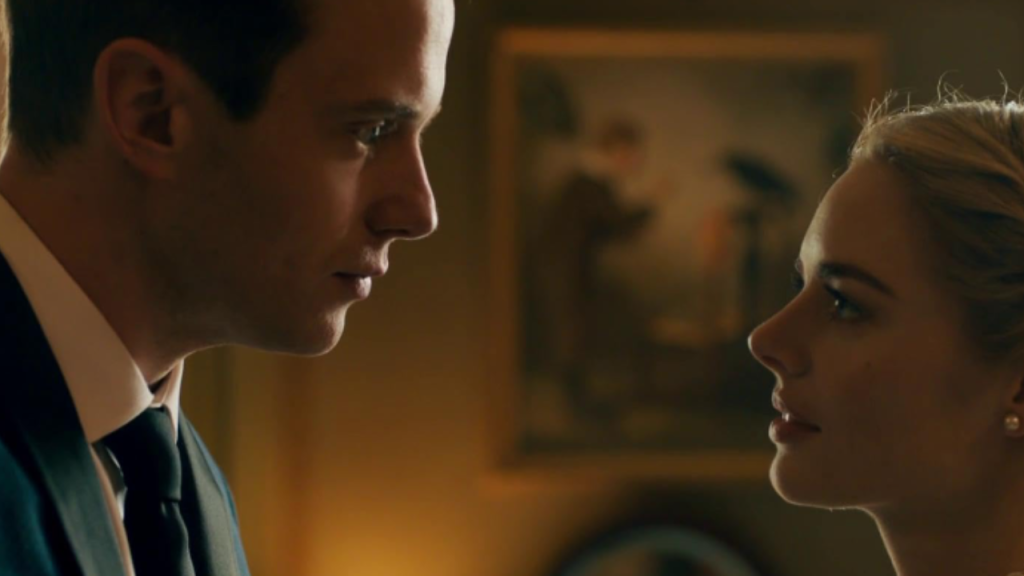
Ready or Not is about a fucked up family with a fucked up tradition. The unassuming Grace (Samara Weaving) thinks her new in-laws are a bit weird. However, she’s blinded by love on her wedding day. She would never suspect that her groom, Alex (Mark O’Brien), would lead her into a deadly wedding night. So, she heads downstairs to play a game with the family, not knowing that they will be hunting her this evening. This is one of the many ways I am different from Grace. I watch enough of the news to know the husband should be the prime suspect, and I have been around long enough to know men are the worst. I also have a commitment phobia, so the idea of walking down the aisle gives me anxiety.

Grace Under Fire
Ready or Not is a horror comedy set on a wealthy family’s estate that got overshadowed by Knives Out. I have gone on record multiple times saying it’s the better movie. Sadly, because it has fewer actors who are household names, people are not ready to have that conversation. However, I’m taking up space this month to talk about catharsis, so let me get back on track. One of the many ways this movie is better than the latter is because of that sweet catharsis awaiting us at the end.
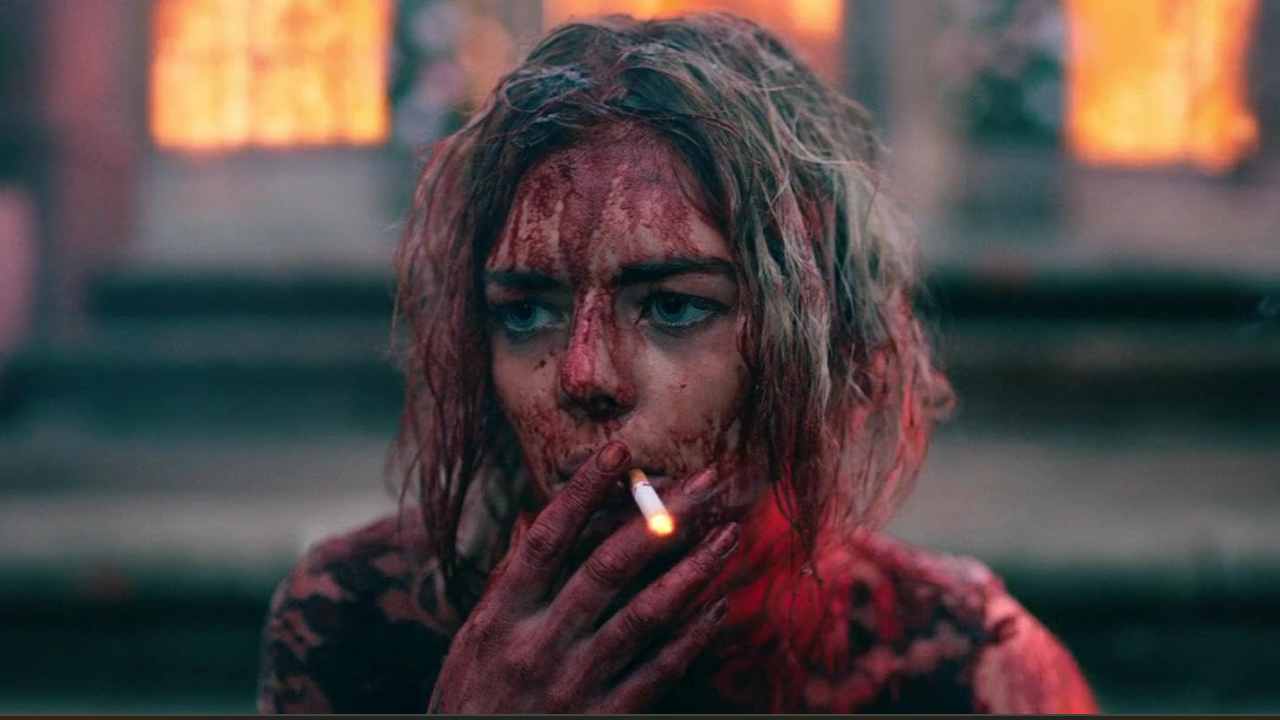
This movie puts Grace through it and then some. Weaving easily makes her one of the easiest final girls to root for over a decade too. From finding out the man she loves has betrayed her, to having to fight off the in-laws trying to kill her, as she is suddenly forced to fight to survive her wedding night. No one can say that Grace doesn’t earn that cigarette at the end of the film. As she sits on the stairs covered in the blood of what was supposed to be her new family, she is a relatable icon. As the unseen cop asks what happened to her, she simply says, “In-laws.” It’s a quick laugh before the credits roll, and “Love Me Tender” by Stereo Jane makes us dance and giggle in our seats.
Ready or Not Proves That Maybe She’s Better Off Alone
It is also a moment in which Grace is one of many women who survives marriage. She comes out of the other side beaten but not broken. Grace finally put herself, and her needs first, and can breathe again in a way she hasn’t since saying I do. She fought kids, her parents-in-law, and even her husband to escape with her life. She refused to be a victim, and with that cigarette, she is finally free and safe. Grace is back to being single, and that’s clearly for the best.
This Guy Busick and R. Christopher Murphy script is funny on the surface, even before you start digging into the subtext. The fact that Ready or Not is a movie where the happy ending is a woman being left alone is not wasted on me, though. While Grace thought being married would make her happy, she now has physical and emotional wounds to remind her that it’s okay to be alone.
One of the things I love about this current era of Radio Silence films is that the women in these projects are not the perfect victims. Whether it’s Ready or Not, Abigail, or Scream (2022), or Scream VI, the girls are fighting. They want to live, they are smart and resourceful, and they know that no one is coming to help them. That’s why I get excited whenever I see Matt Bettinelli-Olpin and Tyler Gillett’s names appear next to a Guy Busick co-written script. Those three have cracked the code to give us women protagonists that are badasses, and often more dangerous than their would-be killers when push comes to shove.

Ready or Not Proves That Commitment is Scarier Than Death
So, watching Grace run around this creepy family’s estate in her wedding dress is a vision. It’s also very much the opposite of what we expect when we see a bride. Wedding days are supposed to be champagne, friends, family, and trying to buy into the societal notion that being married is what we’re supposed to aspire to as AFABs. They start programming us pretty early that we have to learn to cook to feed future husbands and children.
The traditions of being given away by our fathers, and taking our husbands’ last name, are outdated patriarchal nonsense. Let’s not even get started on how some guys still ask for a woman’s father’s permission to propose. These practices tell us that we are not real people so much as pawns men pass off to each other. These are things that cause me to hyperventilate a little when people try to talk to me about settling down.
Marriage Ain’t For Everybody
I have a lot of beef with marriage propaganda. That’s why Ready or Not speaks to me on a bunch of levels that I find surprising and fresh. Most movies would have forced Grace and Alex to make up at the end to continue selling the idea that heterosexual romance is always the answer. Even in horror, the concept that “love will save the day” is shoved at us (glares at The Conjuring Universe). So, it’s cool to see a movie that understands women can be enough on their own. We don’t need a man to complete us, and most of the time, men do lead to more problems. While I am no longer a part-time smoker, I find myself inhaling and exhaling as Grace takes that puff at the end of the film. As a woman who loves being alone, it’s awesome to be seen this way.

The Cigarette of Singledom
We don’t need movies to validate our life choices. However, it’s nice to be acknowledged every so often. If for no other reason than to break up the routine. I’m so tired of seeing movies that feel like a guy and a girl making it work, no matter the odds, is admirable. Sometimes people are better when they separate, and sometimes divorce saves lives. So, I salute Grace and her cathartic cigarette at the end of her bloody ordeal.
I cannot wait to see what single shenanigans she gets into in Ready or Not 2: Here I Come. I personally hope she inherited that money from the dead in-laws who tried her. She deserves to live her best single girl life on a beach somewhere. Grace’s marriage was a short one, but she learned a lot. She survived it, came out the other side stronger, richer, and knowing that marriage isn’t for everybody.


I’ve come to the kind of grim conclusion that sooner or later we’re all going to succumb to horror franchise fatigue. Bear with me, this editorial is more stream of consciousness than most of the ones I’ve written for Horror Press. For those unaware, the forthcoming Camp Crystal Lake show spent a short period of time shooting at a beloved local North Jersey restaurant near me in August. This meant progress for the A24 project that has been radio silent for a while; it also meant no rippers while it was closed for filming, but who said Jason’s reign of terror would be without consequence?
When Horror Franchise Fatigue Becomes An Issue
My friends mentioned it on an idle afternoon, and I carried that conversation over to another friend later that week. It inevitably turned into what all conversations of long-lived franchises do. Talking about how far the series had come, how influential it was, and how it died. Or at least, died without a death certificate. Nothing will keep a studio from coming back to a franchise if that’s where the money is, barring legal troubles and copyright shenanigans.
Revisiting Friday the 13th: A Franchise Rewatch Gone Wrong
As I fondly thought about the Friday series, I was spurred to watch the films. I would watch it all, from start to finish, all twelve movies. Not for any particular article, though the planned process was similar. They’re fascinating films that were both helped and harmed by their immense financial success, so they were as good as any franchise to analyze the changes in. I would note the difference between directors, the shift in tone. How cultural consciousness changed the films as they went on. I would dissect them to see what was at the heart of these movies.
I got about 15 minutes into Part 4 before stopping my marathon.
Horror Franchise Fatigue and the Loss of Enjoyment
Now, this might sound strange. I liked The Final Chapter, I like pretty much all the Friday films (especially the worst ones). And I know that I enjoy them, not from some abstract nostalgia driven memories, but because I had seen several of them recently enough to know that. What it came down to was a very simple question of whether or not I was having fun watching them. The enjoyment was the point, but by the fifth day, I wasn’t feeling anything. I wanted to love the Friday the 13th films the same way I did when I previously watched them, but it just didn’t happen.
And I was confused, how a franchise I had enjoyed so much had just become so unmoving. It wasn’t the experience I had had before. But the truth was that experience couldn’t be restored, and that desire to bring it back was actively harming my enjoyment of the films.

Why Standalone Horror Experiences Still Matter
In contrast, I showed my favorite giallo film to some friends recently. Dario Argento’s Opera is a film I’ve seen plenty of times, and it was a big hit thanks to its Grand Guignol sensibilities and one-of-a-kind cinematography. As far as tales about an opera singer being forced to witness murders go, it got a warm reception. It was crass, it was odd, it was provocative.
And watching my friends’ reactions, from intrigue to disgust to enjoyment, was the exact kind of experience I was hoping for. It was a memorable experience that stuck with me as much as seeing the film for the first time did.
We Don’t Love Horror Franchises, We Love the Experience
It may sound ignorant, but largely, I feel we don’t love franchises. We love the experience. We love the feeling of seeing something come together over the course of hours, the novelty of characters growing and changing if it’s allowed by the scripts. The special emotion invoked when you spend so much time with a piece of media; it’s the same emotion that gets you hooked on a good TV show.
Now for some of you, this is splitting hairs. But I think the core of this is important to recognize: the franchise is just a vessel for the experiences the media provides. It’s shorthand for what you’ve felt and how you feel, a signifier rather than what’s really being signified. The Friday, and Nightmare, and Halloween “series”, as concepts are abstract enough to mean a million different things to a million different viewers, but at the end of the day they are all a collection of viewing experiences to someone.
Fan Culture, Shared Horror Memories, and Closure
Those experiences are the core of “fan culture”. We love how our experiences link with those of others, registering flashes of recognition at a turn of phrase or a reference to a scene. That nebulous tangling of thoughts and feelings with other people is at the essence of shared enjoyment. And if you’re lucky enough, we love to see the book close on a franchise. To see a film series end, having completed its journey is a reward of its own.
But unfortunately, we often don’t get the privilege of watching a series end gracefully or even end at all. The Halloween series and The Exorcist series with their latest entries are obvious examples, and they’ve put the two franchises at arm’s length for me. But they’re far from the only ones.

Scream, Legacy Characters, and the Cost of Overextension
I especially don’t think I can return to the Scream films for a good long while. Putting aside the absolute trash fire made by Spyglass Entertainment firing its lead, then rushing a 7th film so badly they lost the Radio Silence team, I had already tapped out the minute I had heard the film’s premise. If there ever was a horror protagonist who should have stayed retired, it was Sidney Prescott.
All respect to Neve Campbell for finally getting her paycheck, but I can’t think of something less appealing than Sidney coming back. I’ve always been a Scream 3 purist, so I firmly believe that she shouldn’t have been in any of the films after that. She had gotten her happy ending, and left horror as one of the greatest of all time.
But then dangling a legacy character of that significance over a shallow inflatable pool for a third time, and treating it as shark infested waters, just feels ridiculous. The trailer that dropped for it did very little to assuage the notion that it would be anything but predictable.
This isn’t to say I’ve written off Scream entirely, but familiarity in this case has bred some level of contempt. I can identify pretty clearly what I loved about the experience that the Scream franchise used to offer, and this is not it. It’s made me more or less sulky about what it has to offer now; that is, very little of the novelty and shock factor I loved it for.
Why It’s Okay to Walk Away From Horror Franchises You Love
All of these thoughts and encounters led to a series of questions I kept revolving through. Why do we play a game of loyalty to something so abstract as “the franchise”? Is the collection of experiences we attach to a series supposed to be an emotional wage we’re paid to stick around? Is that payment enough? Why should we keep watching a series if we’ve fallen out of love with what it has to offer?
I know as much as you do that the answer to that last question is “we shouldn’t”, and yet we still do. For those of us who have fallen into a similar pessimistic state about the franchises we enjoy, I guess this is all just a way of stating the obvious: it’s okay to leave a series behind. If it’s not fun or engaging or challenging, you can and should set it aside, at least temporarily. While I’m not a proponent of killing fond memories or condemning all nostalgia, that’s just the problem: I want to feel something more than I want to remember that feeling.
Choosing New Horror Over Nostalgia
The old experience of media we once loved can be nice, but there are more new experiences out there than we can have in a single lifetime. We have a near infinite amount to choose from. So, if we’re fortunate, one of them belongs to a series we love, and we can enjoy it once more. But for those of us who don’t have that luck, consider this a reminder that there is a lot more than these familiar faces to see. Next time you feel down about a series you miss or find yourself unable to continue watching, reach for something new. Something odd. Something you haven’t seen. It might just help.
Happy watching, horror fans.

A landmark date in Japanese film history is approaching: December 16th, 2025, marks the official 25th anniversary of the theatrical release of Battle Royale. Its director, Kinji Fukasaku, was a media luminary that lit up the 70s cinema landscape with both war and crime films. He gained notoriety chiefly for his shocking yakuza exploitation films, the Battles Without Honor or Humanity series. But it was his final completed film, Battle Royale, that would be his most popular, and one of his most powerful in terms of the messaging of his films.
Celebrating 25 Years of Battle Royale
Battle Royale is, despite its wild ultraviolence and well-earned accusations of being an exploitation film in spirit, an incredibly moving film. When seen through the lens of Fukasaku’s directorial history and our contemporary troubles, it’s a perennial story of a struggle between generations. Of the subterfuge traditional power structures use to justify horrific actions, and of the people who see through it and rise above it. It’s, in Fukasaku’s words, a “fable” about “the restoration of trust” in the hearts of those who resist manufactured despair.
Battle Royale is the culmination of decades of a director’s frustration being processed and put to film. That brutal past Fukasaku wrestled with is transmuted into a bizarrely poignant and punctuated fairy tale of hope. There’s an emotional outpouring by its final reel, ending in a line of thought that has made the film age like fine wine: it’s up to the youth now. And if you ask Kinji Fukasaku, the kids might not be alright now, but they still can be.
A Director in Dialogue With Nationalism
In his lifetime, Kinji Fukasaku saw war. He was effectively on the front lines due to his perilous job in a munitions factory in Japan when he was 15. He had to witness firsthand the deaths of his friends and move the bodies of lost coworkers, killed in bombing runs on the factory by Allied forces. All of this only to see Japan then lose the war in the most horrific and inhumane way possible with the atomic bombings of Hiroshima and Nagasaki. The downward spiral the nation was sent into was visible to all, as a government focused on economic and material restoration left people to slip through the cracks. These images were indelibly etched into his mind, and then his art.
His musings on the senseless and wanton violence against the Japanese citizenry during World War II were reflected by a staunch anti-nationalist streak in his war films. Under the Flag of the Rising Sun is a film that ends on a note that is as frightening as it is contemplative, reminding us that the cost of war and human cruelty on a governmental level is as spiritual and moral as it is material. And the only ones who really pay that debt of blood and soul are its people, not its leaders, who decided the cost for them.
From Yakuza Cinema to Youth Violence Commentary
This trend would continue into his much more popular films, the aforementioned Battle Without series and its New Battle continuations. The immense levels of Verhoeven-esque violence and general cruelty of these films were a key feature, not a bug. Fukasaku’s presentation of violence would go on to define and be reinterpreted by Asian crime cinema at large after it. But the crassness of these films, against people from all walks of life, is more than meets the eye.
Fukasaku’s yakuza films have often been interpreted by film journalists and scholars like Will Robinson Sheff and David Hanley to be “harsh-lit exposés of postwar Japan’s demoralized spirit”, “[conveying] the chaotic nature of the period”. It’s in the title itself: they’re vignettes highlighting the transformation of humans into criminals as a borderline species metamorphosis. Notions of decency are discarded and minds eroded by baser, war-like mentalities. This would, of course go on to be a major source of the horror in Battle Royale, watching young people slip into this transformation, with the film’s primary antagonists having fully succumbed to it.

The Brutality of Battle Royale
Though he never fully left crime films behind, towards the end of his career Fukasaku would veer into period dramas, jidaigeki films highlighting Japan’s antiquity. But his final film was a curveball return to form, at least in terms of how brutal and overtly political it was.
The year 2000 would see his adaptation of the alternate history horror novel Battle Royale, by author Koushun Takami. The screenplay by Kenji’s son Kenta Fukasaku moves pieces and players around, but ultimately it retains the same plot and most of the same characters. The premise was simple, but dark: a fascist Japanese government has stagnated due to harsh recession and unemployment rates. Its solution to massive economic downturn is bloodsport involving its youngest citizens.
They pit a class of teenagers against each other in a death game involving explosive collars and random weapons, a game that can only have one winner. Isolated from civilization on an abandoned island, the personalities that defined their high school experience turn into deadly shades of their former selves. While a few students band together to escape, most are subsumed by the violence, with heartbreaking results.
Kinji’s Fearsome Magnum Opus
It was a subversive novel from the jump, one blackballed through awards snubs and publication problems due to its exceptional amount of violence. It was a perfect match for Fukasaku’s voice, a grit-filled mouth that spoke truth against unjust power structures and out of touch politicians.
And when Fukasaku’s adaptation came out, it was every bit as outlandish to the general public as the book. Casting actual teenagers and not pulling any punches with how grotesque the battle was drew ire from all around. The film was forced to bear an R-15+ rating, not just because of rating board Eirin’s judgement, but due to a spat with the legislative branch of Japan known as the National Diet. Politicians blamed the film directly for violent crime as fervor around the film rose. Fukasaku urging younger audiences to sneak into theatres to watch it definitely did not help quell the panic.
It’s largely agreed that the conflict between the artist and the government was the major impetus for the film becoming so popular, launching the notoriety of the movie to international audiences rapidly. But it always struck me as a disservice to how well made the film is, because at the end of the day, it’s hard to disagree with the notion that this is Fukasaku’s best film. Without the controversy, it would have always been a classic, just because of the rare form Fukasaku was in while directing it.
A Cast and Director Working in Unison
On a technical level, the film has incredibly tight editing and special effects that shouldn’t be ignored. There’s Kurosawa gold in these hills, replete with sprays of blood and squibs all over thanks to the variety of brutal ends our characters meet. But all these years later, it’s more difficult not to be stunned by how many runaway performances this film has that are just that good.
The crushing subdued emotion of Tatsuya Fujiwara’s performance as Shuya. The delightful evil of Chiaki Kuriyama’s yandere blueprint Chigusa (it’s obvious why this role got her the part of Gogo in Kill Bill). The sheer charismatic menace that is Masanobu Andô as Kiriyama! And of course, we have Takeshi Kitano in a truly legendary performance as former class teacher turned psychotic game host Kitano. Takeshi Kitano has never missed, and his perfectly dark humored performance and the confrontation it culminates in at the film’s climax is proof of that.
The Lighthouse Sequence and the Power of Fukasaku’s Direction
Not everyone is delivering phenomenal work; the film’s notoriously bloody lighthouse sequence is carried more by the gut punch of what happens there than by the cast’s acumen as young actors. But even then, these minor characters and their performers are strong. They demand your sympathy. Even the characters who die in comedically dark deaths demand a fraction of your sadness.
The directing of Kinji Fukasaku, and his son Kenta who wrote the screenplay as well as aided in directing the cast, is what makes the movie work so well. Even if its lighting wasn’t great, if its camera work wasn’t phenomenal, its effects more subdued, Battle Royale would still be a fantastic film because of the man behind the camera and the experiences he drew on to make such a strong film with such a strong voice.

A Perfect Social Satire That Still Works Today
Many years later, the concepts popularized by Battle Royale, including a whole subgenre of fiction and games with its namesake, are old hat. But none of the offspring pieces of media that rose from it are able to achieve the level of incredible social satire the original does.
Fukasaku never glorifies the evils of the battle royale for aesthetic points: the deaths here are bombastic, silly at points, but the way they die is never “cool”. There’s a quiet sadness, a pathetic nature that is just under the surface of the deaths here that reminds you these aren’t action movie heroes. They’re just kids. It’s horrifying still 25 years after the fact because the film never downplays that factor.
They’re subjected to senseless violence, and it’s a great mirror to the social violence levied against them. It’s an attempt to remedy problems they didn’t cause by making them pay a price they should never have had to pay. They’re left rudderless by a society that didn’t care about them as anything more than a scapegoat or an economic panacea. They’ve lost the trust of and trust in the adults in their life, a reflection of the aimlessness and fear that much of the younger generations still carry with them today.
A Timeless Fable of Hope
In my younger days, I had a very surface level appreciation of Battle Royale. One on par with most young viewers, watching for the sheer high impact ultraviolence the film became infamous for. It was the edge of it all that appealed, I suppose. But looking at it now with fresh, older eyes, the characters are evergreen in what they represent. Fukasaku often called the film a “fable” or a “fairy tale” about the next generation’s challenges, and its heroes do feel heroic in that sense; Shuya, Kawada, and Noriko, stand defiant against the tide of hopelessness in an iconic way. They’re the ones who resist the tyranny of the state, who bond together to regain the trust that is stripped from them by finding it in each other. They take back their dignity, and though it’s a slow climb back, one that might seem impossible, there is hope.
When trust is taken from you, you can choose to take it back and share it with those who do believe in you. When hope is taken back, no matter the circumstance, it can’t be stolen from you again. That timeless message, that hidden beauty of a film painted in such harsh brushstrokes, is the kind of special essence that makes Battle Royale a true classic. In bleak times, and worse political states, Battle Royale still stands as not just a fantastic film, but one that understands and sings of that inescapable and unkillable sense of hope.


‘Ready or Not’ and the Cathartic Cigarette of a Relatable Final Girl

‘Carrie’ Review: A Look At Two Adaptations

The Best Horror You Can Stream on Shudder in January 2026

The Best Horror You Can Stream on Netflix in January 2026

‘The Taking of Deborah Logan’ Review: An Overlooked Gem

‘Dry January’ Review: The Perfect Short Film for a Long Month

‘Lair of the White Worm’ Review: A Cult Folk Horror Classic

‘Snakes on a Plane’: A First-Time Watch Review

The Horror Press Podcast: Episode 53 ‘Disclosure Day’ and AI

‘The Snake Woman’ Review: Politics and Schlock in British Horror

‘The People Under the Stairs’ Review: A Brilliantly Bizarre Horror Classic

Slappy Was the Blueprint: How the Dummy from Goosebumps Became A Horror Icon

‘Five Nights at Freddy’s’ and The Story of William Afton Explained

Glen and Glenda: Don Mancini’s Reverence for Queerness in ‘Seed of Chucky’ (2004)

‘Truth or Dare’: Who Did it Best?

V/H/S Franchise Ranked, Best to Worst

Everything You Need to Know About Jason Voorhees

The 11 Most Disturbing Horror Movies Ever, According to an Actual Horror Fan

[REVIEW] ‘Cherry Falls’ (1999) Brittany Murphy Shines in This Cult Classic Slasher
