

TV
Is ‘It: Welcome to Derry’ Worth the Watch?

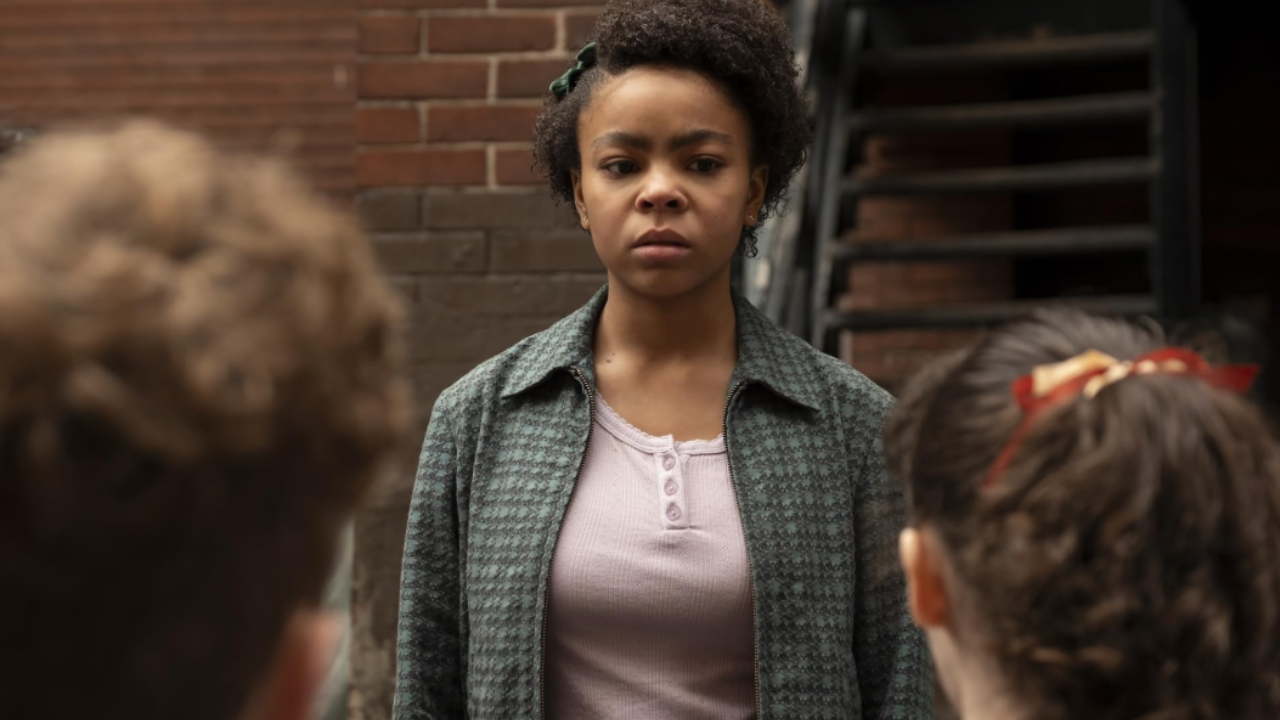
I loved It (2017) and politely refuse to talk about It Chapter Two. So, I have been impatiently waiting for It: Welcome to Derry to drop. I leaned in as soon as it was announced that Andy Muschietti, Barbara Muschietti, and Jason Fuchs were developing the prequel series for HBO Max. So, while I was denied screeners at the eleventh hour, I still tuned in Sunday night to see if it would live up to the hype. I found myself overall pleasantly surprised, despite having a couple of questions, comments, and concerns.
What’s Going On In Derry?
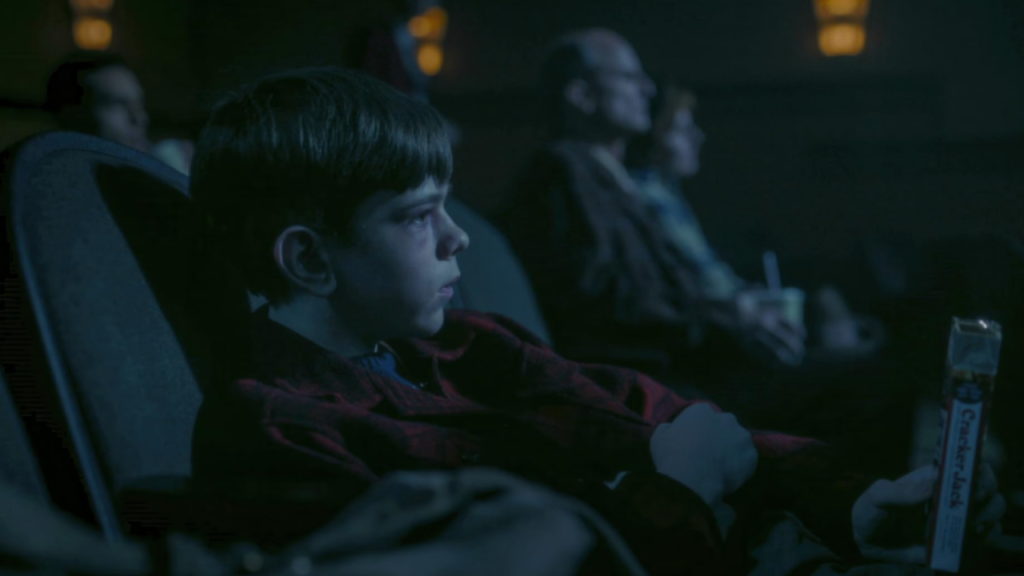
‘The Pilot’ takes place in 1962. We meet Matt Clements (Miles Ekhardt), a kid with a pacifier habit who loves to sneak into movies. He is caught in a showing of The Music Man and has to leave the venue. He makes the mistake of hitchhiking with a family that turns out to be the last time he is seen. The demonic car ride sets us up to know that kids are in danger in this series, and Matty is clearly not our lead.
Matty’s friends Teddy Uris (Mikkal Karim-Fidler) and Phil Malkin (Jack Molloy Legault) are still reeling from his disappearance. Teddy seems to be taking it the worst as everyone in town refuses to talk to him about it. Another kid taking this disappearance hard is Lilly Bainbridge (Clara Stack), who was on the brink of a possible friendship with Matt. She also has her own baggage, so when Matt’s voice and fingers make their way into her drain, she connects with his friends.
This leads them to form a kid gang to investigate, which includes Susie (Hunter Storm Baker) and Ronnie Grogan (Amanda Christie). As an audience, you assume this will be our core group. However, you know what they say about assuming and It: Welcome to Derry makes a bloody ass out of you and me. The ending is shocking, and the reason I will be tuning into the second episode.
Who’s Who?
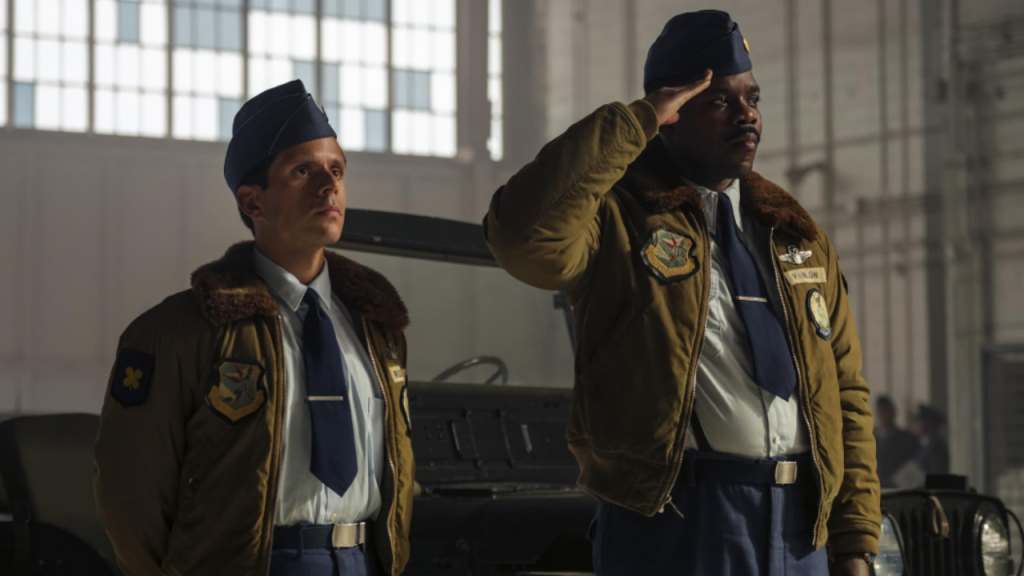
While we know Bill Skarsgård will be reprising the role of Pennywise, we do not see him in the first episode. Which is smart because you have to leave the audience wanting more. However, we do meet Leroy Hanlon (Jovan Adepo), who is the grandfather of Mike Hanlon. So, that’s a huge connection to The Loser’s Club we all know from the book and films. He’s experiencing racism at a military base and is ambushed by a weird group that he and his friend fend off. His story was sort of sidelined, so I’m waiting to see how it fully intertwines with what the kids got into. It’s still early yet, and whatever we think we know might not be the gospel. However, his wife Charlotte Hanlon (Taylour Paige) will also be getting screen time. I’m happy to see this because most King adaptations become overwhelmingly white cast affairs.
Speaking of Black characters from the Stephen King Universe getting more to do, young Dick Hallorann (Chris Chalk) will be involved in the story in some way. Constant Readers will remember Dick from The Shining. He was the Black character who also had “the shine’ and saved Danny and Wendy from the Overlook Hotel. In my least favorite adaptation, he is played by the late and great Scatman Crothers. Stanley Kubrick decided to axe the Black psychic character and perpetuate a trope with his version of King’s tale. A choice I still side-eye, and why I love to see this character in other iterations of the tale. So, I am very excited to see how he will fit into It: Welcome to Derry.
Am I Feeling It: Welcome to Derry?
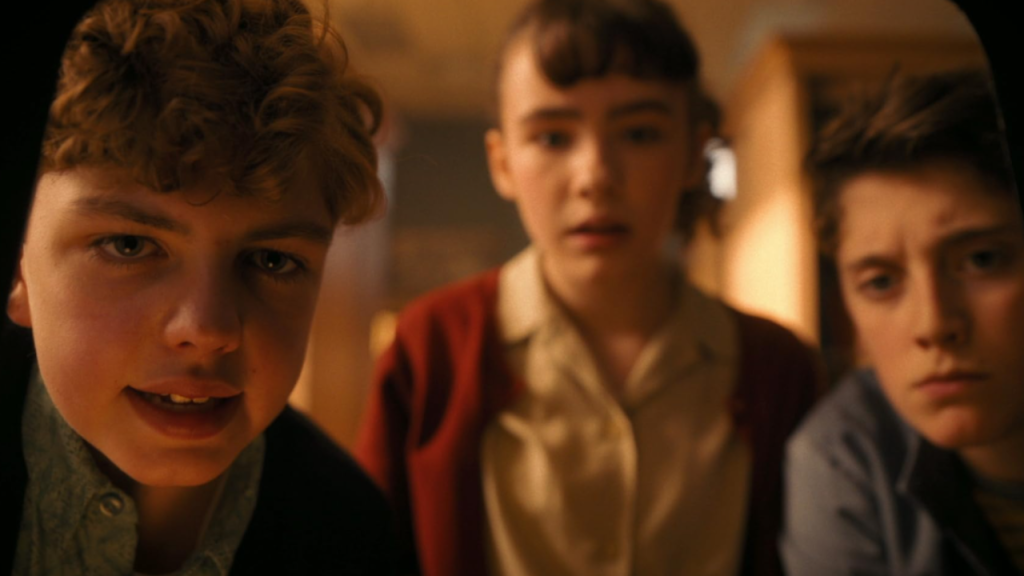
As a former Constant Reader and a lover of horror television, I’m an easy target for this show. While I think the pilot had a couple of things that don’t quite make sense (yet), I’m still leaning in. I am here for the vicious way children are dispatched, the surprising deaths, and for the expansion of one Stephen King’s most iconic baddies. So, I have a date with It: Welcome to Derry this weekend. I want to see where it goes now that most of the cast we were introduced to is dead. I also want to see Pennywise on the small screen to see if Skarsgård can creep us out again. More importantly, it is a fun and intriguing story, and that goes a long way with me.
It’s too soon to say if It: Welcome to Derry will be one of the best shows of the year. However, I have hope that it’s ramping up to be a good time. If it avoids falling into fan service territory and tightens up some of the story, this could be a damn good time. There is so much potential in this pilot. I cannot help rooting for it to find its footing and surprise us all. Sadly, hope is a dangerous thing, so I am so nervous it could be another fumble down the line. All I know is I plan to show up for the next two episodes and see where this all goes.
Watch the ‘It: Welcome to Derry’ Trailer


“Where are all the Black witches?!” We scream into the media void. It seems that no matter how many Black witches in movies and TV may exist, their stories exist for someone else’s benefit. Despite them being the most powerful in the room, they are often reduced to secondary and tertiary characters. If they aren’t depicted with a cauldron and gothic attire, they aren’t considered a witch at all. Historical references can tell us why the term “witch” has been whitewashed in such a manner, just as history tells us how it became a tool for misogyny.
While we’re still owed Black witch representation, the characters mapped out here test the boundaries of this archetype on-screen. They don’t all fall under the term “witch,” nor do they ride a broom at midnight. Our pop culture references are Eurocentric, after all. Those of African descent don’t always subscribe to the pagan practices of the stereotypical witch. Popular media has led us to conflate the fantastical depictions of on-screen witchcraft with elemental healing and divination practices. And so, it’s important to make the distinction between Black characters practicing their respective magick.
Voodooists, Hoodooists, Healers, & Diviners
The term “witch” can mean a lot of things, and they usually have a negative connotation. It’s a taboo that our society is still working through. But beneath the heresy of Black magic is a network of people (not just women) using natural elements, divine entities, and their own power to take control of their lives and for the betterment of their community. Vodou and Hoodoo aren’t much different. While Vodou operates as an organized religion like Brujeria, Hoodoo is folk magic most similar to the popular idea of witchcraft. Somewhere in there are root healers who can identify with either system and deliver the same (if not better) results as green witches. Though the earlier depictions were usually racist and demonizing, we reclaim these characters the way we reclaim the term “witch”.

Mambo Michele Marie LeFleur (The Chilling Adventures of Sabrina 2018-2022)
Mambo Marie, played by Skye Marshall, appears as a Vodou priestess before it’s revealed that Marie LeFleur is just a mask for her true identity: Baron Samedi, the Haitian spirit of the dead.

Mama Maitress (Sugar Hill 1974)
Mama Maitress is a former Vodou queen enlisted for revenge and she’s portrayed by Zara Culley.

Annie (Sinners 2025)
Annie, played by Wunmi Mosaku, appears as a Hoodoo practitioner by way of her grandmother and her knowledge of herbs and holistic medicine helped to protect and heal those around her. Read our review of Sinners here.

Klili Gordon (The Love Wanga 1936)
Portrayed by Fredi Washington, Klili is a Vodou-practicing, Black plantation owner using her craft for revenge on a white man.

Dr. Beehibe (The Exorcist: Believer 2023)
Played by Okwui Okpokwasili, Dr. Beehibe is a Haitian roothealer who used her spirituality in tandem with plants and herbs to aid in the exorcism of two young girls.

Marie Laveau (American Horror Story: Coven/13)
Based on the real Vodou Queen of New Orleans, Angela Bassett plays Maria Laveau whose powers, enhanced by Vodou, equate to that of the Supreme.
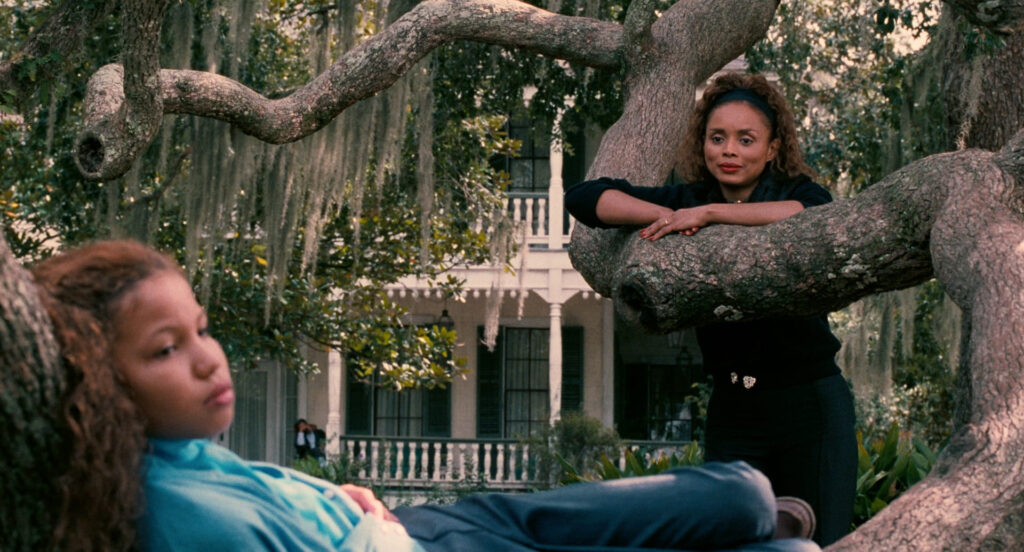
Eve and Mozelle Batiste (Eve’s Bayou 1997)
Eve (played by Jurnee Smollett) and Mozelle (played by Debbie Morgan) have the gift of second sight, otherwise known as Seers, which provide divine premonitions and communication with the spiritual plane.

Elzora (Eve’s Bayou 1997)
Elzora, played by Diahann Carroll, is a Vodou practitioner who is deemed as a “crazy witch” until her prophecies start to ring true for the Baptiste family.

Ms. Eloise (Spell 2020)
Loretta Devine plays a hoodoo practitioner who traps a man, Misery-style, with the use of a figure she made with his skin and blood.
Witches
Considering that most of our favorite Black witches are written from a white perspective, there is a great disservice in simply squeezing these characters into the Western idea of a “witch”. A lingering ghost of culture and identity haunts these shows and films like an elephant in the room. These are the secondary and tertiary characters written for fodder. When they’re not, they are characters that we simply didn’t get enough of. We’re left wanting more.

Kyra, The Seer (Charmed 1998-2006)
Also played by Debbi Morgan, The Seer was canonically a demon with the power to see the future but her powers were all the same as an archetypal witch who casts spells and brews potions.

Rochelle Zimmerman (The Craft 1996)
Rochelle Zimmerman is a latent witch whose abilities are interlinked with her coven’s, channeled through their Creator of the Universe Manon, and she’s portrayed by Rachel True.

Fig (Forbidden Fruits 2026)
Fig, played by Alexandra Shipp, practices the kind of witchcraft that was persecuted in Salem: mundane and fueled by feminism and sisterhood.

Prudence Blackwood (The Chilling Adventures of Sabrina 2018-2022)
Prudence, played by Tati Gabrielle, has the archetypal powers of a witch and ages at a slower rate compared to mortals.

Ambrose Spellman (The Chilling Adventures of Sabrina 2018-2022)
Technically a warlock, Chance Perdomo plays a male witch who specializes in necromancy and ages at a slower rate like Prudence.

Behold Chablis (American Horror Story: Apocalypse 2018)
Behold Chablis (played by Billy Porter) is a Level 3 male witch also considered to be a warlock.

Melissa Cavender (The Midnight Hour 1985)
A latent witch, played by Shari Lynn Belafonte, who invokes the spirit of her great-great-great-great-grandmother, and the undead, by reciting a curse on Halloween Night.

Jennifer Kale (Agatha All Along 2024)
Played by Sasheer Zamata, Jennifer identifies as both a root worker and a witch whose powers include spellcasting and potion-making.

Queenie (American Horror Story: Coven/13)
Played by Gabourey Sidibe, Queenie is the self-proclaimed “human vodou doll” who practices vodou simultaneously with her natural gift of witchcraft.

Vincent Griffith (The Originals 2013-2018)
Vincent is the former Regent of the Nine Covens who is powerful enough to subdue Original vampires and he’s portrayed by Yusuf Gatewood.

Lafayette Reynolds (True Blood 2008-2014)
Lafayette Reynolds, portrayed by Nelsan Ellis, is a medium whose power can be traced back to his great-great-grandmother who practiced magic.

Bonnie Bennett (The Vampire Diaries 2009-2017)
Played by Kat Graham, Bonnie Bennett comes from a long line of powerful witches and operates as both an Anchor and a Huntress.

Charm City Coven (Wicked City 2022-Present)
The Charm City Coven is made up of five witches (played by Taylor Polidore, Shaquita Smith, Mercedez McDowell, Chantal Maurice, and Chanel Mack) in Atlanta who bring their individual, unique powers together to navigate supernatural forces and personal life terrors.

Domino Day (Domino Day: Lone Witch 2024)
Domino Day is a powerful lone witch, portrayed by Siena Kelly, who feeds off of the of energy men.


The works of Stephen King are back in the spotlight once again, if they ever really left. Mike Flanagan’s Carrie series is set to release on Amazon Prime this October 7th, and the heat is on. This would be the fourth run at the tale of a tortured psychic girl suffering through serious religious trauma and bullying; it’s also the first successful television series adaptation. Famously, the 2002 TV film was supposed to serve as the pilot for an extended Carrie series, but that never got off the ground.
There’s a variety of reactions to the show already; from complaints about getting another Carrie White that doesn’t look like Carrie White, to thoughts about introducing other psychic students into the story. It’s fair to say there’s, at the very least, renewed interest in re-evaluating the many adaptations of Stephen King’s works. Old habits die hard.
There’s a ridiculously large swath to choose from, ranging from the obvious classics like The Shining and Pet Sematary, to irregulars like The Langoliers and The Night Flyer. If you’re feeling especially bold, you might try a King original like Storm of the Century or Rose Red (I’m overdue for a watch of Storm anyways). But among all these lies one of the strangest and most forgotten King adaptations. One that was sold as an adaptation of a single novel, but is really a spiritual sibling to the entirety of Stephen King’s canon. That adaptation is the SyFy original series, Haven.
The Silver Age of Supernatural Television Drama
The development of Haven sits smack dab in the middle of what I would call the Silver Age of Supernatural Television Drama. The hypothetical Golden Age that precedes it isn’t pinned to exact years but rather defined by a few masterpieces of evergreen television. These are the shows throughout the ‘90s that really impacted cable TV at large. The obvious cultural touchstones of the genre: The X-Files, Twin Peaks, and most importantly Buffy the Vampire Slayer and Angel, which would see monumental success. They were rapidly followed by the likes of shows like American Gothic and Roswell. I would count Smallville too, but again, blurry edges.
The Silver Age then is marked by an explosion of shows, not necessarily being created as knee jerk reactions to that success, but certainly heavily inspired by these network defining hits. Shows that enjoyed the episodic “monster of the week” format while retaining a focus on the interpersonal drama between its characters. They debuted as their progenitors ended or went late in their run, effectively meant to “replace” them.
This time saw the rise of J.J. Abrams renown with the shows Alias, Fringe, and most importantly, the mega-hit Lost. The most successful of all of them, Eric Kripke’s Supernatural, is still reverberating through pop culture today after its 15 year long run. And for my fellow Warehouse 13 enthusiasts, you know that this is the era that the highly underrated show thrived in.
Also, MTV’s Teen Wolf was there too, I guess.
From The Dead Zone to Haven Island
Among these much more successful shows was an odd little Stephen King adaptation: USA Network’s The Dead Zone. It was a very fast and loose interpretation of King’s novel of the same name. You know the one: go into a six-year coma, come back with psychic powers, meet an evil politician, race to stop him from causing the end of the world. Also, Anthony Michael Hall is here too, I guess.
As one might expect, the premise was rife with procedural potential. Despite a solid initial viewer base, The Dead Zone ran for 6 seasons before being cancelled due to waning ratings. But two of its writers, Sam Ernst and Jim Dunn, ended up as showrunners for a similar but even stranger translation of King’s work: a television adaptation of the book The Colorado Kid called Haven.
When The Adaptation Is Unrecognizable
Haven premiered in July of 2010 on SyFy, joining during a great (if not the best) era for the network. There were phenomenal runs going on with Merlin, Warehouse 13, and later the American remake of Being Human. And, unsurprising to anyone who got 20 minutes into the show’s first episode, “Welcome to Haven”, it fit in much more with those shows than it did with its source material. In fact, the premise betrayed all expectations for fans of the novel.
What The Colorado Kid Is About…
For context: the book is about an intern at a newspaper, Stephanie, trying to solve the bizarre death of a nameless drifter with her new bosses, Dave Bowie and Vince Teague. Details are sparse, and what few the trio have just don’t line up. What results is a hard-fought battle to finally crack the case of who, or what, killed the Colorado Kid. More importantly, The Colorado Kid is pretty explicitly a mystery novel about mystery novels; it has a victim, but there’s little information about the killer, and that’s intentional.
The blank space in this case is the focus. King is really more interested in observing how an audience interfaces with a mystery and what makes them so compelling. He spells all this out as much in an afterword, down to explaining why he wanted to write the story and his perspective on “wanting” an answer being better than “knowing” the answer.
…Is Far and Away from Haven’s Premise
The TV show Haven, however, is very, very different. The show follows FBI agent Audrey Parker (Emily Rose), who is drawn to the town to investigate the inexplicable murder of a criminal who escaped federal prison. When it’s revealed he was killed by impossible means, she soon discovers a phenomenon known as “The Troubles”: the sudden and often subconscious manifestation of dangerous supernatural abilities in the townspeople of Haven. As Audrey realizes her past is intertwined with The Troubles, she attempts to solve the mystery of what’s causing them and who she really is as she becomes entrenched in the lives of Haven’s locals.
Different versions of newspaper owners Dave and Vince, as well as The Colorado Kid himself in season 2, do show up in Haven. But fundamentally, the show is an entirely different beast tonally. It is far and away from the novel, and strangely enough, that was at Stephen King’s request. He initially told Ernst and Dunn when the show was being pitched to ABC to spice it up with more supernatural elements.
Hence, how it ended up as a monster of the week show on Syfy. Double hence, how it became an unrecognizable adaptation of a hardly supernatural book. If I had to compare it to any of the Golden Age shows, it’s most obviously inspired by The X-Files. That being said, it’s hard not to draw comparisons to Fringe. Especially given how, like Fringe, Haven becomes really, really serialized rather than episodic.
A Flat, Kind of Cheesy First Season That Grows on You
The initial monster of the week format set up in Season 1 does carry into the following four seasons, but it becomes very clear that there is a main mythology that will take precedence by early Season 2. While the supernatural mysteries that make up the bulk of the episodes are solid (see episodes 1, 4, 6, 8, and 10 through 13 for the best of the first season), they’re mostly establishing the groundwork for Audrey’s personal narrative arc.
The mysteries are also the backdrop for Audrey’s budding love triangle with local handsome cop Nathan Wournos (Lucas Bryant) and local handsome rogue Duke Crocker (Eric Balfour). The romance is kind of terrible, and unfortunately very frequent since they’re often cooperating to solve the mysteries together.
So, that’s all I’m going to say about it in an effort to be kind.
Haven Season 2 Deepens Audrey Parker’s Mystery
Haven’s first season is mostly tame, erring on slightly underwhelming, with some very cheesy dialogue and drama. The characters aren’t nailed down as anything but loose pastiches until the last several episodes. By then, they’ve built some weight and dimension to them. Where Season 1 leaves off is a pretty solid cliffhanger that will have you at least curious enough to venture into Season 2 if you’ve watched this far. It serves as the first big bite into the intrigue of the question “Who Is Audrey Parker?”, which is the central pillar of the show.
Season 2 is much more engaging, and the episodic mysteries feel much more significant and dangerous. Eventually, the mythology around Audrey and the Troubles sprawls out into a maze of even more questions involving secret societies, split personalities, time travel, and tears in the fabric of reality. That last bit might stand out to fans of The Dark Tower series, and that’s because I’m talking about exactly what you think I’m talking about (no spoilers!).
A Stephen King Adaptation About Stephen King Stories
The show is only somewhat effective at establishing its mythos around Audrey and The Troubles. But I have to appreciate it for what it manages to do in the process, especially throughout the second season as it gives us one good solid villain to follow in the malicious Reverend Driscoll. He is a classic King-style villain, and an embodiment of what Haven really excels at. The same way that The Colorado Kid is a mystery novel about mystery novels, Haven is a Stephen King adaptation about Stephen King Stories.
This goes beyond the fact that they’re effectively trying to find a new person with the shine every week and stopping them before they have their own personal “Black Prom” level meltdown. The show is chockful of references, small and large (the vast majority are sight gags referring directly to Stephen King stories) to his writing. There’s an abundance of episodes whose plots are overtly reinterpretations of King’s works, especially in season two with various homages to It, Maximum Overdrive, and The Dark Half.
And even when the show doesn’t have a one-to-one analog with a King story, it excels at stocking Haven Island with a variety of secondary characters that genuinely feel like the cast of a Stephen King book. The dialog might be corny and the residents strange, but it does feel like a lived in setting, a hallmark of the author’s many fictional small towns in Maine (which get namedropped a decent amount in the show, obviously, they’re all neighbors). Also, when we get the answer of who exactly Audrey is, it actually does end up connecting to the greater Stephen King mythos in a way that is surprising and kind of fun, even if the ending is a little underwhelming and gives Buffy finale flashbacks.
Haven Isn’t Half Bad
At the end of the day, I can’t confidently say Haven is a great show. Especially with how it drags in a lot of places (that double-wide trailer of a fifth season is particularly egregious). It can be exceptionally hit or miss. But it’s so uniquely dedicated to recapturing the vibes of a Stephen King story, that I have to admire it when it does succeed, when some might find that a futile task. Paradoxically, the further it gets away from the source material it was barely riffing off of, the more King it feels.
It is at the very least an incredibly unique show in the Silver Age of Supernatural TV, and if you can tolerate the melodrama of your Supernatural’s and Warehouse 13’s, you’re likely to find some amusement in it even if you’re tuning in and out while watching it. More than ten years out now from Haven’s 2015 finale, it’s safe to say the series won’t click with everybody, but for fans that enjoy homages to the prolific horror author’s extensive repertoire, you’ll be hard pressed to find a show that shows more love to King than this.
