

Editorials
Gatekeeping in Gateway Horror: Why We Need to Reevaluate What the Subgenre Means
Gateway horror holds a nostalgic space in the horror enthusiast’s heart. Many of us fixated on the genre as children, irrespective of whether the films we viewed scarred us for life. The subgenre of gateway horror (or children’s horror) is recognized as films targeted at younger audiences with frightening elements that do not cross the boundaries of suitability. Films that usually represent this subgenre include Hocus Pocus (1993), Gremlins (1984), Frankenweenie (2012), and others.
Unfortunately, most of these narratives focus primarily on white male children from middle-class neighborhoods (Lester, 2022). In ReFocus: The Films of Wes Craven, children’s horror scholar Catherine Lester highlights how children of different ethnic backgrounds are often featured as secondary characters and suggests adult-rated horror films such as The People Under the Stairs (1991) or Eve’s Bayou (1997) are more inclusive for Black children who love horror, through being represented on-screen.
I will further expand on this concept, i.e., gateway horror should not be defined by age ratings. We should look at the type of horror children create; what films resonate within their circles and listen to their opinions on what kinds of creepy stories they crave.


Gateway horror holds a nostalgic space in the horror enthusiast’s heart. Many of us fixated on the genre as children, irrespective of whether the films we viewed scarred us for life. The subgenre of gateway horror (or children’s horror) is recognized as films targeted at younger audiences with frightening elements that do not cross the boundaries of suitability. Films that usually represent this subgenre include Hocus Pocus (1993), Gremlins (1984), Frankenweenie (2012), and others.
Unfortunately, most of these narratives focus primarily on white male children from middle-class neighborhoods (Lester, 2022). In ReFocus: The Films of Wes Craven, children’s horror scholar Catherine Lester highlights how children of different ethnic backgrounds are often featured as secondary characters and suggests adult-rated horror films such as The People Under the Stairs (1991) or Eve’s Bayou (1997) are more inclusive for Black children who love horror, through being represented on-screen.
I will further expand on this concept, i.e., gateway horror should not be defined by age ratings. We should look at the type of horror children create; what films resonate within their circles and listen to their opinions on what kinds of creepy stories they crave.

Horror by Children, For Children
Thanks to TikTok and YouTube, the visibility of child filmmakers creating their own horror shorts has grown. Some even pursue it professionally, beyond the confines of their homes.
A young director making waves in the industry is transgender filmmaker Alice Maio Mackay, who has been called “The self-aware Gen Z Ed Wood we deserve” by critic Juan Barquin. She conceived her first feature, So Vam (2021), at age 15 but already cut her teeth directing shorts since age 11. While Mackay does not position herself as a “horror filmmaker for children”, her work in directing as a child makes her work a groundbreaking contribution to gateway horror. Queerness in the subgenre is scarce, though ParaNorman (2012) has been praised for featuring Mitch as the first openly gay character in an animated film.
Another filmmaker is Emily Hagins, who directed the zombie film Pathogen (2006) at 12 years old, going on to receive a Vinegar Syndrome release in 2022. In Zombie Girl: The Movie (2009), the behind-the-scenes process of Pathogen is captured as we see how she led a team of adults and children to bring her first feature to life. The documentary shows how self-aware she is as a filmmaker, noting she chose the zombie genre due to the conventions it must follow.
There are other child horror filmmakers whose films can be seen in festivals or competitions, creating opportunities for young people to express themselves. Renegade Film Festival has a “Best Gen Z Film” category, and Killer Shorts has opened submissions for horror writers under 18. We can look to the horror child creator as a guide, as well as seek out their opinions on horror as audience members.

Gateway Horror: Beyond the PG-13 Rating
When my niece was 12 years old, we recorded an episode of the Kindergeist Podcast, which discussed whether horror was appropriate for children. She expressed that Bird Box (2018) should be PG-13. When I mentioned death by suicide may be too intense for young viewers, she added:
“My generation, which is Gen Z obviously, we get introduced to social media and things at a very young age. So I learned about suicide when I was in fourth grade, okay? Which is a very young age to process. So that’s why I feel like it shouldn’t be rated-R probably, because I’m so used to seeing suicide everywhere.”
Salem Horror Fest founder Kay Lynch’s list of “queer friendly horror for children” on Letterboxd reveals how she sees the value in including R-rated films, because most embraced gateway horror films can be restrictive to the diversity of childhood experiences. Similarly, 14 year old CommonSense reviewer named GlytchedWatchesMovies wrote that I Saw The TV Glow (2024) should be accessible to 11 year olds and above, but the film has been rated 15 in the UK and PG-13 in the US.
The contrast between children’s and adults’ opinions surrounding film ratings is fascinating. In the US, the Classification and Ratings Administration (CARA) board is made up of a group of parents (with children aged 5-17) who help families decide what they can view together. However, at times it may feel adults claim that their restrictions “keep the children in mind” when in many cases, there is a desire to “control what the children have in mind.”

Children, Speak Now
Osgood Perkins is a director who is challenging the standard of gateway horror. In his retelling of the Grimm fairy tale Gretel & Hansel (2020), he approached the film’s intensity with the understanding that gateway horror tends to undermine the intelligence of young people. In an interview with Bloody Disgusting, he unpacks pushing against the norm:
“Where’s Gremlins today? Where’s the thing for kids that’s just slightly too freaky that just sort of trusts kids to be able to take care of themselves and to be able to emerge out from the other side and there’s just not a lot of those. So yes, the idea was always to honor the younger audience.”
Rated PG-13, Gretel & Hansel is an excellent example of a gateway horror film that does not shy away from crafting a dark and sophisticated storyline. Others include Jordan Peele’s Monkeypaw Productions, with their release of Henry Selick’s stop-motion Wendell & Wild (2022), which centers around a Black girl grieving the loss of her parents, and features a cast of Asian, Brown and transgender characters. In portrayals of neurodivergence, Come Play (2020) has been praised as a “horror movie that gets autism right”, showing a nonverbal 8-year-old on the autism spectrum.
While gateway horror is cherished, it is still an underserviced niche that is very cisgender, white, and heavily influenced by the perspectives of adults. There is still a lot of work to be done in creating a more inclusive and realistically diverse portrayal of childhood in gateway horror, but one thing is for sure – without the children’s involvement, we will not be getting anywhere.
References
Ponce, Z. and Pajarillo, X. (2021) 1: Is Horror Appropriate for Kids? Kindergeist [Podcast]. 24 September. Available at: https://podcasters.spotify.com/pod/show/kindergeist-podcast/episodes/1-Is-Horror-Appropriate-for-Kids-e17rmst
Thurman, T. ” Osgood Perkins on Making ‘Gretel & Hansel’ a Horror Movie for a Younger Audience.” Bloody Disgusting, 31 Jan. 2020, https://bloody-disgusting.com/interviews/3602756/interview-oz-perkins-gretel-hansel/
Waddell, Calum. ReFocus: The Films of Wes Craven, Edinburgh: Edinburgh University Press, 2023. https://doi.org/10.1515/9781399507028


Horror Press’ exploration of catharsis this month lends itself naturally to the topic of satisfying horror movie deaths. While murdering people who vex you in real life is rightly frowned upon, horror allows us to explore our darker sides. Fiction gives us the catharsis and relief to allow us to survive that ineradicable pox that is other people. To that end, here are the 10 most satisfying deaths in horror movies.
PS: It goes without saying that this article contains a few SPOILERS.
The 10 Most Satisfying Deaths in Horror Movies
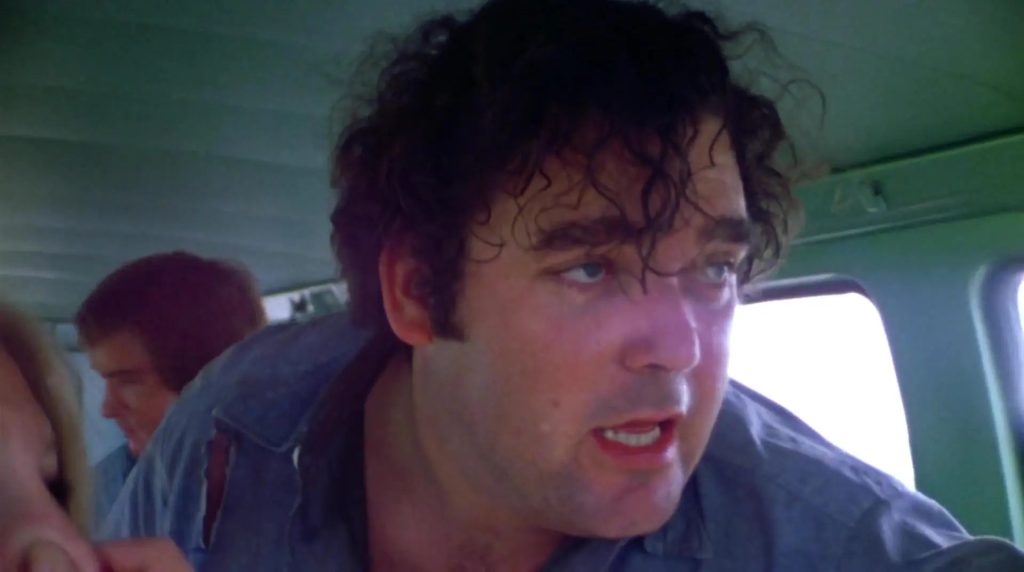
#10 Franklin, The Texas Chain Saw Massacre
I ranked this death from the original Texas Chain Saw Massacre lowest for two reasons. First, I think Franklin’s whole vibe is a perfect fit for the unnerving, overwhelming atmosphere of Tobe Hooper’s masterpiece. Second, I think it’s important for representation that onscreen characters from marginalized groups be allowed to have flaws. That said, Franklin Hardesty is one of the most goddamn annoying characters in the history of cinema. Endless shrieking and raspberry-blowing will do that for ya. His death via chainsaw comes as a profound relief. His sister Sally spends the next 40 minutes or so screaming nonstop, and that’s considerably more peaceful.

#9 Lori, Happy Death Day
This is less about the character herself and more about Tree’s journey. After watching her time-loop for so long, being thwarted at every turn, Lori’s poison cupcake is a real gut-punch. Tree’s vengeance allows her to break out of the time loop once and for all (until the sequel). It also allows us to rejoice in the fact that her work to improve herself hasn’t been for naught.
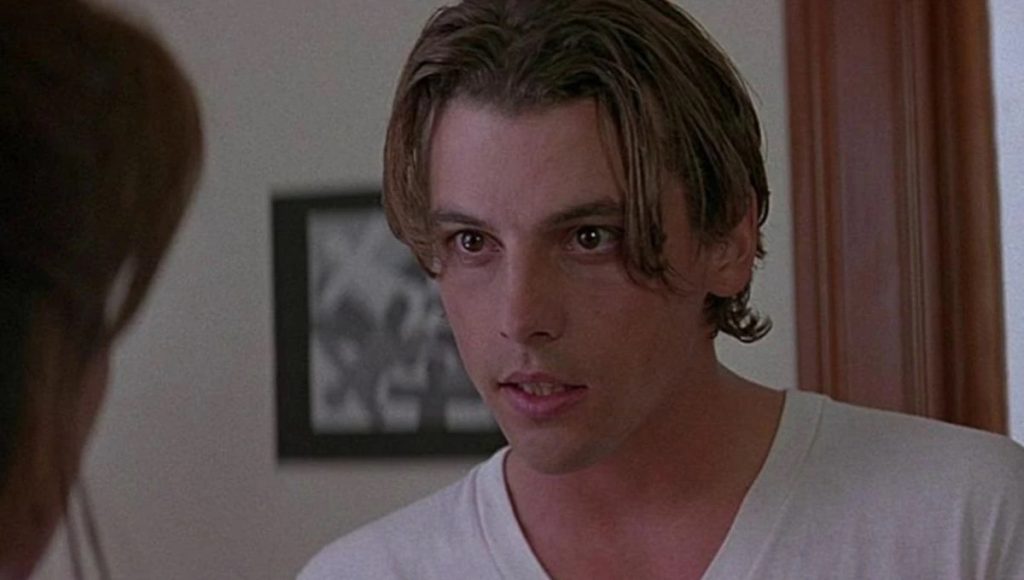
#8 Billy, Scream (1996)
There are a hell of a lot of satisfying kills perpetrated upon Ghostfaces in the Scream franchise. However, the original still takes the cake. Sidney Prescott curtly refuses to allow a killer to plug a sequel at the end of her survival story. Instead, she plugs him in the head, saying, “Not in my movie.” It’s not just a great ending to a horror movie. It’s a big middle finger to sleazy teenage boyfriends the world over.

#7 Crispian, You’re Next
Ooh, when Erin finds out that this rotten man has knowingly brought her along to a home invasion… His attempt to charm (and bribe) her might have won over a weaker person. But in addition to putting her in danger, he has willingly had his family slaughtered for money. Erin won’t stand for that, and her takedown of yet another Toxic Horror Boyfriend is cause for celebration.
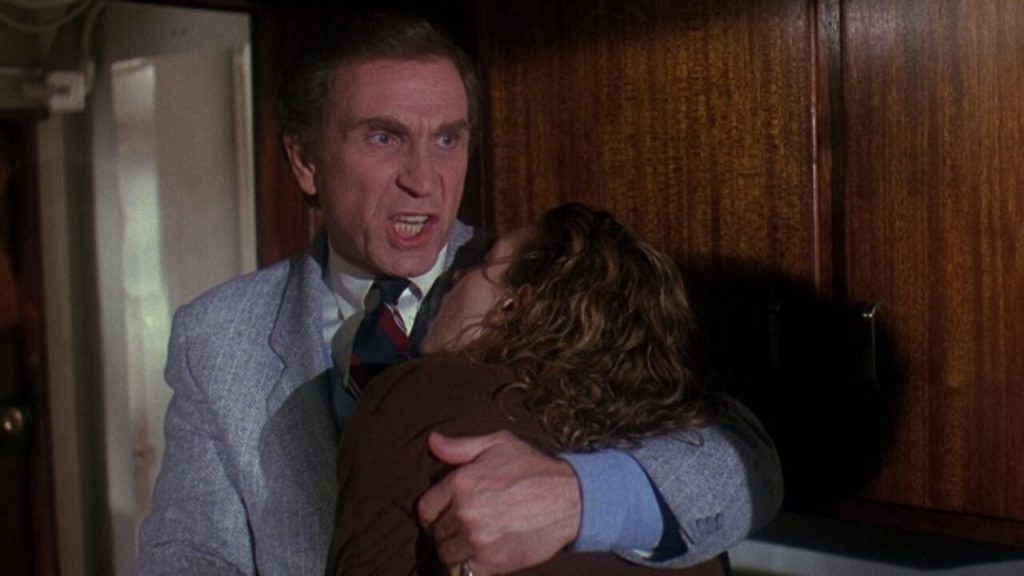
#6 Charles, Friday the 13th Part VIII: Jason Takes Manhattan
Charles McCulloch might be one of the nastiest characters in film history. While school administrators are hardly any student’s best friend, his cold cruelty is downright abnormal. How he manages to be simultaneously overbearing and wicked to his niece, Rennie, I’ll never know. But thankfully, Jason Voorhees drowns him in a vat of toxic waste, removing the need to solve that mystery. Not all heroes wear capes. Sometimes they wear hockey masks.
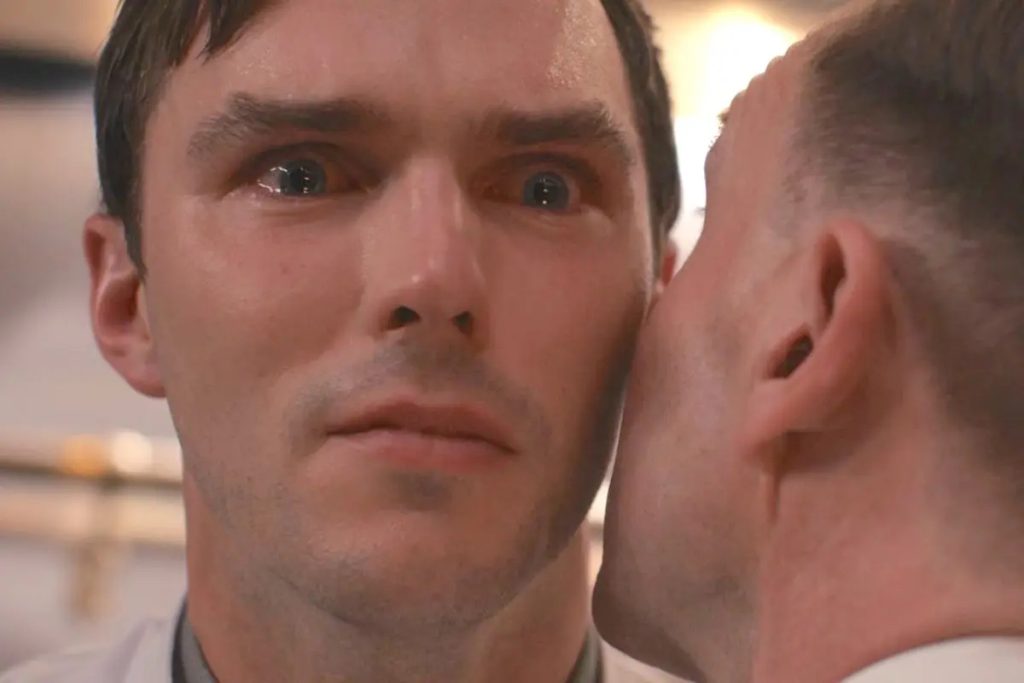
#5 Tyler, The Menu
Up next on the tasting tray of cinema’s worst boyfriends, we have Tyler. He’s not technically Margot’s boyfriend, because she’s an escort he invited to a fancy dinner. But he should still land in the hall of fame. That’s because he brought her despite knowing ahead of time that nobody was meant to leave the restaurant alive. Thankfully, he gets one of the best Bad Boyfriend deaths of them all. He dies at his own hands. By hanging. After being thoroughly humiliated with proof that all the mansplaining in the world can’t make someone a good chef. Delectable.
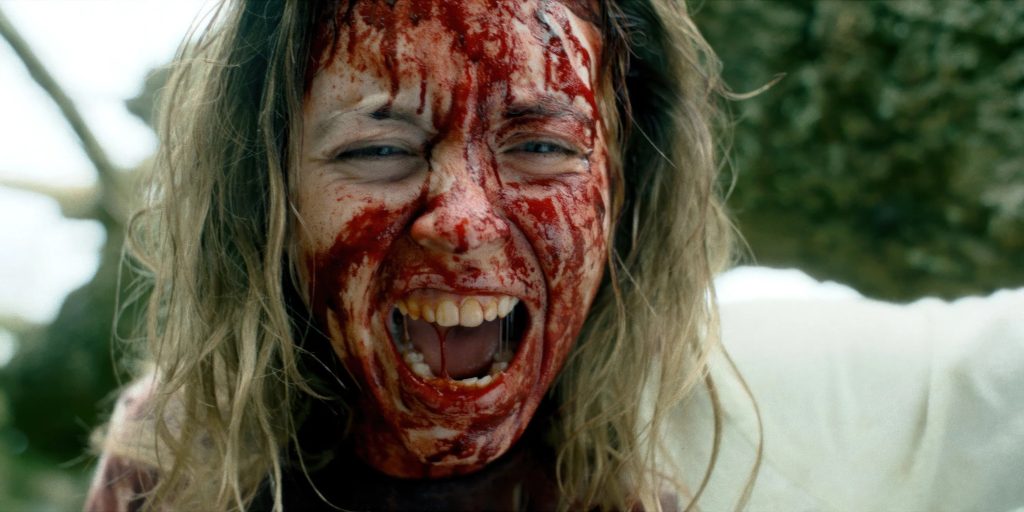
#4 The Baby, Immaculate
You may remember this kill from my Top 10 Child Deaths article. The ending of Immaculate is (there’s no other word for it) immaculate. Shortly after Sister Cecilia learns that she has been unwillingly impregnated with the son of Christ, she gives birth. Instead of letting the church manipulate her further after violating her body, she smashes that godforsaken thing with a rock. In the process, she sheds years of ingrained doctrine and sets herself free once and for all. This is the ending that Antichrist movies have historically been too cowardly to give us. The fact that this character is a potential messiah makes it that much more cathartic.
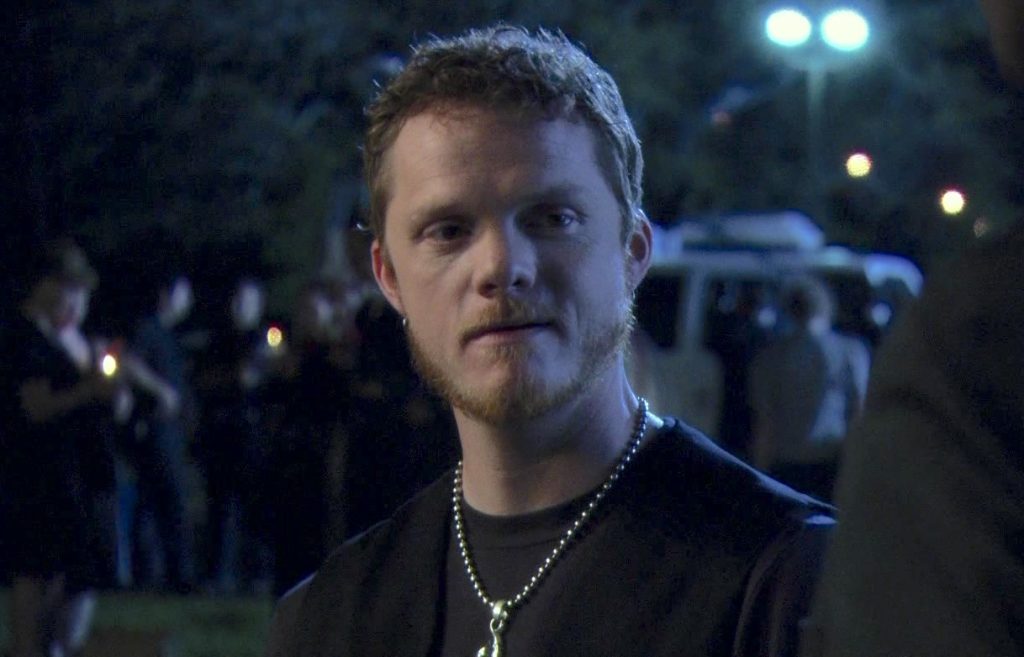
#3 Carter, The Final Destination
I mean, come on. This guy is literally credited as “Racist” at the end of the movie. Pretty much every Final Destination movie has an asshole character who you crave to see die. But this epithet-spewing, cross-burning bigot is by far the worst of the bunch.
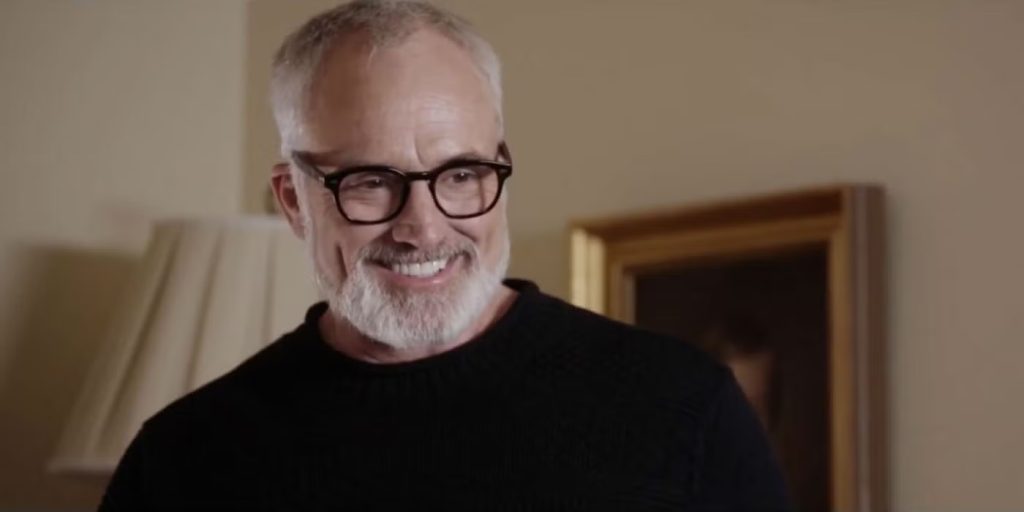
#2 Dean, Get Out
Racism comes in many forms, as Jordan Peele’s Get Out highlights. The Armitage family’s microaggressions quickly become macroaggressions, more than justifying Chris’ revenge slayings. While this whole portion of the movie is immensely satisfying, Dean’s death might just be the most cathartic. This is because he is killed via the antlers of a stuffed deer head. Chris uses the family’s penchant for laying claim to their prey’s bodies against them with this perfectly violent metaphor.

#1 Adrian, The Invisible Man (2020)
Here we have the final boss of Toxic Horror Boyfriends. This man is so heinously abusive that he fakes his own death in order to torment his ex even more. Cee using his own invisibility suit against him to stage his death by suicide is perfectly fitting revenge.

I was late to the Radio Silence party. However, I do not let that stop me from being one of the loudest people at the function now. I randomly decided to see Ready or Not in theaters one afternoon in 2019 and walked out a better person for it. The movie introduced me to the work of a team that would become some of my favorite current filmmakers. It also confirmed that getting married is the worst thing one can do. That felt very validating as someone who doesn’t buy into the needing to be married to be complete narrative.
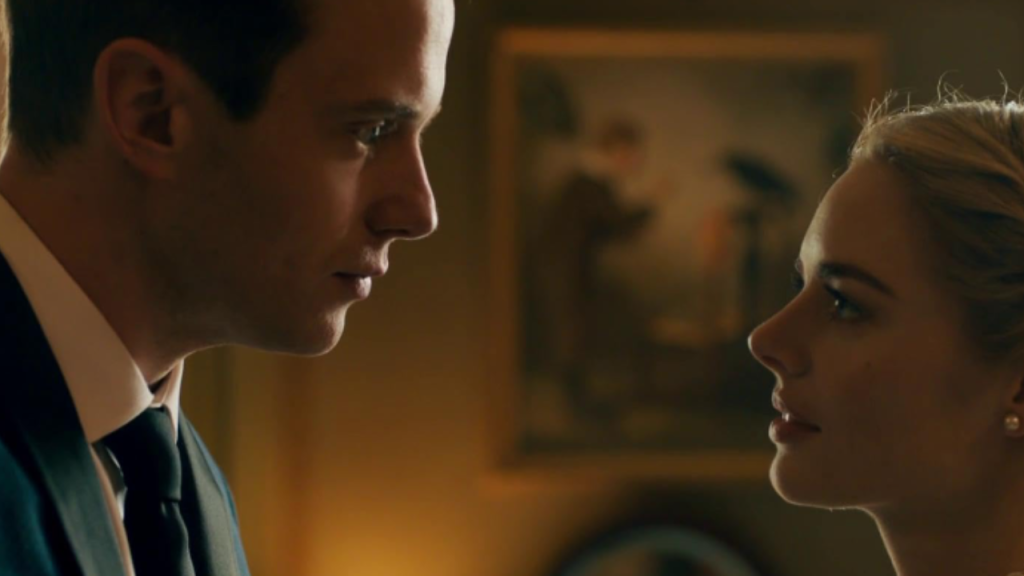
Ready or Not is about a fucked up family with a fucked up tradition. The unassuming Grace (Samara Weaving) thinks her new in-laws are a bit weird. However, she’s blinded by love on her wedding day. She would never suspect that her groom, Alex (Mark O’Brien), would lead her into a deadly wedding night. So, she heads downstairs to play a game with the family, not knowing that they will be hunting her this evening. This is one of the many ways I am different from Grace. I watch enough of the news to know the husband should be the prime suspect, and I have been around long enough to know men are the worst. I also have a commitment phobia, so the idea of walking down the aisle gives me anxiety.

Grace Under Fire
Ready or Not is a horror comedy set on a wealthy family’s estate that got overshadowed by Knives Out. I have gone on record multiple times saying it’s the better movie. Sadly, because it has fewer actors who are household names, people are not ready to have that conversation. However, I’m taking up space this month to talk about catharsis, so let me get back on track. One of the many ways this movie is better than the latter is because of that sweet catharsis awaiting us at the end.
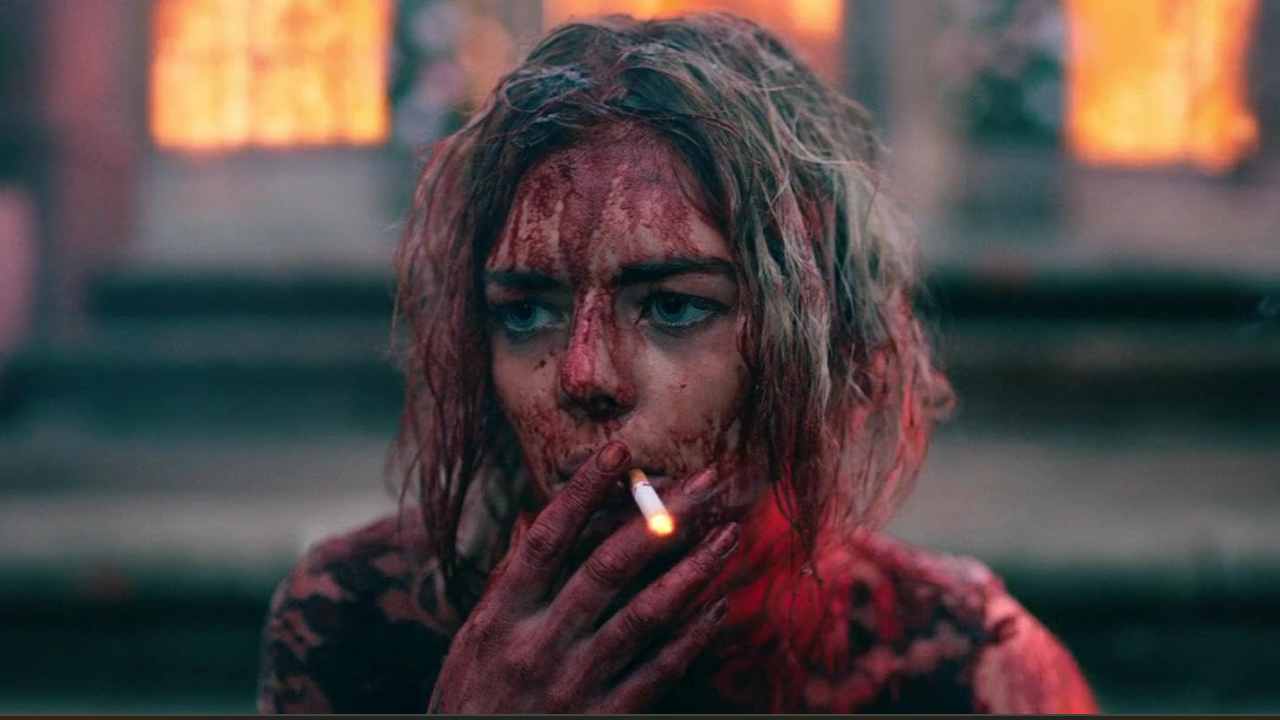
This movie puts Grace through it and then some. Weaving easily makes her one of the easiest final girls to root for over a decade too. From finding out the man she loves has betrayed her, to having to fight off the in-laws trying to kill her, as she is suddenly forced to fight to survive her wedding night. No one can say that Grace doesn’t earn that cigarette at the end of the film. As she sits on the stairs covered in the blood of what was supposed to be her new family, she is a relatable icon. As the unseen cop asks what happened to her, she simply says, “In-laws.” It’s a quick laugh before the credits roll, and “Love Me Tender” by Stereo Jane makes us dance and giggle in our seats.
Ready or Not Proves That Maybe She’s Better Off Alone
It is also a moment in which Grace is one of many women who survives marriage. She comes out of the other side beaten but not broken. Grace finally put herself, and her needs first, and can breathe again in a way she hasn’t since saying I do. She fought kids, her parents-in-law, and even her husband to escape with her life. She refused to be a victim, and with that cigarette, she is finally free and safe. Grace is back to being single, and that’s clearly for the best.
This Guy Busick and R. Christopher Murphy script is funny on the surface, even before you start digging into the subtext. The fact that Ready or Not is a movie where the happy ending is a woman being left alone is not wasted on me, though. While Grace thought being married would make her happy, she now has physical and emotional wounds to remind her that it’s okay to be alone.
One of the things I love about this current era of Radio Silence films is that the women in these projects are not the perfect victims. Whether it’s Ready or Not, Abigail, or Scream (2022), or Scream VI, the girls are fighting. They want to live, they are smart and resourceful, and they know that no one is coming to help them. That’s why I get excited whenever I see Matt Bettinelli-Olpin and Tyler Gillett’s names appear next to a Guy Busick co-written script. Those three have cracked the code to give us women protagonists that are badasses, and often more dangerous than their would-be killers when push comes to shove.

Ready or Not Proves That Commitment is Scarier Than Death
So, watching Grace run around this creepy family’s estate in her wedding dress is a vision. It’s also very much the opposite of what we expect when we see a bride. Wedding days are supposed to be champagne, friends, family, and trying to buy into the societal notion that being married is what we’re supposed to aspire to as AFABs. They start programming us pretty early that we have to learn to cook to feed future husbands and children.
The traditions of being given away by our fathers, and taking our husbands’ last name, are outdated patriarchal nonsense. Let’s not even get started on how some guys still ask for a woman’s father’s permission to propose. These practices tell us that we are not real people so much as pawns men pass off to each other. These are things that cause me to hyperventilate a little when people try to talk to me about settling down.
Marriage Ain’t For Everybody
I have a lot of beef with marriage propaganda. That’s why Ready or Not speaks to me on a bunch of levels that I find surprising and fresh. Most movies would have forced Grace and Alex to make up at the end to continue selling the idea that heterosexual romance is always the answer. Even in horror, the concept that “love will save the day” is shoved at us (glares at The Conjuring Universe). So, it’s cool to see a movie that understands women can be enough on their own. We don’t need a man to complete us, and most of the time, men do lead to more problems. While I am no longer a part-time smoker, I find myself inhaling and exhaling as Grace takes that puff at the end of the film. As a woman who loves being alone, it’s awesome to be seen this way.

The Cigarette of Singledom
We don’t need movies to validate our life choices. However, it’s nice to be acknowledged every so often. If for no other reason than to break up the routine. I’m so tired of seeing movies that feel like a guy and a girl making it work, no matter the odds, is admirable. Sometimes people are better when they separate, and sometimes divorce saves lives. So, I salute Grace and her cathartic cigarette at the end of her bloody ordeal.
I cannot wait to see what single shenanigans she gets into in Ready or Not 2: Here I Come. I personally hope she inherited that money from the dead in-laws who tried her. She deserves to live her best single girl life on a beach somewhere. Grace’s marriage was a short one, but she learned a lot. She survived it, came out the other side stronger, richer, and knowing that marriage isn’t for everybody.


‘Night Patrol’ Review: Vampiric Cop Horror Undone by Messy Execution

The 10 Most Satisfying Deaths in Horror Movies

‘28 Years Later: The Bone Temple’ Review: Nia DaCosta Has the Cure

The Horror Press Podcast Episode 54: Heated Rivalry & Yahtzee

‘Sleepy Hollow’ Review: Seeing Really Is Believing

‘Ready or Not’ and the Cathartic Cigarette of a Relatable Final Girl

‘Carrie’ Review: A Look At Two Adaptations

The Best Horror You Can Stream on Shudder in January 2026

The Best Horror You Can Stream on Netflix in January 2026

‘The Taking of Deborah Logan’ Review: An Overlooked Gem

‘The People Under the Stairs’ Review: A Brilliantly Bizarre Horror Classic

Slappy Was the Blueprint: How the Dummy from Goosebumps Became A Horror Icon

‘Five Nights at Freddy’s’ and The Story of William Afton Explained

Glen and Glenda: Don Mancini’s Reverence for Queerness in ‘Seed of Chucky’ (2004)

‘Truth or Dare’: Who Did it Best?

V/H/S Franchise Ranked, Best to Worst

Everything You Need to Know About Jason Voorhees

The 11 Most Disturbing Horror Movies Ever, According to an Actual Horror Fan

[REVIEW] ‘Cherry Falls’ (1999) Brittany Murphy Shines in This Cult Classic Slasher
