

Editorials
The Most Iconic Fashion in Horror Films


One of the things I love most about horror is the degree to which it can realize its visual splendor. A horror film’s artistic expression lives and dies at the hands of its creative heads, and the only limit in bringing its surreal, otherworldly hellscapes and threatening villains to life lies with the budget and the MPAA. Our fear wouldn’t be as visceral without the talents of special effects artists, production designers, and the costume department. If your eyes don’t believe what they’re seeing is real, if even for a moment, how else would they pop out of their sockets?
Strutting Through Horror: Our Favorite Looks From Scary Movies
In the same way, the queer community – an unyielding well of creativity and self-expression – wouldn’t be the same without its roots in the arts. That well is often tapped through fashion and the outward appearance we present to the world. Miuccia Prada once said, “Fashion is instant language,” which couldn’t be more correct in filmmaking. Upon meeting a new character, their wardrobe instantly tells us a lot about them, which is vital within a 90-minute runtime. On the flip side, it’s always scarier when everyday people are getting got. While many iconic villains lean heavily into slimy or sexy aesthetics, the main cast of your typical horror movie isn’t getting gutted in haute couture.
There are exceptions to this rule, wherein your faves are setting trends as they run for their lives, and, of course, said villains are regularly serving us grisly glamour as they slice and dice. So in honor of Pride month, the queer community and the fashion industry that is so heavily intertwined with identity and expression, let us strut down some of horror’s most infamous runways. Screw NYC and Milan; we’re heading into the shadows to explore the inner minds of serial killers and the depths of outer space for this fashion freakshow.
“In order to be irreplaceable, one must always be different.” – Coco Chanel

The Cell (2000)
Visionary director Tarsem Singh and his frequent collaborator, the late Oscar-winning costume designer Eiko Ishioka, materialize a nightmarish fantasy realm in this gory psychological thriller. Following a classicly early-aughts plot, cutting-edge technology enables social worker Catherine Deane (Jennifer Lopez) to enter the disturbingly picturesque mind of a serial killer to decode where his latest victim is being held – all while draped in gorgeous Gaultier-inspired designs. Themes of subservience, domination, and religious motifs are seen in the costuming and set design as Catherine loses herself in the killer’s demented world. Singh’s penchant for chains, endlessly flowing drapery, and a signature pop of red are scattered throughout. It’s a shame Rihanna’s single “S&M” came eleven years too late for some music video cross-promotion.

Hellraiser (1987 & 2022)
Delving deeper into the BDSM designer vault, Clive Barker’s novella adaptation includes many exciting chains and whips. Future Oscar-winning costume designer Joanna Johnston brought his twisted tale of the eternally tortured Cenobites to life – the story of each extra-dimensional demon’s kink being expressly told through their individual lewks. The 2022 reboot traded in PVC leather for pure fleshy goodness, desecrating Hell’s catwalk by splaying skin and muscle over their bodies like a nefarious Project Runway challenge. The phrase, “What’s your pleasure?” has never produced such a meaty response.

Saw (2004)
The beartrap headdress that started it all. Cary Elwes sawing off his own foot usually comes to mind when people think of James Wan’s breakout film, but the tetanus-encrusted deathtrap covering Shawnee Smith’s head is what first shocks us in the torture porn hit. Her downtrodden, heroin-chic character Amanda, eyes wide and dripping in mascara, shockingly manages to escape the contraption wired around her jaw and goes on to play a pivotal role throughout the franchise.

The Return of the Living Dead (1985)
Everybody loves Trash! This comedic punk rock middle finger to the über serious Night of the Living Dead is all fun and games, even after everyone starts getting their brains gnawed on. Starting off as a self-referential spinoff, no character embodies the film’s anarchic vibes more than Trash, played by genre actress Linnea Quigley, who sports a fire-engine red pompadour with a Bowie-via-the-local-mall outfit. Perhaps in a knowing wink to the sexed-up characters Quigley was famous for, Trash just wants to be ripped apart by a group of men. And reader, she certainly gets her wish.
“I’ll stop wearing black when they make a darker color.” – Wednesday Addams

The Craft (1996)
Witchy Los Angeles goths just hit different. The classic horror mashup of Heathers and Clueless is prime 90s teen fashion perfection, and our favorite coven’s style will leave you entranced. Costuming is key in creating a distinct before and after, and the film does an excellent job of evolving the girls’ wardrobe and attitudes once they harness their underworldly powers. The underdog hath left the bog when fan-favorite Nancy (Fairuza Balk) leads the pack in her mod leather witchy eleganza.

Scream’s Sweaters (1996)
Gale Weathers generally takes center stage when fashions of the Scream franchise are discussed, but in the original, it’s the sweaters that ground its characters and create relatability. Drew Barrymore, her wig, and that infamous beige sweater; Tatum’s lime green turtleneck that almost shows some skin; Stu and his chunky blood-soaked knit. When worn by iconic characters in a legendary movie, even the most casual outfits can stand the test of time. A special shoutout goes to Scream VI’s pumpkin lewk worn by newbie Anika – the ONLY time a bucket hat has worked.

Jennifer Tilly as Tiffany Valentine (1998 – present)
The Chucky franchise’s second, more photogenic face is fashion icon Jennifer Tilly/Tiffany Valentine. Tilly and her murderous doll counterpart are quite literally one and the same at this point, and it’s been a delight to watch as her gothic trailer park pinup aesthetic has evolved into a more refined lewk emblematic of Tilly’s real-life persona. It’s all 1950s diamonds and Dior by the time we see her in the later films and TV series, and her costuming is once again a testament to the way fashion weaves a transformative tale. In fact, given her glamorous 25+ year influence on the genre, it should come as no surprise to learn that she’s co-chair of the Golden Breastplate Award committee.

Bride of Frankenstein (1935)
Lighting strikes twice when it comes to Mary Shelley’s monstrous works of fiction, and the OG deadly bride on this list had audiences clutching their pearls during James Whale’s game-changing sequel. Despite not rising up until the film’s final moments, Elsa Lanchester cemented herself in horror history as the Monster’s unwilling beau. A vision in white, her floor-length gown and matching hair coils represent the birth of new life in the face of miscalculated evil, and the breakout sequel began a monstrous trend of its own at Universal.

Ready or Not (2019)
Samara Weaving delivers an appropriately modern take on the bride-in-crisis archetype by taking matters into her own hands and sticking it to her cultist in-laws like so many wish they could. Borrowing heavily from fan-favorite You’re Next, Weaving is put through the bloody ringer on her wedding day, and her lacey bodice becomes collateral damage. Burnt, bloodied, and tattered, it all builds to one hell of a final shot that perfectly encapsulates what a singular (and newly single) badass she’s become.
“You can have anything you want in life if you dress for it.” -Edith Head

The Love Witch (2016)
Auteur Anna Biller does it all in her charming feminist tribute to 1960s cinema. In total control over her film’s artistic vision, Biller examines female sexuality and the fear its power has over men through an unapologetically feminine lens of beauty and design. Inspired by retired fashion label Gunne Sax, which specialized in blending the empire waists of Renaissance culture with 19th-century Victorian patterns, she hand-crafted many of its costumes. As a result, it’s a joy to watch the hopelessly romantic witch Elaine look for love in all the wrong ways, whether she’s wearing a go-go dress, a baby pink sun hat, or one of Countess Luann de Lesseps’ statement necklaces.

Last Night in Soho (2021)
Another deep dive into far-out 1960s fashion, Edgar Wright’s impeccably stylish murder mystery transcends time and space. Its leads Sandy (Anya Taylor Joy) and Eloise (Thomasin McKenzie) couldn’t be more different, and that dichotomy is explicitly seen through their clothing. Yet, as visions of Sandy in all her Brigitte Bardot and Twiggy glory continue to act as a muse for Eloise’s blooming talent as a designer, we learn the grass is not always greener. Beauty can be empowering, but it can also be one’s downfall.

In Fabric (2019)
Peter Strickland’s bizarre film about an insidious red dress that ultimately destroys whoever wears it is an underrated gem. Blending comedy with surreal and witchy horror, it examines our relationship with clothing and the people who sell it to us. The natural flow of the wrap dress, a signature creation of Diane von Furstenberg, allows this killer garment to ambush people of all shapes and sizes. Bonus points for the Suspiria-like coven of department store clerks, who add an extra dose of WTF.

Blood and Black Lace (1965)
Mario Bava’s early-giallo classic, in which a killer murders a gaggle of models one by one, was critically panned during its release. However, it has since become a favorite of many famous filmmakers, and with a luxurious title like that, who can blame them? The killer’s face is obscured by a stocking (fun fact: Atonement used a Chanel stocking over the camera lens to give the film a dreamier look), as he slays our Italian bombshells in a way that intersects violence with fashion in previously unseen ways. It may favor style over substance, but its tableau is bloody stunning.

The Neon Demon (2016)
Perhaps the most quintessentially in-vogue film on this list, Nicholas Winding Refn’s slow burn about Jesse (Elle Fanning), a naive model new to Los Angeles, is like watching fashion week on acid. Designers like Armani, Giles, and Saint Laurent supplied pieces for the production, and their dangerous beauty is necessary to bring this “adult fairy tale” to life. We can examine what it means to be beautiful and the succubus-like nature of narcissism and jealousy while the camera carefully frames the scene like a glitzy, new-age baroque painting. And if its lethargic pace makes you feel antsy, a wild final act will make it all worth the wait.

The Hunger (1983)
Costume designer Milena Canonero, who is responsible for the wardrobe iconography in many of Wes Anderson’s films, showcases the elitism of well-to-do vampires Miriam and John Blaylock (Catherine Deneuve and David Bowie) in Tony Scott’s debut film. This overtly erotic thriller proves nothing is off limits for the upper echelon, and outfits that mix classic Saint Laurent and Hollywood glam with broad 1980s shoulder pads and a touch of Egyptian flair make it all the more unattainable. The film was so polarizing that it inspired Ryan Murphy’s equally polarizing American Horror Story: Hotel, which gave us Gaga and gore — thank you, Tony.

Queen of the Damned (2002)
A sequel to Anne Rice’s Interview with the Vampire, this film left critics and audiences wanting more. Still, it gave us the late, great singer Aaliyah’s outstanding performance as the vampire Queen Akasha in her final acting role. She contorts her body like a snake draped in an Egyptian-inspired headpiece and chest of jewels, and the performance certainly made its mark on pop culture. Her co-star, the often shirtless Stuart Townsend as the vampire Lestat, made audiences equally salivate in his Alexander McQueen-inspired low-rise leather pants. Have mercy!

Bram Stoker’s Dracula (1992)
It wouldn’t be a list on fashion in horror if I mentioned Francis Ford Coppola’s vampire epic, which won Eiko Ishioka an Oscar for her work in costume design. Coppola is quoted as saying he considered the actors the “jewels” of the film, so he wanted the wardrobe to represent his gems accordingly. Ishioka’s designs are defiant and otherworldly, depicting the changes Dracula and the women in his life undergo during its dark odyssey. Two standouts include Dracula’s red armor, which resembles living muscle tissue, and the wedding dress of his short-lived bride Lucy, a miraculous confection of white lace that looks like Vera Wang and Rodarte had a field day creating a wild collaboration in the 19th century.

Death Becomes Her (1992)
Meryl Streep and Goldie Hawn are silver screen legends, but personally, the true fashion-forward standout of this dark comedy is the ageless Isabella Rosellini as Lisle Von Rhuman. Her mysterious character bestows the gift of immortality upon the iconic duo and does it all while looking like ancient royalty. Her slicked-back bob and bejeweled breastplate are regal AF, and you would not want to cross her while she’s donning her oversized quilted shawl collar shaman lewk. If the film is about aging women taking back their power, Rosellini proves she’s the HBIC.
“What ‘normal’ people would perceive as ugly, I can usually see something of beauty in it.” – Alexander McQueen

The Lure (2015)
Polish director Agnieszka Smoczynska serves up a European glam rock mermaid musical like no other – really, there’s nothing else like it in existence. A murderous take on The Little Mermaid, the film follows mer-sisters Silver (Marta Mazurek) and Golden (Michalina Olszańska) as they perform their titular show at a nightclub and navigate life and love on land. It is flamboyant excess, and it is easy to be lured in by the extravagant musical numbers and grotesque special effects.

Under the Skin (2014)
An atypical film for both this list and in general, Jonathan Glazer’s dreary tale follows an alien being that looks like Scarlett Johansson as it makes a journey of self-discovery in a Scottish seaside town. Very slice-of-life, it often uses non-actors and is entirely unassuming aside from Johansson’s famous face and the visually abstract scenes of human harvesting dispersed throughout. However, in the film’s final moments, we bare witness to the alien’s true form – a shimmery matte black humanoid with no distinct features. The sorrowful longing bubbling underneath the surface finally boils over, and themes of beauty and how our grasp on it drives our assimilation into society become clear.

Silent Hill (2006)
If you’re a fan of video games, you almost certainly know about Pyramid Head. As the judge, jury, and executioner of the foggy demonic town of Silent Hill, PH exemplifies androgynous couture. A metallic pyramid helm sits atop a chiseled torso that melts into a floor-length skirt stitched together of flesh. Don’t fuck with Pyramid Head.

Pink Flamingoes (1972)
Drag performer Divine made his mark on culture in John Waters’ divisive outsider comedy, where his character Babs worked to maintain her self-proclaimed title as “the filthiest person alive.” Holding a handgun cocked and ready to fire in a blood-red mermaid dress, Divine clawed his way into the minds of anyone who came across the film or its iconic poster. Fashion influences public perception, and this divine fit filled our minds with a morbid curiosity about the drag legend.
“I wanna dress you up in silk taffeta.” – Lady Gaga

Doctor Sleep (2019)
Rebecca Ferguson gives a haunting performance as the psychic vampire villainess, Rose the Hat, in the sequel to Stephen King’s The Shining. Her charisma and beauty seem effortless, exuding quiet confidence in pseudo-bohemian lewks with a single braid she wears much better than your average Jedi. Rose the Hat also kidnaps and murders children for their life essence to retain her youthful glow, so there’s that.

Crimson Peak (2015)
“Gowns. Gorgeous gothic gowns.” That should be the only thing you’re muttering to yourself throughout Guillermo del Toro’s Victorian love story. Costume designer Kate Hawley draws a line in the sand between good vs. evil and employs a particular light and dark aesthetic for the film’s leads. Mia Wasikowska, as Edith, wanders through her haunted new home adorned with puffy sleeves resembling a butterfly or moth, and Jessica Chastain slinks about the shadows in corsets and tightly fitted dresses, snatched for the gods and ready to pounce.

The Skin I Live In (2011)
Pedro Almodóvar’s unconventional and eccentric story about a surgeon (Antonio Banderas) who holds a woman (Elena Anaya) captive and grafts an unbreakable synthetic skin onto her body is magnificently minimalist in its fashion. The sterilized athleisure look the mysterious woman wears is very vapid “LA intellectual,” and the subdued nature of the costuming only adds to the film’s list of questions.

Trick ‘r Treat (2007)
You didn’t think I’d leave out Sam, the Pumpkin Prince of All Hallow’s Eve, did you? Sam is everything – his name is a shortened form of the Gaelic festival marking Halloween itself, he wears a cute-as-heck pumpkin lewk, and he brandishes a razor-sharp lollipop as a murder weapon for all those who don’t maintain tradition. Every time he dispatches another victim, you can’t help but giggle and scream, “Slay!”

Beetlejuice (1988)
Tim Burton’s supernatural goth classic will soon have a sequel after over 30 years, but its avant-garde fashion has always remained fresh in our brains. From Lydia Deetz (Winona Ryder) and her strange and unusual red wedding dress to her mother, Delia (Catherine O’Hara), who makes outrageous style choices work to her advantage, every frame is dripping in Hot Topic meets Betsey Johnson decadence. A particularly inspired look comes when Delia wears what looks like a black nitrile glove on her head as a fastener. Mother snapped with that one.

Jason X (2001)
The final film on our list levitates us beyond Earth’s atmosphere into the dark recesses of space and, somehow, right back into the clutches of Jason Vorhees. As previously mentioned, slasher fashion tends to lean basic as hell, but apparently, someone resurrected an early 2000s lookbook in 2455, and it works! Most agree that style at the turn of the millennium was tacky and tryhard futurism, but when you bring it into actual space, somehow it becomes campy couture. Halter tops, mesh, and subdued blues and silvers litter the screen, and sexed-up Power Rangers fighting mecha Jason in an airlock has never looked better.
“Whoever said that money can’t buy happiness simply didn’t know where to go shopping.” – Bo Derek
And there you have it! Horror’s greatest runways have been decided. The language of fashion and a film’s wardrobe speaks for itself – whether resonating with deeper themes, illustrating character arcs, or solely there make you jealous. The heroes and villains discussed here are unrivaled, but no one’s stopping you from using them to inspire your self-expression through patterns and fabric. And as always, if you have any questions or complaints, take them up with the Miranda Priestly of Horror Press


Horror Press’ exploration of catharsis this month lends itself naturally to the topic of satisfying horror movie deaths. While murdering people who vex you in real life is rightly frowned upon, horror allows us to explore our darker sides. Fiction gives us the catharsis and relief to allow us to survive that ineradicable pox that is other people. To that end, here are the 10 most satisfying deaths in horror movies.
PS: It goes without saying that this article contains a few SPOILERS.
The 10 Most Satisfying Deaths in Horror Movies
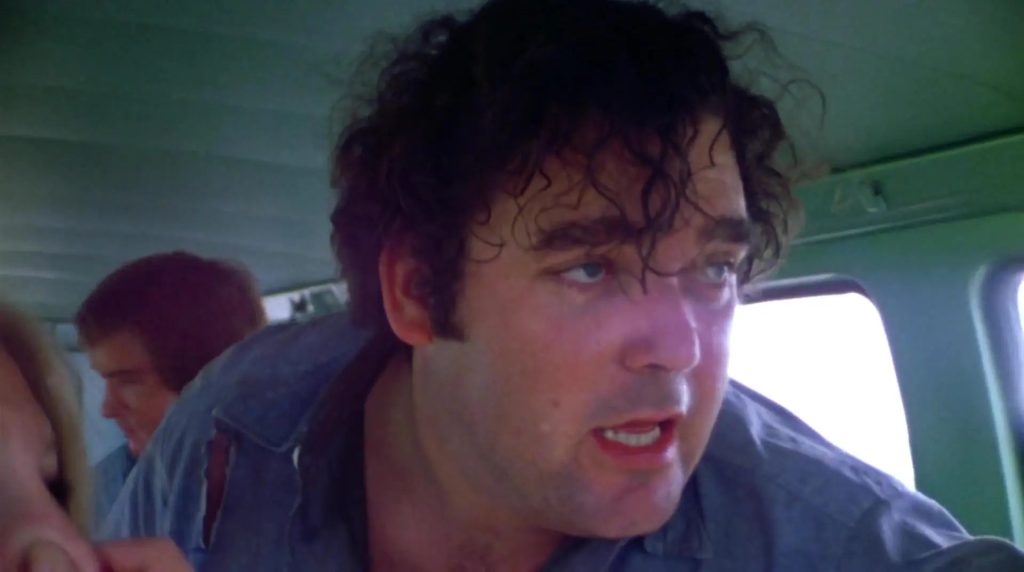
#10 Franklin, The Texas Chain Saw Massacre
I ranked this death from the original Texas Chain Saw Massacre lowest for two reasons. First, I think Franklin’s whole vibe is a perfect fit for the unnerving, overwhelming atmosphere of Tobe Hooper’s masterpiece. Second, I think it’s important for representation that onscreen characters from marginalized groups be allowed to have flaws. That said, Franklin Hardesty is one of the most goddamn annoying characters in the history of cinema. Endless shrieking and raspberry-blowing will do that for ya. His death via chainsaw comes as a profound relief. His sister Sally spends the next 40 minutes or so screaming nonstop, and that’s considerably more peaceful.

#9 Lori, Happy Death Day
This is less about the character herself and more about Tree’s journey. After watching her time-loop for so long, being thwarted at every turn, Lori’s poison cupcake is a real gut-punch. Tree’s vengeance allows her to break out of the time loop once and for all (until the sequel). It also allows us to rejoice in the fact that her work to improve herself hasn’t been for naught.
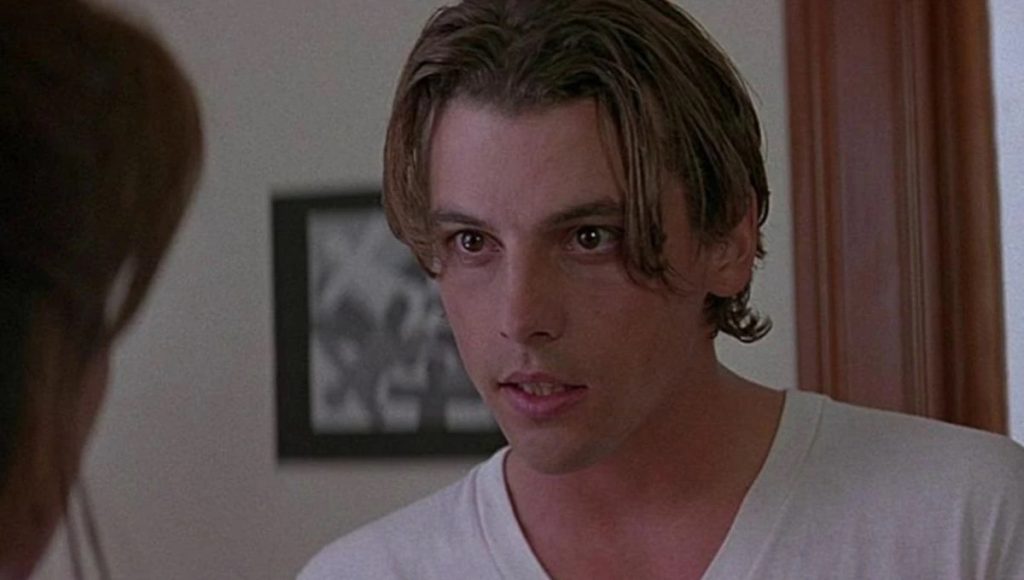
#8 Billy, Scream (1996)
There are a hell of a lot of satisfying kills perpetrated upon Ghostfaces in the Scream franchise. However, the original still takes the cake. Sidney Prescott curtly refuses to allow a killer to plug a sequel at the end of her survival story. Instead, she plugs him in the head, saying, “Not in my movie.” It’s not just a great ending to a horror movie. It’s a big middle finger to sleazy teenage boyfriends the world over.

#7 Crispian, You’re Next
Ooh, when Erin finds out that this rotten man has knowingly brought her along to a home invasion… His attempt to charm (and bribe) her might have won over a weaker person. But in addition to putting her in danger, he has willingly had his family slaughtered for money. Erin won’t stand for that, and her takedown of yet another Toxic Horror Boyfriend is cause for celebration.
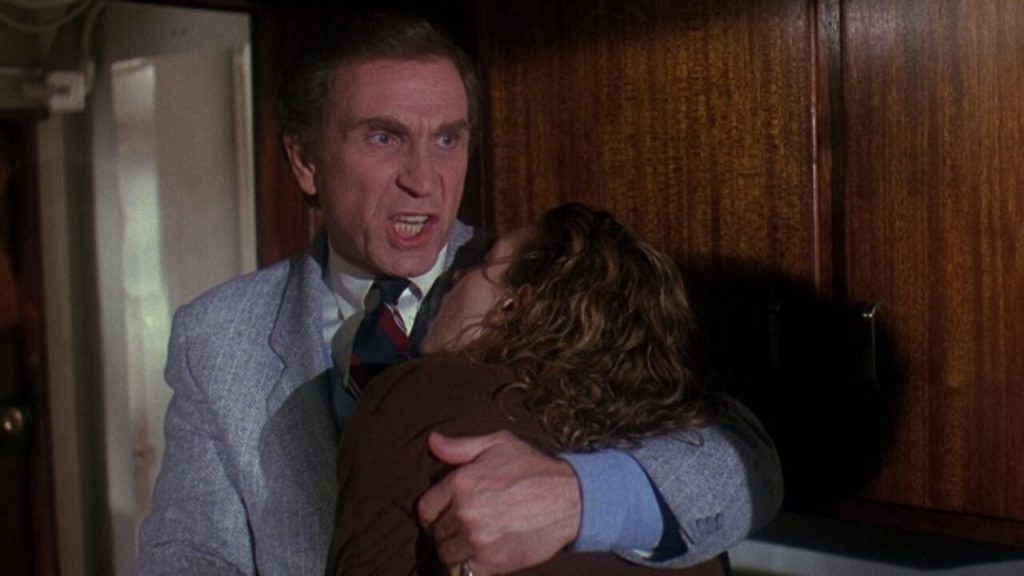
#6 Charles, Friday the 13th Part VIII: Jason Takes Manhattan
Charles McCulloch might be one of the nastiest characters in film history. While school administrators are hardly any student’s best friend, his cold cruelty is downright abnormal. How he manages to be simultaneously overbearing and wicked to his niece, Rennie, I’ll never know. But thankfully, Jason Voorhees drowns him in a vat of toxic waste, removing the need to solve that mystery. Not all heroes wear capes. Sometimes they wear hockey masks.
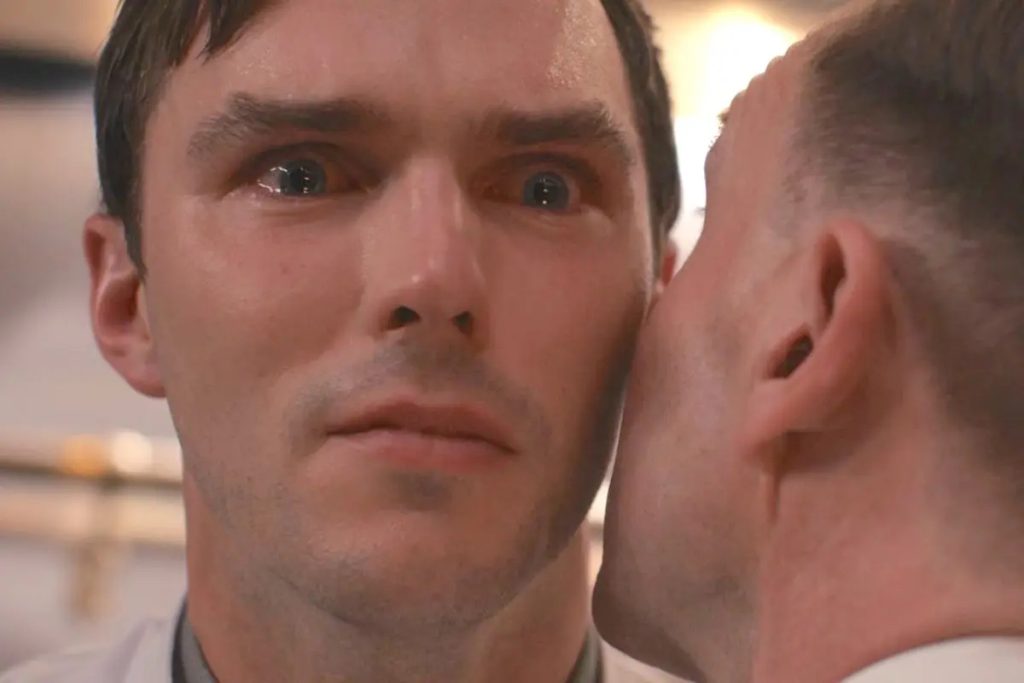
#5 Tyler, The Menu
Up next on the tasting tray of cinema’s worst boyfriends, we have Tyler. He’s not technically Margot’s boyfriend, because she’s an escort he invited to a fancy dinner. But he should still land in the hall of fame. That’s because he brought her despite knowing ahead of time that nobody was meant to leave the restaurant alive. Thankfully, he gets one of the best Bad Boyfriend deaths of them all. He dies at his own hands. By hanging. After being thoroughly humiliated with proof that all the mansplaining in the world can’t make someone a good chef. Delectable.
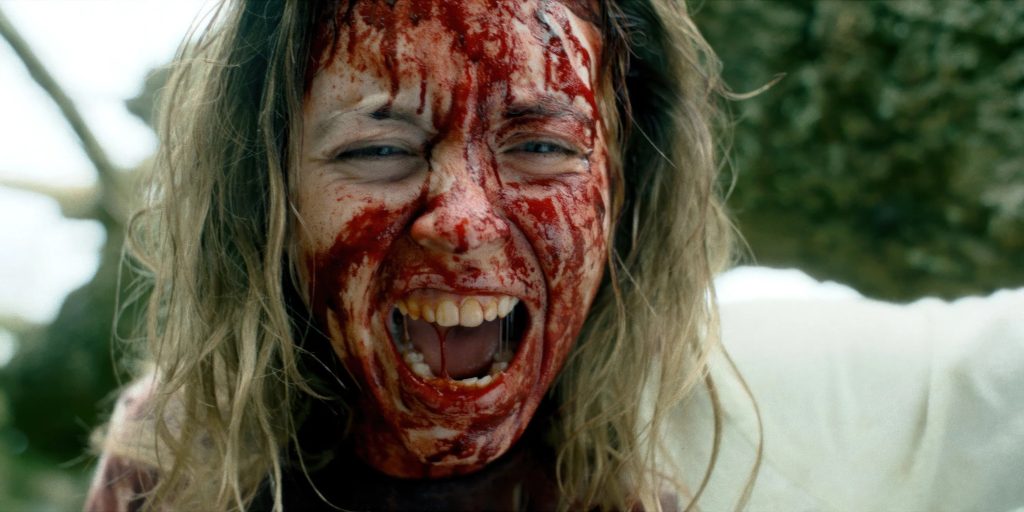
#4 The Baby, Immaculate
You may remember this kill from my Top 10 Child Deaths article. The ending of Immaculate is (there’s no other word for it) immaculate. Shortly after Sister Cecilia learns that she has been unwillingly impregnated with the son of Christ, she gives birth. Instead of letting the church manipulate her further after violating her body, she smashes that godforsaken thing with a rock. In the process, she sheds years of ingrained doctrine and sets herself free once and for all. This is the ending that Antichrist movies have historically been too cowardly to give us. The fact that this character is a potential messiah makes it that much more cathartic.
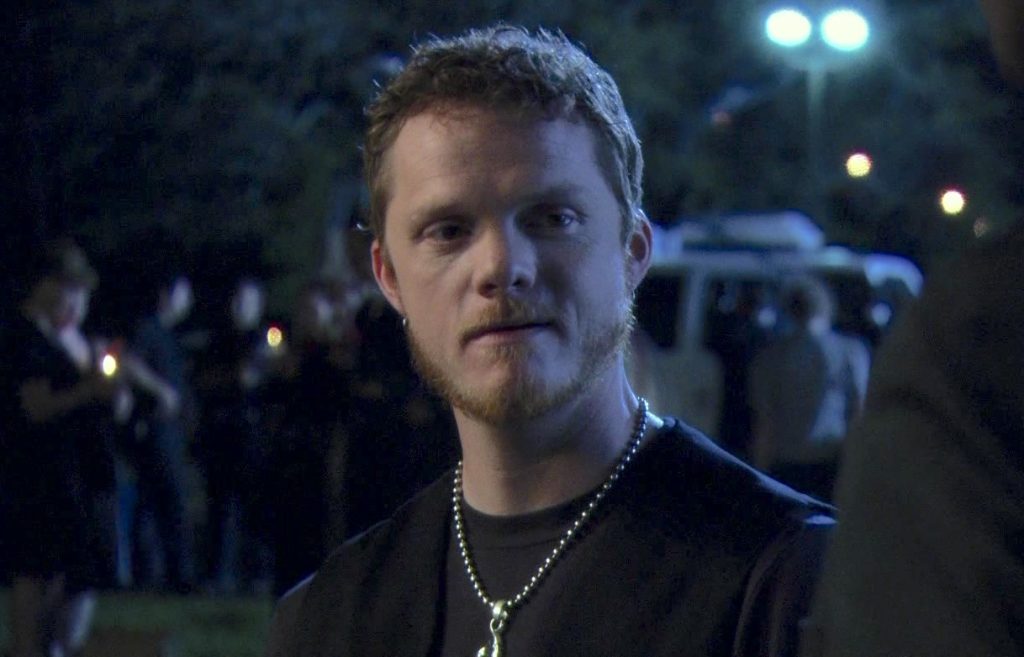
#3 Carter, The Final Destination
I mean, come on. This guy is literally credited as “Racist” at the end of the movie. Pretty much every Final Destination movie has an asshole character who you crave to see die. But this epithet-spewing, cross-burning bigot is by far the worst of the bunch.
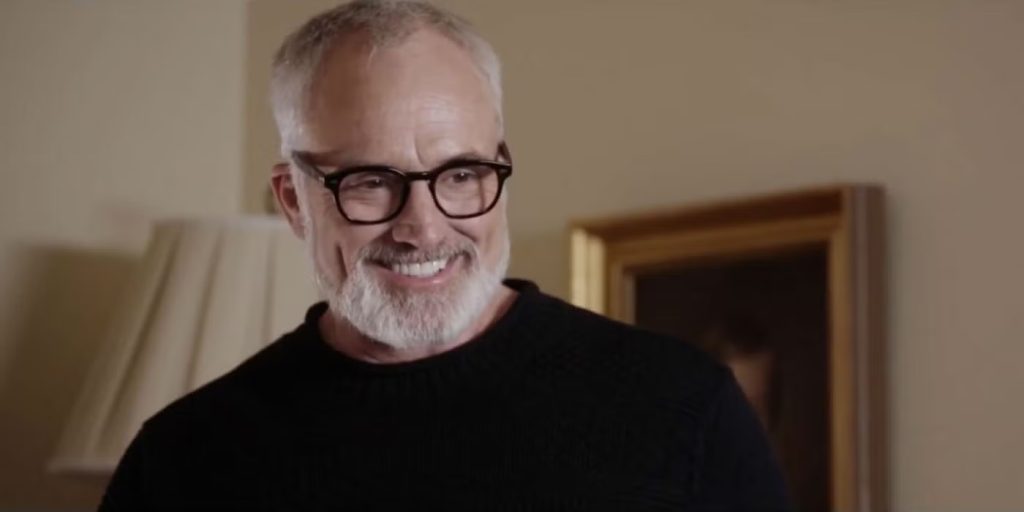
#2 Dean, Get Out
Racism comes in many forms, as Jordan Peele’s Get Out highlights. The Armitage family’s microaggressions quickly become macroaggressions, more than justifying Chris’ revenge slayings. While this whole portion of the movie is immensely satisfying, Dean’s death might just be the most cathartic. This is because he is killed via the antlers of a stuffed deer head. Chris uses the family’s penchant for laying claim to their prey’s bodies against them with this perfectly violent metaphor.

#1 Adrian, The Invisible Man (2020)
Here we have the final boss of Toxic Horror Boyfriends. This man is so heinously abusive that he fakes his own death in order to torment his ex even more. Cee using his own invisibility suit against him to stage his death by suicide is perfectly fitting revenge.

I was late to the Radio Silence party. However, I do not let that stop me from being one of the loudest people at the function now. I randomly decided to see Ready or Not in theaters one afternoon in 2019 and walked out a better person for it. The movie introduced me to the work of a team that would become some of my favorite current filmmakers. It also confirmed that getting married is the worst thing one can do. That felt very validating as someone who doesn’t buy into the needing to be married to be complete narrative.
Ready or Not is about a fucked up family with a fucked up tradition. The unassuming Grace (Samara Weaving) thinks her new in-laws are a bit weird. However, she’s blinded by love on her wedding day. She would never suspect that her groom, Alex (Mark O’Brien), would lead her into a deadly wedding night. So, she heads downstairs to play a game with the family, not knowing that they will be hunting her this evening. This is one of the many ways I am different from Grace. I watch enough of the news to know the husband should be the prime suspect, and I have been around long enough to know men are the worst. I also have a commitment phobia, so the idea of walking down the aisle gives me anxiety.

Grace Under Fire
Ready or Not is a horror comedy set on a wealthy family’s estate that got overshadowed by Knives Out. I have gone on record multiple times saying it’s the better movie. Sadly, because it has fewer actors who are household names, people are not ready to have that conversation. However, I’m taking up space this month to talk about catharsis, so let me get back on track. One of the many ways this movie is better than the latter is because of that sweet catharsis awaiting us at the end.
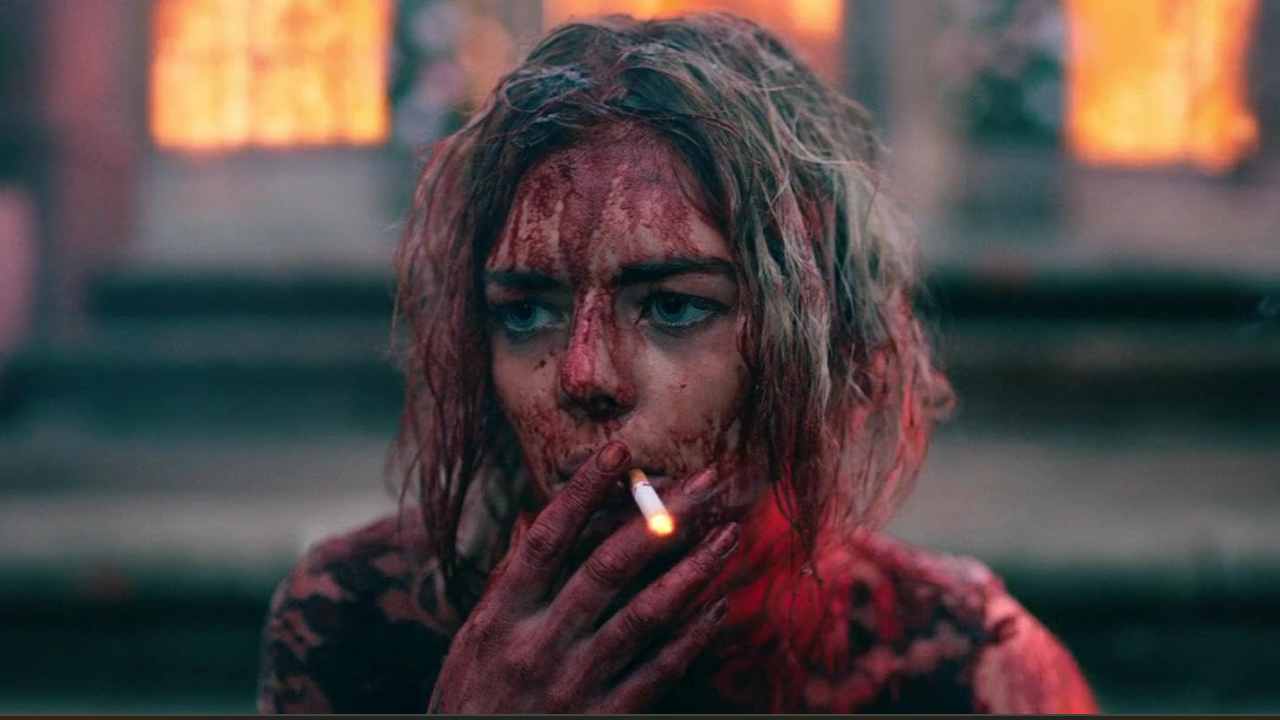
This movie puts Grace through it and then some. Weaving easily makes her one of the easiest final girls to root for over a decade too. From finding out the man she loves has betrayed her, to having to fight off the in-laws trying to kill her, as she is suddenly forced to fight to survive her wedding night. No one can say that Grace doesn’t earn that cigarette at the end of the film. As she sits on the stairs covered in the blood of what was supposed to be her new family, she is a relatable icon. As the unseen cop asks what happened to her, she simply says, “In-laws.” It’s a quick laugh before the credits roll, and “Love Me Tender” by Stereo Jane makes us dance and giggle in our seats.
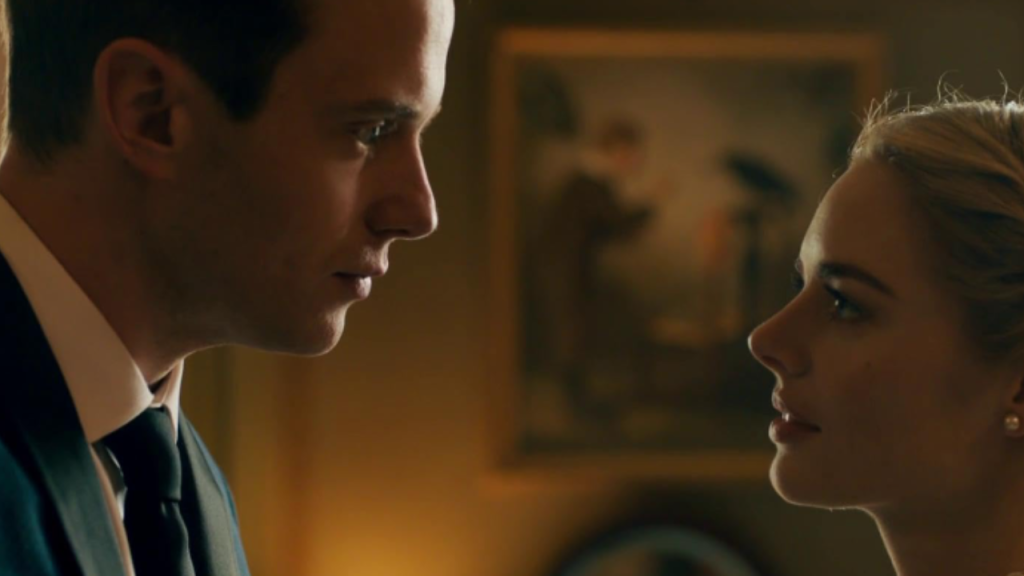
Ready or Not Proves That Maybe She’s Better Off Alone
It is also a moment in which Grace is one of many women who survives marriage. She comes out of the other side beaten but not broken. Grace finally put herself, and her needs first, and can breathe again in a way she hasn’t since saying I do. She fought kids, her parents-in-law, and even her husband to escape with her life. She refused to be a victim, and with that cigarette, she is finally free and safe. Grace is back to being single, and that’s clearly for the best.
This Guy Busick and R. Christopher Murphy script is funny on the surface, even before you start digging into the subtext. The fact that Ready or Not is a movie where the happy ending is a woman being left alone is not wasted on me, though. While Grace thought being married would make her happy, she now has physical and emotional wounds to remind her that it’s okay to be alone.
One of the things I love about this current era of Radio Silence films is that the women in these projects are not the perfect victims. Whether it’s Ready or Not, Abigail, or Scream (2022), or Scream VI, the girls are fighting. They want to live, they are smart and resourceful, and they know that no one is coming to help them. That’s why I get excited whenever I see Matt Bettinelli-Olpin and Tyler Gillett’s names appear next to a Guy Busick co-written script. Those three have cracked the code to give us women protagonists that are badasses, and often more dangerous than their would-be killers when push comes to shove.

Ready or Not Proves That Commitment is Scarier Than Death
So, watching Grace run around this creepy family’s estate in her wedding dress is a vision. It’s also very much the opposite of what we expect when we see a bride. Wedding days are supposed to be champagne, friends, family, and trying to buy into the societal notion that being married is what we’re supposed to aspire to as AFABs. They start programming us pretty early that we have to learn to cook to feed future husbands and children.
The traditions of being given away by our fathers, and taking our husbands’ last name, are outdated patriarchal nonsense. Let’s not even get started on how some guys still ask for a woman’s father’s permission to propose. These practices tell us that we are not real people so much as pawns men pass off to each other. These are things that cause me to hyperventilate a little when people try to talk to me about settling down.
Marriage Ain’t For Everybody
I have a lot of beef with marriage propaganda. That’s why Ready or Not speaks to me on a bunch of levels that I find surprising and fresh. Most movies would have forced Grace and Alex to make up at the end to continue selling the idea that heterosexual romance is always the answer. Even in horror, the concept that “love will save the day” is shoved at us (glares at The Conjuring Universe). So, it’s cool to see a movie that understands women can be enough on their own. We don’t need a man to complete us, and most of the time, men do lead to more problems. While I am no longer a part-time smoker, I find myself inhaling and exhaling as Grace takes that puff at the end of the film. As a woman who loves being alone, it’s awesome to be seen this way.

The Cigarette of Singledom
We don’t need movies to validate our life choices. However, it’s nice to be acknowledged every so often. If for no other reason than to break up the routine. I’m so tired of seeing movies that feel like a guy and a girl making it work, no matter the odds, is admirable. Sometimes people are better when they separate, and sometimes divorce saves lives. So, I salute Grace and her cathartic cigarette at the end of her bloody ordeal.
I cannot wait to see what single shenanigans she gets into in Ready or Not 2: Here I Come. I personally hope she inherited that money from the dead in-laws who tried her. She deserves to live her best single girl life on a beach somewhere. Grace’s marriage was a short one, but she learned a lot. She survived it, came out the other side stronger, richer, and knowing that marriage isn’t for everybody.


‘Night Patrol’ Review: Vampiric Cop Horror Undone by Messy Execution

The 10 Most Satisfying Deaths in Horror Movies

‘28 Years Later: The Bone Temple’ Review: Nia DaCosta Has the Cure

The Horror Press Podcast Episode 54: Heated Rivalry & Yahtzee

‘Sleepy Hollow’ Review: Seeing Really Is Believing

‘Ready or Not’ and the Cathartic Cigarette of a Relatable Final Girl

‘Carrie’ Review: A Look At Two Adaptations

The Best Horror You Can Stream on Shudder in January 2026

The Best Horror You Can Stream on Netflix in January 2026

‘The Taking of Deborah Logan’ Review: An Overlooked Gem

‘The People Under the Stairs’ Review: A Brilliantly Bizarre Horror Classic

Slappy Was the Blueprint: How the Dummy from Goosebumps Became A Horror Icon

‘Five Nights at Freddy’s’ and The Story of William Afton Explained

Glen and Glenda: Don Mancini’s Reverence for Queerness in ‘Seed of Chucky’ (2004)

‘Truth or Dare’: Who Did it Best?

V/H/S Franchise Ranked, Best to Worst

Everything You Need to Know About Jason Voorhees

The 11 Most Disturbing Horror Movies Ever, According to an Actual Horror Fan

[REVIEW] ‘Cherry Falls’ (1999) Brittany Murphy Shines in This Cult Classic Slasher
