

Editorials
The Halloween Franchise Peaked With H20 Here’s Why

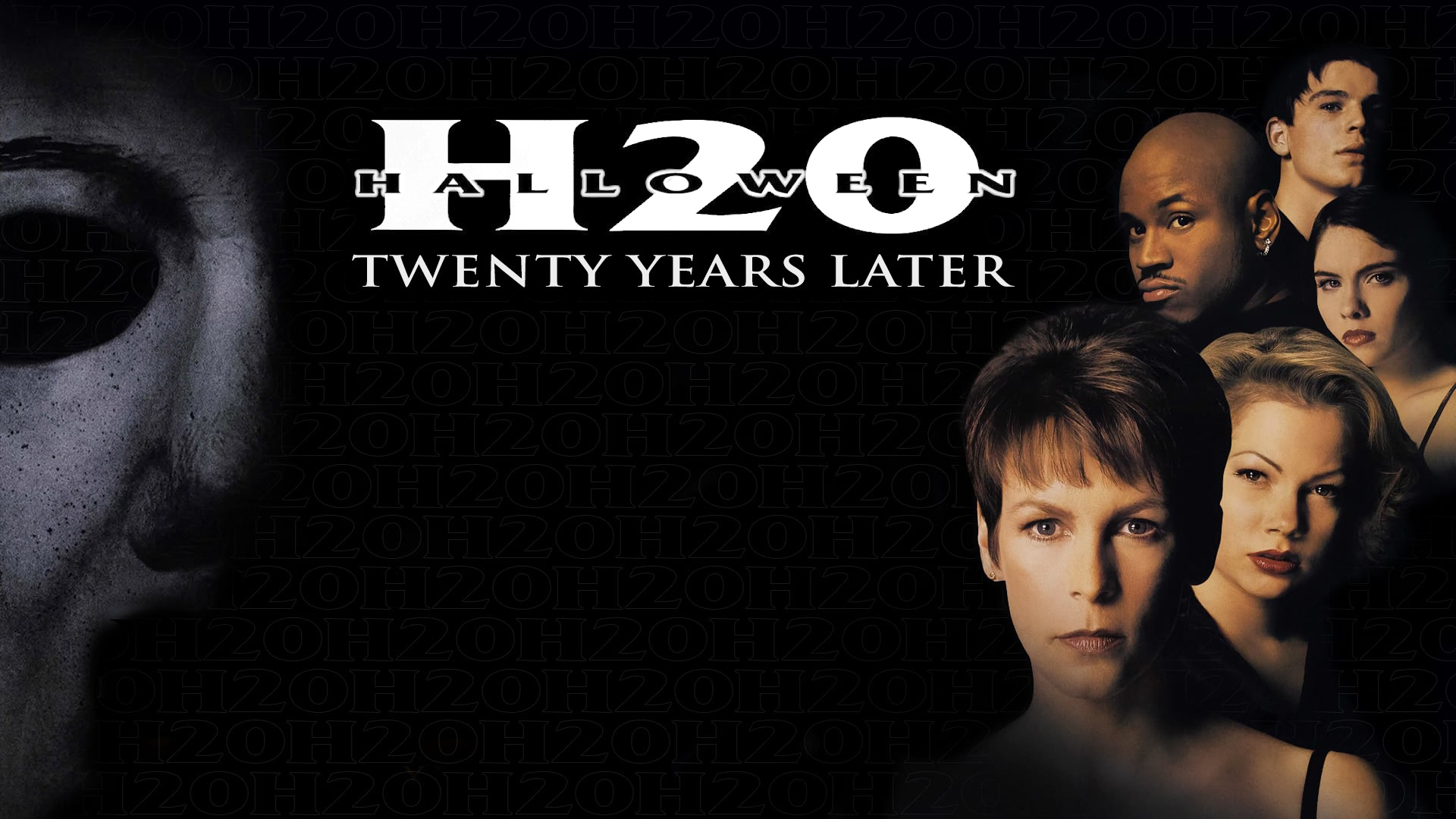
I’m going to begin this conversation with a sort of insane thought. Halloween as a franchise maybe should have ended with its first film.
That’s not to say there’s no value in the Halloween films. Much to the contrary, I like the first three films a lot. I recommend Halloween 3: Season of the Witch to people an annoying amount; I even try to watch it a few times every October to keep the vibes up. And as you already know from clicking on this article, I enjoy Halloween H20: 20 Years Later quite a bit.
I’ve even softened up on the Rob Zombie remake duology over the years. I don’t like them, but it’s like getting flowers, I can still appreciate them. However, Halloween, as a series, has long suffered from its own success. And sometimes, it feels like it’s just going to keep suffering.
HALLOWEEN’S FIRST BOLD CHOICE AFTER 16 YEARS OF WAITING
It’s easy to forget that John Carpenter’s original Halloween was effectively the Paranormal Activity of its time. Flipping a cool $70 million and change off of a $300,000 budget, it has had a genuinely immeasurable impact on the cinematic landscape and how horror films are made.
For some, that’s a bad thing. Notoriously, my beloved 3rd entry in the franchise was considered a hard misstep by audiences. Everyone knows the story; the resounding “Where’s Michael?” response to the third entry gunned down Carpenter’s desires to turn Halloween into an anthology series. So, after going into hiding for 5 years, Halloween 4 continued the story of Michael in 1988.
And then it just kept going.
As the years went on, it became progressively harder and harder to innovate, resulting in some very odd plotlines and tones. Which is why Halloween H20 is where the franchise peaked. Because it had a rare essence to it. It had guts.
It was willing to actually kill the series once and for all, even if it was impossible to do so.
EVIL DOESN’T DIE TONIGHT, THE CONTRACT SAYS SO
Before David Gordon Green’s reboot trilogy brought Laurie back as a Sarah Connor style badass, H20’s pre-production had reinvented Strode to usher in the 20th anniversary of the first film. She went from a resilient young woman into a traumatized survivor running from her past.
The original concept for Halloween H20 involved a substance abusing Laurie Strode trying to get clean so she could die with dignity against an escaped Michael. In a turn of events, she would find the will to live and kill him once and for all. It was a concept Jamie Lee Curtis was passionate about, understandably so. Laurie wasn’t the first final girl, but she was the codifier for that ideal, in a way Jess Bradford and Sally Hardesty before her weren’t. It would have made for a harrowing exploration of what was debatably the most important final girl ever.
That isn’t what happened.
There is an infamous video from a Q&A panel with Jamie Lee Curtis where she explains that the blame for Michael surviving H20 lies primarily with one man: the late great Moustapha Akkad. Akkad was famous for his business acumen, but that desire to see the Halloween franchise make bankroll had ultimately stolen away Laurie’s triumphant victory over Michael.
You see, Akkad had written a clause into the contracts surrounding the film. A clause that she could not, in no uncertain terms, kill Michael Myers. Michael would live, no matter what Laurie did. But thanks to the meddling mind of Scream creator Kevin Williamson, who had been brought on to work on the screenplay for H20, Laurie did get her vengeance in a way.
LAURIE STRODES RETURN DONE RIGHT
The actual H20 follows Laurie Strode in hiding years after Halloween 2, ignoring the events of the sequels. She’s the headmistress of a boarding school, living under a fake name far from Haddonfield with her son. But still, she can’t let go of that Halloween night. She sees Michael’s face, The Shape, everywhere. She can barely stomach talking about what happened. But when Michael kills Dr. Loomis, nurse Marion Chambers, and then finds her, Laurie is forced to face her greatest fear once and for all.
And she does. After a prolonged chase and fight on the grounds of the school, she refuses to let a wounded Michael be taken into custody. Stealing a cop’s gun and an ambulance, Laurie runs Michael off a cliff and pins him against a tree with the vehicle. She shares a brief moment with him, inscrutable eyes reflecting Michael’s. They could be expressing a number of possible emotions. Is it empathy? Hatred? Pity? Fear leaving her for the final time?
Regardless of what it is, she’s done feeling it. With a hefty swing, she decapitates him with a fire axe, ending Michael for the last time. It’s over.
Roll credits. Audience cheers. The world is healing.
AND THEN HALLOWEEN: RESURRECTION HAPPENS
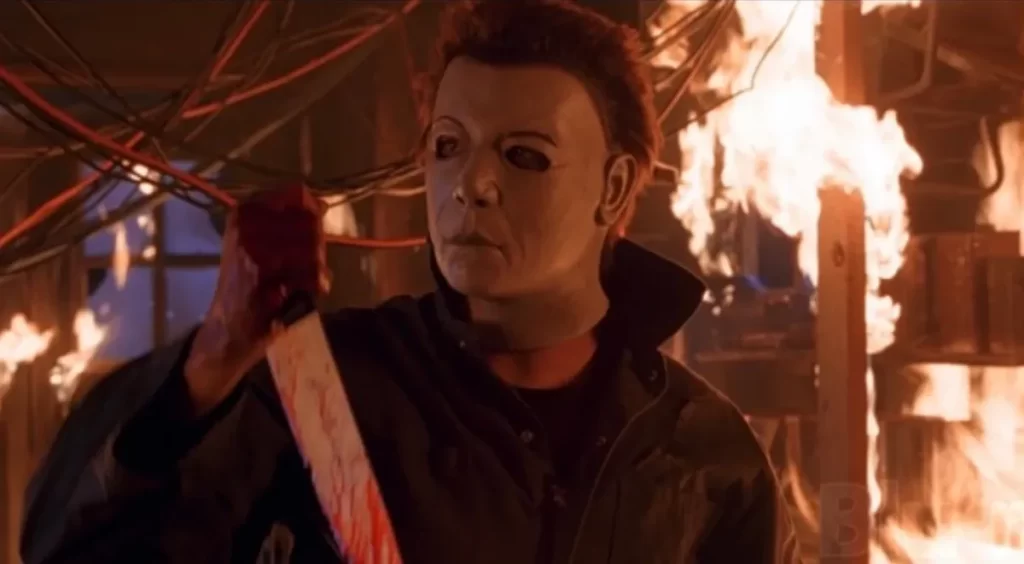
Yes, and then Halloween: Resurrection happens. Laurie is killed in the first few minutes, revealing that Michael pulled the old bamboozle switcheroonie in the previous film. She had actually just killed an ambulance driver that Michael had put the mask on. Williamson’s trick of making both Laurie and the audience believe they had killed Michael worked. But that same trick curled a finger on the monkey’s paw and led to what is definitively the worst film in the franchise.
A proto-internet streamer subplot. The kid from Smart House is there for some reason. Busta Rhymes hits Michael Myers with the Charlie Murphy front kick from that one Dave Chappelle sketch about Rick James.
Roll credits. The audience boos. Everyone who spent money on it feels like they’re being stamped to death by horses.
HALLOWEEN AS A FRANCHISE IS TERRIFIED OF ENDINGS
And this is why I say that Halloween H20 is probably the best we’re going to get out of the series, maybe ever. It is a series that, at its core, has had producers terrified of endings since even Halloween 2. Carpenter never intended there to be a sequel, or any follow ups for that matter. That was mostly the work of producer Irwin Yablans, who pushed hard to continue the story of Michael. And then, eventually, it was the work of every other producer who demanded they milk Halloween for all its worth.
H20 is a film that is antithetical to that idea. When watched as intended, ignoring Resurrection, it’s fantastic. As the end of Laurie and Michael’s story, one that shows evil is weak without fear to bolster it, it is pretty much the perfect finale. Hot off the heels of Scream’s success in 1996, H20 is often talked about as an attempt to cash in on the meta-horror craze of the 90s and early 2000s. The way people discuss it, you would think it was supposed to be a tongue-in-cheek slasher that made fun of itself and Halloween’s legacy. But in reality, aside from its humor, it ends up being quite reflective and thoughtful of that legacy.
It’s not spiteful of the films that came before it because it ends by tricking the audience. It’s what that trick represents, boldly spitting in the eye of Halloween being held prisoner for money. Mocking Halloween being stuck in an eternal cycle of rinsing and repeating the same events. It doesn’t care about franchising or longevity; it cares about telling a good story and letting its hero rest. It’s respectful to Carpenter’s creation in a way that other attempts to continue the series simply weren’t.
H20 TELLS AN ENDING, HALLOWEEN ENDS TRIES TO SELL YOU ONE
It begs the question: why does H20 work here in how it ends the series, but Halloween Ends doesn’t?
All of Ends biggest issues stem from the fact that, unlike H20, it’s trying to sell you an ending instead of making one that feels right. The maudlin closer it gives doesn’t feel real. It doesn’t feel true to the Laurie it shows us, or any other iteration of the character for that matter. It doesn’t feel genuinely emotional in any regard.
And that’s because Ends as a whole doesn’t have the spirit that H20 does. Ends is, first and foremost, a highlight reel reminding you of how cool Halloween is instead of understanding why any of its previous entries were effective. From its marketing to its incredibly clunky climax, it feels like it’s an advertisement for never letting go of Halloween, even when it should have been done a while ago. And that’s just the wrong lesson to leave on.
JANET LEIGH’S CAMEO IN H20 SPEAKS VOLUMES
Halloween H20 has a pretty famous cameo from Janet Leigh in it, an OG scream queen and the real-life mother of Jamie Lee Curtis. In it, they have a heart-to-heart as fictional characters Laurie Strode and Norma Watson. It’s made more impactful when you realize it was Leigh’s penultimate film performance, and her final performance in a horror film.
The moment serves as a cute in-joke on their real-life relationship, but more than that, it foreshadows the film’s ending. Norma urges Laurie to move past her fear, to relish her future as a survivor instead of being caught up in the past and reliving the same night over and over again.
I find this scene even more poignant now, seeing how neatly it reflects on what has happened to Halloween as a franchise in the years since the original, and especially since H20. It’s a series that got stuck in trying to continue the same story and just got progressively worse at it. In some way, it feels like it’s urging us to make a choice. No matter how deep a legacy of fear may be, it must come to an end at some point. There is no need to cling to the same stories over and over. We can enjoy them for what they are without returning to them.
No matter what the future of the Halloween franchise is, only a viewer themselves can choose where the story ends. It doesn’t matter how many times the studio brings him back, you have to make the choice. Only you decide when it ends. And for my money, H20 is the best ending you can ask for.


My first feature film, Death Drop Gorgeous, was often described as its own disturbed piece of queer cult cinema due to its over-the-top camp, practical special effects, and radical nature. As a film inspired by John Waters, we wore this descriptor as a badge of honor. Over the years, it has gained a small fanbase and occasionally pops up on lists of overlooked queer horror flicks around Pride month and Halloween.
The Streaming Era and the Myth of Monoculture
My co-director of our drag queen slasher sent me a status update, ostensibly to rile up the group chat. A former programmer of a major LGBTQ+ film festival (I swear, this detail is simply a coincidence and not an extension of my last article) declared that in our modern era, “cult classic” status is “untenable,” and that monoculture no longer exists. Thus, cult classics can no longer counter-culture the mono. The abundance of streaming services, he said, allows for specific curation to one’s tastes and the content they seek. He also asserted that media today that is designed to be a cult classic, feels soulless and vapid.
Shots fired!
Can Cult Cinema Exist Without Monoculture?
We had a lengthy discussion as collaborators about these points. Is there no monoculture to rally against? Are there no codes and standards to break and deviate from? Are there no transgressions left to undertake? Do streaming services fully encompass everyone’s tastes? Maybe I am biased. Maybe my debut feature is soulless and vapid!
I’ve been considering the landscape. True, there are so many options at our streaming fingertips, how could we experience a monoculture? But to think a cult classic only exists as counter-culture, or solely as a rally against the norm, is to have a narrow understanding of what cult cinema is and how it gains its status. The cult classic is not dead. It still rises from its grave and walks amongst the living.

What Defines a Cult Classic? And Who Cares About Cult Cinema?
The term “cult classic” generally refers to media – often movies, but sometimes television shows or books – that upon its debut, was unsuccessful or undervalued, but over time developed a devout fanbase that enjoys it, either ironically or sincerely. The media is often niche and low budget, and sometimes progressive for the cultural moment in which it was released.
Some well-known cult films include The Adventures of Priscilla, Queen of the Desert (1994), Showgirls (1995), Re-Animator (1985), Jennifer’s Body (2009), and my personal favorite, Heathers (1989). Quoting dialogue, midnight showings, and fans developing ritualistic traditions around the movie are often other ways films receive cult status (think The Rocky Horror Picture Show).
Cult Cinema as Queer Refuge and Rebellion
Celebration of cult classics has long been a way for cinephiles and casual viewers alike to push against the rigid standards of what film critics deem “cinema.” These films can be immoral, depraved, or simply entertaining in ways that counter mainstream conventions. Cult classics have often been significant for underrepresented communities seeking comfort or reflection. Endless amounts of explicitly queer cinema were lambasted by critics of their time. The Doom Generation (1995) by Gregg Araki and John Waters’ Pink Flamingos (1972) were both famously given zero stars by Roger Ebert. Now both can be viewed on the Criterion Channel, and both directors are considered pioneers of gay cinema.
Cult films are often low-budget, providing a sense of belonging for viewers, and are sometimes seen as guilty pleasures. Cult cinema was, and continues to be, particularly important for queer folks in finding community.
But can there be a new Waters or Araki in this current landscape?
What becomes clear when looking at these examples is that cult status rarely forms in a vacuum. It emerges from a combination of cultural neglect, community need, and the slow bloom of recognition. Even in their time, cult films thrived because they filled a void, often one left by mainstream films’ lack of imagination or refusal to engage marginalized perspectives. If anything, today’s fractured media landscape creates even more of those voids, and therefore more opportunities for unexpected or outsider works to grab hold of their own fiercely loyal audiences.
The Death of Monoculture and the Rise of Streaming
We do not all experience culture the same way. With the freedom of personalization and algorithmic curation, not just in film but in music and television, there are fewer shared mass cultural moments we all gather around to discuss. The ones that do occur (think Barbenheimer) may always pale in comparison to the cultural dominance of moments that occurred before the social media boom. We might never again experience the mass hysteria of, say, Michael Jackson’s Thriller.
For example, our most successful musician today is listened to primarily by her fanbase. We can skip her songs and avoid her albums even if they are suggested on our streaming platforms, no matter how many weeks she’s been at number one.
Was Monoculture Ever Real?
But did we ever experience culture the same? Some argue that the idea of monoculture is a myth. Steve Hayden writes:
“Our monoculture was an illusion created by a flawed, closed-circuit system; even though we ought to know better, we’re still buying into that illusion, because we sometimes feel overwhelmed by our choices and lack of consensus. We think back to the things we used to love, and how it seemed that the whole world, or at least people we knew personally, loved the same thing. Maybe it wasn’t better then, but it seemed simpler, and for now that’s good enough.”
The mainstream still exists. Cultural moments still occur that we cannot escape and cannot always understand the appreciation for. There are fads and trends we may not recognize now but will romanticize later, just as we do with trends from as recently as 2010. But I’d argue there never was monoculture in the same way America was never “great.” There was never a time we all watched the same things and sang Madonna songs around the campfire; there were simply fewer accessible avenues to explore other options.
Indie Film Distribution in the Age of Streaming
Additionally, music streaming is not the same as film streaming. As my filmmaking collective moves through self-distributing our second film, we have found it is increasingly difficult for indie, small-budget, and DIY filmmakers to get on major platforms. We are required to have an aggregator or a distribution company. I cannot simply throw Saint Drogo onto Netflix or even Shudder. Amazon Prime has recently made it impossible to self-distribute unless you were grandfathered in. Accessibility is still limited, particularly for those with grassroots and shoestring budgets, even with the abundance of services.
I don’t know that anyone ever deliberately intends on making a cult classic. Pink Flamingos was released in the middle of the Gay Liberation movement, starring Divine, an openly gay drag queen who famously says, “Condone first-degree murder! Advocate cannibalism! Eat shit! Filth are my politics, filth is my life!”
All comedy is political. Of course, Waters was intentional with the depravity he filmed; it was a conscious response to the political climate of the time. So if responding to the current state of the world makes a cult classic, I think we can agree there is still plenty to protest.

There Is No Single Formula for Cult Cinema
Looking back at other cult classics, both recent and older, not all had the same intentional vehicle of crass humor and anarchy. Some didn’t know they would reach this status – a very “so bad, it’s good” result (i.e., Showgirls). And while cult classics naturally exist outside the mainstream, some very much intended to be in that stream first!
All of this is to say: there is no monolith for cult cinema. Some have deliberate, rebellious intentions. Some think they are creating high-concept art when in reality they’re making camp. But it takes time to recognize what will reach cult status. It’s not overnight, even if a film seems like it has the perfect recipe. Furthermore, there are still plenty of conventions to push back against; there are plenty of queer cinema conventions upheld by dogmatic LGBTQ+ film festivals.
Midnight Movies vs. Digital Fandom
What has changed is the way we consume media. The way we view a cult classic might not be solely relegated to midnight showings. Although, at my current place of employment, any time The Rocky Horror Picture Show screens, it’s consistently sold out. Nowadays, we may find that engagement with cult cinema and its fanbase digitally, on social media, rather than in indie cinemas. But if these sold-out screenings are any indication, people are not ready to give up the theater experience of being in a room with die-hard fans they find a kinship with.
In fact, digital fandom has begun creating its own equivalents to the midnight-movie ritual. Think of meme cycles that resurrect forgotten films, TikTok edits that reframe a scene as iconic, or Discord servers built entirely around niche subgenres. These forms of engagement might not involve rice bags and fishnets in a theater, but they mirror the same spirit of communal celebration, shared language, and collective inside jokes that defined cult communities of past decades. Furthermore, accessibility to a film does not diminish its cult status. You may be able to stream Tim Curry as Dr. Frank-N-Furter from the comfort of your couch, but that doesn’t make it any less cult.

The Case for Bottoms
I think a recent film that will gain cult status in time is Bottoms. In fact, it was introduced to the audience at a screening I attended as “the new Heathers.” Its elements of absurdity, queer representation, and subversion are perfect examples of the spirit of cult cinema. And you will not tell me that Bottoms was soulless and vapid.
For queer communities, cult cinema has never been just entertainment; it has operated as a kind of cultural memory, a place to archive our identities, desires, rebellions, and inside jokes long before RuPaul made them her catchphrases repeated ad nauseam. These films became coded meeting grounds where queer viewers could see exaggerated, defiant, or transgressive versions of themselves reflected back, if not realistically, then at least recognizably. Even when the world outside refused to legitimize queer existence, cult films documented our sensibilities, our humor, our rage, and our resilience. In this way, cult cinema has served as both refuge and record, preserving parts of queer life that might otherwise have been erased or dismissed.
Cult Cinema Is Forever
While inspired by John Waters, with Death Drop Gorgeous, we didn’t intentionally seek the status of cult classic. We just had no money and wanted to make a horror movie with drag queens. As long as there continue to be DIY, low-budget, queer filmmakers shooting their movies without permits, the conventions of cinema will continue to be subverted.
As long as queer people need refuge through media, cult cinema will live on.


Most of my early happy memories are of being released by my mother, free to wander the video store. I was at my happiest roaming the aisles when it was my turn, but I always walked a little faster going through the horror section, as this was before my love affair with the genre started. There was one VHS cover that particularly scared me, so I always avoided making eye contact with the sinister face on the front of Child’s Play.
A Video Store Recommendation That Changed Everything
Many years later, as I would return to the video store on my own as a teen, I was on a mission to watch as many horror movies as possible. I was also a closeted queer teen harboring a massive crush on the girl who worked the counter, who happened to like horror, and I took any chance I could to talk to her. One night, feeling brave and definitely not overwhelmed by gay feelings, I worked up the courage to ask for her any recommendations.
“Hey! I have a three-day weekend coming up, and was wondering if you had any suggestions for some movies I can just dive into all weekend. Horror preferred.”
“Do you like slashers?”
“Love them! Michael, Jason, Freddie. The classics.”
“Well, and of course Chucky.”
“The talking doll?”
Her eyes widened, and she walked around from the counter, making me realize I had never seen her from the waist down before. She grabbed my wrist and dragged me into the horror section.
“Your homework for the weekend is to watch Child’s Play 1 through 5. The first three are great, but Bride of Chucky is really where it’s at. You’ll see what I mean when you get there. If you make it to Seed of Chucky, we’ll talk.”
With a wink, she left me to do my homework assignment, and of course, I wanted to be a good student, so I picked up the DVDs, grabbed some Whoppers and a popcorn, and went home to study.
Discovering the Child’s Play Franchise as a Queer Teen
Child’s Play was instantly a hit for me. Maybe it was my childhood fear of Chucky, or maybe it was Don Mancini’s anticapitalist take on a killer in the form of something much smaller and cuter than the hulking slashers I was accustomed to, but I had to see how they would bring back my new favorite guy. While I have love and affection for 2 and 3 (I later named my cat Kyle after Andy’s foster sister), I rushed my first watch because I wanted to get to Bride of Chucky to see exactly what Video Store Girl was talking about.
Bride of Chucky was like Dorothy going from sepia to full-spectrum color for me. Having seen Bound at a very formative time for me, Jennifer Tilly was worshipped as queer royalty in my heart. She was instantly magnetic as Tiffany Valentine. The sheer camp of it all, combined with the fact that it had one of the first gay characters I’ve ever seen that was just a “normal” gay person, captured my heart. I dreaded the death David would face for the horrible crime of being a gay man on screen, but to my surprise and delight, he wasn’t punished for it. He was dispatched in the same gruesome manner as any of Chucky and Tiffany’s other villains.

Seed of Chucky and the First Time I Felt Seen
I was excited to get to Seed of Chucky, both because by this point I had fallen in love with the franchise, but also because I wanted to do a good job and impress Video Store Girl. What I didn’t expect was to have my core shattered in a way that I couldn’t fully express until I was an adult. Seed of Chucky is about a doll, first named Shitface by a cruel ventriloquist, that realizes Chucky and Tiffany may be their parents. Throughout most of the movie, Chucky and Tiffany argue over the gender of their child, whom they named Glen/Glenda. The name itself is a reference to the classic Ed Wood movie about a character that we would now likely call genderfluid, who likes to wear men’s and women’s clothing. At the end of the film, it’s clear that for Glen/Glenda, they are two souls inhabiting one body.
“Sometimes I feel like a boy. Sometimes I feel like a girl. Can’t I be both?”
Those words felt like someone was skipping rocks across my heart. It felt like a secret I wasn’t supposed to know, but it was the answer to a question I had never thought to ask. Gender fluidity wasn’t something that was discussed in my conservative home of Orange County. Did Video Store Girl see something in me that I wasn’t hiding as well as I could be? I loved my weekend watching the Child’s Play franchise, but I asked my mom to return the movies for me, as I couldn’t face someone who had seen me so clearly just yet.
Rewatching Seed of Chucky as an Adult
Seed of Chucky, a script that had been rejected by Universal for being “too gay” came to me again as an adult upon rewatch. Where I had found questions, I could not find the answer to in Glen/Glenda, I found acceptance through an unlikely character: Chucky. It’s in Seed of Chucky that our main character, Chucky, gives up the ghost and decides, for once and all, that he no longer wishes to be human. He loves himself exactly as he is for the form he chose for himself, a doll. If a psychopathic killer doll could love himself exactly as he was in a body that he chose to present himself in, why couldn’t I?
Don Mancini and Queer Voices in Horror
One of the best parts of having the same writer at the helm for every entry into the same franchise is that, unlike other typical slasher villains, Chucky gets to experience character development and growth. And because Don Mancini himself is gay, his voice behind the experience has been an authentic beacon of hope for queer audiences. “It has really been nice for me, again, as a gay man, to have a lot of gay, queer, and trans fans say that movie meant a lot to them, and that those characters meant a lot to them as queer kids.” He says in an article by Rue Morgue.
Why Chucky Remains a Queer Icon
One of my greatest joys was watching all three seasons of the cancelled too soon series, Chucky. Jake (Zacary Arthur), the show’s new gay protagonist, goes from clashing with his homophobic father (who is quickly dispatched by Chucky) to his first love and found family. Chucky with his own found family in Tiffany, G.G. (formerly Glen/Glenda), Caroline, and Wendell (John Waters). While the show has ended, I hope this won’t be the last we see of him, and I’m excited to see where Don Mancini takes the character for future queer audiences. One standout moment from the series is when Jake sits with Chucky and talks about G.G.
“You know, I have a queer kid…genderfluid”
“And you’re cool with it?”
“I’m not a monster Jake.”
If a killer doll could love his genderfluid child, I expect nothing less from the rest of society. Growing up feeling the way I felt about my gender and sexuality, I didn’t have peers to rely on to learn about myself.
But what I did have was Chucky. My friend til’ the end.


‘Iron Lung’ Review: Exceptionally Atmospheric Cosmic Horror

No, Cult Cinema Isn’t Dead

‘The Ritual (2017)’ Review: When Grief Gets Gruesome

‘Wait Until Dark’ Review: A Timeless Psychological Horror Thriller

‘Return to Silent Hill’ Review: A Misogynistic Betrayal of Silent Hill 2

‘Lake Mungo’ Review: Still the Greatest Ghost Film of All Time

How ‘Child’s Play’ Helped Shape LGBTQ+ Horror Fans

‘The Cabin in the Woods’ Review: And the State of Horror

‘Night Patrol’ Review: Vampiric Cop Horror Undone by Messy Execution

The 10 Most Satisfying Deaths in Horror Movies

‘The People Under the Stairs’ Review: A Brilliantly Bizarre Horror Classic

‘Five Nights at Freddy’s’ and The Story of William Afton Explained

Slappy Was the Blueprint: How the Dummy from Goosebumps Became A Horror Icon

Glen and Glenda: Don Mancini’s Reverence for Queerness in ‘Seed of Chucky’ (2004)

‘Truth or Dare’: Who Did it Best?

V/H/S Franchise Ranked, Best to Worst

Everything You Need to Know About Jason Voorhees

The 11 Most Disturbing Horror Movies Ever, According to an Actual Horror Fan

[REVIEW] ‘Cherry Falls’ (1999) Brittany Murphy Shines in This Cult Classic Slasher
