

Reviews
[REVIEW] ‘Sinners’: Ryan Coogler’s First Horror Movie Is For The Culture
Sinners is a bloody, sexy, devilish good time. It is also a love letter to Black filmgoers as it reminds us the price of freedom never came cheap for those who came before us. However, a few seconds of freedom is a lot for people who are used to turning crumbs into a feast. Why should we assimilate when we can keep doing us, cousin? After all, the drinks are cold, the catfish is hot, and the music is better on the inside.

Ryan Coogler is a filmmaker hellbent on giving Black folks a reason to show up and show out in theaters near you. While many of us discovered him with Black Panther, he had already sent warning shots to the industry with Fruitvale Station and Creed. Films that established no matter what the subject matter is, his art is made with Black people in mind. This is a welcome departure from the racial trauma porn that many of us are constantly subjected to in the media.
Coogler’s work is more interested in capturing Black joy while acknowledging the entirety of the Black experience. He does not shy away from the sentimental. Nor does he sugarcoat that this country runs on racism rather than Dunkin’ Donuts. He is just aware that we deserve more in the year 2025 of our Lord Jordan Peele. This is why Blerds have been eagerly awaiting his first horror film, Sinners.
Michael B. Jordan Shines as Twin Brothers in Sinners
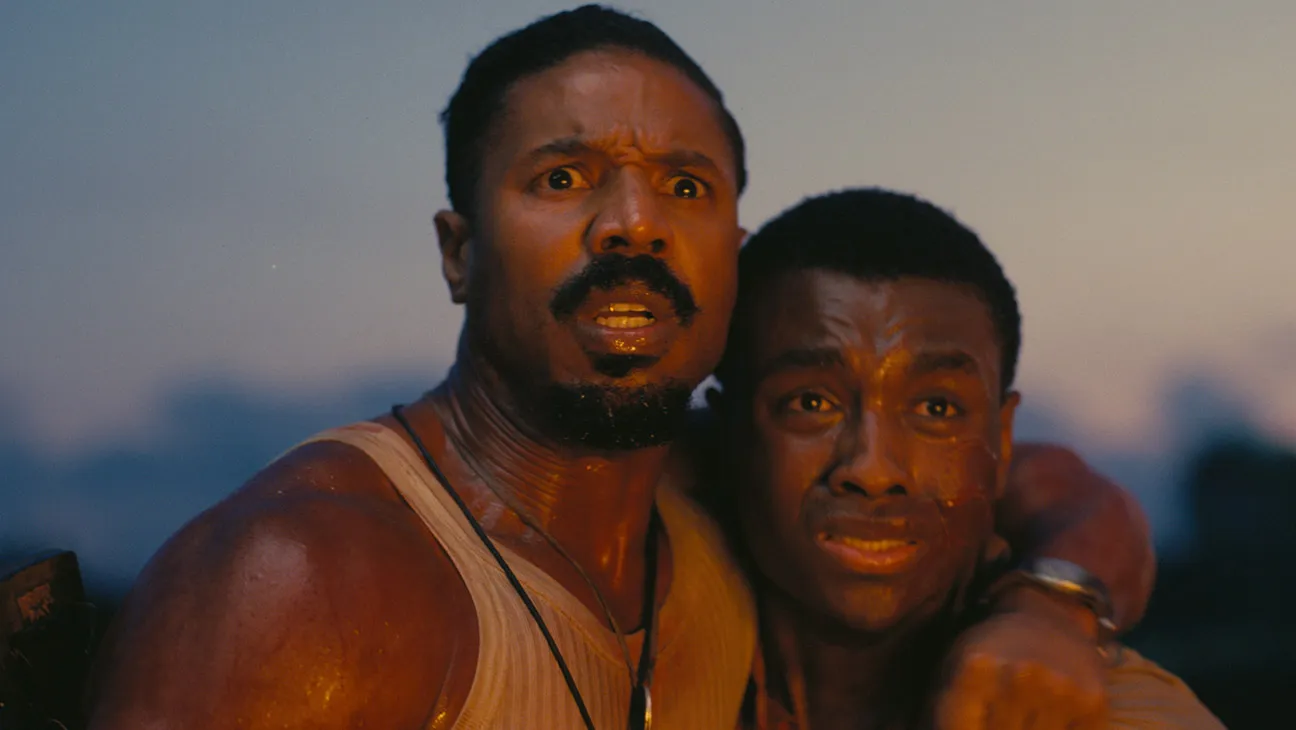
Sinners takes place in 1932 on the day twin brothers Smoke and Stack (both played by Michael B. Jordan) return to their hometown in the Delta. The two have survived WWI, managed to escape with their lives working for infamous Chicago mobsters, and are ready for a new venture. With stolen liquor and wads of cash, they set out to open a jukejoint for Black folks. They enlist their younger cousin, and some old friends, and begin to reignite things with their former flames as they think they are starting a new chapter.
However, their grand opening is interrupted when a band of vampires realizes they have someone they want. The leader of the undead, Remmick (Jack O’Connell), is delightfully creepy and will not take no for an answer. What ensues is a fun bloodbath by a filmmaker who refuses to treat his movies as if they should not all be Oscar contenders.
Again, Coogler makes movies for Black folks. So, there is a lot more Black joy in this movie than I would have expected. There is barely any vampire activity in the first half of Sinners. However, whenever I almost felt salty about that, I remembered lesser movies that took their time. Those same titles are the ones people claim are pure cinema, so those cinephiles should let Coogler cook.
He gives us a reverse From Dusk Till Dawn situation where the vampires want inside the establishment to feed on our beloved characters. This also allows Sinners to sustain tension as we wait to see who will be foolish enough to eventually invite them in and start the battle.
While Sinners never completely veers into Vampires Vs. the Bronx territory, it is clear that Remmick is offering a different brand of gentrification. He is trying to sell them the more subtle flavor that is assimilation. He offers friendship, community, and eternal life. However, it comes with a hefty price: their souls and identities.
The very freedom they have strived for with this business endeavor and their own community that welcomed them back with open arms. He wants them to forsake their individualism and become part of his undead hive.
Miles Caton Steals the Show as Sammie in Sinners
Most thirsty people were sold by the idea of getting two Michael B. Jordans for the price of one. However, the movie belongs to Miles Caton, who plays Sammie, the younger cousin of the twins. Sammie’s dad is a preacher, but Sammie wants to be a musician. Spending this fateful day with his cousins, whom he idolizes, as they take him under his wing, is clearly the best day of his life. At least until night falls and people start dying. Caton infuses the character with so much little brother energy that it is hard not to feel protective of him.
As the bodies begin piling up, the anxiety for his well-being skyrockets. As a lover of Black vampire cinema, I could not help but wonder if his scenes in the church were a little bit of a nod to Bill Gunn’s Ganja & Hess.
Rounding out the main cast is Wunmi Mosaku as Annie. Mosaku fans will recognize her as another woman who stays 10 steps ahead of everyone else. She clocks the weirdos outside as not human and catches everyone else up. She is also tasked with laying down the rules, which is a vital role in every vampire tale. Annie and Smoke are hesitantly rekindling their relationship after suffering a traumatic blow years ago. Mary (Hailee Steinfeld) is a woman who has a history with Stack.
Their fling meant more to them than he would like to let on, and her mother practically raised the twins. Because of her skin tone, she can pass as a white woman but knows where her real community is. Like Annie, she is a baddie in love with one of the troublesome twins. Unlike Annie, she makes a grave mistake.
We also get the added treat of Delroy Lindo as Delta Slim. A drunk musician who has some of the funniest lines once all hell breaks loose. However, one of the things that I love about Sinners is that it acknowledges Black folks were not the only ones keeping non-white communities afloat. A Choctaw tribe tries to warn a racist she is in danger. Grace Chow (Li Jun Li) and Bo Chow (Yao) are another hot couple in this dancery. They run a few businesses in the Black part of town, and the twins know they are the first people to call when plotting their event.
They are entrenched in this community and a Jack and Jill of many trades. They can find catfish for 100 people, make signs, and patch up thieves who have been shot. This is awesome, but it sadly leads to them getting front-row seats to the ensuing carnage.
Ludwig Göransson’s Music Elevates Sinners’ Vampire Tale
Coogler is not just reteaming with Jordan for Sinners, but he also tagged composer Ludwig Göransson for this gory tale. Göransson has worked on all of Coogler’s films, but this is the first one that puts music at the center. As someone who hates musicals and is a recovering theatre kid, I got nervous the first few times musical moments scratched at the window of my vampire movie. However, music is crucial to the plot, and this thread pays off for people who know a movie does not end until the credits are over.
The use of music also helps the film further set itself apart from other vampire movies it will be compared to for eternity. The vampire’s songs are so different from what Sammie and the other acts have brought this night that it’s offputting. It instantly alerts our main characters that they are not like us.
I jokingly refer to Remmick and his squad as Mumford & Sons when explaining my journey to accepting the music was here to stay. However, he and his bloody band of vampires are disturbing no matter how hard they dance or sing. This is partly because Coogler also brought back Director of Photography Autumn Durald Arkapaw, who he partnered with for Black Panther: Wakanda Forever. So, this movie looks gorgeous, and Arkapaw made history by being the first woman cinematographer to shoot a feature on large format IMAX film.
I did not realize what a difference this would make until I was in the theater. So many shots of Sinners belong in the MoMA.
Is Sinners a Cultural Milestone for Black Cinema?
I know that Sinners runtime is a commitment. I also know most of us were going for the Coogler Effect and the hot cast. However, the film is another pop culture shift on this filmmaker’s resume. In the way that Black Panther became a historical moment, Sinners is achieving the same. We can argue all day about if it could have been hornier, what scenes could be trimmed, and so forth.
However, none of the nitpicky things undercuts the social significance of what this film does. It transcends its subgenre as it becomes one of the best vampire movies of my generation. My only regret is that I do not live in one of the places showing the film the way the director intended it to be seen.
Sinners is a bloody, sexy, devilish good time. It is also a love letter to Black filmgoers as it reminds us the price of freedom never came cheap for those who came before us. However, a few seconds of freedom is a lot for people who are used to turning crumbs into a feast. Why should we assimilate when we can keep doing us, cousin?
After all, the drinks are cold, the catfish is hot, and the music is better on the inside.


Every horror fan has *one* blind spot they’re ashamed to admit. Mine just happens to be Stephen King. Reading wasn’t something I was really big into until my 20s, unless you count how many times I read The Ultimate Zombie Survival Guide or Mick Foley’s The Hardcore Diaries. The latter nearly got me in trouble at school too many times. All of that is to say that Carrie is one of the few King novels I’ve read, even if it has been nearly a decade and a half. Similarly, that’s been about how long it has been since watching the 1973 film. Let’s just say rewatching that and 2013’s Carrie was…something.
Revisiting Carrie
Carrie (Sissy Spacek/Chloë Grace Moretz) is an ostracized girl in her high school. No thanks to her hyper-religious mother, Margaret (Piper Laurie/Julianne Moore). One day after gym class, Carrie experiences her first period. Unsure what is happening to her body, Carrie freaks out in the gym’s shower and is ridiculed by her classmates, most notably Chris Hargensen (Nancy Allen/Portia Doubleday) and Sue Snell (Amy Irving/Gabriella Wilde). At that time, the only person who comes to Carrie’s aid is her gym teacher, Miss Collins (Betty Buckley)/Miss Desjardin (Judy Greer). Feeling bad for what she has done, Sue attempts to reconcile with Carrie by having her boyfriend, Tommy Ross (William Katt/Ansel Elgort), take Carrie to the prom. But Chris, who wasn’t allowed to go to prom because of the shower incident, and her boyfriend Billy (John Travolta/Alex Russell) have different plans.
While the director of 2013’s Carrie, Kimberly Peirce, is an acclaimed filmmaker, it’s incredibly hard to compete against Brian De Palma. De Palma’s depiction, written by Lawrence D. Cohen, of the first-ever novel published by Stephen King, is a fantastic example of a page-to-screen adaptation. From what I recall, Carrie (the novel) isn’t told solely from Carrie’s point of view, but rather employs a multiple-narrator approach. Cohen’s idea of keeping the audience in Carrie’s point of view, mostly, is definitely the right move. Her story is tragic, and one lived by many kids. Fanatical parents ruining their kids’ lives because of their skewed views of reality, based on a retelling of a retelling of a retelling of someone who lives in the sky, is sad.
Why Brian De Palma’s Carrie Is a Model Stephen King Adaptation
Nearly every aspect of Cohen’s retelling of King’s story works. Well-rounded characters give way to perfect setup/payoff moments. Add to that De Palma’s masterful visual storytelling, and you have a nearly perfect film. Sure, some moments don’t stand the test of time upon a modern rewatch. And that’s okay. The overall nature of this film remains effective in most senses. 2013’s remake, on the other hand, is nothing but poor choices stacked upon more poor choices.
It’s hard to imagine what involvement Lawrence D. Cohen had in the writing of the 2013 film because it’s a complete departure from everything that works with the 1976 film. I assume that Cohen wrote the bones of the script, and Pretty Little Liars: Original Sin’s Roberto Aguirre-Sacasa Riverdale’d it up. Roberto Aguirre-Sacasa has written one film that I think is astounding, The Town That Dreaded Sundown. (And one project that I enjoyed, Pretty Little Liars: Original Sin.) Except for those two projects, Roberto Aguirre-Sacasa has worked hard to bubblegum-ize many horror projects.
How the 2013 Carrie Script Loses the Soul of the Original
De Palma’s film is mean and pulls no punches. Pierce’s film is an affront to the senses. 2013’s Carrie is visually dull, full of terrible-looking digital effects, and is apparently acted by cardboard cutouts of decent actors. Chloë Grace Moretz is a talented actor, but everything about her performance feels like a no-rehearsal, first-take performance. Ansel Elgort is apparently on set. I think Julianne Moore wanted to put a down payment on a new beach house. And Alex Russell is a non-entity.
Moreover, everything about Pierce’s Carrie has too many notes of optimism. While I don’t remember the extent of Margaret’s character in the novel, I can almost assume that King didn’t create her as a character with any redeeming qualities. Too many times in Carrie (2013), we see these small moments of redemption, even if they are quickly undercut by Margaret’s disdain for her child. That’s not to say we need a ruthlessly mean film. But there is no edge to this remake.
The Problem With Softening Carrie White’s Mother
There’s something about how reserved the 1976 film is that kept me intrigued for the “big” moment. Hearing Carrie’s mom say, “I should have killed myself when pregnant with you,” (or something along those lines) was an incredibly impactful and heartbreaking moment. Seeing Margaret attempt to kill baby Carrie with [comically] large scissors in the opening of the remake, only to be stopped by divine intervention, is awful storytelling. It feels like an attempt to set up a potential(ly dumb) deus ex machina that never comes to fruition. That’s not even to mention how awful the dialogue is in the remake. Having a cutaway to a female student saying, “Oh my god, it’s period blood,” just shows that the writers have zero trust in the audience.
Do you really not think someone watching a Carrie remake knows what the hell is going on? It’s a slap in the face when the writers think their audience is full of propeller hat-wearing buffoons.
Carrie (2013) does less with more in 100 minutes than Carrie (1976) does in 98. Bland scenes of Chloë Grace Moretz practicing telekinesis are a drag. Watching Gabriella Wilde and Portia Doubleday snarkily argue with each other endlessly kills the pacing. I get that everyone knows the Carrie story (or at least the bare bones of it), but that’s okay. There is nothing wrong with modernizing a story while still keeping its pure elements intact. Maybe the issue is letting Roberto Aguirre-Sacasa pen R-rated properties. (Seriously, how did he strike such gold with The Town That Dreaded Sundown?!)
A Remake With Nothing to Say
Carrie (1976) is a profound film with style, class, and insanely great acting. Carrie (2013) is nothing more than a mid-aughts SparkNotes retelling of a great story through a PG-13 lens. It’s clear to me this film had to try way too hard to be rated R. 2013’s Carrie is one of the most pitiful films I’ve ever seen. There’s more care put into one scene of a SciFi Original than the entirety of this awful remake. It took me three hours of Ball X Pit to wipe the bad taste of this film out of my brain. And the more I write this, the angrier I get… Oh no, why did that lamp in my room just explode?

Horror lends itself a home to nearly every medical malady you can think of. From pica to sleepwalking, there’s most likely a horror film about it. One of the most underutilized medical illnesses in the genre has got to be Alzheimer’s disease. Think about it, the disease is a horror film on its own. What could be scarier than forgetting who you are, where you are, why you are, or what you’re doing? I’ve had many family members suffer from this awful disease, and the slow downfall deeper into it is an absolute tragedy to watch. Except for Relic and Viejos, there aren’t too many films that tackle this tricky subject. Out of the handful of films that do, one of the most impactful has to be The Taking of Deborah Logan.
A Documentary Crew Faces More Than Alzheimer’s in The Taking of Deborah Logan
Mia Hu (Michelle Ang) is a medical student who heads to Exhuma, Virginia, to document the progression of Deborah Logan’s (Jill Larson) struggle with Alzheimer’s disease. Along with her documentary crew, comprised of Gavin (Brett Gentile) and Luis (Jeremy DeCarlos), the team, and Deborah’s daughter, Sarah (Anne Ramsay), start to realize that Alzheimer’s may not be the worst of Deborah’s problems. As the days tick on, the documentary crew stumbles across the case of a missing child killer and slowly starts to put the pieces together. Do Deborah and her former partner, Harris (Ryan Cutrona), harbor a dark secret that will change how everyone views this cold case? And where did all these snakes come from?!
There are two sides of The Taking of Deborah Logan to examine: how it handles the found footage angle and how it handles Alzheimer’s disease. Let’s tackle the found footage first. As always, when it comes to found footage, we need to look at whether the filming is justified. Mia and her crew are there for documentation purposes, so the cliched “film everything” line works really well here. And the setup for the documentation is one of the best setups in the subgenre.
When Supernatural Horror Complicates a Sensitive Subject
Mia’s crew is expecting that they’ll see some odd stuff, maybe some freak-outs at the most. But once they start experiencing what can best be described as supernatural horror, the team will do whatever they can to document every single aspect. It also helps the Logan family that they’re being given grant money from Mia’s school to be subjects of the filming. Though that’s not to say that just because the filming is justified, the story is great.
Written by Gavin Heffernan and Adam Robitel, and directed by Robitel, The Taking of Deborah Logan suffers from too much story. There’s a fine line between exploitation and benevolence, and this film really toes that line of good versus bad taste. Heffernan and Robitel’s script makes sure not to villainize Deborah’s Alzheimer’s disease. And in doing so, they dug themselves into a hole that they don’t necessarily climb out of. Rather than doing too little and letting the horror naturally flow from Deborah’s disease, they take the film in a weird, supernatural angle that fails to find its footing in a way that feels reasonable.
Effective Horror Overshadowed by Narrative Overload
I can appreciate, in a sense, that the writers didn’t want to make Deborah seem like a villain or a horror villain icon. They easily could have. But the way they go about justifying what’s going on, and how it has a positive effect on Sarah and Deborah’s strained relationship, just feels way too forced. While the horror is incredibly effective, it’s hard not to get wrapped up in the minutiae of intricacies surrounding the film’s overall story. And that, to me, is where this story completely fails. Yes, it makes sense. No, it’s not great.
But, at the end of the day, it is a horror film. And should a horror film be judged on the singular metric of its horror? If the answer is yes, then The Taking of Deborah Logan is an unquestionable win. There has to be a reason I’ve thought about it on and off over the past 11 years. Whenever I watch it, I always forget that the story is just too much for its own good.
Jill Larson’s Standout Performance Elevates The Taking of Deborah Logan
The majority of the acting in this film is par for the course for found footage. It’s off, lines don’t necessarily land, some of the written lines feel improved, etc. Jill Larson, though, destroys all the competition with her portrayal of Deborah Logan. From smiles to screams, Larson flips it on a dime, unclenching her jaw and decimating the scenery. Most found footage films don’t have stellar performances. The Taking of Deborah Logan has one of the best performances in the 2010s.
For being found footage, The Taking of Deborah Logan sets itself apart from the majority of the straight-to-video found footage slop. And that’s coming from someone who considers found footage their favorite subgenre. I’d be interested to see more Alzheimer’s-based horror because it’s a fairly untapped market ripe for the picking. But, I know that as much as we would see it done well, I can only imagine how exploitative some of them would inevitably be.


‘Ready or Not’ and the Cathartic Cigarette of a Relatable Final Girl

‘Carrie’ Review: A Look At Two Adaptations

The Best Horror You Can Stream on Shudder in January 2026

The Best Horror You Can Stream on Netflix in January 2026

‘The Taking of Deborah Logan’ Review: An Overlooked Gem

‘Dry January’ Review: The Perfect Short Film for a Long Month

‘Lair of the White Worm’ Review: A Cult Folk Horror Classic

‘Snakes on a Plane’: A First-Time Watch Review

The Horror Press Podcast: Episode 53 ‘Disclosure Day’ and AI

‘The Snake Woman’ Review: Politics and Schlock in British Horror

‘The People Under the Stairs’ Review: A Brilliantly Bizarre Horror Classic

Slappy Was the Blueprint: How the Dummy from Goosebumps Became A Horror Icon

‘Five Nights at Freddy’s’ and The Story of William Afton Explained

Glen and Glenda: Don Mancini’s Reverence for Queerness in ‘Seed of Chucky’ (2004)

‘Truth or Dare’: Who Did it Best?

V/H/S Franchise Ranked, Best to Worst

Everything You Need to Know About Jason Voorhees

The 11 Most Disturbing Horror Movies Ever, According to an Actual Horror Fan

[REVIEW] ‘Cherry Falls’ (1999) Brittany Murphy Shines in This Cult Classic Slasher
