

Editorials
The Enduring Legacy of ‘Scream’: 25 Years of Meta-Horror Mastery


Stating the obvious here, but Scream has some serious endurance.
Over its 25-year history, the series has seen steady growth in its fanbase. With its highs and lows, along with multi-year lulls between films, this perennial series remains one that fans, myself included, can be proud to say is their own.
This begs the question, what makes Scream so unique as to outlast so many others? The original film is lightning in a bottle, an inimitable movie that reignited the costume killer craze. Many have tried and failed to emulate the charm of the films, mostly due to the complexity of their charm.
Scream is a Recipe for Success
Many horror movies have a strong iconography: well-designed slashers, inspiring final girls, earworm soundtracks, and memorable kills. Scream, of course, has all this but excels because of the horror history in its framework. That history is the filmography of industry veteran Wes Craven.
All four films carry the innovative spark Craven is renowned for while retaining the spirit of his previous works. The cruelty and aggression from the various Ghostface killers harken back to his work in 1976’s The Last House on the Left, where he first shocked audiences with the depravity of the Stillos. The dark humor of Scream takes the bleak laughs the best of the Nightmare on Elm Street films could produce and elicits them through Kevin Williamson’s famously clever dialogue.
And what is a conversation on Scream without addressing the meta-commentary on horror film history? Something audiences were first treated to heavily in Craven’s New Nightmare, Scream was a film that was decades in the making, as its creation finds many roots in its predecessors. It’s fitting that a series inspired by so many others would end up influencing a score of horror films to come.
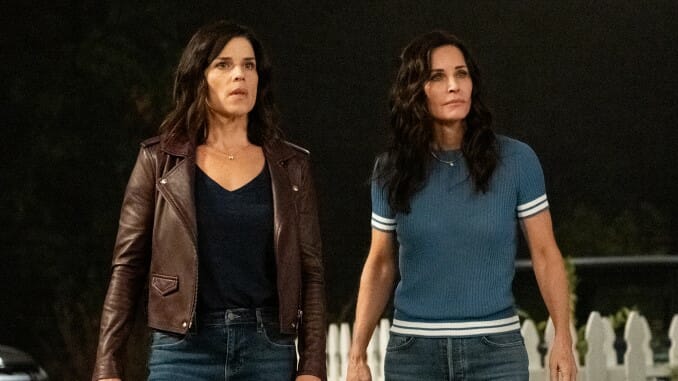
Heartfelt Love Letter to Slashers
As often as people brand Scream as satirizing the slasher genre, the movies feel like the most heartfelt love letter to slasher films because those films are its parentage. It knows where it comes from, looks back with pride, and paves a path rife with improvements.
On a technical and narrative level, all the Scream films are incredibly well constructed because of this. (Yes, even Scream 3. I would argue ESPECIALLY Scream 3 at some points, but that is a conversation for another day.) The cast of each of the films include some of the most charismatic and enjoyable actors to grace the silver screen. They’re fleshed out and three-dimensional, driving empathy in a subgenre where it feels increasingly easy to forget even main cast members in favor of the grisly spectacle of the villains. And in terms of villains, this series has the best chase scenes in all of horror and some of the best showdowns between killer and victim, due to how frenetic and high energy they can get.
But you, dear horror fan, already know all this, I’m sure. So, what is the secret ingredient then, if not all the above? What are its biggest improvements?
The Folklore in Scream
In other films, we get only a few lines about a killer’s legacy, a scene if we’re lucky, with a survivor or a victim. The gravity of a Voorhees massacre or a Krueger dream slaughter is largely relegated to the main cast and their interactions with the killer. But in Scream, we get to see the folklore of Sidney’s story spread. We’re presented with the relationship between the events of the films and the world around them to learn how the legend of Ghostface is transmitted. The Scream movies are a rarity that treats the town of Woodsboro, and eventually the world at large, as a character that grows with the rest of the cast.
This became most clear to me when I first heard Nick Cave’s “Red Right Hand” play in the films, a song I’ll forever associate with the movies. Despite how short the scene is, watching Woodsboro shut down for curfew in broad daylight was the scene that really got to me the first time I saw the movies. It was then that I recognized how rarely we get to see the outermost ripples of the shockwave created by a slasher’s rampage.
The Cultural Impact of Stab
And those shockwaves reverberate even further as the films go on. Woodsboro’s fear in the time between the first and second movies morphs into a morbid fascination that eventually spawns a series within a series, Stab. By Scream 4, there are seven Stab films with a fervent following; the teens of Woodsboro have parties to marathon the films, shouting lines back at the screen like it’s Rocky Horror Picture Show. It’s especially fun to see characters behaving as I would with Scream, reciting its many quotable lines. I see myself in Scream 2’s rambunctious theater, worked up to a fever pitch for the next installment in their beloved franchise.
Every time this element resurfaced, I was reminded of the special nature of how the Scream movies interact with their audience. There’s a sense of endearing realism in the reactiveness of the Scream world, with Stab paralleling our world’s reactiveness to Scream. Ghostface is mythologized, not as Billy and Stu or Mrs. Loomis and Mickey, but as a cultural sensation, a legend that has spawned an indelible influence on the collective consciousness. The series doesn’t just become a meta-commentary on horror films, it becomes a story on the power of Scream’s story; the power that lies in change. The very same power it had over me when I first saw it.
Each of the Scream films gives us a sensation of growth; growth that parallels that of its audience. It’s one of the franchises that hasn’t gotten lost in its own hype or swamped down in trying to relive its glory days. The series is just as forward-thinking and in touch with its audience as it was back in 1996, making it highly rewatchable. It still has a strong fanbase because it looks to the future of horror and shows us the greatness of change.


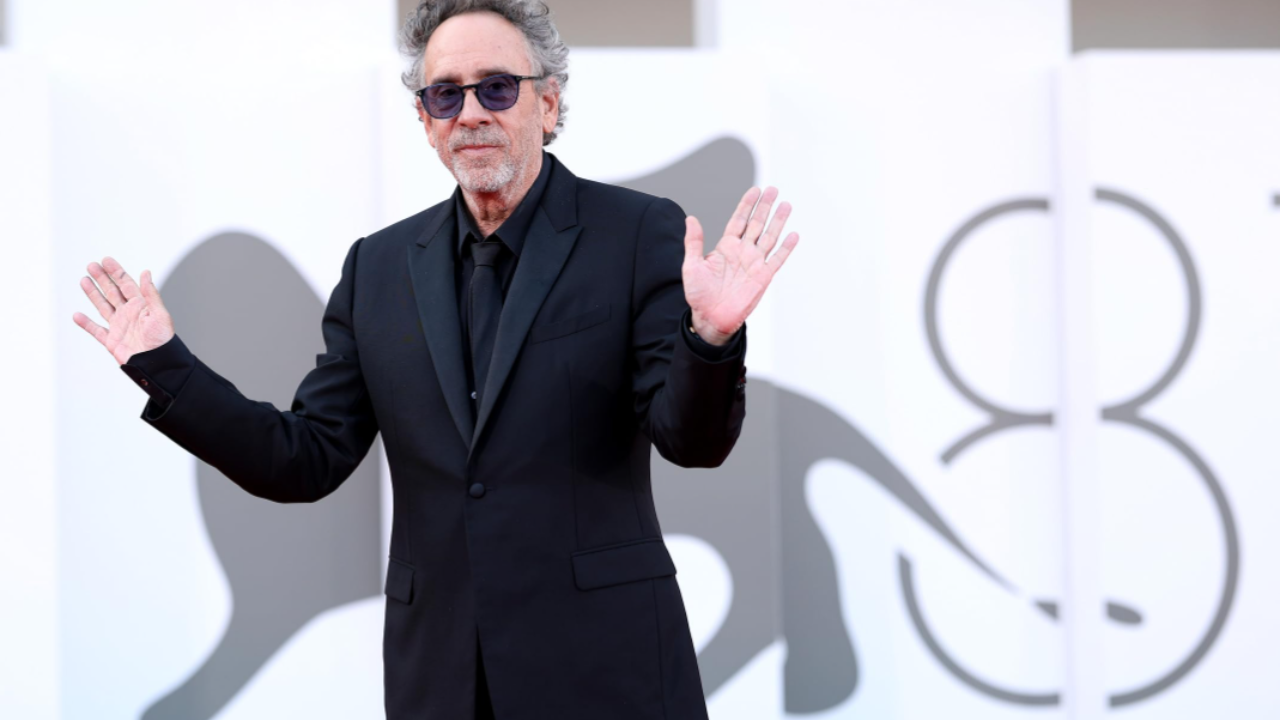
Tim Burton was not always my nemesis. In the not-too-distant past, I was a child who just wanted to watch creepy things. I rewatched Beetlejuice countless times and thought he was a lot more involved in Henry Selick’s The Nightmare Before Christmas than he actually was. I was also a huge Batman fan before Ben Affleck happened to the Caped Crusader. To this day, I still argue that Michael Keaton’s Bruce Wayne was one of the best. So when I tell you I logged many hours rewatching Burton’s better films in my youth, I am not lying.
However, as I got older, I started to realize that this director’s films are usually exclusively filled with white actors. Even his animated work somehow ignores POC actors, seemingly by design. This is sadly common in the industry, as intersectionality seems to be a concept most older filmmakers cannot wrap their heads around. So, I was one of the people who chalked it up to a glaring oversight and not much more. I also outgrew Burton’s aesthetic and attempts at humor when I started seeking out horror movies that might actually be scary.
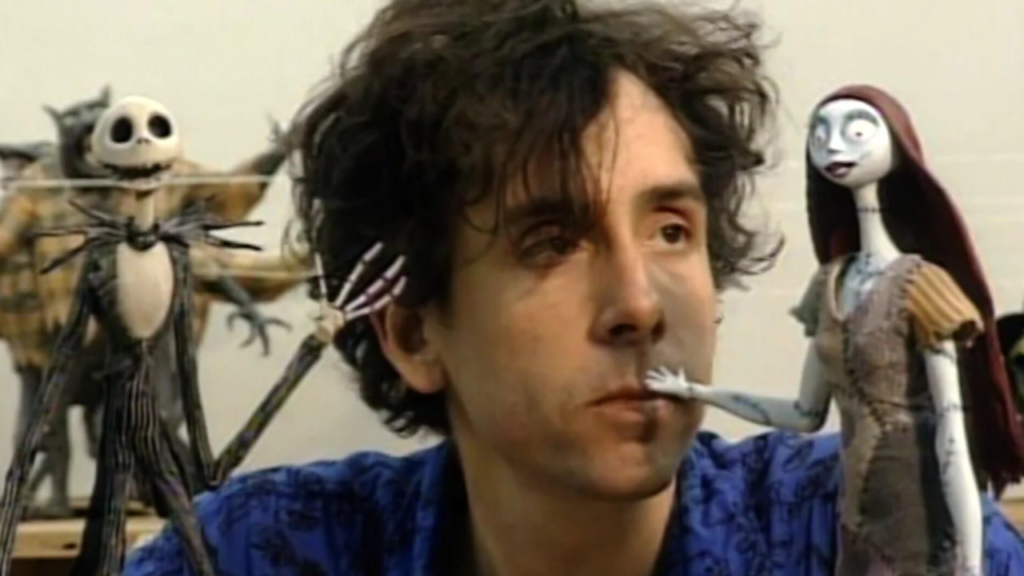
I Was Over Tim Burton Before It Was Cool
So, how did we get to episodes of the podcast I co-host, roasting Tim Burton? I kind of forgot about the man behind all of those movies I thought were epic when I was a kid. In huge part because his muse was Johnny Depp, whom I also outgrew forever ago. I wasn’t thinking about Burton or his filmography, and I doubt he noticed a kid in the Midwest stopped renting his movies. I didn’t think about Burton again until 2016 rolled around.
In an interview with Bustle for Miss Peregrine’s Home for Peculiar Children, the lack of diversity in Burton’s work came up. That’s when the filmmaker explained this wasn’t a simple blunder or oversight on his part. He also unsurprisingly said the wrong thing instead of pretending he’d like to do better in the future.
Tim Burton said, “Things either call for things, or they don’t. I remember back when I was a child watching The Brady Bunch, and they started to get all politically correct. Like, OK, let’s have an Asian child and a black. I used to get more offended by that than just… I grew up watching blaxploitation movies, right? And I said, that’s great. I didn’t go like, OK, there should be more white people in these movies.” – Bustle
Tim Burton Is Not the Only One Failing
We watch older white guys fumble in interviews when topics like gender parity, diversity, politics, etc., come up all the time. It’s to the point now where most of us are forced to wonder if their publicists have simply given up and just live in a state of constant damage control. However, Tim Burton’s response was surprisingly offensive in so many ways. The more I reread it, the more pissed off at this guy I forgot existed after we returned our copy of Mars Attacks! to the Hollywood Video closest to my childhood home. While I knew I wouldn’t be revisiting Edward Scissorhands and Beetlejuice, his explanation for the almost complete absence of POC in his work burst a bubble.
We Hate To See It
Tim Burton’s own words made me realize so many obvious issues that I excused as a kid. Like Billy Dee Williams as Harvey Dent in Batman, it was the only time I remembered a Black actor with substantial screentime in a Burton film. Or that The Nightmare Before Christmas was really named the late Ken Page’s character, Oogie Boogie. As a Black kid, what a confusingly racist image with a helluva song. So, Burton saying the quiet part out loud is what led me to reexamine the actual reasons I probably stopped watching his work. His problematic answer is also why I don’t have the nostalgia that made most of my friends sit through Beetlejuice Beetlejuice.
I love the cast for this sequel we didn’t need. I am also delighted to see Jenna Ortega continue working in my favorite genre. However, from what I heard from most of my friends who watched the movie, I’m not the only person who has outgrown Tim Burton’s messy aesthetic and outdated stabs at jokes. I am also not the only one paying attention to what’s being said about the Black characters on Wednesday. Again, I’m always happy to see Ortega booked and busy. However, I also refuse to pretend Burton has fixed his diversity problem. If anything, this moves us deeper into specific bias territory.
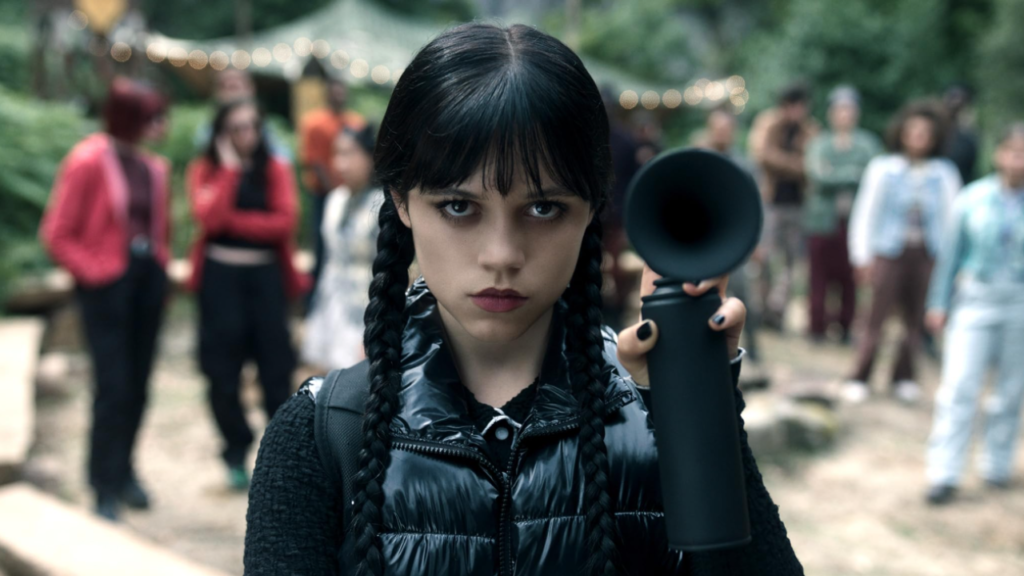
Tim Burton’s Bare Minimum Is Not Good Enough
He will now cast a couple of Brown people, but is still displaying colorism and anti-Blackness. His “things” seemingly “call for things” that are not Black folks in key roles that aren’t bullies. He still feels that’s his aesthetic. If we are still dragging him into the last millennium, will he ever work on a project that truly understands and celebrates intersectionality? Or will he continue doing the bare minimum while waiting for a cookie? I don’t know, and to be honest, I don’t care anymore. I’m not the audience for Tim Burton. You can say my “things” no longer “call for things” he’s known for. In part because I’m over supporting filmmakers who don’t get it and don’t want to get it.
If a director wants to stay in a rut and keep regurgitating the mediocre things that worked for him before I was born, that’s his business. I’m more interested in what better filmmakers who can envision worlds filled with POC characters. Writer-directors that understand intersectionality benefits their stories are the people I’m trying to engage with. So, while Tim Burton might have had a few movies on repeat during my VHS era, I have as hard of a time watching his work as he has imagining people who look like me in his stuff. I will never unsee “let’s have an Asian child and a black” in his offensive word salad. However, I don’t think he wants me in the audience anyways because he might then have to imagine a world that calls for people who look like me.


My first feature film, Death Drop Gorgeous, was often described as its own disturbed piece of queer cult cinema due to its over-the-top camp, practical special effects, and radical nature. As a film inspired by John Waters, we wore this descriptor as a badge of honor. Over the years, it has gained a small fanbase and occasionally pops up on lists of overlooked queer horror flicks around Pride month and Halloween.
The Streaming Era and the Myth of Monoculture
My co-director of our drag queen slasher sent me a status update, ostensibly to rile up the group chat. A former programmer of a major LGBTQ+ film festival (I swear, this detail is simply a coincidence and not an extension of my last article) declared that in our modern era, “cult classic” status is “untenable,” and that monoculture no longer exists. Thus, cult classics can no longer counter-culture the mono. The abundance of streaming services, he said, allows for specific curation to one’s tastes and the content they seek. He also asserted that media today that is designed to be a cult classic, feels soulless and vapid.
Shots fired!
Can Cult Cinema Exist Without Monoculture?
We had a lengthy discussion as collaborators about these points. Is there no monoculture to rally against? Are there no codes and standards to break and deviate from? Are there no transgressions left to undertake? Do streaming services fully encompass everyone’s tastes? Maybe I am biased. Maybe my debut feature is soulless and vapid!
I’ve been considering the landscape. True, there are so many options at our streaming fingertips, how could we experience a monoculture? But to think a cult classic only exists as counter-culture, or solely as a rally against the norm, is to have a narrow understanding of what cult cinema is and how it gains its status. The cult classic is not dead. It still rises from its grave and walks amongst the living.

What Defines a Cult Classic? And Who Cares About Cult Cinema?
The term “cult classic” generally refers to media – often movies, but sometimes television shows or books – that upon its debut, was unsuccessful or undervalued, but over time developed a devout fanbase that enjoys it, either ironically or sincerely. The media is often niche and low budget, and sometimes progressive for the cultural moment in which it was released.
Some well-known cult films include The Adventures of Priscilla, Queen of the Desert (1994), Showgirls (1995), Re-Animator (1985), Jennifer’s Body (2009), and my personal favorite, Heathers (1989). Quoting dialogue, midnight showings, and fans developing ritualistic traditions around the movie are often other ways films receive cult status (think The Rocky Horror Picture Show).
Cult Cinema as Queer Refuge and Rebellion
Celebration of cult classics has long been a way for cinephiles and casual viewers alike to push against the rigid standards of what film critics deem “cinema.” These films can be immoral, depraved, or simply entertaining in ways that counter mainstream conventions. Cult classics have often been significant for underrepresented communities seeking comfort or reflection. Endless amounts of explicitly queer cinema were lambasted by critics of their time. The Doom Generation (1995) by Gregg Araki and John Waters’ Pink Flamingos (1972) were both famously given zero stars by Roger Ebert. Now both can be viewed on the Criterion Channel, and both directors are considered pioneers of gay cinema.
Cult films are often low-budget, providing a sense of belonging for viewers, and are sometimes seen as guilty pleasures. Cult cinema was, and continues to be, particularly important for queer folks in finding community.
But can there be a new Waters or Araki in this current landscape?
What becomes clear when looking at these examples is that cult status rarely forms in a vacuum. It emerges from a combination of cultural neglect, community need, and the slow bloom of recognition. Even in their time, cult films thrived because they filled a void, often one left by mainstream films’ lack of imagination or refusal to engage marginalized perspectives. If anything, today’s fractured media landscape creates even more of those voids, and therefore more opportunities for unexpected or outsider works to grab hold of their own fiercely loyal audiences.
The Death of Monoculture and the Rise of Streaming
We do not all experience culture the same way. With the freedom of personalization and algorithmic curation, not just in film but in music and television, there are fewer shared mass cultural moments we all gather around to discuss. The ones that do occur (think Barbenheimer) may always pale in comparison to the cultural dominance of moments that occurred before the social media boom. We might never again experience the mass hysteria of, say, Michael Jackson’s Thriller.
For example, our most successful musician today is listened to primarily by her fanbase. We can skip her songs and avoid her albums even if they are suggested on our streaming platforms, no matter how many weeks she’s been at number one.
Was Monoculture Ever Real?
But did we ever experience culture the same? Some argue that the idea of monoculture is a myth. Steve Hayden writes:
“Our monoculture was an illusion created by a flawed, closed-circuit system; even though we ought to know better, we’re still buying into that illusion, because we sometimes feel overwhelmed by our choices and lack of consensus. We think back to the things we used to love, and how it seemed that the whole world, or at least people we knew personally, loved the same thing. Maybe it wasn’t better then, but it seemed simpler, and for now that’s good enough.”
The mainstream still exists. Cultural moments still occur that we cannot escape and cannot always understand the appreciation for. There are fads and trends we may not recognize now but will romanticize later, just as we do with trends from as recently as 2010. But I’d argue there never was monoculture in the same way America was never “great.” There was never a time we all watched the same things and sang Madonna songs around the campfire; there were simply fewer accessible avenues to explore other options.
Indie Film Distribution in the Age of Streaming
Additionally, music streaming is not the same as film streaming. As my filmmaking collective moves through self-distributing our second film, we have found it is increasingly difficult for indie, small-budget, and DIY filmmakers to get on major platforms. We are required to have an aggregator or a distribution company. I cannot simply throw Saint Drogo onto Netflix or even Shudder. Amazon Prime has recently made it impossible to self-distribute unless you were grandfathered in. Accessibility is still limited, particularly for those with grassroots and shoestring budgets, even with the abundance of services.
I don’t know that anyone ever deliberately intends on making a cult classic. Pink Flamingos was released in the middle of the Gay Liberation movement, starring Divine, an openly gay drag queen who famously says, “Condone first-degree murder! Advocate cannibalism! Eat shit! Filth are my politics, filth is my life!”
All comedy is political. Of course, Waters was intentional with the depravity he filmed; it was a conscious response to the political climate of the time. So if responding to the current state of the world makes a cult classic, I think we can agree there is still plenty to protest.

There Is No Single Formula for Cult Cinema
Looking back at other cult classics, both recent and older, not all had the same intentional vehicle of crass humor and anarchy. Some didn’t know they would reach this status – a very “so bad, it’s good” result (i.e., Showgirls). And while cult classics naturally exist outside the mainstream, some very much intended to be in that stream first!
All of this is to say: there is no monolith for cult cinema. Some have deliberate, rebellious intentions. Some think they are creating high-concept art when in reality they’re making camp. But it takes time to recognize what will reach cult status. It’s not overnight, even if a film seems like it has the perfect recipe. Furthermore, there are still plenty of conventions to push back against; there are plenty of queer cinema conventions upheld by dogmatic LGBTQ+ film festivals.
Midnight Movies vs. Digital Fandom
What has changed is the way we consume media. The way we view a cult classic might not be solely relegated to midnight showings. Although, at my current place of employment, any time The Rocky Horror Picture Show screens, it’s consistently sold out. Nowadays, we may find that engagement with cult cinema and its fanbase digitally, on social media, rather than in indie cinemas. But if these sold-out screenings are any indication, people are not ready to give up the theater experience of being in a room with die-hard fans they find a kinship with.
In fact, digital fandom has begun creating its own equivalents to the midnight-movie ritual. Think of meme cycles that resurrect forgotten films, TikTok edits that reframe a scene as iconic, or Discord servers built entirely around niche subgenres. These forms of engagement might not involve rice bags and fishnets in a theater, but they mirror the same spirit of communal celebration, shared language, and collective inside jokes that defined cult communities of past decades. Furthermore, accessibility to a film does not diminish its cult status. You may be able to stream Tim Curry as Dr. Frank-N-Furter from the comfort of your couch, but that doesn’t make it any less cult.

The Case for Bottoms
I think a recent film that will gain cult status in time is Bottoms. In fact, it was introduced to the audience at a screening I attended as “the new Heathers.” Its elements of absurdity, queer representation, and subversion are perfect examples of the spirit of cult cinema. And you will not tell me that Bottoms was soulless and vapid.
For queer communities, cult cinema has never been just entertainment; it has operated as a kind of cultural memory, a place to archive our identities, desires, rebellions, and inside jokes long before RuPaul made them her catchphrases repeated ad nauseam. These films became coded meeting grounds where queer viewers could see exaggerated, defiant, or transgressive versions of themselves reflected back, if not realistically, then at least recognizably. Even when the world outside refused to legitimize queer existence, cult films documented our sensibilities, our humor, our rage, and our resilience. In this way, cult cinema has served as both refuge and record, preserving parts of queer life that might otherwise have been erased or dismissed.
Cult Cinema Is Forever
While inspired by John Waters, with Death Drop Gorgeous, we didn’t intentionally seek the status of cult classic. We just had no money and wanted to make a horror movie with drag queens. As long as there continue to be DIY, low-budget, queer filmmakers shooting their movies without permits, the conventions of cinema will continue to be subverted.
As long as queer people need refuge through media, cult cinema will live on.


Tim Burton, Representation, and the Problem With Nostalgia

[INTERVIEW] Tucking Into ‘Hannibal Lecter: A Life’ with Author Brian Raftery

‘Re-Animator’ Review: The Lasting Legacy of a Horror Comedy

‘Iron Lung’ Review: Exceptionally Atmospheric Cosmic Horror

No, Cult Cinema Isn’t Dead

‘The Ritual (2017)’ Review: When Grief Gets Gruesome

‘Wait Until Dark’ Review: A Timeless Psychological Horror Thriller

‘Return to Silent Hill’ Review: A Misogynistic Betrayal of Silent Hill 2

‘Lake Mungo’ Review: Still the Greatest Ghost Film of All Time

How ‘Child’s Play’ Helped Shape LGBTQ+ Horror Fans

‘The People Under the Stairs’ Review: A Brilliantly Bizarre Horror Classic

‘Five Nights at Freddy’s’ and The Story of William Afton Explained

Slappy Was the Blueprint: How the Dummy from Goosebumps Became A Horror Icon

Glen and Glenda: Don Mancini’s Reverence for Queerness in ‘Seed of Chucky’ (2004)

‘Truth or Dare’: Who Did it Best?

V/H/S Franchise Ranked, Best to Worst

Everything You Need to Know About Jason Voorhees

The 11 Most Disturbing Horror Movies Ever, According to an Actual Horror Fan

[REVIEW] ‘Cherry Falls’ (1999) Brittany Murphy Shines in This Cult Classic Slasher
