

Reviews
[REVIEW] The Skiing Slasher ‘Iced’ (1988) Provides Chills, If Not Thrills
Hell hath frozen over here at Horror Press, and as one of the world’s premiere 1980s slasher obsessives, I thought this might be the perfect time to crack into my unwatched VHS of the 1988 skiing slasher Iced. Here’s the gist. Four years after their friend Jeff (Dan Smith) dies in a skiing accident, a group of friends (Doug Stevenson, Debra De Liso, John C. Cooke, Elizabeth Gorcey, Michael Picardi, Ron Kologie, and the original Wednesday Addams, Lisa Loring) is invited to the swanky Snow Peak skiing community for a vacation. Isolated and surrounded by snow, they begin to be hunted by a killer wearing Jeff’s cracked ski mask, who blames them for the accident. Is it Jeff? Or is it someone else seeking revenge?


Hell hath frozen over here at Horror Press, and as one of the world’s premiere 1980s slasher obsessives, I thought this might be the perfect time to crack into my unwatched VHS of the 1988 skiing slasher Iced. Here’s the gist. Four years after their friend Jeff (Dan Smith) dies in a skiing accident, a group of friends (Doug Stevenson, Debra De Liso, John C. Cooke, Elizabeth Gorcey, Michael Picardi, Ron Kologie, and the original Wednesday Addams, Lisa Loring) is invited to the swanky Snow Peak skiing community for a vacation. Isolated and surrounded by snow, they begin to be hunted by a killer wearing Jeff’s cracked ski mask, who blames them for the accident. Is it Jeff? Or is it someone else seeking revenge?
Is Iced a Good Slasher Movie?
Unfortunately, like many meat-and-potatoes slasher movies of the late 1980s, Iced does not have much to offer the seasoned horror fan. The acting ranges from competent (hi, Lisa Loring) to absolutely abysmal, averaging out much closer to abysmal than not. The real estate agent Alex Bourne (played by the movie’s screenwriter, Joseph Alan Johnson), in particular, is a disastrously beige nonentity.
The movie’s pacing and structure are also baffling. There are almost no murders beyond the opening kill for a good half of Iced’s runtime, forcing you to spend time watching this group of people have a mediocre ski vacation where they’re constantly sniping at one another and not doing much else. When the kills do come, they zip past you at a too-rapid clip, hardly giving you time to pay proper attention to them, like chocolates on the conveyor belt in I Love Lucy.
There is next to no tension-building in the movie because of this, just a lurching sort of stop-start motion that will make you seasick. By far, the most exciting and visceral moment of the movie is a scene where a character is wandering around in the dark and bangs his shin on a coffee table.
Tragically, the skiing is also not that thrilling to watch. While it’s competently shot, enough to be legible, it seems to be beyond the limits of director Jeff Kwitney to turn it into something propulsive and exciting. Thankfully, the movie pretty much forgets about skiing after the first act, anyway.

What Does Iced Do Well?
Although the sum of its parts is pure blandness, there is plenty that Iced does quite well. For instance, the movie was shot in Utah and thus comes by its iciness naturally (sorry, Jack Frost, California doesn’t quite cut it), crafting a unique setting for a late-period slasher with a frigid, moody atmosphere. I’m also a sucker for themed kills, and the use of a ski pole, an icicle, a snowplow, and a hot tub do a lot to spice up the proceedings.
For the gorehounds in the audience, only one of the kills is particularly bloody, though they are nearly all well-rendered by their own standards (there’s an electrocution that relies on performance rather than effects, for instance, and does stick the landing). And even the offscreen or underwhelming kills end up being useful in the Final Girl sequence, when their frozen bodies provide a gruesome and effectively bleak tableau.
Exploitation and Progressive Elements in Iced
As far as exploitation movies go, Iced also has quite a bit to offer on that front. Nearly every member of the cast takes off all their clothes at one point or another, chilliness be damned, and there is a reasonably equitable division of male and female characters wandering around bare-chested, which always feels shockingly progressive when you’re watching a 1980s slasher. Plus, the sequence that is the most undignified (a topless corpse is seen with snow piled on her breasts) actually works for the tone, as the indignity makes her death feel that much more tragic, while the piled snow emphasizes how impossibly long the character has been exposed to the elements.
What else is good? Well… The killer’s POV is depicted by showing a view through the cracks in Jeff’s visor, which provides a neat new image for a type of shot that is otherwise pretty standard for a slasher movie.
However, Iced ultimately exists in this nether space between interesting and boring where it never particularly feels like a slog, but is oh-so withholding when it comes to meting out exciting moments. I’ve seen dozens of slashers that are much, much worse, so it’s hard to get angry about what this 1988 entry is bringing to the table. That said, this one is only for die-hard fans of the subgenre, or for people who desperately need a snowy horror fix and have already seen everything else from The Shining to Wind Chill.
Score: 4/10


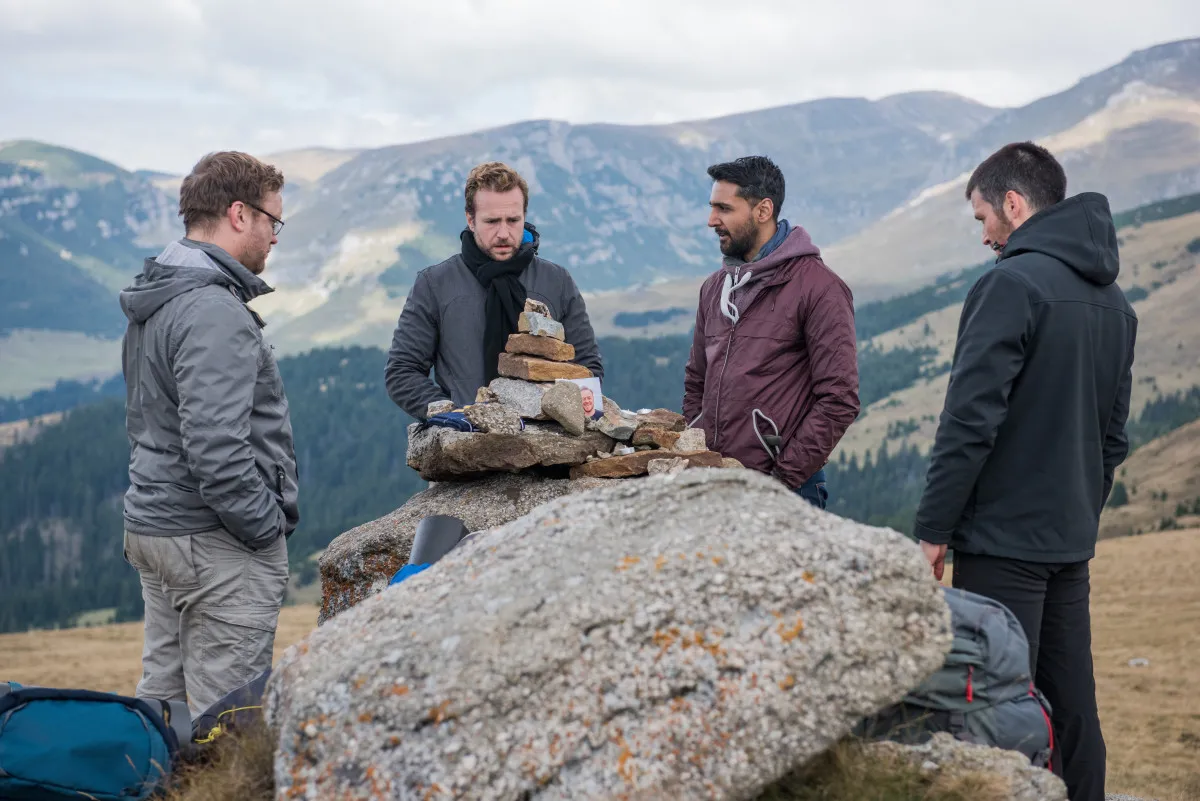
The Ritual is, without a doubt, one of the most completely enthralling horror films of the past decade. Usually, I wouldn’t open with such a strong reaction for a movie that isn’t a technical and narrative masterpiece, but this is close enough to call that in. It’s at the very least masterful work that deserves more love, and that’s even with it having a permanent home and high placement on the world’s biggest streaming platform. It’s no longer the obscure hidden gem it was at the time of release, if it ever was that, but I refuse to stop talking about it.
The sheer catharsis this film grants through its cast, and the way its environment really pushes that cast of characters, is what I could only describe as “surgical.” It cuts to the bone. It’s a movie about the strangling nature of grief, and it gives us a great time showing its characters fighting against that choking feeling.
What is The Ritual (2017) About?
After the death of Rob, things haven’t been the same for Luke. The memories of the robbery that took his life, a robbery he had to witness hiding behind a liquor shelf, still haunt him. But there’s a chance for closure as he and his friends go on the trip that Luke had helped plan the night he died.
Their quest to honor his memory sends them through the beautiful locales of Northern Sweden, along a hiking trail in the mountains. But after an attempt at a shortcut sends the group deep into the woods and they struggle to get back on course, it becomes violently clear they aren’t the only ones in the wilderness. Ritualistic markings, involving dead animals and dire effigies, warn of a much greater power lurking in the forest. Whether they can escape it depends on whether they can keep each other safe long enough to get out.
Netflix Could You Lock In And Do A Physical Release For Once
This is a phenomenal film, but I’d be remiss if I didn’t get up on my soapbox about its format for just one moment. Regrettably, this is a streaming-only film that has been shackled by Netflix to its platform. It has an excessively rare DVD release floating around, but that is also unfortunately, region locked, and likely more low fidelity than most physical collectors would like. Especially when so much of this movie relies on shadow and darkness, a Blu-Ray release is kind of obligatory for high quality preservation of the director’s vision.
Not sure what I expected from the media conglomerate that it is. Netflix is already notorious for refusing to release physical media and then cancelling and erasing shows from the platform. What are we going to do with you Netflix? You only ever seem to cause me problems. Just make the physical release for this already.
Gorgeous, Grotesque, And Gut-wrenching All At The Same Time
Setting that thought aside, this film was bound to be fantastic given the horror pedigree behind it. Cutting loose anthology director David Bruckner, the MVP of the V/H/S franchise, then giving him a budget and legendary location scouting is about as great as you’d expect. It’s like saying that sugar and butter make things taste better; should you really be shocked?
When you have this many lighting and environmental factors to juggle, expectations are understandably high. The film on paper should look at least a little choppy, but Bruckner and cinematographer Andrew Shulkind really are in their element here. This is only exemplified even further by the film’s most memorable space-bending set piece at its climax. I won’t even risk spoiling it for lack of a better description, but I will say the stark contrast they play with light and shadow here makes for some really captivating visuals and frightening moments.
The naturalistic environment this folk horror takes place in really has a knack for showing the contrasting beauty and grotesqueness of the things hiding in the woods. And its director really has a knack for using that environment to squeeze the actors for all they’ve got.
A Phenomenal Cast Led By Rafe Spall
Make no mistake: The Ritual is not just a pretty face. This is at its core a story about a group of men facing their strained relationships in the wake of a brutal death, and all the ugliness that entails. They’re foolish, angry, bitter, and sad people struggling each in their own way to accept a loss. What it leads you with is what you’d expect to be one-note characters being slotted into archetypal roles, but what they end up as feels surprisingly real.
The obvious star here is our lead Rafe Spall, whose turn as main character Luke ranges from downright depressing to shockingly soul lifting. You can see Spall plays him as a man slowly trying to piece himself back together, fumbling as he’s soaked in alcohol and self-pity. His changing demeanor throughout the film really reflects the truth of his character: he was only ever going to change and confront his past when he was forced to. And him being forced to go through supernatural circumstances really does make for one of the most satisfying character arcs in a horror film I’ve ever seen.
Is This The Best Creature Design Of The Past 20 Years?
Again, it’s difficult to talk about this film without spoiling its most fun moments, so I will just say that you only stand to gain something by watching it. If its emotional aspects don’t grab you, its aesthetic qualities will. And if all that fails to grab you, maybe this will: The Ritual boasts what is the definitively best monster design of the 2010s, if not the past 20 years. Nothing, and I mean nothing, can top the visual concept this film delivers on with that design. Need I say more?

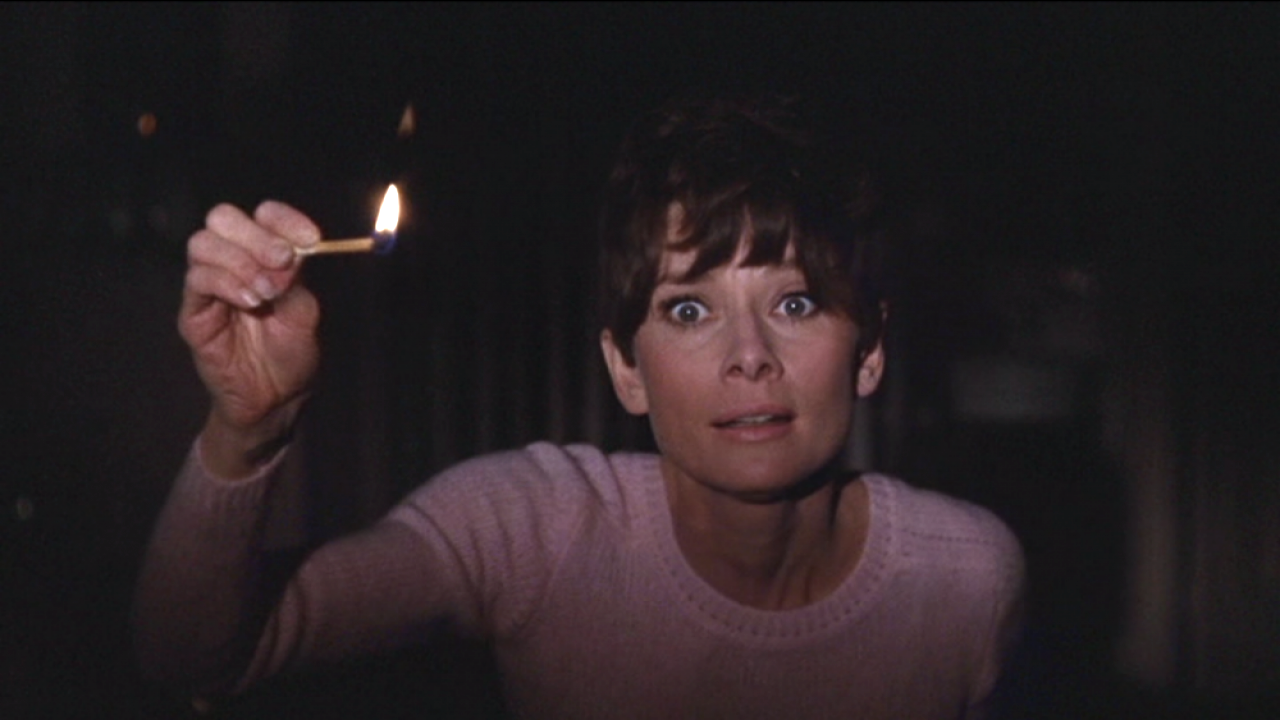
In my recent review of Venom, I scolded myself for an overall lack of care in watching films outside of my comfort zone. When it came to thinking of cathartic horror films for January, Venom’s own Robert Carrington quickly came to mind. Carrington penned Venom and co-wrote Wait Until Dark, and I couldn’t help but think this was the best way to get me back into watching films I don’t typically watch. When I first watched Wait Until Dark in a semi-secluded beach house on Cape Cod years ago, I was stunned. I had never seen an Audrey Hepburn movie before, and knowing that this film was wholly against type for her, I have never watched one since. Something about Wait Until Dark just never ceases to get under my skin, rewatch upon rewatch.
Wait Until Dark: A Deadly Cat-and-Mouse Game
Lisa (Samantha Jones) brings a drug-filled doll from Canada to New York. Once at the airport, she hands the doll off to an unknowing Sam (Efrem Zimbalist Jr.), who takes it home, where he lives with his wife Susy (Audrey Hepburn), who has recently gone blind. Mike (Richard Crenna) and Carlino (Jack Weston) make a trip to Sam’s (gorgeous) apartment to meet up with Lisa, but they find Roat (Alan Arkin) and Lisa’s dead body. Roat gives the men an offer they can’t refuse, and they decide to help him find the doll. What transpires is a cat-and-mouse game between three criminals and a blind woman, who is smarter and craftier than any of them would have imagined.
There are only a handful of films that I’ve seen adapted from stage plays that work better as films. Frank Capra’s adaptation of Arsenic and Old Lace is tied with this film for best stage-to-screen adaptation (in my view). It’s been a long time since I’ve read Frederick Knott’s stellar stage play, but it still doesn’t hold a candle (or match!) to Terence Young’s truly terrifying epic. With a few moments of exception, the majority of Wait Until Dark is a self-contained chamberpiece that refuses to give one second of relief. Writers Jane-Howard and Robert Carrington crafted Knott’s stage play into one of the most heart-pounding experiments of horror and suspense.
Audrey Hepburn’s Incredible Performance
As stated in the introduction, I had not watched an Audrey Hepburn movie before Wait Until Dark. That’s not to say I don’t know who she is. Audrey Hepburn is one of the few icons whose name carries their legacy. Seeing Hepburn’s immensely captivating performance makes it clear what a powerhouse of an actor she was. While Hepburn does a significant amount of carrying throughout Wait Until Dark, it’s the ensemble cast that makes this film a true piece of art. Richard Crenna’s unbridled charisma creates this unusual mixture of friendship and fear…he could sell water to a fish. Each interaction between Crenna and Hepburn makes you start to forget that he is indeed a bad guy with ulterior motives. Each performance in Wait Until Dark is a masterclass in screen performance.
Please don’t crucify me when I say this, but Alan Arkin truly steals the show with his performance. Wait Until Dark is unquestionably an Audrey Hepburn vehicle. But Alan Arkin chews the scenery like a gristly steak. Whether he’s Roat, Roat Jr., or Roat Sr., Arkin has this film in a chokehold. He’s funny, charismatic, rude, mean, and undoubtedly one of horror’s greatest villains. His greasy black hair and slick black glasses give him a hitman demeanor that’s only amped up with each costume change. But it’s his arrogance that gets him in the end. The simplest oversight puts him in a blind woman’s crosshairs and signs their death warrant.
Wait Until Dark: A Title That Becomes a Warning
It wasn’t until this watch, probably my tenth viewing, that I finally understood the title. Wait Until Dark isn’t just a catchy title that easily rolls off the tongue…it’s a warning. The film may have been unsettling for the first hour and twenty minutes, now just wait until the lights go off in the final act. If you haven’t seen Wait Until Dark, you’re missing out on one of horror’s greatest treasures.
Films today have become too same-y. There’s this constant need to always up the ante, but there’s little want to tell interesting stories. One of my least favorite things about horror is how it’s becoming too mean. Bring Her Back is ruthlessly mean for no purpose. Terrifier is mean for no purpose (Damien Leone’s words). Mean horror does have a place within the genre, but when that seems to be taking the genre over, then what’s the point? Post-9/11, mean horror had a purpose; it was a mirroring of the anger many people felt. Now, it feels like so many horror films just want to one-up the latest release for no reason.
Why Wait Until Dark Still Matters
One of the beautiful things about Wait Until Dark is how tastefully mean it is. What’s more mean than a group of criminals toying with a blind woman for hours over a slightly felonious amount of drugs? It is mean when Alan Arkin goes through the trouble of putting on two different disguises to fool a blind woman who doesn’t touch his face once. But this is all intended to tell a story, and not meant to solely make the audience uncomfortable…it’s for the purpose of GREAT storytelling. Filmmakers who were inspired by slashers of the ‘80s are a dime a dozen these days; where are the filmmakers inspired by Wait Until Dark?
Those are the films I want to see.


No, Cult Cinema Isn’t Dead

‘The Ritual (2017)’ Review: When Grief Gets Gruesome

‘Wait Until Dark’ Review: A Timeless Psychological Horror Thriller

‘Return to Silent Hill’ Review: A Misogynistic Betrayal of Silent Hill 2

‘Lake Mungo’ Review: Still the Greatest Ghost Film of All Time

How ‘Child’s Play’ Helped Shape LGBTQ+ Horror Fans

‘The Cabin in the Woods’ Review: And the State of Horror

‘Night Patrol’ Review: Vampiric Cop Horror Undone by Messy Execution

The 10 Most Satisfying Deaths in Horror Movies

‘28 Years Later: The Bone Temple’ Review: Nia DaCosta Has the Cure

‘The People Under the Stairs’ Review: A Brilliantly Bizarre Horror Classic

‘Five Nights at Freddy’s’ and The Story of William Afton Explained

Slappy Was the Blueprint: How the Dummy from Goosebumps Became A Horror Icon

Glen and Glenda: Don Mancini’s Reverence for Queerness in ‘Seed of Chucky’ (2004)

‘Truth or Dare’: Who Did it Best?

V/H/S Franchise Ranked, Best to Worst

Everything You Need to Know About Jason Voorhees

The 11 Most Disturbing Horror Movies Ever, According to an Actual Horror Fan

[REVIEW] ‘Cherry Falls’ (1999) Brittany Murphy Shines in This Cult Classic Slasher
