

Reviews
‘28 Years Later: The Bone Temple’ Review: Nia DaCosta Has the Cure

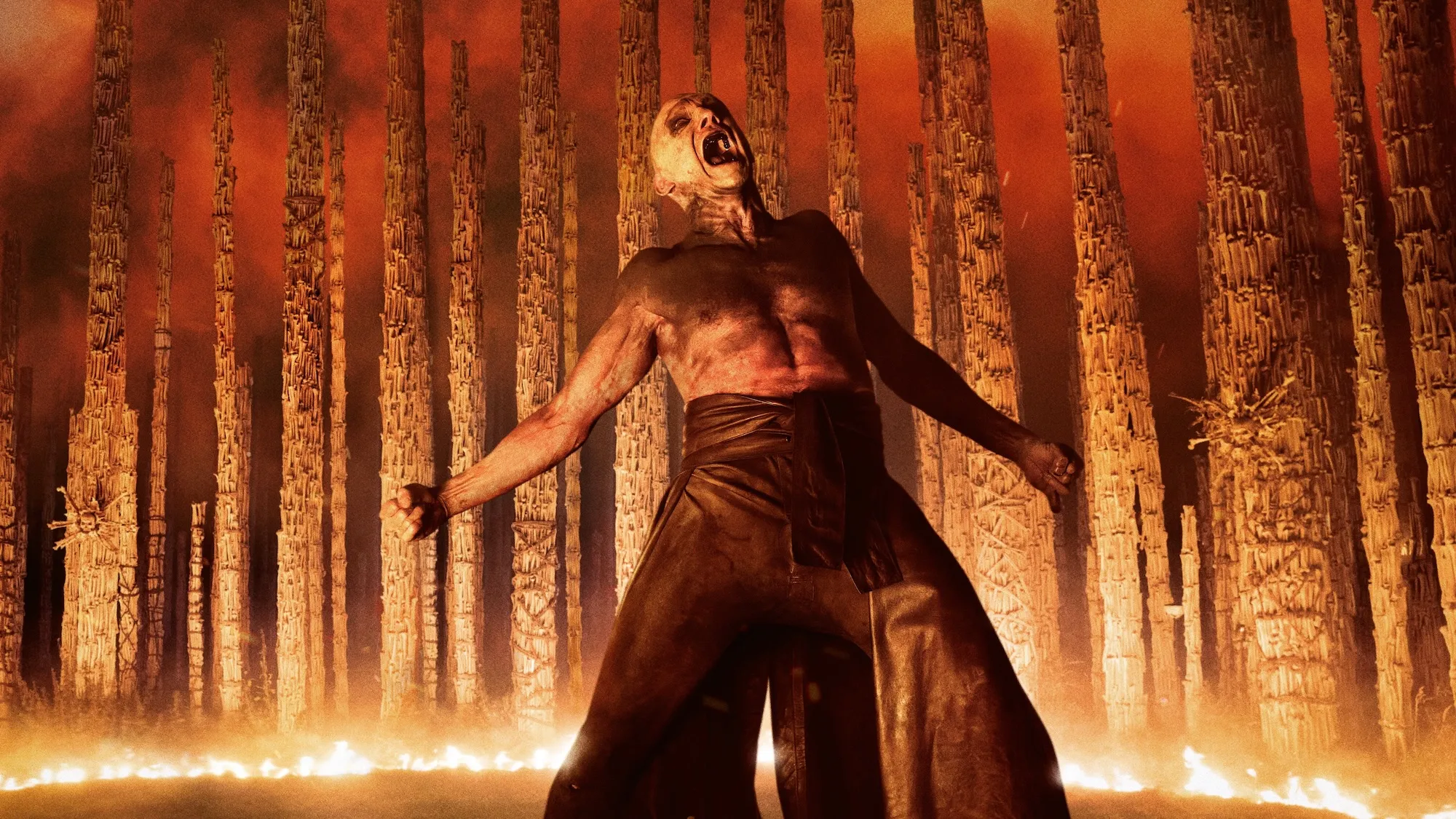
If there’s one thing I truly admire about 28 Years Later: The Bone Temple, it’s how deftly it maneuvers itself out of the mires that blemished the previous film. It continues the story director Danny Boyle and writer Alex Garland set up in 28 Years Later, but manages to bypass all of its weaknesses. It remedies all the ailments of the 2025 reboot, and it’s safe to say director Nia DaCosta is the one delivering the cure.
Director Nia DaCosta Gets Us Back on Course
Instead of the overly stylized editing and camerawork Boyle indulged in, we get a film that is clean and sharp without sacrificing the chaotic nature of the conflicts at hand. Instead of spreading its narrative and thematic butter too thin by hitting on many different ideas, The Bone Temple focuses in and focuses hard on what it’s trying to say about its characters. And most surprisingly of all, it manages to strike a near perfect balance of dark humor and genuinely disturbing sights to create a film that is every bit as fun as it is bleak and brutal.
Spike’s Journey Continues– While Dr. Ian Kelson’s Begins
As Spike’s journey in a post-apocalyptic Great Britain continues, he finds himself in dangerous company: The Fingers, a childish and ultraviolent band of tracksuit wearing survivors all named Jimmy. They’re guided by their demented priest and gang leader Sir Lord Jimmy Crystal, a demanding monster that consumes everything in his path to fulfill his dark and bizarre sacraments.
As he’s inducted into the gang in a brutal fashion, things go from bad to worse as Spike tries to escape them. But elsewhere something even stranger than the Fingers’ way of life begins to unfold, as Dr. Ian Kelson’s run-ins with the infected alpha Samson bear bizarre new fruit.
Jack O’Connell Reminds Us of What Made 28 Days Later So Good
Those expecting the violent infected roaming the woods to take center stage again will likely be disappointed, as their threatening presence from the first film has been usurped by our new underhanded antagonist Jimmy Crystal. Portrayed by Jack O’Connell, hot off the heels of his explosive performance in Sinners, he proves to us time and again that there are in fact worse fates than infection and death out in the wastelands of the United Kingdom. He is without a doubt the best part of the film, primarily for what he achieves in refocusing on the ethos of the series. The sheer human horror that made 28 Days Later so compelling is revitalized here, with O’Connell taking on the same kind of dire threat that Christopher Eccleston did as Major West in the very first film.
I would dare to say the character might be even more effective than Major West in how masterfully his writing tells us who he is, and how the character reflects Spike’s own growth. Jimmy Crystal is an ignoble lord, an ersatz early 2000s Jimmy Savile with all the uncomfortable meta-commentary underpinnings that implies; he is a predator, just a predator of a different kind. He is through and through, a fun to watch monstrosity; not charismatic per se, but very, very entertaining. O’Connell plays the immature, rotten-toothed psychotic like a worn, familiar instrument, and is able to generate a lot of discomfort and disquiet with how he plays him.
Ralph Fiennes and Chi Lewis-Parry Are Unrivaled
The other star player is, unsurprisingly, Ralph Fiennes as Dr. Ian Kelson. Though he doesn’t have as expansive an arc as Spike did previously, we get to spend time watching the character soul search for something in himself and in his new companion, the now somewhat docile Samson (played once again by the absolute mountain of a man that is Chi Lewis-Parry). It’s the emotional ballast that keeps the darker half of this film afloat, and a perfectly complementing light to Spike and the Fingers dark plotline.
Credit where it’s due to Lewis-Parry in particular as well, whose physical control and facial acting as Samson was genuinely impressive; this time around, it’s certainly more demanding and asks for more nuance than the monster role it started as, which he achieves. The odd relationship the two characters foster in this film is a delight that’s only matched by Kelson eventually running afoul of Jimmy Crystal, and where it goes from there is a far cry from what I expected.
A Taste of the Terrifying Trilogy Closer Yet to Come
Though the A and B plots of the film have a heavy delineation in tone and in story, the way they intertwine is more elegant than I anticipated, and much more fun than I would have ever bet. It takes until late in the second act to see what picture is being pieced together exactly, but the crash of a climax it provides results in a rollicking good time that merges the disparate halves.
Many will see the midpoint of this trilogy-to-be, and expect its over reliance on what came before or needless burden setting up the forthcoming third film. But 28 Years Later: The Bone Temple is far from beholden to its place in the series. It is purely a good movie, and it stands on its own as one. There’s a genuine cohesion here, and an unpredictable x-factor in the radical departure from the family focused plotline of the previous film.
A Confident Middle Chapter That Stands on Its Own
Where 28 Years Later was a post-apocalyptic coming of age, The Bone Temple is a dark fairytale about characters on a disastrous journey for one thing: control in a lost, uncontrollable world. It’s a fine study of characters locked in a scramble to stay on top, and how they interact with characters scrambling to retain their humanity. What results is a sequel that isn’t just better than what came before it, but one that will ignite audiences with excitement for the final installment that’s yet to come.
28 Years Later: The Bone Temple releases in movie theaters on January 16th, 2026


It’s always been hard to admit, but I’ve never been the biggest Tim Burton fan. His movies have been genre-defining moments, and yet I’ve just always felt lukewarm about him and his films. Maybe a part of it could be attributed to growing up in the Burtonesque Hot Topic era. One of the only films of his I had ever had an affinity for is Sleepy Hollow. Sleepy Hollow, the story, frightened me as a child. Throw in a terrifying, sharp-toothed Christopher Walken and a horse-producing tree vagina, and you’re set. Unfortunately, I have to chalk this up as yet another film I looked back on with heavy rose-tinted glasses.
Sleepy Hollow A Murder Mystery in Upstate New York
Ichabod Crane (Johnny Depp) is a constable from New York who dreams of ‘modernizing’ police work. He has issues with how monstrous and primitive the methods of police work were at the time. In an attempt to rid themselves of his tenacity, Ichabod is sent to upstate New York by his superiors to investigate a string of decapitations. Upon arriving at Sleepy Hollow, Ichabod starts to realize there is more to this string of killings than meets the eye. Along with Katrina Anne Van Tassel (Christina Ricci), Ichabod must find the true secrets behind this small town before it’s too late.
If you’re still reading this, then I assume you’re either hate-reading to see what other negative things I say about Tim Burton, or you agree with me. Looking at his filmography, Tim Burton is clearly a genuinely impressive filmmaker. Pee-wee’s Big Adventure, Ed Wood, Mars Attacks!, Big Fish, and Frankenweenie are wonderful films. He is rightfully given the credit he deserves. Personally, I heavily dislike the aesthetic of most of his work. Dark gothic whimsy has never been appealing to me whatsoever. It’s a similar reason to why the majority of horror comedies don’t work for me.
Tim Burton Is All Style Over Substance
Behind Washington Irving’s original story exists a harrowing true tale of death and destruction. That is, if you’re to believe a bloody battle during the American Revolution inspired the story. Director Tim Burton’s quirky retelling and reimagining of this story lessens the impact of the original story. Along with writer Andrew Kevin Walker and story writers Kevin Yagher and Andrew Kevin Walker, Tim Burton’s Sleepy Hollow feels brainless and empty. It’s the epitome of all style and no substance.
Tim Burton should receive ample credit for how he directs his actors, though. As much as it’s easy to hate him, Johnny Depp gives a performance that clearly was him working up to his signature style. And it works very well. Depp plays off his more charismatic cast in a way that works well for his character, and this is one of the few Depp performances I truly love. Each performance (not you, Jeffrey Jones) is spectacular. Christina Ricci is a delight, as always. Michael Gambon is a joy to watch. And Christopher Walken gave me nightmares as a child. It feels weird to say that Sleepy Hollow was my first introduction to Walken, and was soon followed by “more cowbell”!
Practical Effects and Late-90s Digital Effects That Still Hold Up
1999, or the late 90s in general, was the wild wild west for digital effects in film. To my surprise, the handful of digital effects used in this film hold up incredibly well. The biggest effect in this film is the tree vagina/horse going into the tree. If there’s another positive I can give to Tim Burton, it is that he appreciates a good practical effect. Thankfully, he didn’t fall into the pitfall that many successful filmmakers did around this time. If it can be done practically, it should. Having the clout that Tim Burton has, I have a feeling that studios would not have pressured him into sacrificing any part of his vision.
Rarely do I enter a review without knowing what I want to say. Sleepy Hollow is one of those rare times. I hate to say that most of this film did little to nothing for me, now. Sure, the performances are great, and the production design is astounding. But set that aside, and this film was basically an hour and 45 minutes of me blankly looking at my television screen. It was one of the rare times that ads on a free-to-watch platform actively infuriated me. Maybe it’s because I pitched other incredible films I had already watched for January. Or maybe it’s because I still just don’t care for Tim Burton.

Every horror fan has *one* blind spot they’re ashamed to admit. Mine just happens to be Stephen King. Reading wasn’t something I was really big into until my 20s, unless you count how many times I read The Ultimate Zombie Survival Guide or Mick Foley’s The Hardcore Diaries. The latter nearly got me in trouble at school too many times. All of that is to say that Carrie is one of the few King novels I’ve read, even if it has been nearly a decade and a half. Similarly, that’s been about how long it has been since watching the 1973 film. Let’s just say rewatching that and 2013’s Carrie was…something.
Revisiting Carrie
Carrie (Sissy Spacek/Chloë Grace Moretz) is an ostracized girl in her high school. No thanks to her hyper-religious mother, Margaret (Piper Laurie/Julianne Moore). One day after gym class, Carrie experiences her first period. Unsure what is happening to her body, Carrie freaks out in the gym’s shower and is ridiculed by her classmates, most notably Chris Hargensen (Nancy Allen/Portia Doubleday) and Sue Snell (Amy Irving/Gabriella Wilde). At that time, the only person who comes to Carrie’s aid is her gym teacher, Miss Collins (Betty Buckley)/Miss Desjardin (Judy Greer). Feeling bad for what she has done, Sue attempts to reconcile with Carrie by having her boyfriend, Tommy Ross (William Katt/Ansel Elgort), take Carrie to the prom. But Chris, who wasn’t allowed to go to prom because of the shower incident, and her boyfriend Billy (John Travolta/Alex Russell) have different plans.
While the director of 2013’s Carrie, Kimberly Peirce, is an acclaimed filmmaker, it’s incredibly hard to compete against Brian De Palma. De Palma’s depiction, written by Lawrence D. Cohen, of the first-ever novel published by Stephen King, is a fantastic example of a page-to-screen adaptation. From what I recall, Carrie (the novel) isn’t told solely from Carrie’s point of view, but rather employs a multiple-narrator approach. Cohen’s idea of keeping the audience in Carrie’s point of view, mostly, is definitely the right move. Her story is tragic, and one lived by many kids. Fanatical parents ruining their kids’ lives because of their skewed views of reality, based on a retelling of a retelling of a retelling of someone who lives in the sky, is sad.
Why Brian De Palma’s Carrie Is a Model Stephen King Adaptation
Nearly every aspect of Cohen’s retelling of King’s story works. Well-rounded characters give way to perfect setup/payoff moments. Add to that De Palma’s masterful visual storytelling, and you have a nearly perfect film. Sure, some moments don’t stand the test of time upon a modern rewatch. And that’s okay. The overall nature of this film remains effective in most senses. 2013’s remake, on the other hand, is nothing but poor choices stacked upon more poor choices.
It’s hard to imagine what involvement Lawrence D. Cohen had in the writing of the 2013 film because it’s a complete departure from everything that works with the 1976 film. I assume that Cohen wrote the bones of the script, and Pretty Little Liars: Original Sin’s Roberto Aguirre-Sacasa Riverdale’d it up. Roberto Aguirre-Sacasa has written one film that I think is astounding, The Town That Dreaded Sundown. (And one project that I enjoyed, Pretty Little Liars: Original Sin.) Except for those two projects, Roberto Aguirre-Sacasa has worked hard to bubblegum-ize many horror projects.
How the 2013 Carrie Script Loses the Soul of the Original
De Palma’s film is mean and pulls no punches. Pierce’s film is an affront to the senses. 2013’s Carrie is visually dull, full of terrible-looking digital effects, and is apparently acted by cardboard cutouts of decent actors. Chloë Grace Moretz is a talented actor, but everything about her performance feels like a no-rehearsal, first-take performance. Ansel Elgort is apparently on set. I think Julianne Moore wanted to put a down payment on a new beach house. And Alex Russell is a non-entity.
Moreover, everything about Pierce’s Carrie has too many notes of optimism. While I don’t remember the extent of Margaret’s character in the novel, I can almost assume that King didn’t create her as a character with any redeeming qualities. Too many times in Carrie (2013), we see these small moments of redemption, even if they are quickly undercut by Margaret’s disdain for her child. That’s not to say we need a ruthlessly mean film. But there is no edge to this remake.
The Problem With Softening Carrie White’s Mother
There’s something about how reserved the 1976 film is that kept me intrigued for the “big” moment. Hearing Carrie’s mom say, “I should have killed myself when pregnant with you,” (or something along those lines) was an incredibly impactful and heartbreaking moment. Seeing Margaret attempt to kill baby Carrie with [comically] large scissors in the opening of the remake, only to be stopped by divine intervention, is awful storytelling. It feels like an attempt to set up a potential(ly dumb) deus ex machina that never comes to fruition. That’s not even to mention how awful the dialogue is in the remake. Having a cutaway to a female student saying, “Oh my god, it’s period blood,” just shows that the writers have zero trust in the audience.
Do you really not think someone watching a Carrie remake knows what the hell is going on? It’s a slap in the face when the writers think their audience is full of propeller hat-wearing buffoons.
Carrie (2013) does less with more in 100 minutes than Carrie (1976) does in 98. Bland scenes of Chloë Grace Moretz practicing telekinesis are a drag. Watching Gabriella Wilde and Portia Doubleday snarkily argue with each other endlessly kills the pacing. I get that everyone knows the Carrie story (or at least the bare bones of it), but that’s okay. There is nothing wrong with modernizing a story while still keeping its pure elements intact. Maybe the issue is letting Roberto Aguirre-Sacasa pen R-rated properties. (Seriously, how did he strike such gold with The Town That Dreaded Sundown?!)
A Remake With Nothing to Say
Carrie (1976) is a profound film with style, class, and insanely great acting. Carrie (2013) is nothing more than a mid-aughts SparkNotes retelling of a great story through a PG-13 lens. It’s clear to me this film had to try way too hard to be rated R. 2013’s Carrie is one of the most pitiful films I’ve ever seen. There’s more care put into one scene of a SciFi Original than the entirety of this awful remake. It took me three hours of Ball X Pit to wipe the bad taste of this film out of my brain. And the more I write this, the angrier I get… Oh no, why did that lamp in my room just explode?


The 10 Most Satisfying Deaths in Horror Movies

‘28 Years Later: The Bone Temple’ Review: Nia DaCosta Has the Cure

The Horror Press Podcast Episode 54: Heated Rivalry & Yahtzee

‘Sleepy Hollow’ Review: Seeing Really Is Believing

‘Ready or Not’ and the Cathartic Cigarette of a Relatable Final Girl

‘Carrie’ Review: A Look At Two Adaptations

The Best Horror You Can Stream on Shudder in January 2026

The Best Horror You Can Stream on Netflix in January 2026

‘The Taking of Deborah Logan’ Review: An Overlooked Gem

‘Dry January’ Review: The Perfect Short Film for a Long Month

‘The People Under the Stairs’ Review: A Brilliantly Bizarre Horror Classic

Slappy Was the Blueprint: How the Dummy from Goosebumps Became A Horror Icon

‘Five Nights at Freddy’s’ and The Story of William Afton Explained

Glen and Glenda: Don Mancini’s Reverence for Queerness in ‘Seed of Chucky’ (2004)

‘Truth or Dare’: Who Did it Best?

V/H/S Franchise Ranked, Best to Worst

Everything You Need to Know About Jason Voorhees

The 11 Most Disturbing Horror Movies Ever, According to an Actual Horror Fan

[REVIEW] ‘Cherry Falls’ (1999) Brittany Murphy Shines in This Cult Classic Slasher
