

Interviews
[INTERVIEW] Discussing ‘The Program’ and Disclosure with Filmmaker James Fox
I had the wonderful opportunity to sit down with documentary filmmaker James Fox to discuss his newest documentary, The Program. Set to release on December 16th, The Program looks at modern disclosure and how we got here. From the events that led up to David Grush, Commander Fravor, and Ryan Graves’s testimony to the United States House Committee on Oversight and Accountability, to where we are today and what we have to look forward to. James has self-funded his previous documentaries, and The Program is no different.
Sit back and enjoy my conversation with James Fox as we discuss New Jersey drone sightings, government backlash, and a whole lot more!

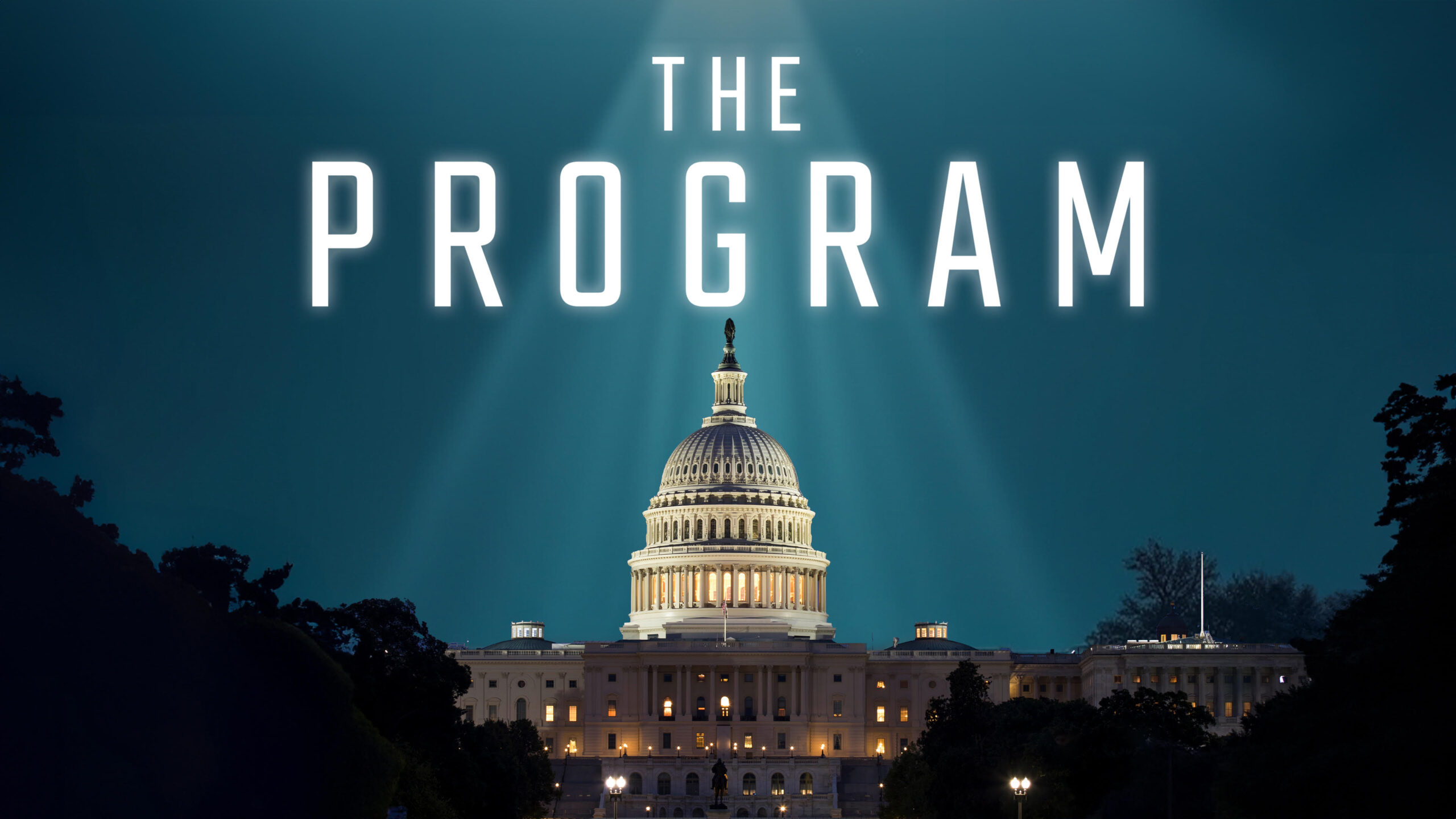
I had the wonderful opportunity to sit down with documentary filmmaker James Fox to discuss his newest documentary, The Program. Set to release on December 16th, The Program looks at modern disclosure and how we got here. From the events that led up to David Grush, Commander Fravor, and Ryan Graves’s testimony to the United States House Committee on Oversight and Accountability, to where we are today and what we have to look forward to. James has self-funded his previous documentaries, and The Program is no different.
Sit back and enjoy my conversation with James Fox as we discuss New Jersey drone sightings, government backlash, and a whole lot more!
An Interview with Documentarian James Fox
Brendan Jesus: Whenever I do Ufology-related interviews, I like to start them off on a lighter note before we really dig into things. There have been many representations of extraterrestrials in modern media. Do you have a favorite interpretation of ETs/UFOs/UAPs?
James Fox: How modern?
BJ: We’ll say 70s and on. Fire in the Sky and up. Wait–
James Fox: That was the 90s! Close Encounters is really cool because those reports came directly out of Project Blue Book files. And Hyneck was actually in the movie. I remember at the time people telling me like, “Close Encounters, that one object that did that, that’s what I saw!” And what the beings looked like came out of the Project Blue Book files.
Fire in the Sky was pretty good! I sat down with Travis Walton a number of times. The first time was probably 12 or 13 years ago. We met at a cafe, and the two of us were going to have dinner. I do this often when I really want to capture a story, like really live it. I’ll close my eyes and have the individual I’m interviewing give me a deep level of detail. What they saw, what they felt. I close my eyes and relive it. I did that with Travis Walton; I wanted to be there in the craft with him. See what he saw, feel what he felt. That case is just so extraordinary! They passed the polygraph tests!
I met with a lot of the guys that were with him. One of the guys was working in a Walmart and didn’t have time to get off work. So he told me if I wanted to see him to come to Walmart and he’d take a five-minute break. I went there and he goes, “You ever see a brand new Corvette? Like it’s so perfect–that’s what this craft looked like.” He was describing the level of perfection of this craft in a way I’d never forget. To see it in his eyes…it was a great case.
BJ: If there are aliens proper as we’ve come to see in shows like The X Files or heard of in Dr. Jonathan Reed’s 1999 appearance on Coast to Coast with Art Bell and his recorded alien scream, would you put your money on greys or greens?
James Fox: Greys. It’s funny, there was a witness from the Roswell crash and I had spoken to the individual who spoke directly to Mac Brazel. Mac Brazel was the one who came upon the crash debris site and went to the military base in Roswell, New Mexico, and said, “Hey, you’re talking about this reward…I think I found something..” Mac Brazel told the guy I was talking to, I think he ran the mortuary and was named Glen Dennis. [Brazel] goes, “You know those little green fellas they always talk about?” Dennis goes, “Yeah…” Brazel says, “They ain’t green.”
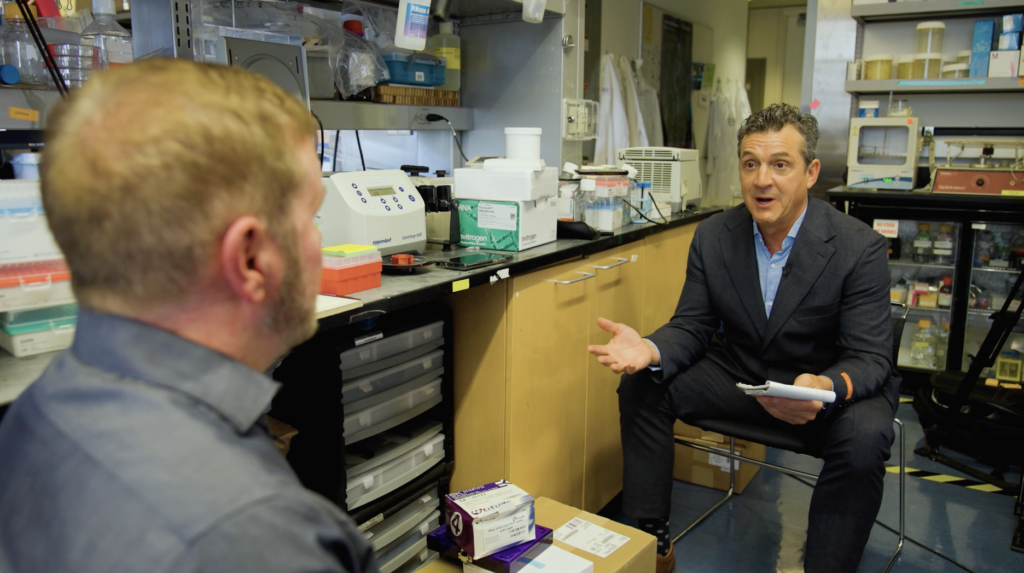
Image courtesy of Lab 9 Films and Falco Ink
BJ: Unbeknownst to you and your team, when you set a release date of The Program for December 16–you know The Program is releasing at a pivotal moment in modern Ufological history. Where I’m at in New Jersey, as you’ve probably heard over the past month, has been inundated with “drone” sightings. What is your take on this? And do you think these sightings might be some good PR for you to get more laypeople interested in a documentary like The Program?
James Fox: They’re trying to make contact! Kidding. I’ve kept my eye on this. I have a friend who lives in Jersey, and he’s like, “I’m living in the epicenter; I’ve seen them six times!” I asked what they looked like, and he said, “They’re the size of SUVs,” so I asked how they fly. “They’re hovering and they move side-to-side.” Okay, so what about the noise? “Oh, they’re noisy.” In my book, and I’m not talking about incursions over military bases, or the alleged objects that the F-16s have closed in on which have outmaneuver this–that’s some pretty advanced technology. If these little things can hover and outmaneuver an F-16, that’s pretty phenomenal.
But. The loiter time [of the Jersey drones] is a lot longer than any drone I’ve ever flown. I fly relatively professional drones for all of my movies and I have some higher-end drones–you have 20 or 25-minute flight times. These objects are up there for hours, I’m told. It’s just really strange that we haven’t had the kind of press conference because you have all these residents, night after night, saying this is happening, and what the hell is going on? Why has the executive branch been so quiet about it?
There have been some statements from governors and mayors, but why aren’t we saying like, “Hey, China’s flying highly advanced drones over our area.” Why are they flying over people’s houses every night? It’s really weird. Having said that. I have not seen any evidence that causes me to eliminate conventional propulsion. Advanced, but conventional.
BJ: I saw a post you made regarding taking odd jobs to fund The Program. What was the process like to get this documentary made?
James Fox: That post was for The Phenomenon, the film I made in 2020. A lot of times, I don’t think it’s told enough, the backstory of what it takes to get these projects across the finish line. I had tremendous hurdles in making The Phenomenon. I had tremendous hurdles to overcome in making Moment of Contact. The Program was even worse.
My distributor was acquired by a larger distributor at the very beginning of production. At the end of production, my distributor stopped paying me royalties. They had all of my films, directly or indirectly. It was like somebody turned off the spigot, and all my income was gone overnight. It has gone on to this day. I went into serious debt making The Program because I didn’t have any money. I was dealing with that nightmare and it’s like the worst-case scenario for a filmmaker, having your distributor rip you off. That larger company said they were making a little transition with their financial department, and they’ll be right on it!
Month after month after month.
I had to deal with that unfortunate aspect. Thank god I was in a position where I could go into debt by borrowing money. It had its challenges. This is the most independent production I’ve done in my 30 years in this field. I don’t have a distributor at all. I’m doing this completely independently. I raised a quarter of a million dollars after finishing the movie just so I could put it out. There are lots of hidden expenses people don’t know about, like insurance, trailers, social media, ads, PR firms, and all that stuff. To do it right, you have to spend the money to do it right.
To answer your question, yes. I’ve done foundational work, parked cars, floor heating, painting jobs, roofing jobs, and worked at a hotel. All of this was throughout my career making documentaries.
BJ: Do you think that having to do that has made you more hungry to tell the stories that you want to tell?
James Fox: Yeah. I never got into this for the money. When I was broke and making The Program I was like, “Well, I’ve been here before!” I picked myself up by the bootstraps. I remember people telling me to put out a GoFundMe and I’m like, “I’m not in a foreign prison right now, I don’t need to take free money.” We have a completely 100%, from start to finish, independent documentary. No executives involved, no distributors involved, no one telling me what to do or what to edit.
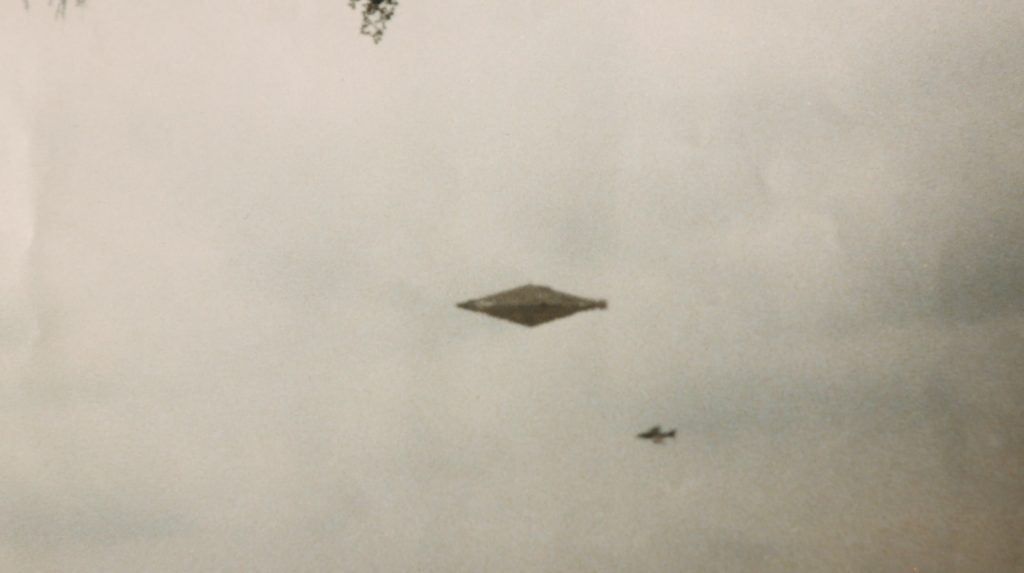
Image courtesy of Lab 9 Films and Falco Ink
BJ: I do want to talk about David Grusch in a second, but there’s a Ufologist I have interviewed, I won’t say his name. After he came out with his stories, he reported sightings of Men In Black, gangstalking, white vans parked down the road, and all that good stuff. Have you, from any of your films, experienced anything along the lines of thinking your phone is being recorded or seeing that van day after day?
James Fox: One of the things I reluctantly reported on, I kind of covered it a little bit in The Phenomenon, was a visitation a science teacher had. It was a dramatic UFO encounter, along with the whole school… roughly 360 people in broad daylight. This was in Melbourne, Australia, in 1966. The science teacher, who unfortunately just passed, Mr. Greenwood, had talked about why he went silent for over 50 years. It was because he had a visit from men in suits who were very intimidating. That was the first time I reported on that.
Then I went to Brazil and covered an alleged crash case for Moment of Contact. The mother of two of the primary school witnesses, who came within 10 feet of a live creature in broad daylight, had a visit from the so-called MIB–they were also very intimidating and threatening. I kind of went all in on that report. I had heard stuff like it since the 90s. At the time I didn’t really believe it, didn’t really have enough evidence, and thought it might lessen the credibility of my production so I opted out for a couple of decades. Then I decided to go all in and cover that aspect of the encounter.
In the last possible interview, we cover a case that happened in 1990: The Calvine Incident. We cover this in The Program. There were six photographs taken with two witnesses in broad daylight. Military jets were circling the object. It was a fascinating case but we just couldn’t find the witnesses. We found people who investigated the case in an official capacity from the Ministries of Defense for the Royal Airforce in Scottland, Craig Lindsay, and at the last minute, thank god to David Clark, we found someone who came forward and had worked with the two witnesses. They came forward and described these Men In Black. These men in suits came in and scared the living shit out of the witnesses.
To quote him, “They came in after a meeting with these MIB, and they were WHITE AS A FECKING GHOST.” That was one of the most indelible impressions. Like who are these people?
BJ: I’m glad your safety hasn’t been put at risk. You have a unique perspective where it’s clear you’re not trying to promote an ideology, you’re just asking questions and you’re asking the right people. That’s what separates something like The Program from other documentaries out there where you can tell people are coming at it from a point of they think they know what they think they know and that’s the story they’re telling. Whereas you ask, what I feel, are unbiased questions. I think that’s why people are going to really be intrigued by The Program.
James Fox: Thank you, I appreciate that. I’m just Joe Public who’s very curious.
BJ: I’m glad that you bring up David Grusch, and team’s, testimony. It brought a modern wave of disclosure. There’s something powerful about the visual of him sitting there with Jeremy Corbell sitting behind his left shoulder and George Knapp sitting over his right. It’s kind of visually like the angel and demon over his shoulders. Jokingly. Why do you think that out of the three of them, Ryan Graves, Commander Fravor, and Grusch, Grusch was the only one who was so heavily attacked for his testimony?
James Fox: Good question. I asked this internally to a number of folks. They said that he was tasked with going out and uncovering what the intelligence agencies knew. David Grusch, after a couple of years, found the program. He pulled the curtain back. There they were. He found it. They went after him. I remember in a parking lot, with another intel guy I was talking with at the time in D.C., and Grusch was on speaker phone. They were talking and David Grusch sounded like he was terrified for his life. I had never heard anything quite like it. He was legitimately–and I didn’t know it was him at the time. This intel guy turned to me and said, “He needs to go public as soon as humanly possible. He’s worried about his own personal safety.” [Grusch] pulled back the curtain and found what he was tasked with finding. He paid a price for what he found…and for revealing it.
There was no choice other than going public. Making that story public and saying as much as he could without going to jail. My understanding, from people I’ve talked to, is that if you violate your national security oath, there’s no due process. They just pick you up and throw you behind bars. I can’t remember the guy’s name directly behind Grusch. He was the first ICIG. He should have been sitting next to him, but he was behind him.
BJ: In The Program, you touch on the Defense Bill and the prospect of Eminent Domain regarding crashed UAPs. It’s widely known that private companies, like Lockheed Martin, have stated they’ve engaged in crash retrieval. If the government implemented Eminent Domain over these objects, do you think these companies would give their property up? If you think about it, Lockheed makes weapons. If they say, “You can pry this UAP out of my cold dead hands,” what’s there from being Ufology’s version of Ruby Ridge?
James Fox: I’ve been asking this question, specifically, where is it and who has the authority to release it? [Crash retrieval] is deliberately put in the hands of subcontractors. I say in the film that you can subpoena the subcontractors but the folks at, let’s say, Lockheed, they’re a private entity. I was told because of all the pressure and publicity, fairly recently, that there are folks within, again let’s say Lockheed, who want to divest. They want these objects out of their hands for liability reasons.
I remember when I dug into the Wilson/Davis memo, featured in The Program, it was the head of the DIA who got into a phone call where people (let’s say Lockheed) were reluctant to acknowledge what they had. Basically, [the DIA] said shut your piehole and don’t say anything about it. This was according to statements in the memo, which is a bonafide legitimate memo. Some of these folks seem to have more gravitas and power than our elected officials, the people who should be in charge of oversight. That’s the weird part about all of this. Who gave these guys the authority to call the shots?
I’m told that if such a project does exist, and I’m convinced it does, it would be an unacknowledged SAP (Special Access Program) under the umbrella of the DOE (Department of Energy). That would be the best place to hide it with the least amount of oversight. That’s where, if there is such a crash retrieval program, they have it.
BJ: That makes complete sense. Unfortunately, in Ufology, there are quite a few grifters. People who use their positions, or positions they’ve had, to make a quick buck. There are some people that I’m glad did not make an appearance in The Program, but the subjects you do have and speak with are spectacular. What was your process in deciding who to speak with, and how did your subjects craft your narrative?
James Fox: I thought it was important to highlight the bipartisan effort that was going on. I wanted individuals from both parties. That was important to me. It’s refreshing to see both parties working together and being civil with one another. I want to see more of that, we don’t have to demonize an opponent because we don’t agree politically. That was refreshing. Also, I think, okay, if this is true and I’m presenting this case to a jury, who would be most likely in a position to know? Those with the highest clearances and credentials are the ones I leaned into heavily.
People don’t just contact me and say, “Hey, I want to be in your next doc!” It took me years for Hal Puthoff to participate. It took a year just to get him to meet with me and then another year to think about whether he would go on camera. It takes time. Kirk McConnell put his neck out. He just retired this year from the Senate Armed Services Committee, and he was present from 2017 to 2024, investigating in an official capacity with high clearances. He came forward because he was disgusted with what was being said publicly by the former head of AARO.
Obviously, pilots, Ryan Graves is a very credible individual. Sitting members of Congress. People within the intel community. I try to be selective and mindful of–people with the most credibility possible.
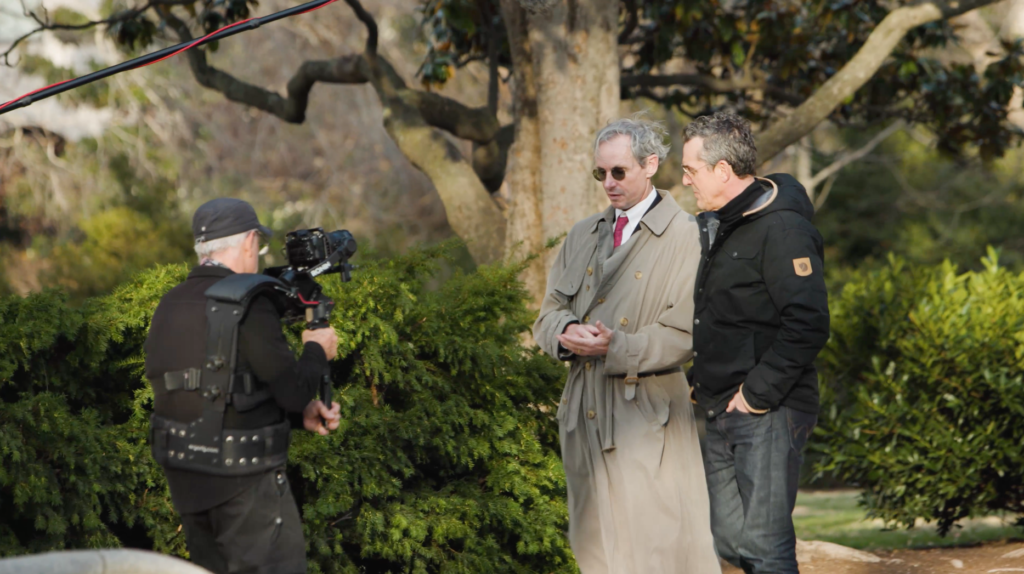
Image courtesy of Lab 9 Films and Falco Ink
BJ: I think it shows very well in the final product. You mentioned the word jury in your previous statement and that’s very interesting with one of the last sentiments you put forward near the end of The Program. “We put people in the electric chair based on eyewitness testimony.” That’s an incredibly powerful quote, and I don’t think I’ve heard anyone in this field say anything like that. What does that quote mean to you? Do you think more people should run with that ideology when it comes to disclosure?
James Fox: I just feel like we put so much significance on eyewitness testimony except when it comes to UAPs. That doesn’t make any sense. When you have multiple trained pilots describing something that’s picked up on radar, FLIR, ground radar, airborne radar, seen by four sets of eyeballs…that should be taken seriously! Those guys on the Nimitz case have everything BUT the craft. All the sensory data, the visual data, and FLIR data. It’s damn compelling, and I would NOT call that anecdotal.
BJ: There is still quite a stigma, which you cover, against being an experiencer or having sightings. There are also a lot of entertainment shows surrounding aliens/UFOs/UAPs. Shows like The Secret of Skinwalker Ranch, Mystery at Blind Frog Ranch, and Ancient Aliens. Do you think shows like that hurt the idea of disclosure and stoke the stigma?
James Fox: Ancient Aliens has made quite an impact. It’s memed. “I’m not saying it’s aliens…but it’s aliens!” Those have gotten a lot of traction and interest. I’ve had people that I’ve met with who enjoy the shows. I remember thinking, well it’s not the most credible but okay! Everyone is having fun. I’m not trying to bash them, but I generally don’t watch them. There’s nothing wrong with entertainment. I do try and bring some lighter moments to my work and entertain. I don’t want my work to be like an encyclopedia so I try and make it fun while keeping the substance.
BJ: Like when The Program takes a trip over to Scotland!
James Fox: I made poached eggs and TOAST!
BJ: Final question. What do you want people to take away from The Program?
James Fox: That there’s a very serious and sober investigation taking place right now that could very well lead to the disclosure of a story that could touch the lives of every man, woman, and child on the planet. Whether you believe it’s real or not, I think there’s enough smoke to suggest there’s fire. There’s enough evidence to suggest something truly inexplicable is taking place, and there might very well be an agency or government body that’s hiding definitive proof we’re not alone.
I want to thank James Fox for taking the time to talk with me. His documentary
The Program is available on VOD platforms on December 16th! Don’t miss it!


Film Fests
Inside the Live Scoring of Häxan: An Interview with The Flushing Remonstrance at Brooklyn Horror Film Festival


If I ever needed more proof that Brooklyn Horror Film Festival was the place to be in October, my experience at this year’s live screening of Häxan with The Flushing Remonstrance was that.
The Nitehawk Cinema in Williamsburg is the primary home for the festival, and the host to what feels like a million different screenings. Each film feels like an outpouring of a director’s vision, of a cast and crew’s hard work over months, or even years. But one screening in particular among the repertory options on offer caught my eye, and that was Häxan. Part historical analysis, part horror, and part drama, there aren’t many films like this silent feature from Benjamin Christensen. And certainly, there are very few like it in terms of its age and impact: the movie is over a century old and still manages to grasp the intrigue, imagination, and emotion of audiences today.
But it was what was attached to the film that really intrigued me. Because this particular screening of Häxan was being played with a live accompaniment. I didn’t know what to expect from a group called The Flushing Remonstrance; frankly, I didn’t even know what to expect from a soundtrack accompanying a century old film as unique as Häxan. A set of percussion machines and a keyboard set were set up at the foot of the theatre screen, and soon two musicians approached them: Catherine Cramer and Robert Kennedy, the duo that makes up The Flushing Remonstrance.
The theatre dims, and the soft glow that comes off the lights illuminating their instruments becomes pronounced. The duo’s work blends into the film seamlessly. Their music is introspective, emotionally fine-tuned, and sonically bonded to what’s happening on screen with a level of smoothness I didn’t expect. There was a clear interplay at work between the film and the live score, and I knew then that I had to ask them how they did it. The Flushing Remonstrance was kind enough to entertain the question and spoke with us here at Horror Press about their process and history.
The following interview has been lightly edited for clarity and conciseness.
An Interview With The Flushing Remonstrance on the Art of Live Scoring a 100+ Year Old Film

Luis Pomales-Diaz: So. Why exactly did you name yourselves The Flushing Remonstrance? I don’t want to assume you represent the Quakers, but… the name does raise questions.
Robert Kennedy: We were both working at a museum in Flushing, Queens, when we met. We got together for what we thought would be a one-off show. We would be live scoring vintage cartoons in a park. So, we needed a name, and after the usual process where we came up with a bunch of jokey names that would never fly, we landed on The Flushing Remonstrance.
Mainly because of geographical proximity, and it always sounded kind of ’60s like Jefferson Airplane. It wasn’t a particular political statement, although what the document represented and what they were doing, speaking truth to power, does resonate with us. We claim no representation of Quakers.
Tell us about your musical background. How does it factor into your live performances scoring films?
Catherine Cramer: We get asked a lot, almost every show, ‘how do you do this?’ and ‘is this a composed score or is this entirely improvised?’ And I find it interesting, because I spent the bulk of my musical career playing jazz, and I ask people if they know how that works first.
There’s the chart, a melody that can be written down, but then the bulk of what jazz musicians do varies from performance to performance. Who knows how many iterations of Autumn Leaves there have even been, but they all have their own measure of changes and improvisations.
Robert: We’ve been playing together for ten years, and we bring our improvisational ability and sensibility to [live scores] as our own thing. We’ve almost always played in the context of accompanying a film or a short film. If we hit something while we’re in rehearsal, we’ll run with it. But we don’t have written melodic content like a jazz quartet. Maybe like five percent of our material is identified pitches or chords, and those are primarily to ensure that Catherine’s percussion has a number of sounds that have tonal components, and that we produce either a consonant or dissonant effect.
The best way to describe it is: we are improvised, but we have defined the structure for a given film very precisely. As far as what sorts of sounds and feelings and what sorts of timing will accompany different sections and scenes of a film, it’s definite.
An excerpt from the Flushing Remonstrance live score for The Cabinet of Dr. Caligari.
And when you’re determining those feelings, that framework, what’s the process you go through? How many times do you watch the film through?
Robert: It’s somewhat of an automatic process at this point. We identify a film we want to play, we watch it through (separately, usually), and sort of chart out the architecture of it, almost like a storyboard. Scene by scene, where the scene is taking place, and what’s happening.
We then run the film together, and let the film guide our decisions when we rehearse. And whatever the filmmaker is suggesting to us, that’s what we do. Some films we’ve had to slave over a little bit more, sometimes, we’re particularly satisfied with the first go through. We have a great deal of instrumental rapport that factors into it, and we do it in a way that feels natural to us. So sometimes it comes easily.
Catherine: When we first run through a new film, like with Häxan, there’s a lot of stopping and going back, trying variations of the same scene. Each time through, we change or add something new. And even with the film we’ve played the most, Nosferatu, it’s always different. People come up who have seen us before to tell us our performance had a completely different feeling. It keeps the performances very alive in a sense, even when the film is somewhere around 100 years old.
What causes the variation between screenings of a film like Nosferatu that makes it so different each time, even after a decade of playing the film? What keeps changing, and why?
Catherine: No matter how many times we’ve played Nosferatu, there’s been a continual change. Sometimes it’s an instrumental change. On the Roland Octapad, the instrument that I play, there are a hundred different patches, and in each patch there are eight pads, and in each pad there’s up to as many as four sounds depending on where you hit it. Not including the volume and how you balance the sounds. And that causes radical changes in itself.
How we react to the film emotionally has changed a lot since the very beginning. We watch these films intently, and they guide us not just when we’re coming up with the framework. It guides us when we’re playing. We’re not just playing along but really bonding the music to the film. The last time we played it, it felt more sparse, more haunting.
And playing Nosferatu now, what emotions do you play to the most? What stands out to you more now than when you first started?
Catherine: With Nosferatu…it’s so sad. Nosferatu is a film I see as pathetic, in the truest sense of the word pathos. Orlok is such a tragic figure, and that sense has only grown each time we play it. In certain moments, when the man is walking down the middle of the street reading off the names of the dead during the plague, and every moment when Ellen is sitting by the ocean waiting for her husband to come home, all of the imagery strikes me so much more deeply. It’s those feelings that I’ve tried to accentuate.
Does the audience’s feelings factor into the performance to an extent?
Robert:The feel of the space, the sound of the room, but especially the feel of the crowd, are vital to how these performances keep changing. When we played Todd Browning’s The Unknown and Dali’s Un Chien Andalou in early November of last year, obviously, the presidential election had happened. Any audience we were playing for had that circulating in their head.
There were high emotions and clouded minds, and it was palpable. We brought into it an anger and intensity to a certain extent, because we were putting our own state of mind and our audience’s state of mind into it. Disorientation, paranoia, gloom, it made its way into the music. That’s how it is with improvised music often, you hear more traditional jazz, and you can tell when someone is having a bad night or if they’re sick. You’re not immune to being influenced by outside forces, and in our case, we lean into those outside forces.
A segment of the Flushing Remonstrance’s Nosferatu live score.
As musicians, you have about as many tools as filmmakers when it comes to communicating emotions through your music. Sometimes you even have more, depending on your instruments. Which emotions on film are the most challenging to communicate through your music?
Robert: I think a particular challenge is if there is a sustained scene of intensity. Sustained scenes of violence, a riot, a mob fleeing like in Metropolis. The end of The Phantom of the Opera is another great example, when they’re chasing him through the streets of Paris. The obvious approach is to pile it on, get really loud and clangorous. But after a while, it gets tiring for us and for the audience. You can’t put more water in a full glass. Those are the most challenging, assuring there’s a sense of dynamism while retaining that kinetic feeling. The goal is to maintain the integrity of the film we’re working with.
Catherine: The hardest for me are the spots where there is no emotion. In Nosferatu, we have this scene where the longshoremen are preparing the ship, we have a man reading off a list, men moving boxes, but really not much is happening. You can’t just have it be silent! It’s not until they dump out the dirt and the rats come out that you have something to do. But you can’t leave that dead air, which is hard to fill out. Playing to emotion isn’t necessarily easy because you want to do it well, but it’s the in between parts that get me. And silent films need to have in between parts because you can’t just have constant exposition.
Robert: I immediately thought of the Spanish language version of Dracula we did last year at Brooklyn Horror. There are these long drawing room scenes where they’re sort of just…talking. And like…well, there’s only so much we can do. And that film has a lot of it! (laughs) But then you also have very active characters like that version’s Renfield, who is really just chewing the scenery.
Oh, I truly love Pablo Alvarez Rubio as Renfield. He’s my favorite Renfield. The definitive one for me, I’d love to see what you play for him.
Robert: You know, I have to put in a vote for Tom Waits in Francis Ford Coppola’s version. Beyond the freakishness, he plays so well, there’s this sadness and desperation, being aware he’s a prisoner to Dracula, that’s great. On that note though, there is one thing we do the same every single time when we play Nosferatu.
After Orlok dies in the sunlight, it cuts to Knock in his cell looking out the bars, and he says, ‘The master is dead!’ And we always go to silence, every time. Because the death isn’t the climax, the climax is the aftermath. The spell has been broken, and the sacrifice Lucy has made for this guy…who in like, none of the films, really deserves it! And the silence punctuates that.
The Flushing Remonstrance original score for the Guy Maddin short Blue Mountains Mystery Séance.
For Häxan in particular, you do have quite a few scenes that are high intensity, and high emotion. The film is effectively a witchhunter’s manual, with all the historical cruelty that implies towards the women who are accused witches.
Robert: Absolutely! It’s based at least in part on the Malleus Maleficarum, an actual witchhunter’s manual.
It also has some generally raucous scenes of the witches. The black sabbath in the woods for instance. It’s an easy out to compose something quick and aggressive for that sequence. How did you determine what you wanted to do for that?
Catherine: It’s not an easy film to accompany. There are protracted scenes of torture, scenes of the accused women being interrogated and psychologically beaten down. One of the hardest there is the scene of the priest trying to force the young woman to use magic, to agree to show him so she can see her child again. It’s intense, but there’s subtlety you have to play for.
Robert: You know when that particular scene comes along, you’d think because of the nature of it you’d expect it to call for a big Rite of Spring, grand guignol, kind of raucous sound. But you have to break down where a scene starts and what it is. When it begins, we start with people sitting on a hilltop, and they see the witches flying off to the woods, and then you get the scene of the witches flying over the town. There’s not really fear or aggression in that, but rather mystery and a bit of wonder. So, we play towards that.
Then they get to the woods, and it begins, and that mass the witches start up is at its core a ritual. The question at the heart of it is ‘what sounds like ritual music?’, so we aim for something ritualistic. Someone’s instinct might be to play something like Carmina Burana, but it’s just not interesting. It’s obvious. It isn’t in the interest of the film or our interest to make it noisy or heavy or Stravinsky-esque, because that’s just not what the film is going for.
Häxan is over 100 years old. Though it has the indelible place in horror history, the story it tells and its cinematography, do feel very divorced from modern filmmaking. Is there an emotional disconnect from the way it’s presented that makes putting together the framework you work off of difficult?
Catherine: It’s a fun challenge, and a very different kind of challenge. It’s like a PhD dissertation turned into a film, which is not even factoring in the temporal quality that makes it so different on its own. It’s a shocking film, beyond the content but also shocking in the historicity of it and the sheer number of people killed and tortured in the name of stopping witches. Between 35 and 60 thousand dead. Like really? How many people died for this?
Then there’s also the fact that he brings in contemporary feminism into the film is fascinating, and tragic. Things are somewhat different a century later, but we’ve not completely moved past which is sad.
The film in its last quarter is agonizing. The dialogue it has on the concept of hysteria, and modern psychological medicine as opposed to contemporary notions of psychology…
Robert: I mean the fact that they call it hysteria tells you quite a bit…
Yeah, It’s not great. Interesting, compelling, but flawed in some ways.
Robert: In terms of trying to score a film that’s that old…we try our hardest not to let it change what we do. We take each film on its own level and try to be inspired by it. But we deliberately try not to make any attempt to emulate the music of the period. We avoid idioms, we try to avoid period music because it would be silly just trying because we are primarily using electronic instruments. Whenever it’s possible, it’s just us and the film.
The Flushing Remonstrance plays a live score for the Guy Maddin short “Saint, Devil, Woman”, part of his installation art piece Seances.
How has your approach to live scoring films affected your experience while watching film?
Catherine: I think my history with film itself influences it. I did film studies at NYU, then I worked for Millennium Film Archive for a while, which was a really fabulous place on East 4th Street that preserved avant-garde films. Then I was a film editor for about six years. All that to say, I’ve always been very conscious of the sound in films. I orient more to listening for that. Starting with the sound more than I’m seeing picture wise.
Robert: I come to it from a similar place. My background is a lot of audio production for records. Mix and loudness are key factors, and I can’t turn it off. If a score is too busy or feels cliché or gets in the way of the film, I just can’t ignore it.
Are there any films in particular that you would specifically like to live score in the future?
Robert: Absolutely. We luckily have a good long running relationship with Brooklyn Horror Film Festival, and the yearly festival theme guides us on what we’re doing next year. There’s been a lot of enthusiasm in us reviving our accompaniment to F.W. Murnau’s Faust, but this time with a completely different sound. We won’t retain anything from before, we haven’t played it since 2018, so this will be entirely new. It will have a bit of resonance with Häxan we suspect. There’s a Scandinavian film called The Phantom Carriage that has been on my short list as a film I’ve wanted to play for a long, long time.
We also love working directly with directors. We’ve been very fortunate to work with the filmmaker Guy Maddin, who makes contemporary films that are like silent films. Given our repertoire, we go together very well, and we’re very fortunate to have linked with a living filmmaker. We recently scored two very early Clive Barker films this past summer, one of which has never had a score. We contacted him, and he gave us his blessing. All that said, there’s not a formal list, but we know which films work with how our process and our style work, and we are excited to play them.
Catherine: I always look forward to working with contemporary working filmmakers. And because of our background in avant-garde film, we’ve also been approached to score contemporary short films, and that’s been fun. There are so many different opportunities we’d like to score for. It’s New York, there’s always stuff happening.
Robert: And if you are a contemporary filmmaker who thinks your film would benefit from the sonic ministrations of a group like ours, get in touch with us!

A big thanks once more to The Flushing Remonstrance, who took the time to talk with us. You can follow their ongoings and adventures in live scoring on Instagram. A special thanks also to Brooklyn Horror Film Festival for connecting us.
And finally, thank you for taking the time to read this. Remember to stay tuned to Horror Press (@horrorpressllc on Twitter and Instagram, @horrorpress.com on Bluesky) for more interviews with creatives in the horror space, and for all news horrors!

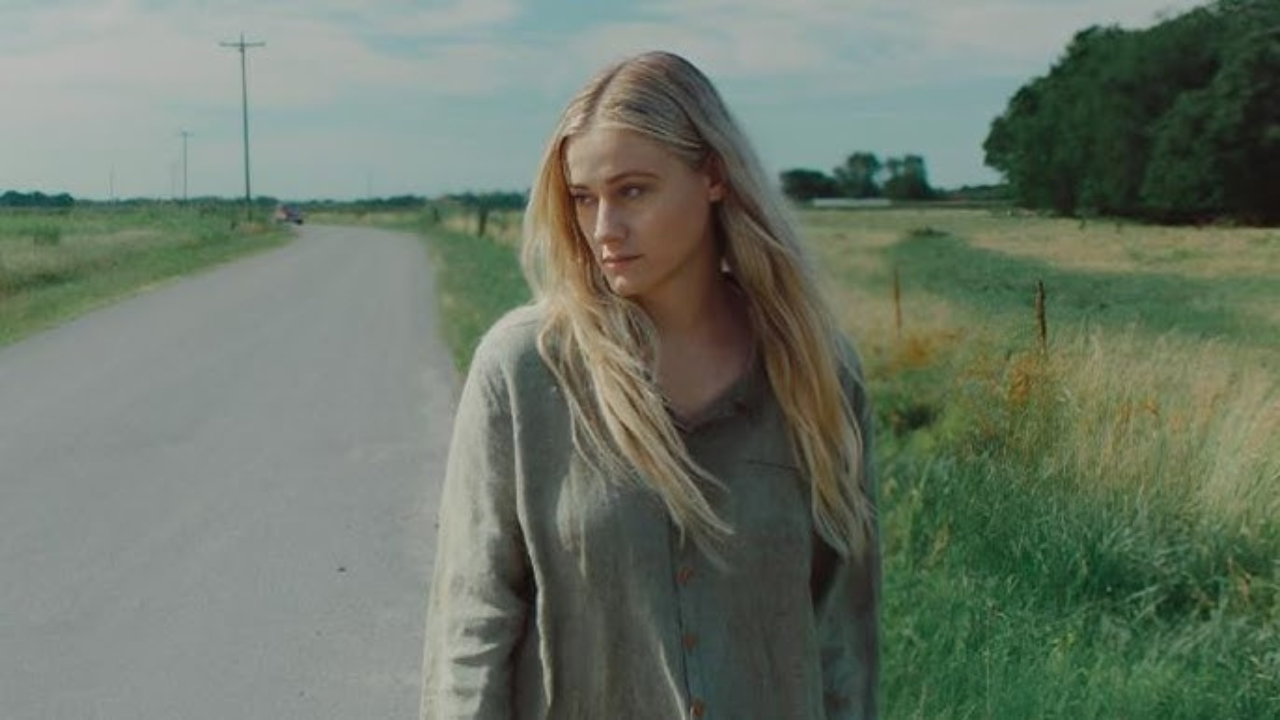
I was one of the few people lucky enough to catch the East Coast premiere of Abigail Before Beatrice at Brooklyn Horror Film Fest. This southern cult horror moment gives us a lot to talk about, and I decided to go right to the cool filmmaker herself. I caught up with Cassie Keet to talk about her new film, cults, and getting the perfect take even when the bowling alley has been overrun by small children. Read on for our spoiler-free discussion to help you prepare for this devastatingly sad film.
An Interview with Filmmaker Cassie Keet on Her Movie Abigail Before Beatrice
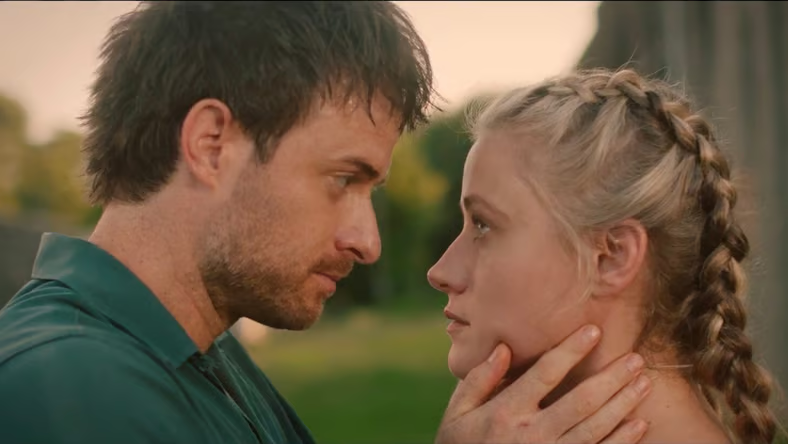
Horror Press: So, this is your second feature with cults being part of the problem. While Abigail Before Beatrice has a much different vibe than Scream Therapy, it’s safe to say you have thoughts about cults and cult mentality. What is it about the world of cults that draws you in as a filmmaker?
Cassie Keet: I’ve always been curious and sympathetic to people who are drawn into cults. They’re looking for something that’s missing in their life (Abigail Before Beatrice), or they’re born into a system that’s already been put into place for them (Scream Therapy). I’ve always found the members of the cult more interesting than the cult itself or even the leader. Who are these people? Who did they used to be? I know how easy it is to wake up one day and realize, “Oh shit, is this relationship toxic?” The catch is, sometimes that wakeup call doesn’t happen until years later. I think part of my sympathy for people in cults is a way of giving myself and the past relationships I participated in a little bit of grace.
HP: I think people are not as aware of how easily they can exhibit cult-like behavior. Trying to fit in is a slippery slope to becoming part of a pack and not thinking for yourself. However, people tend to look down on people in cults without looking at their own actions and realizing they are not so different. Why do you think there is this reflex to judge people who join cults instead of empathizing with whatever reasons made them feel like a cult was the only place they could find community?
CK: I think people want to believe that they’re different and would never “fall for” something like that. But there are cults everywhere. Cults of personality (looking at you, shitty YouTube manosphere dudes), MLMs (looking at you, girls I went to middle school with), cults of religion (looking at you, every religion). These are ways of thinking that are being weaponized against people by people acting in bad faith, who are the ones who are benefiting the most from your participation. I don’t want to sound callous – I love myself a fun YouTube or TikTok series. I tried to sell makeup in my early 20s, and I’m still a practicing reformed Methodist. It’s about how these things are used.
It’s easy to look at someone who has slipped down a slope and want to congratulate yourself for wearing the right shoes. But no one is “too smart” to be influenced by something that speaks directly to them on a deep, personal level. We’re all looking for something. Sometimes we find it in the wrong place.
HP: It’s hard to not love Beatrice (Olivia Taylor Dudley) in the first act. Then we get to start to get a fuller picture and discover she’s not quite who we thought she was. In your Q&A, you mentioned that you wanted to highlight that even logical people can find themselves in a cult. Can you discuss what went into crafting this character, whom we empathize with even when we are not on board with her thought process?
CK: I wrote Beatrice with the intention of challenging myself as a writer while also exploring some of my own past experiences. I wanted to approach some painful topics that were close to me from a compassionate, if somewhat ambivalent, lens. Beatrice is who she is. I recognize myself in her, and I recognize so many others who have experienced toxic or traumatic relationships. She’s a deeply flawed human because humans are deeply flawed. There’s the joke “I support women’s rights, and women’s wrongs,” and honestly, that applies to Beatrice. Well, maybe not all of her wrongs.
HP: One of the things I like about Abigail Before Beatrice is that it specifically explores how gender plays into cults. Grayson (Shayn Herndon) is clearly a predator, and these women put up with these abuses and his lies, in some small part, because society conditions women to put up with toxic male behaviors. Because there are so many cults getting documentaries or living in our collective consciousness, is Grayson based on someone(s) specifically?
CK: Grayson is a mixture of some cult leaders (Manson, Koresh, Jones), but mostly he was a personal creation. VERY personal. I asked myself, “Who is the type of guy that you would leave your life behind for?” Grayson was my answer. He approaches with a soft hand and a charming smile, tells you you’re special and that you belong somewhere special, and then whisks you away with a romantic kiss. After watching the scene where Grayson meets and seduces Beatrice, several people have said that they would have been tempted to go to the farm with him if he’d done the same. I know I would have.
HP: I think one of the saddest things about Beatrice is that she is clearly capable of living a full life outside of this cult. Yet, she can’t see that, so she mourns the sisterhood, abuse, and routine. As someone who went to grad school for theatre, I find that depressingly relatable and sad. However, many people have a hard time seeing themselves as competent individuals who deserve more. How many of our friends continue to settle in their relationships, jobs, etc.? Why do you think so many of us prefer the devil we know rather than seeing what else is out there?
CK: There’s a term called ‘familiar suffering.’ We choose the pain we’ve experienced in the past or are currently experiencing, because it’s a known quantity. We fear the unknown and the possibility that it contains worse suffering, so we stay where we are. It’s a coping mechanism. It’s built into our brains as a survival technique, even though it lessens our quality of life and leads to self-sabotage. You have to willingly break yourself out of it, but damn it’s hard. Combine that with an abusive environment or relationship that tells you what you have is the best you’ll ever get and that you’ll fail within a world that’s different, and you’ve got a recipe for disaster.
HP: Because everyone handles trauma differently, I love that Abigail (Riley Dandy) and Beatrice have two completely different journeys with the aftermath of their stint in a cult. Was there a draft where we got more time with the two of them? Or was the vision always to focus on Beatrice?
CK: When I was first conceptualizing the story, I originally wanted to split the narrative between the two of them to show them both in the present. The scene where they reunited at the coffee shop was the first scene I wrote. However, the more I wrote about Beatrice, the more I wanted to explore the specific story of someone who can’t move on because they can’t let go. If I had a million dollars, I would make mini-movies about all of the cult girls and their lives before and after. I just find it so fascinating.
HP: You have so many stories from filming this movie in intense heat and battling wildlife in Arkansas. I have been lucky to hear a few stories, but what is the one you find the funniest and can share with our readers at Horror Press?
CK: Oh god, there are so many. Every day was a hot, sweaty adventure. I will say that the day we filmed at the bowling alley was insane. They let us rent three lanes for free a month before shooting, mentioning off-handedly that they had rented out a few other lanes. When we started setting up our lights and gear, SEVERAL BUSSES OF CHILDREN arrived. Apparently, every other lane had been rented out to day camps. It was the loudest day of my life. Hundreds of screaming children ages 6-11 are sprinting around like maniacs.
Our amazing grip team built a privacy wall for the actors (and for sound, god bless), but at one point, some kid did the inchworm past it. The entire cast and crew stared at him. It felt like a mass hallucination. But, fun fact: we were able to get the shot of Will (Jordan Lane Shappell) bowling a strike and Beatrice (Olivia Taylor Dudley) hitting one pin in just one perfect take. When I called cut, we screamed louder than all of the kids!
HP: What is one thing you have been dying to talk about regarding this movie (non-spoilers obviously) and haven’t been able to?
CK: Olivia’s performance. Every single performance is incredible, but oh holy shit, Olivia just knocks it out of the park. I spent half of filming either staring in shock at the monitor or openly weeping between takes. She’s just beyond amazing. I am so in love with our cast – especially my supporting leads Riley Dandy, Shayn Herndon, Jordan Lane Shappell, and Molly Jackson. I couldn’t have made this movie without this cast.
HP: What are you working on next after you finish your festival run with Abigail Before Beatrice?
CK: I’ve got a couple of things in development right now, which is super exciting! A script I wrote in 2024, right before we went into production for ABB, made the Black List, so that’s with two production companies right now. Fingers crossed!
HP: What social media apps can people find you on, if you want your fans to find you?
CK: Find me on Insta! @kissmycassiek
Abigail Before Beatrice, is still touring festivals. Keep your eyes out for more updates and make sure you follow Cassie Keet to stay in the loop.


‘Iron Lung’ Review: Exceptionally Atmospheric Cosmic Horror

No, Cult Cinema Isn’t Dead

‘The Ritual (2017)’ Review: When Grief Gets Gruesome

‘Wait Until Dark’ Review: A Timeless Psychological Horror Thriller

‘Return to Silent Hill’ Review: A Misogynistic Betrayal of Silent Hill 2

‘Lake Mungo’ Review: Still the Greatest Ghost Film of All Time

How ‘Child’s Play’ Helped Shape LGBTQ+ Horror Fans

‘The Cabin in the Woods’ Review: And the State of Horror

‘Night Patrol’ Review: Vampiric Cop Horror Undone by Messy Execution

The 10 Most Satisfying Deaths in Horror Movies

‘The People Under the Stairs’ Review: A Brilliantly Bizarre Horror Classic

‘Five Nights at Freddy’s’ and The Story of William Afton Explained

Slappy Was the Blueprint: How the Dummy from Goosebumps Became A Horror Icon

Glen and Glenda: Don Mancini’s Reverence for Queerness in ‘Seed of Chucky’ (2004)

‘Truth or Dare’: Who Did it Best?

V/H/S Franchise Ranked, Best to Worst

Everything You Need to Know About Jason Voorhees

The 11 Most Disturbing Horror Movies Ever, According to an Actual Horror Fan

[REVIEW] ‘Cherry Falls’ (1999) Brittany Murphy Shines in This Cult Classic Slasher
