

Interviews
Unpacking Cults and Humanity in ‘Abigail Before Beatrice’ with Filmmaker Cassie Keet

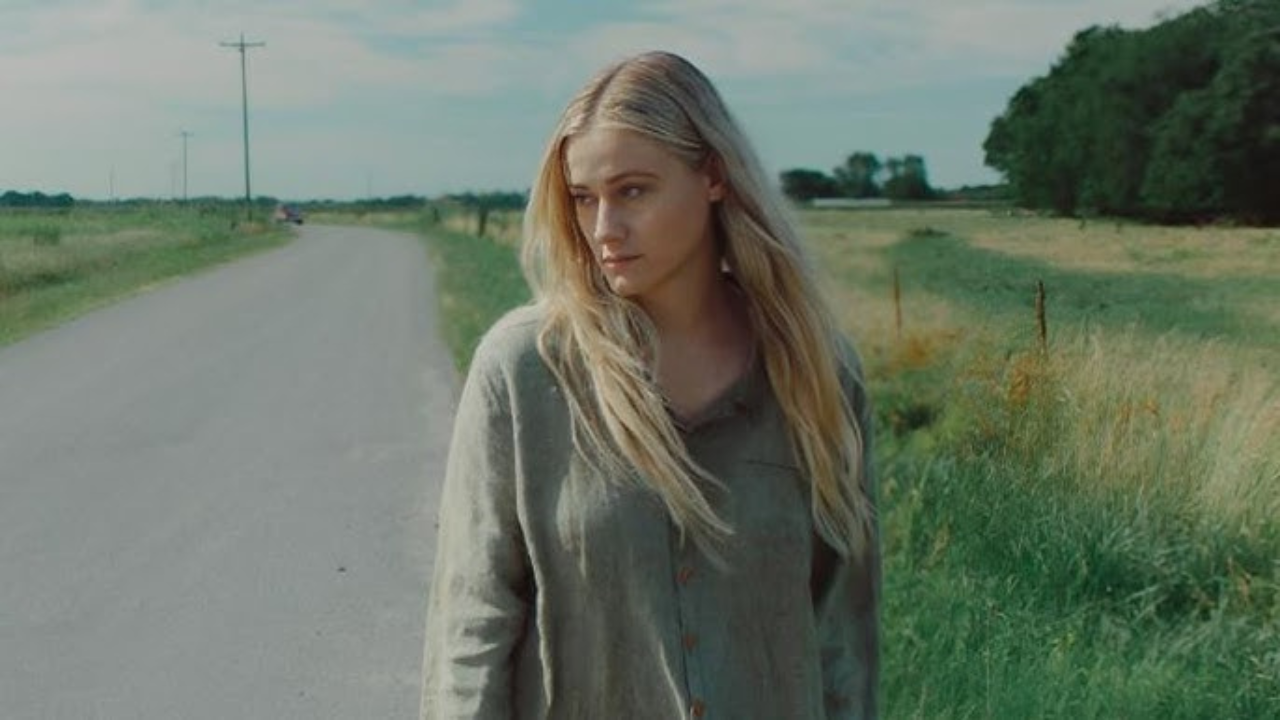
I was one of the few people lucky enough to catch the East Coast premiere of Abigail Before Beatrice at Brooklyn Horror Film Fest. This southern cult horror moment gives us a lot to talk about, and I decided to go right to the cool filmmaker herself. I caught up with Cassie Keet to talk about her new film, cults, and getting the perfect take even when the bowling alley has been overrun by small children. Read on for our spoiler-free discussion to help you prepare for this devastatingly sad film.
An Interview with Filmmaker Cassie Keet on Her Movie Abigail Before Beatrice
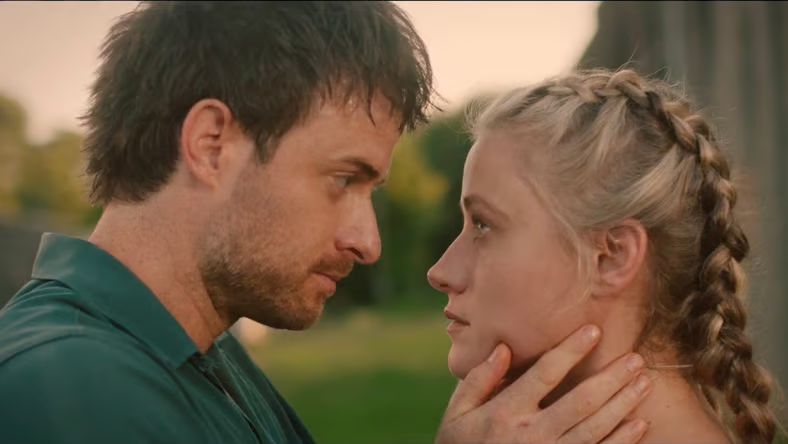
Horror Press: So, this is your second feature with cults being part of the problem. While Abigail Before Beatrice has a much different vibe than Scream Therapy, it’s safe to say you have thoughts about cults and cult mentality. What is it about the world of cults that draws you in as a filmmaker?
Cassie Keet: I’ve always been curious and sympathetic to people who are drawn into cults. They’re looking for something that’s missing in their life (Abigail Before Beatrice), or they’re born into a system that’s already been put into place for them (Scream Therapy). I’ve always found the members of the cult more interesting than the cult itself or even the leader. Who are these people? Who did they used to be? I know how easy it is to wake up one day and realize, “Oh shit, is this relationship toxic?” The catch is, sometimes that wakeup call doesn’t happen until years later. I think part of my sympathy for people in cults is a way of giving myself and the past relationships I participated in a little bit of grace.
HP: I think people are not as aware of how easily they can exhibit cult-like behavior. Trying to fit in is a slippery slope to becoming part of a pack and not thinking for yourself. However, people tend to look down on people in cults without looking at their own actions and realizing they are not so different. Why do you think there is this reflex to judge people who join cults instead of empathizing with whatever reasons made them feel like a cult was the only place they could find community?
CK: I think people want to believe that they’re different and would never “fall for” something like that. But there are cults everywhere. Cults of personality (looking at you, shitty YouTube manosphere dudes), MLMs (looking at you, girls I went to middle school with), cults of religion (looking at you, every religion). These are ways of thinking that are being weaponized against people by people acting in bad faith, who are the ones who are benefiting the most from your participation. I don’t want to sound callous – I love myself a fun YouTube or TikTok series. I tried to sell makeup in my early 20s, and I’m still a practicing reformed Methodist. It’s about how these things are used.
It’s easy to look at someone who has slipped down a slope and want to congratulate yourself for wearing the right shoes. But no one is “too smart” to be influenced by something that speaks directly to them on a deep, personal level. We’re all looking for something. Sometimes we find it in the wrong place.
HP: It’s hard to not love Beatrice (Olivia Taylor Dudley) in the first act. Then we get to start to get a fuller picture and discover she’s not quite who we thought she was. In your Q&A, you mentioned that you wanted to highlight that even logical people can find themselves in a cult. Can you discuss what went into crafting this character, whom we empathize with even when we are not on board with her thought process?
CK: I wrote Beatrice with the intention of challenging myself as a writer while also exploring some of my own past experiences. I wanted to approach some painful topics that were close to me from a compassionate, if somewhat ambivalent, lens. Beatrice is who she is. I recognize myself in her, and I recognize so many others who have experienced toxic or traumatic relationships. She’s a deeply flawed human because humans are deeply flawed. There’s the joke “I support women’s rights, and women’s wrongs,” and honestly, that applies to Beatrice. Well, maybe not all of her wrongs.
HP: One of the things I like about Abigail Before Beatrice is that it specifically explores how gender plays into cults. Grayson (Shayn Herndon) is clearly a predator, and these women put up with these abuses and his lies, in some small part, because society conditions women to put up with toxic male behaviors. Because there are so many cults getting documentaries or living in our collective consciousness, is Grayson based on someone(s) specifically?
CK: Grayson is a mixture of some cult leaders (Manson, Koresh, Jones), but mostly he was a personal creation. VERY personal. I asked myself, “Who is the type of guy that you would leave your life behind for?” Grayson was my answer. He approaches with a soft hand and a charming smile, tells you you’re special and that you belong somewhere special, and then whisks you away with a romantic kiss. After watching the scene where Grayson meets and seduces Beatrice, several people have said that they would have been tempted to go to the farm with him if he’d done the same. I know I would have.
HP: I think one of the saddest things about Beatrice is that she is clearly capable of living a full life outside of this cult. Yet, she can’t see that, so she mourns the sisterhood, abuse, and routine. As someone who went to grad school for theatre, I find that depressingly relatable and sad. However, many people have a hard time seeing themselves as competent individuals who deserve more. How many of our friends continue to settle in their relationships, jobs, etc.? Why do you think so many of us prefer the devil we know rather than seeing what else is out there?
CK: There’s a term called ‘familiar suffering.’ We choose the pain we’ve experienced in the past or are currently experiencing, because it’s a known quantity. We fear the unknown and the possibility that it contains worse suffering, so we stay where we are. It’s a coping mechanism. It’s built into our brains as a survival technique, even though it lessens our quality of life and leads to self-sabotage. You have to willingly break yourself out of it, but damn it’s hard. Combine that with an abusive environment or relationship that tells you what you have is the best you’ll ever get and that you’ll fail within a world that’s different, and you’ve got a recipe for disaster.
HP: Because everyone handles trauma differently, I love that Abigail (Riley Dandy) and Beatrice have two completely different journeys with the aftermath of their stint in a cult. Was there a draft where we got more time with the two of them? Or was the vision always to focus on Beatrice?
CK: When I was first conceptualizing the story, I originally wanted to split the narrative between the two of them to show them both in the present. The scene where they reunited at the coffee shop was the first scene I wrote. However, the more I wrote about Beatrice, the more I wanted to explore the specific story of someone who can’t move on because they can’t let go. If I had a million dollars, I would make mini-movies about all of the cult girls and their lives before and after. I just find it so fascinating.
HP: You have so many stories from filming this movie in intense heat and battling wildlife in Arkansas. I have been lucky to hear a few stories, but what is the one you find the funniest and can share with our readers at Horror Press?
CK: Oh god, there are so many. Every day was a hot, sweaty adventure. I will say that the day we filmed at the bowling alley was insane. They let us rent three lanes for free a month before shooting, mentioning off-handedly that they had rented out a few other lanes. When we started setting up our lights and gear, SEVERAL BUSSES OF CHILDREN arrived. Apparently, every other lane had been rented out to day camps. It was the loudest day of my life. Hundreds of screaming children ages 6-11 are sprinting around like maniacs.
Our amazing grip team built a privacy wall for the actors (and for sound, god bless), but at one point, some kid did the inchworm past it. The entire cast and crew stared at him. It felt like a mass hallucination. But, fun fact: we were able to get the shot of Will (Jordan Lane Shappell) bowling a strike and Beatrice (Olivia Taylor Dudley) hitting one pin in just one perfect take. When I called cut, we screamed louder than all of the kids!
HP: What is one thing you have been dying to talk about regarding this movie (non-spoilers obviously) and haven’t been able to?
CK: Olivia’s performance. Every single performance is incredible, but oh holy shit, Olivia just knocks it out of the park. I spent half of filming either staring in shock at the monitor or openly weeping between takes. She’s just beyond amazing. I am so in love with our cast – especially my supporting leads Riley Dandy, Shayn Herndon, Jordan Lane Shappell, and Molly Jackson. I couldn’t have made this movie without this cast.
HP: What are you working on next after you finish your festival run with Abigail Before Beatrice?
CK: I’ve got a couple of things in development right now, which is super exciting! A script I wrote in 2024, right before we went into production for ABB, made the Black List, so that’s with two production companies right now. Fingers crossed!
HP: What social media apps can people find you on, if you want your fans to find you?
CK: Find me on Insta! @kissmycassiek
Abigail Before Beatrice, is still touring festivals. Keep your eyes out for more updates and make sure you follow Cassie Keet to stay in the loop.


Interviews
[INTERVIEW] Inside the Glitter-Streaked World of ‘The Vampire Lestat’ with Production Designer Andres Cubillan


Lestat, Lestat, Lestat. That’s been the name on my lips ever since the first teasers for AMC’s The Vampire Lestat dropped last year. This new iteration of the show formerly known as Interview with the Vampire centers on the eponymous Brat Prince himself, Lestat de Lioncart (Sam Reid), as he embarks on a cross-country tour of contemporary America with his self-titled band, his antics immortalized on film by snarky baby bloodsucker Daniel Molloy (Eric Bogosian), the ghosts of his past hot on his heels.
But if you’re reading this, you already know all that. You’re here for the juicy details, and who better to dish them than the man who crafts Lestat’s most intimate spaces, production designer Andres Cubillan? A newcomer to the world that Anne Rice created and showrunner Rolin Jones breathed new life into, Cubillan helped ensure that The Vampire Lestat feels like an entirely different beast to the seasons that came before it, without losing sight of the series’ immortal soul—or Lestat’s divine bitchiness.
Around the midway point of the season, I caught up with Cubillan to discuss the big questions in life, like “doesn’t that shower make the bus damp?” and “how do you cuddle in a coffin made for one?” Here’s what he had to say about designing for the wolf killer extraordinaire’s most chaotic and iconic era yet.
The Vampire Lestat Turns up the Dial on the World We’ve Seen So Far (And Yes, It Goes to Eleven)
Samantha McLaren: The shift to Lestat’s perspective this season really turns expectations on their head. As production designer, how much freedom did you have to overhaul the look and feel of the show—and were you nervous at all about changing things that fans had come to expect?
Andres Cubillan: Yes, absolutely. When I was meeting for it, Rolin said from the get-go that he wanted this to look like a completely different show. He said “this is basically like we are rebooting our own show,” so he knew it had to be a total tonal shift, a total visual shift.
For me, my nerves came from the high quality of the work before. I’m a good friend of Mara LePere-Schloop [production designer on the first two seasons]. I trained under her, I admire her immensely, so it was more about how to do the beautiful work justice. And I’ve said this before, but I wanted to be able to crank up the dial on what Lestat would be now, present day—his point of view and his emotional state. I took liberties where liberties were given, and I just knew that it needed to be incredibly well researched, and there needed to be so much thought behind everything—not just because our writers are so passionate about the original literature, the scripture, but also the fans. Our fans know every word that Anne Rice has written front and back. We couldn’t just be flippant about any decision. We needed to do something spectacular for her, and for the character.
SM: One thing I love about vampire media is the inherent tension between the allure and glamour of vampirism, and the decay and death that’s an inherent part of it. Is that tension something that you wanted to play with this season?
AC: I try to actually go away from the traditional vampire tropes. In early discussions with Rolin, we said let’s be very particular as to where we use red—where black is even used… We wanted Lestat to feel unique in the vampire genre, as opposed to cliché in any way.
In terms of the allure, he’s so insanely alluring in and of himself that it’s going to come naturally, so for me, it was a matter of trying to fill in the blanks in the script—what can I say in the design that’s going to give context to him and his actions in that particular moment? It sort of naturally becomes alluring and sexy and dramatic, but I don’t think it was a conscious thing.

Lestat’s Tour Bus Showcases the Personalities of Its Occupants—And the Collaboration Between the Crew
SM: It comes through in interesting ways, like his tour bus. You have the dichotomy of that glamorous, sleek upper deck and the dingy, disgusting lower deck. When you were designing the bus, how much did you research real tour buses, and how much of it came from lurid imaginings?
AC: A lot of research. There was something so easy in grounding a rock star like Lestat in more of a retro vibe—Bowie, Jagger, Iggy Pop—but I wanted to try to blend it in with more of a contemporary musician. So, I looked a lot at contemporary tour buses, but they’re not very exciting. It’s a lot of formica and cramped spaces, and it didn’t feel personalized enough.
Then it became more of a departure after doing that research, to go back to these artists from the 70s, 80s, and 90s that actually did personalize their buses that way. Led Zeppelin, for example, they had a 747—I think it was called The Starship—it had a completely decked-out lounge with a piano and a fireplace and shag carpeting. Whether they knew it at the time or not, it felt iconic. It was one of those places that everyone wanted to go and be with them. So, how to translate that to Lestat? I wanted the dichotomy, as you said, of this flippant reaction to not caring how the rest of the band or everyone else was faring down below: he was going to make his space the inviting, seductive lounge that he wanted it to be. Rolin kept using the word “bespoke,” and I think we wanted it to appear like nothing we had seen before.
The downstairs became so fun because we could just throw anything out there and it would feel in place—formica walls and leopard-print rugs. I had seen this one picture of Taylor Swift’s tour bus. It was a regular tour bus, except she brought in her own couch; she liked the comfort of that couch. So we brought in this custom-upholstered, crushed metallic velour couch, and then it broke everyone’s heart when we aged it down with cigarette burns and miscellaneous stains, but it needed to feel crunchy. It was fitting, but it needed to feel appropriate.
And the evolution of that set—how to individualize each of the spaces for each of the band members without actually saying “this is my space.” We tried to do, in our heads, backstory rituals for the characters. I liked the idea of Salamander taking his gum out of his mouth as soon as he got in the bus and just sticking it on the wall, or sticking it on the ceiling, so that became the Fisherman’s Wharf section, just wrapped in chewed gum. And the fact that TC would hang a garland of socks across her bunk bed. There were a series of little customizations to each of them to give a little more of their personality within a greater space.
And then Lestat’s upstairs space—I really struggled with that one. The downstairs? Easy. Upstairs? So difficult, because the combination of glam, luxury, rock and roll, but also classic and elegant—there were all of these clashing styles that needed to come together in that space. We kept changing themes back and forth, and I worked a lot with Lex Wood, our costume designer, because every time I would pick an upholstery fabric and I’d be like “I have it, this is it! It’s so unusual—it’s phenomenally Lestat.” And then she would bring out his costume and be like “he’s going to disappear into the sofa—that’s exactly what he’s wearing in this scene.” Okay, back to the drawing board! Here we go again.
But I think, ultimately, it made it better to go through all of those drafts and those versions, having input from all of these people… I had this idea for a shower that would open and it would be Botticelli’s [Venus] painting but Lestat is the one on the shell, so it was like “check me out, I’m phenomenal and amazing.” And as things started breaking down in terms of space, one of my concept artists said, “What if the chandelier is a shower?” I was like, oh my god, that’s brilliant—that’s so unusual. Having the collaboration from all these different people to come in and bring their ideas made it more special.
Lestat Is Not Afraid of Standing Out—And That Iconic Shower Creates New Avenues for Exhibitionism
SM: Love that shower. It feels almost ethereal—like, it shouldn’t exist in the middle of this bus, on the top deck no less, but it works because everything around Lestat feels a little bit magical. He’s an ethereal being moving through this space.
AC: There were two things that I loved about that. One was, we made the windows on either side of the shower taller. Rolin and I had this idea that we were never able to actually shoot: we wanted this shot of the bus next to a minivan at a stoplight, and just this family gawking up at Lestat, buck naked, showering, because he doesn’t care—it’s a “feast your eyes” sort of thing.
And then, as I’ve been posting online and adding photos of the set so that the fans can see a little bit more, there was someone who—not in a critical way—said “but the shower next to the upholstery, is that going to get mildewy?” Which is brilliant, but I don’t think Lestat would care. He’d just say, “Reupholster them. Change them out.”
I don’t think you’re able to see it, but before the blood shower comes down, from the start, the banquettes are blood-stained along the bottom… It’s just giving a little hint of what’s to come, of what the potential of the space was.
SM: You mentioned working with Lex Wood and the collaboration there. I’m curious, how much did you want the costumes and the design to work harmoniously together, or did you want any clash there because Lestat is such a chaotic and loud character?
AC: I always say that with production design, if you’re noticing it, I’m not doing it well. I think it should feel very natural, and it should never take away from the character or the story. With something like this, it’s context and it should be flashy to a degree, but from the start, the rule that Rolin, Hannah [Moscovitch, executive producer/writer], Lex, and I came to was always make Lestat pop from everything.
Lex and I did have conversations on the side about moments where we thought his character wouldn’t necessarily want to stand out, or wouldn’t be ready to stand out—if there was any hesitation on his part. We were able to pick and choose those moments. I’ve never had such a collaborative experience with a costume designer before. Lex knew Lestat and knew Sam in a way that I didn’t, so for her to bring in her reasoning as to why she was bringing in those colors or those patterns—sometimes it altered the design, because I was like well, this is the right thing to do; he really should stand out, or he really should blend in.
But the tension was always, always keep your eye on Lestat. Any time he walks into a room, the eye should always go to him. That was the bible rule we all needed to follow.
Lestat’s Apartment in Montreal Balances Culture and Comfort (With a Touch of Louis)
SM: I want to talk a little about Lestat’s home in Montreal that we see in the first episode. After two seasons of seeing him in the past, it’s almost jarring to see him in this cozy, modern space wearing a comfy sweater. But the closer you look, the more you realize it’s him, just contemporized. What was your starting point for that space—what were the details you knew you needed for it to feel Lestat, and were there some surprising little twists you wanted to pull in for this modern version of him?
AC: I started with Mara’s work in season one. The space that she had designed for him was so lush and detailed; the color was incredibly rich. The conversation that I had with Rolin when I was pitching his space was that it always felt like, in the past, he is hiding his true self; he is assimilating into the time, into the culture, into the style and fashions. Now that he doesn’t have that hang-up anymore—even less after he becomes a musician, but even when we see him before the book comes out—he is finally able to be himself in a way that isn’t hiding away from the public eye. To me, then, Lestat is someone who lives incredibly boldly. I didn’t want to shy away from very bold and obnoxious choices. So I took Mara’s work and I just pumped up the volume and threw some nuclear waste on it, just to see what would happen, what would that reaction be?
I started with the music room. That was basically the one place that I really wanted to use red, and I made the room completely monochromatic. The walls and the ceiling are gloss red; the carpet is an ochre red. Even the drapes are red with zebras on it. I wanted it to feel warm and like a space of creation, so when my decorator, Summer Gaal, and I started going around what his house would be, we started with the music room. We thought that would be the beginning of all his ideas and creation. We knew it needed to be something that a very cultured person would have. He’s been around for a very long time—not that old vampires are automatically cultured and elegant, but more that he does come from an aristocratic background. He has lived a life of wealth and fame for 200+ years. So, I wanted it to be able to say, “I don’t need to own the most expensive painting. I want a painting that I react to.” And what are the variety of items that he’s reacting to across the centuries that he has lived and across all the different cultures and places that he has known?
My decorator found this gorgeous, kind of collapsing oversized purple couch, and that didn’t fit at all. It wasn’t elegant. It wasn’t anything special. (It actually was—my decorator told me afterward that it’s apparently some very famous sofa that I had no idea about!) But it felt like a place where he could crawl up with his boots on and just strum his guitar to just give him the cocoon, that sort of comfort that he’s always, I think, been looking for.
And from there, the living room: what is that contrast, what is the place of seduction? Very early on in one of the scripts, Lestat was in a book club and they were reading the book with select characters, and I thought, how ridiculous is this that this character is having a book club to complain about his ex-boyfriend’s book? So what does that space look like? It’s the contrast to the music room: it just needs to be hard and soft, warm and cold, little nods to the theater life with the pulled drapery with the view to the street.
Obviously the painting… The Lovers [René Magritte, 1928] with the veiled, covered faces. That was something that one of my graphic designers brought to me and she said “you know, I think we can get this painting,” and all of a sudden, it just completely clicked. It’s the veil; it’s the fact that we don’t know who that person is. It just made sense to have that particular painting in place. And we found this one Canadian artist who did a painting that is a bit multimedia, and he’s basically pulling his chest apart… Everything started having all this symbolism to it, where it’s him bearing his soul; it’s the veil; it’s the sexual coffee table that he can put his feet on. All of these things started coming together, and honestly, it was not easy. I was freaking out about colors for the longest time.
Also, in my career, I’ve been very fortunate to have multicultural characters in my stories, in my sets. And this couldn’t be a space that was only going to be for Lestat. I think he would have made it, to a degree, for Louis [Jacob Anderson] as well. So, how does Louis’ persona fit in here? Is this a space that would welcome him? What does his skin tone look like against these colors? All of those little things need to be kept in mind to make the place complete.

Lestat’s Complicated History Is Woven Into Every Set That Cubillan and His Team Crafted This Season
SM: I know there were a few details this season that you really fought for. You’ve mentioned online that for Lestat’s childhood bedroom, you were adamant about needing the (more expensive) tiled flooring to represent how his family looks down on him like a servant. Were there other elements like that that maybe didn’t make sense to people when you first described them, but you knew they were Lestat?
AC: Yes and no. Rolin gives us an incredible amount of trust, and from the start, he has said “we hire the people that we know are going to tell the story the way that we want.” Some of the details I needed to press for because they felt so incredibly appropriate; others, I got no pushback on. Even when things were getting hectic and the budgets were coming in, Rolin kept saying “Just keep going. You’re designing for Lestat. You’re designing for this character. Keep doing you.” That was incredibly comforting—not that I’m doubting my choices, but more about being the newcomer to this family of people that have lived and breathed these characters for so long. I wanted to do it justice. I wanted to be able to bring a part of myself and what I envision for this character.
In that room [the childhood bedroom], for example, I had a perfect color story for the rafters that we never see. It was all these same dusty colors that I had picked for the chateau; they were the same colors for his modern world. Some of these things you’re going to see, others you’re not. I don’t think that the audience is necessarily going to make that connection, but for me, I felt it was important to have it so I could justify in my head the evolution of the character.
In his room, I’ve mentioned that it’s the period version of the quintessential little boy’s room, but how does that clash with pale pink painted ceilings? It should never look easy. It should never look straightforward. There needed to be a push and pull between two things constantly.
In the Paris apartment, which you get a glimpse of in episode three, we were trying to think of what kind of a place do Lestat and Nicki [Joseph Potter] share in this blissful beginning of their relationship, and how does that space then evolve when Lestat becomes a vampire and has this access to wealth? We wanted it to feel incredibly romantic… Our backstory was that they are squatting in a former aristocrat’s house. They’re in one of these gorgeous apartments in Paris; the owners have been taken to the guillotine, and now this gorgeous architecture exists for two lovers to share in front of the fireplace, and all they need is a mattress on the floor and each other. That’s all they need—and how does that then evolve into the beauty and the wealth that we see later?
Cubillan Personally Tested All the Coffins in The Vampire Lestat and Has Some Questions About the Cuntessa’s Cuddle Etiquette
SM: I could pick your brain all day but I’ll end on a fun question (maybe morbid, but hopefully fun). If you yourself were a vampire and you had to design your own coffin, what kind of details would you want for yourself?
AC: Oh man, that is a really tough question.
In terms of the morbid thing, I didn’t necessarily find it morbid. I tried all of the coffins that we made. I tried Lestat’s golden coffin; I tried the period coffins you’ll see later. I think there’s something so cocoon-like about them. I kept making this argument about why we see Louis and Armand in season two in the bed. I understand why, due to the lore or back in the day, they’d want to sleep in a coffin, but nowadays, [get] electric shutters and you can sleep in the comfort that you want. But there’s something incredibly safe and quiet about these spaces that I think is regenerative. I sort of grew to understand why Lesat would want to maintain this element of his past, and that’s something that cannot be let go of. It’s sort of a safe space.
As for myself, I wouldn’t go as far as Lestat. It would have to be something a little [Ludwig] Mies van der Rohe, maybe a little Frank Lloyd Wright—in terms of the Mies van der Rohe simplicity of materials, but then the craftsmanship of Frank Lloyd Wright. I think having something that’s really detailed in the wood, in the carving, but can be incredibly modern and simplistic, that would be my ideal. However, it needs to be big. It needs to be a jumbo coffin. I kept thinking to myself, why would he have such a tiny coffin that he can’t bring anyone into? [Laughs] It needs to be at least made for two.
SM: Well, we know that Lestat is fine with an elevator or wherever for that activity, so maybe the coffin is purely for sleep.
AC: Exactly. There’s a scene in season one where Claudia notices that Louis gets up out of his coffin and gets into Lestat’s coffin, and I was like, oh my god, how are they both fitting in there? Like, how? [Laughs] Even if it’s just cuddling, that feels so tight and uncomfortable! So I would want at least a full, if not a double coffin.

Lestat De Lioncourt’s Portrait – Anne Rice’s The Vampire Lestat – Photo Credit: Photo Credit: Sophie Giraud/AMC
Lestat Might Be a Butterscotch Bitch, But Designing for Him Was an “Absolute Joy”
SM: Great answer, very practical! Thank you so much for speaking with us—we’re big fans of the series and it’s such a thrill to talk about the craftsmanship that went into it.
AC: I want to mention one thing… This show has sort of spoiled me for future shows, simply because of, not just the trust coming from our showrunners and our producers, but because of the collaborative element that I had with both of our cinematographers, every director. Everyone cared so much about the story. Nothing was flippant… There was nothing that felt thrown away. Everything had to be completely meaningful.
Lex and I worked incredibly well together, and [makeup department head] Tami Lane, that evil genius that she is, because everyone had a different piece of Lestat that they kept putting together. As the newcomer to the team, all of a sudden, it just made that character so much more whole, and it made him an absolute joy to design for.
SM: I really do feel that the newcomer perspective aids this season, because we are seeing this reframed version of Lestat. He can’t be the same as we’ve seen, and he’s so special here… But then, I’m a Lestat apologist.
AC: I was always more of a fan of Lestat than I was of Louis and Armand. It seemed so much more fun to be him. And in this, Sam just goes right for the jugular. He bares his soul—and not just his soul, but Lestat’s soul. It was absolutely magnificent to see him on set and not just own every room that he walked into, but emote the hell out of every single line, every single song lyric, every note. He was absolutely heartbreaking in the best way, and I was so happy to be a part of it.
New episodes of The Vampire Lestat drop Sundays on AMC and AMC+.


Viewers will sometimes dismiss indie, lower-budget movies, especially slashers, as copies of a copy. However, this was not my reaction to Brittney Greer’s Halloween-themed teen slasher movie Happy Halloween. The film had won Best Feature Film at the Berryville Film Festival and was obviously made with a lot of heart and passion for horror. I was excited to speak with the writer/director to share what I took away from her movie.
Happy Halloween is a thoughtful love letter to the slasher subgenre. This was evident from numerous horror easter eggs, including closing credits in the same style as Scream, bloody messages spilled from the same vein as Urban Legend, and a festive jack-o-lantern-filled set piece tipping its hat to Trick ‘r Treat.
When I asked Greer if slashers were her entry point into the genre, she confirmed this was the case. Her love of color came from her dad showing her Killer Klowns from Outer Space at the age of five or six, but the respect and intrigue came from her mother introducing her to Scream.
“My mom showed me Scream [in 1996]. We rented it on VHS right when it came out and I just remember [there was] something about that mask and they were talking about horror films that I heard my dad talking about, my brother talking about, [and] my mom [talking about]… the stuff that you talk about after watching a scary movie…it was something that was just super impactful.”
How Brittney Greer Gave Happy Halloween Its Own Voice
While classic slashers and 90s teen horror movies are in the DNA of Happy Halloween, it does not at all feel like a fan made recreation of any one of them. It is a melting pot, respectfully borrowing from the slasher canon. Besides the aforementioned easter eggs, the editing style (compliments to editor and DP David M. Watson) and score will feel familiar to horror fans, in a good way. She explained part of the reason she wanted to make this movie was that “[she] wanted more Halloween movies.” I asked her what the challenges were to adding her own voice to an already packed slasher subgenre.
“There’s only seven stories out there. And it’s what you’re bringing to it [that’s] going to make it different…You’re not going to have anybody create new stories, [but] new things added into it…The heart of it is all going to kind of feel the same. And I think with a lot of horror films, especially slashers, I feel like you have to have some [stereotypical] characters in there because you have a very short period of time to allow your audiences to know who you’re dealing with and who you’re talking to. And with me, with slasher films, I think it’s helpful because there’s been so many fantastic slasher films, that you can [approach it with] who’s going to be my Tatum type character who has so much heart.”

(Kagan, final girl Hadley, Payton, Adam [left to right])
Creating Authentic Teen Characters in an Indie Slasher
Independently produced movies come with certain expectations, such as not being familiar with the cast. However, Greer successfully cast a group of youngsters that authentically come off as good high school friends. The dynamic between two main couples, Kagan, who’s dating final girl Hadley, and the final girl’s BFF Payton with Adam, didn’t take much screen time to understand they are close friends who rely on each other.
Reimagining the Final Girl Through Hadley’s Trauma
The new element I was excited to see in Happy Halloween was the final girl Hadley (Emma Reinagel), who had already been through her own horror movie, and we are now getting caught up with her. I have honestly always wanted to see this in a non-sequel slasher. Proving further that Greer is tapped into the slasher fan’s psyche.
“First off, thank you for saying that. That was definitely the intention behind it. It’s just one of those things, again, being a horror movie fan… you see these people and these horrific things happen to them, and you get sequels, and that’s honestly where it came from. [In] sequels, there are no scars. You’d have mental scars. You’d probably be on medications….I’m not a huge fan of the Rob Zombie Halloween movies, but in the sequel, we see Laurie who is scarred up, and she is very broken…I’ve always wondered why we do not see these people with scars… Or why are they not in therapy? [It was something] I wanted to see with Happy Halloween. So when I was writing it, I was thinking, what gets this girl back into this town? What can we do that gets her back here? What could have happened to her?… [Her] character that comes back [is] very much not who these people remember [and] she’s coming back into the mix [with] this friend group.”
Where to Watch Happy Halloween and Hear the Full Brittney Greer Interview
I had a ball picking out the horror homages and getting to nerd out with Brittney. You can find Happy Halloween (2024) on VOD anywhere you digitally rent your horror movies. You can also check out my full interview with Brittney Greer on my podcast Autopsy of a Horror Movie anywhere you find podcasts.
