

Games
Horror Game Remakes and the Polygonal Glow Up

Technology is fleeting. What was once groundbreaking and state-of-the-art is child’s play compared to the digital landscape we’ve grown accustomed to today. Looking back at movies with dated CGI is often laughable, and landmark moments in film history tend to shy away from these dusty digital artifacts. Video games, however, are a different sort of Digimon. Their sole purpose is to invite us into virtual playgrounds where we experience their stories and environments firsthand.
Speak to any gamer, and they’ll regale a novella’s worth of tales from their time wandering through the multiverse, many of which are part of the pop cultural canon in their own right. Gaming is a lived experience, and while old-school pixelated graphics and blocky 3D models do not withstand the test of time, to gamers, these moments rival the cultural significance of film’s greatest hits.
Why Game Remakes Outshine Movie Reboots
Today, the tech has far outpaced past limitations. And while a TV adaptation such as The Last of Us has rendered many a thinkpiece due to the seamless way modern games tell harrowing and emotional stories, returning to the classics that thrilled us is often a chore. Fond memories don’t compensate for eye-straining environments and outdated mechanics that are more combative than the game’s actual monsters. If you’ve ever attempted a return to the notorious “tank controls” of yesteryear, you’d agree it’s like trading in your cell phone for a pager.
Tension is gone, character models are cringe, and the old guard has lost its edge. Yet, the gaming industry has solved our nostalgic conundrum via the recent remake trend. We may roll our eyes at yet another uninspired movie reimagining, but give us a 4K upgrade of a gaming classic with modern touches and quality-of-life improvements, and we are seated. In gaming – especially when it comes to horror – immersion is essential.

A Survival Horror History Lesson
2002 – Resident Evil REmake: The blueprint for what could be, Capcom shocked RE fans and newbies alike with a moody remake of their survival horror classic. Including a full graphical overhaul with detailed pre-rendered backgrounds, tweaked controls, and an expanded story, it had fans foaming at the mouth – and terrorized scores of naive children who thought Nintendo games to be innocuous platformers. It did not sell as well as they had hoped, but its mark had been made.
2016 – Doom: After a decade’s worth of HD remasters pushed chiefly for a cash grab, technology had caught up with our wildest nightmares, and a reboot of the hellish first-person shooter franchise Doom was released. It won Best Action Game at the 2016 Game Awards, and the time had come for popular old-school franchises to claw their way back into the zeitgeist.
2019 – Resident Evil 2: In 2017, Resident Evil 7 rebooted the franchise as an immersive first-person Texas Chainsaw Massacre – I legitimately could not handle playing for more than an hour – and convinced Capcom to take another crack at a remake. The new RE2 took a 90s masterpiece and upped the ante with eye-popping graphics and an expanded story to become the definitive survival horror experience. It outsold the original 1998 game in its first year of release, and the black flame of horror game remakes was about to spread like wildfire.
April 2020 – Resident Evil 3: A truncated retelling of an underrated gem, it was rushed out after RE2’s success. Having excluded chunks of the original, fans were disappointed, but it got the job done and added another modern RE game to the catalog.
November 2020 – Demon’s Souls: A PS5 exclusive launch title, gamers could reexperience the original that spawned a franchise with a next-gen coat of paint. Until recently, however, the PS5 has been a rare commodity, so only a select few could bare witness to that infamous “YOU DIED” screen.
2022 – The Last of Us: In case you missed the transcendent masterpiece in 2013, Naughty Dog released a next-gen remake on PS5 four months before the critically acclaimed HBO series premiered.
January 2023 – Dead Space: It’s bloodthirsty necromorphs on a massive space shuttle, so Resident Evilmeets Event Horizon. The graphics and sound design are next-level, and you’ll certainly be leaving the lights on.
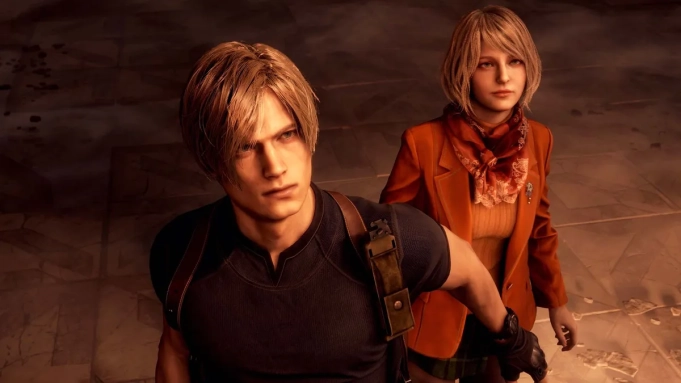
March 2023 – Resident Evil 4: A remake of the franchise’s darling is releasing this month and has tens, tens, tens across the board in critic reviews.

Old Dog, Gorier Tricks
Unnecessary horror movie remakes are often an exercise in what not to do. With few exceptions to the rule, they’re typically a way to make a quick buck on the uninitiated and leave fans of the originals unimpressed. Gaming, on the other hand, is participatory. Experiencing your faves like they were meant to be, remade from the ground up in the modern era, is like seeing them in color for the first time. Familiarity is now often used against us to rake in those scares. Occasional changes to set pieces and the order of events, coupled with photorealistic gore, will have you regretting that Jamie Lee Curtis-endorsed cup of Activia yogurt. Add to the mix 3D audio, ray tracing, butter smooth framerate, and enhanced enemy AI, and you may as well be the one holding the flashlight – and in VR, you are!
Newcomers will be shitting bricks regardless while they explore the puzzle boxes that are RE2’s labyrinthine Racoon City Police Department or Dead Space’s derelict spaceship Ishimura for the first time. Yet compared to a movie remake, only a video game can inject that same level of adrenaline fans of the original felt when they first played upwards of twenty years ago. Unlike in 2008, you’ll be rationing electrical power within the Ishimura as you explore, forcing you to cut the lights in all the wrong places. And speaking as someone who has completed The Last of Us several times since 2013, there was still something uniquely special about exploring and surviving through the lush, overgrown neighborhoods and abandoned cityscapes with Joel and Ellie on the PS5. It’s like getting a 4DX theater upgrade of your Blu-ray collection.

What Fresh Hell is This?
A calming piano accompaniment lulls you into a false sense of security while you sort through your pockets. The lighting seems brighter, and strangely, a typewriter in the center of the room calls out to you. As you jot down the memories of the last twenty minutes like a goldfish with a notepad, the faint thud of footsteps draws near. “It couldn’t be,” you think, as you recall doing a great job at zigzagging your way across the building. You only need one more medallion to escape this hellhole, so you creak open the door and return to the nightmare. BAM! It’s game over as the hulking behemoth closes his fist around your neck, and you draw your final breath.
That was just one example of your many encounters with Tyrant – or Mr. X as he’s more affectionately called – in the RE2 remake. He was a small piece of the pie during your second playthrough in 1998, but this time, he’s stalking your every move at various points throughout the main campaign. AI is taking the world by storm and is no different here. Mr. X is in pursuit throughout the RCPD in real-time, so make too much noise blasting away zombies, and you’re toast. It’s borderline debilitating. Yet this type of hands-on, play-at-your-own-risk visual storytelling is why we adore the medium. Everyone’s experience differs depending on when and how you choose to slink out of the light and into the shadows, and these remakes pull no punches.
Enhanced AI and Storytelling Innovations
Beyond the enhanced AI of the chainsaw-wielding maniacs and human companions of Resident Evil 4 or the petrifying sound of the Dead Space necromorphs scuttling through vents, game directors are finding other ways to make these adventures fresh. Cherished stories are now the director’s cuts we’ve always wanted, incorporating new story beats, side quests, character interactions, and even additional never-before-seen endings. Filming a scene for a video game in 2023 is no different than your average day doing motion capture for the MCU or James Cameron, and storytelling is held to the same standard as visual finesse.
On the flip side, the HBO adaptation of The Last of Us accomplishes what very few have done before. In a meta twist, the game’s creator, Neil Druckmann, is the show’s lead writer. We’re essentially getting another remake of the game, and Druckmann gifts us entire episodes dedicated to characters and subplots only hinted at on consoles. Much as the audiovisual enhancements in the PS5 remake allowed me to experience the beauty and terrors of its world with fresh eyes, the HBO series views its characters through a new lens. Naysayers have always looked down their noses at video games, but the series’ critical success and viewer reception, which brought people to tears weekly, has something to say about that.

Untold Horrors
The future is bright for horror gaming, and its untapped backlog for remakes and reimaginings runs deep. The macabre classic Silent Hill 2 has been announced as the next major remake coming down the pike, which will undoubtedly induce a few panic attacks. As for other hopefuls, Parasite Eve – a bizarre fusion of Final Fantasy and Resident Evil set in NYC that explores themes of bodily autonomy and spontaneous human combustion – and Dino Crisis, which is clearly about gunning down dinosaurs come to mind. And let’s not forget the wild west of VR and whatever hallucinatory nightmares that might bring.
If we’ve learned anything from the success of this new trend, the adage “if it ain’t broke, don’t fix it” does not apply to video games. Allowing the game’s core to remain intact is necessary, but twenty-year-old polygons need help being scary again. And please, whatever you do, don’t even think about bringing back tank controls for some kitsch nostalgia trip.


Sex, bloody torture, gore, cosmic terror, and whole lot of BDSM demons. The iconic Hellraiser franchise, known for its queer subtext and dark fantasy-terror, is fucking back…but maybe not the way you might expect. Saber Interactive, the company behind Warhammer 40,000: Space Marine 2 has unleashed the iconic franchise into the video game world with one terrifying trailer. This is Hellraiser: Revival.
The official blurb of the game introduces the story. Protagonist Aidan, who’s Girlfriend is taken into Hell after the Genesis Configuration (a puzzle box seemingly quite similar to the iconic Lament Configuration). He must use and unlock the secrets of the configuration to battle countless demons, Pinhead worshippers, and the Cenobites themselves to save her.
That’s not all for the story, though. Living legend Clive Barker, creator of The Hellbound Heart, and Director of the original film, reportedly helped on the story of the game, returning to the iconic franchise he created decades ago. He is quoted as saying, “Working on the first true Hellraiser game has been a venture deep into the recesses of my darkest imaginings.” With this in mind, one can it expect it to stay true to the roots of the series.
Graphic both in sex and violence, the trailer promises the look and feel of the classic film. It filled to the brim with cenobites, horrendous torture methods, and some deviously designed demons. The color palette is drenched in dark shadows and a menacing Hellscape.
Games
‘Lost Records: Bloom & Rage Tape 2’ Review: A Heart-Wrenching ‘90s Adventure with Unforgettable Choices
Lost Records: Bloom & Rage is a perfect jumping-off point if you’ve never played a Don’t Nod game. It shows you just how creative, original, and passionate the entire team is. Even the minor graphical glitches weren’t enough to take me out of the game one bit. That being said, I think Bloom & Rage is a game that will emotionally destroy many. Those of you who are in an emotionally vulnerable state, be warned because Tape 2 gets incredibly heavy, and if you’re not ready, you’ll be caught off guard. I said it best in my coverage of Tape 1 and want to end this review by reiterating that this game made me nostalgic for my childhood while also yearning for the one I never had.


Lost Records: Bloom & Rage Tape 1 was a homerun for Don’t Nod Montréal. In the most recent episode of the Horror Press Podcast, I ranted about Y2K and my discontent with ‘90s nostalgia bait and that I almost dislike it more than ‘80s nostalgia bait. What I appreciated about Tape 1 is how it creates its own version of the ‘90s while remaining a referential timepiece. The ending of Tape 1 left me wanting more, and now that I’ve played through Tape 2 twice, and somehow got the same ending both times, I’m ready to talk about it.
Picking Up the Pieces: Tape 2’s Story Continues
Tape 2 picks up where Tape 1 left off. Present-day Swann Holloway (Olivia Lepore), Autumn Lockheart (Andrea Carter), and Nora Malakian (Amelia Sargisson) are at the Blue Spruce Bar in Velvet Cove. They’re reeling in their shared revelation of the night of the concert they put on 27 years ago in this very parking lot. The mystery box still sits in the center of the table as a beacon of what once was and what will be. We jump back and forth between the present and a post-concert 1995 and the fallout on the revelation of Kat Mikaelsen’s (Natalie Liconti) leukemia. But how the game ends, my dear players, is in your hands.
Before we get into it, I want to make sure I discuss two things I didn’t talk about in my coverage of Tape 1. First, we have an incredibly direct reference to a film that fits perfectly and has been confirmed as an easter egg. Swann’s license plate reads, “STV GLW”. This has been confirmed as a direct reference to Jane Schoenbrun’s I Saw the TV Glow, which I thought was an incredibly sweet reference. We also get another great reference in a form that pays homage to another film that inspired this game (it seems), and that is Nora’s lighter, which is white and says, “Fire Walk With Me” on it—loved seeing that!

A Soundtrack That Haunts and Hypnotizes
I’m not sure why I didn’t cover it previously, but the other aspect of both tapes that makes the experience ethereal is the soundtrack. Much of the composed music for the game creates a hallucinogenic, dream-like atmosphere that sets the soundtrack miles apart from others. But the songs that resonate the hardest are those from duo Milk & Bone (Laurence Lafond-Beaulne and Camille Poliquin) and Ruth Radelet. Without the whimsical ambiance they created, this game would not be what it is. And then we have See You In Hell by Nora Kelly, which I’ve been humming to myself over and over since I finished the game.
Tape 2 ups the ante from Tape 1 in a way I wasn’t sure they could pull off. Even though the game is rated M, Tape 1 felt a little safe. Tape 2 takes the training wheels off and lets you know fairly early that we’re not here to mess around. Each second feels like an eternity; each decision is heavier than before. The writers (Desiree Cifre, Nina Freeman, and Jean-Luc Cano) crafted four wonderfully complex teenage characters, and seeing how what happened (in your playthrough) forms the clay of their present-day selves is a feat that many choose your own adventure games fail to pull off. I have never felt so deeply about a set of characters in a video game until now. (Even though my playthrough made me dislike Autumn quite a bit.)
Final Thoughts: Nostalgia Meets Yearning


‘Iron Lung’ Review: Exceptionally Atmospheric Cosmic Horror

No, Cult Cinema Isn’t Dead

‘The Ritual (2017)’ Review: When Grief Gets Gruesome

‘Wait Until Dark’ Review: A Timeless Psychological Horror Thriller

‘Return to Silent Hill’ Review: A Misogynistic Betrayal of Silent Hill 2

‘Lake Mungo’ Review: Still the Greatest Ghost Film of All Time

How ‘Child’s Play’ Helped Shape LGBTQ+ Horror Fans

‘The Cabin in the Woods’ Review: And the State of Horror

‘Night Patrol’ Review: Vampiric Cop Horror Undone by Messy Execution

The 10 Most Satisfying Deaths in Horror Movies

‘The People Under the Stairs’ Review: A Brilliantly Bizarre Horror Classic

‘Five Nights at Freddy’s’ and The Story of William Afton Explained

Slappy Was the Blueprint: How the Dummy from Goosebumps Became A Horror Icon

Glen and Glenda: Don Mancini’s Reverence for Queerness in ‘Seed of Chucky’ (2004)

‘Truth or Dare’: Who Did it Best?

V/H/S Franchise Ranked, Best to Worst

Everything You Need to Know About Jason Voorhees

The 11 Most Disturbing Horror Movies Ever, According to an Actual Horror Fan

[REVIEW] ‘Cherry Falls’ (1999) Brittany Murphy Shines in This Cult Classic Slasher
