

Reviews
[REVIEW] Is ‘Fire in the Sky’ (1993) The Greatest Sci-Fi Movie Ever Made?


Nowadays, if you asked a casual fan of High Strangeness if they knew of any high-profile alien/UAP-related stories, they’d probably mention Chris Bledsoe and his book UFO of God. But if you asked that question two or three years ago, they would mention one of two people: Betty/Barney Hill or Travis Walton. I’ve read both Fire in the Sky and The Walton Experience (both are basically the same book) and listened to the times when Art Bell had Travis Walton on his show. The story is fascinating! But…there is information under the surface that makes me question Travis’s experience. Nonetheless, Fire in the Sky was a blind spot on my watchlist, and I figured what better month than “based on a true story” to give it a watch?
It should be noted there are many issues with this story from both Travis Walton and Mike Rogers. While I’m more familiar with everything regarding this story pre-2021, I will discuss the post-2021 issues to the best of my ability.
Fire in the Sky and the Night Travis Walton Vanished
Fire in the Sky follows a group of six loggers (there were seven in the true story): Travis Walton (D. B. Sweeney), Mike Rogers (Robert Patrick), Allan Dallis (Craig Sheffer), David Whitlock (Peter Berg), Greg Hayes (Henry Thomas), and Bobby Cogdill (Bradley Gregg). This group, led by Travis, is working on clearing brush in the White Mountains in Snowflake, Alaska. Due to a tight deadline, they find themselves working long shifts. At the end of the night, the six men pack into Mike Rogers’s truck and head home through mountain paths. Allan Dallis makes note of a “fire” in the sky, prompting Mike to stop his truck. Travis jumps out and decides to check out the object. Suddenly, he’s consumed by a beam of light and thrown backward. Thinking he’s dead and freaked out by this object, Mike guns it out of there. By the time he gets the guts to go back and check on Travis…he realizes Travis is gone.
Once back in town, Mike calls the cops, and the five of them wait for the police. A search party is called the very next day, to no avail. The town descends into chaos, reporters flood this small town, and a witch hunt ensues. Many of the townsfolk think the other loggers killed Travis and nearly begin to march with pitchforks and torches. Travis eventually reappears five days later…but he is nothing more than the shell of the man he once was.
How the Film Treats Travis Walton’s Story
What’s very clear from the film is that neither writer Tracy Tormé nor director Robert Lieberman believes a single ounce of Travis’s story. Part of me believes that if Tracy and Robert lived in this town when this happened, they’d be a part of the angry mob. It’s frustrating that Lt. Frank Waters (James Garner) is given more credibility than any of the men involved in the incident. Rather than giving proper justice to both sides of the story, the writer and director make their allegiance to their respective sides well-known.
That being said, the film is a joy to watch. Robert Patrick is, and always has been, one hell of an actor. Funnily enough, Robert Patrick learned, not too long before the making of this film, that he is related to Mike Rogers! You can feel Patrick’s passion in every second of screen time. Most notable is the polygraph scene. Tired of being looked down upon and hated by everyone in town, he loses it when asked to come back for a second polygraph test. In the most “I know what I saw!” moment in the film, Mike Rogers has told his truth and is frustrated that it’s not enough.
The Infamous Alien Testing Scene and ILM’s Lasting Impact
While the film does a great job at fomenting the hoax angle, there is one scene specifically this film is known for: the testing scene. Coordinated by Industrial Lights & Magic, the scene where Travis explores the spaceship and gets tests run on him is both exhilarating and terrifying. From the gooey space pods to the skin-like wrap and eye needle, this scene hasn’t been topped in Sci-Fi horror. ILM has long been known for pushing the boundaries of visual effects, and this scene is particularly gorgeous. I can’t imagine what it would be like to watch this in theaters in 1993.
All that being said, this film takes way too many liberties for my liking. The scene where Travis wakes up in the spaceship and is tested on is the most notable of exaggerations. In Travis’s story, he was initially knocked out by the beam of light. He then woke up in an almost hospital-like room. Three short, hairless aliens surrounded him. Travis attempted to fight them off and was eventually taken to another room by a human wearing a helmet. The room he was taken to was the last thing he remembers, as three other humans put a plastic sheet over his face. From there, the next thing he remembered was walking down a highway.
I can understand why that might not be too exciting for a feature film, but it’s very different from what we get in Fire in the Sky.
Evidence Suggesting the Travis Walton Abduction May Be a Hoax
Now, we should get to the evidence that points to this being a possible hoax. The UAP was described as your classic two-pie saucer. I wholeheartedly believe that UAPs are not the classic UFOs we see in 50s sci-fi movies, so that’s a red flag for me. Next, we have the fact that Travis and Duane’s father was a huge fan of Ufology (and there are reports that the brothers believe their father was abducted, but that could be heresy). Also, we have real reports that Travis and his brother Duane wanted to be abducted. When Travis went missing, his brother was definitely worried but didn’t seem as worried as a brother should be. This could possibly be because Travis and Duane [reportedly] had a pact that should one of them be abducted, the one who was taken would try and talk the aliens into coming back and taking the second brother.
There’s also the fact that Travis’s company was behind schedule and on the verge of losing their contract to finish the logging job. An abduction would be a great way to prolong that contract! What type of person would cancel a contract when there’s an investigation into a missing person? While the team was working late to finish their job, it was noted by a crew member that on the night of the abduction they stayed longer past dark than they had before.
Mike Rogers Recants and Retracts
In 2021, things get messy…kind of. Mike Rogers posts on Facebook denouncing The Walton Experience and stating that he no longer considers himself a witness. A month later, he spoke with a producer making a new documentary about Travis Walton. In this conversation, which the producer recorded, Rogers mentioned that the incident was a staged hoax. Rogers was upset that Walton did not include him in discussions regarding the film’s remake–the two would eventually make amends with each other, and Mike Rogers retracted his statement.
Take that information for what you will.
Fire in the Sky as Sci-Non-Fi Horror
Fire in the Sky is lighting in a bottle. It was a time when filmmaking was preparing to break into a new spectrum of filmmaking. It’s not just a fascinating look at a supposed real-life story, it’s scary. It’s authentic. It’s emotional. There are parts of Travis’s story I believe, and parts I don’t. While Fire in the Sky may be exaggerated, it’s a beautiful film that tells a beautiful story in a timeless way. If you’re a fan of Ufology, aliens, or High Strangeness in general, you must check this film out. To me, Fire in the Sky is the greatest Sci-non-Fi about alien abductions.


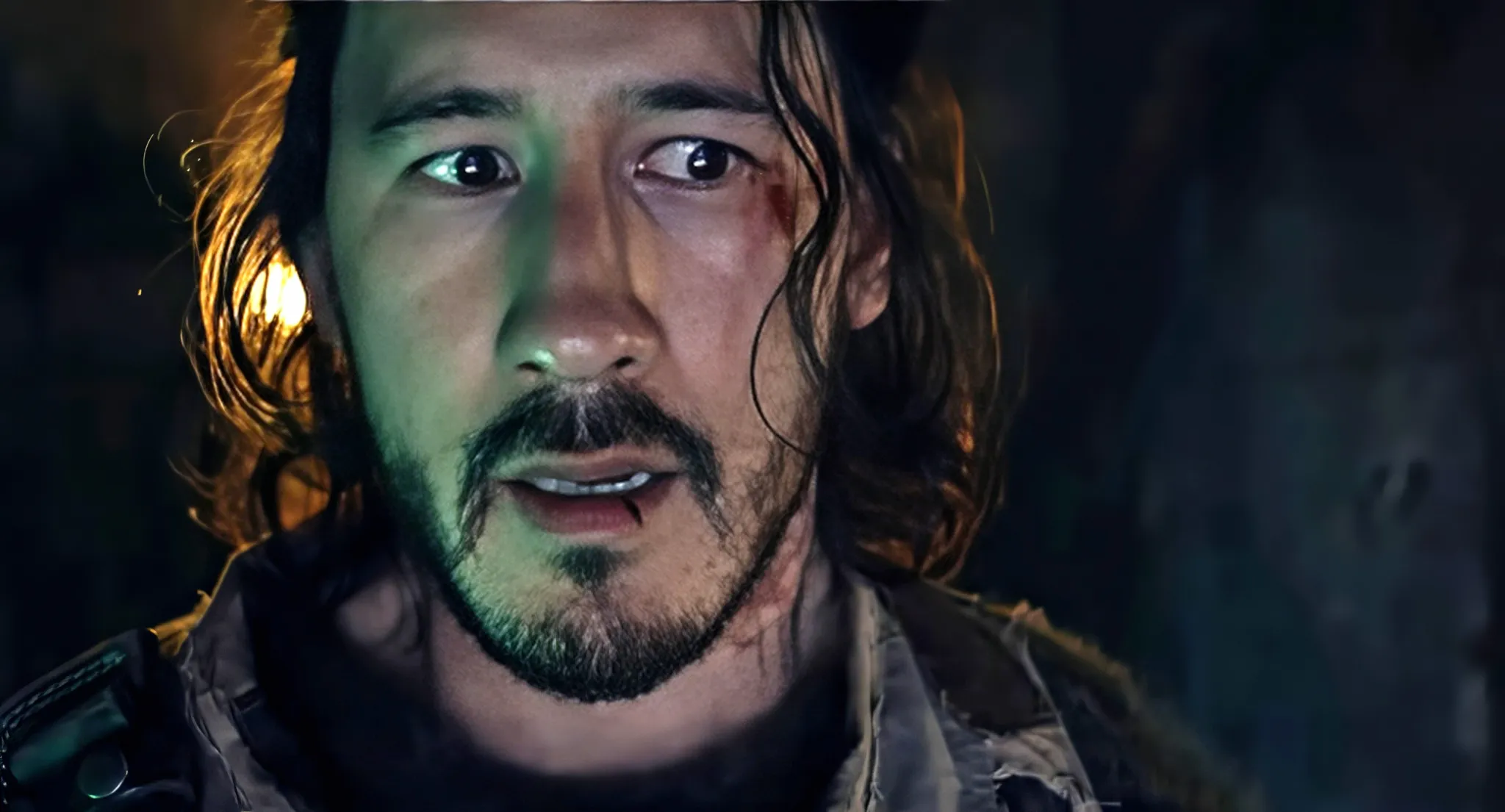
As Iron Lung begins, the film places you in an overhead shot looking down at a submarine that’s seen better days. Jagged metal teeth of a broken cage sit at its head, illuminated by a light from the ship above that’s about to cut it loose. As you’re about to be dropped into a roiling ocean of blood, you become quickly invested in its story.
A dire paternal voiceover runs you through your place in the world as an observer: someone is being sent into the “waters” of a far-off moon in a dead, dark galaxy. They’re in search of an answer you’re automatically aware will never be enough and a penance they will never attain. It prompts an obvious, cutting question: if Hell is where we’re looking for an answer, how bad must things be among the stars to go searching there for hope?
A Surprising Outing for Writer and Director Mark Fischbach
The debut feature film of writer and director Mark Fischbach, better known to the internet at large as Markiplier, is as surprising as it is atmospheric. And no, not surprising because Fischbach is an internet personality crossing over into film. And no, not surprising because this is a video game adaptation that is actually quite good.
The surprise here is mainly from the way Fischbach dodges a number of first-time filmmaker torpedoes that would otherwise sink the film straight to the sea floor. It’s in the very clear coordination and trust he has with his cast and crew. In a way, the film itself is a mirror of the submersible his character is forced to pilot: flawed, surely, but strong enough to complete its mission and deliver an exceptional experience.
What Is Iron Lung About Exactly?
The story goes as follows: in the wake of an event called the Quiet Rapture, the stars themselves have been snuffed out. Most of the galaxy has been plunged into sudden darkness, and a mass dying off has consumed countless worlds (think the worst possible aftermath to The Nine Billion Names of God).
Convicted for a reprehensible crime, the convict Simon (played by Markiplier himself) has been given a rare opportunity to return to life among the survivors. The mission is to pilot a death trap of a one-man submarine into the blood oceans of an alien moon, looking for a scientific sample useful enough to earn his freedom. That is, assuming he doesn’t lose his mind or his life in the process.
Bespoke Set Design That Matches the Premise Perfectly
Iron Lung should be commended first and foremost for being a bottle film with the perfect set design to match. Not overly ambitious, but not too simplistic either. Contained in a marvel of a small space, the submarine here is a tactile nightmare of rusty metal and antiquated technology you never get sick of seeing more of.
While Fischbach and director of photography Philip Roy have the camera linger in close ups almost too often, I don’t blame them for wanting to capture the finer details and leer at them. It’s clear every inch of this condensation covered machine was engineered by the art team and production design to emphasize its prison cell qualities as a barely functional vessel.
The ship’s external camera fires off like a flash bulb on its interior, barely illuminating the cabin with its next horrific image of the sea floor before plunging us back into darkness. The oxygen gauge and its cold robotic voice are a countdown to the painful annihilation that awaits its pilot. Its proximity sensors give only the barest indications of what’s going on outside, ticking a dull noise warning us: you are not alone. It’s a punishment to operate, and the set design as well as the very solid sound design that accompany it make that violently clear and effectively spinetingling.
Translation From Game to Film Isn’t So Perfect Though
This perfect setting isn’t always used perfectly though. The translation of the game’s mechanics and gameplay to the screen are both a weakness and a strength. They make the pacing of the first third run to a slow start, especially when Fischbach’s screenplay grinds against the strong suit of the film’s cinematography: the panic of it all.
Like its video game source material, David Szymanski’s Iron Lung, the film is really at its best when it’s instilling a sense of active and imminent panic. A tone that matches the borrowed time the submarine is glued together with. Putting out fires, both literal and metaphorical, ratcheting up its claustrophobia as you’re placed cheek to cheek with Simon in steamy, metallic darkness. This is where Iron Lung shines.
Markiplier’s Performance in Iron Lung is Hit or Miss, But Mostly Hits
It’s outside of these moments of panic where the weakest parts of the script and Fischbach’s performance are highlighted. Some weak line deliveries and beats of dead air kill the real tight headlock the film could have you gripped in from start to finish. And while Fischbach is phenomenal at playing terrified or pleading or even simple exhaustion in the face of the impossible, he really requires someone to bounce off of as his solo work just isn’t as compelling. Even the clunkiest bits of dialogue between him and his jailer (Caroline Kaplan) are better than the best of his moments where he talks to himself or tries to inject some humor into the bleak story.
This is a shame too, because the minimalist storytelling and background we get for his character is genuinely very intriguing. It’s thematically rich for what the film is trying to say about the power and terror of belief, and it’s doubly satisfying that the film has enough confidence to not lay everything out in a longwinded speech explaining the motives and lore that landed him here.
All that being said, his performance is hit or miss, but he mostly hits. The dialogue becomes more urgent as we approach the climax, and all of the cast delivers on that impending doom nicely. It reaches its peak in the final act, and Fischbach is on fire as he struggles to hold himself together in the face of absolute madness leaching its way into the pressurized cabin.
Iron Lung: A Redemptive Finale With Pure Liquid Body Horror
What a fantastic final act it is, one that makes up for its imperfection in the first two parts with a homerun of pure liquid body horror. It’s just phenomenal how the film’s digital and practical effects present the true horrors of Iron Lung. There’s a near perfect mesh between the two, and they highlight the best influences of similar genre films that came before.
Soaked with all the gore, madness, and mystery of the likes of Event Horizon and Pandorum, Iron Lung is a worthy successor in the cosmic horror genre as it rises above its own problems. It’s a moody, environmentally precise stunner of a horror film that sets a benchmark as the movie to beat for forthcoming releases this year.

The Ritual is, without a doubt, one of the most completely enthralling horror films of the past decade. Usually, I wouldn’t open with such a strong reaction for a movie that isn’t a technical and narrative masterpiece, but this is close enough to call that in. It’s at the very least masterful work that deserves more love, and that’s even with it having a permanent home and high placement on the world’s biggest streaming platform. It’s no longer the obscure hidden gem it was at the time of release, if it ever was that, but I refuse to stop talking about it.
The sheer catharsis this film grants through its cast, and the way its environment really pushes that cast of characters, is what I could only describe as “surgical.” It cuts to the bone. It’s a movie about the strangling nature of grief, and it gives us a great time showing its characters fighting against that choking feeling.
What is The Ritual (2017) About?
After the death of Rob, things haven’t been the same for Luke. The memories of the robbery that took his life, a robbery he had to witness hiding behind a liquor shelf, still haunt him. But there’s a chance for closure as he and his friends go on the trip that Luke had helped plan the night he died.
Their quest to honor his memory sends them through the beautiful locales of Northern Sweden, along a hiking trail in the mountains. But after an attempt at a shortcut sends the group deep into the woods and they struggle to get back on course, it becomes violently clear they aren’t the only ones in the wilderness. Ritualistic markings, involving dead animals and dire effigies, warn of a much greater power lurking in the forest. Whether they can escape it depends on whether they can keep each other safe long enough to get out.
Netflix Could You Lock In And Do A Physical Release For Once
This is a phenomenal film, but I’d be remiss if I didn’t get up on my soapbox about its format for just one moment. Regrettably, this is a streaming-only film that has been shackled by Netflix to its platform. It has an excessively rare DVD release floating around, but that is also unfortunately, region locked, and likely more low fidelity than most physical collectors would like. Especially when so much of this movie relies on shadow and darkness, a Blu-Ray release is kind of obligatory for high quality preservation of the director’s vision.
Not sure what I expected from the media conglomerate that it is. Netflix is already notorious for refusing to release physical media and then cancelling and erasing shows from the platform. What are we going to do with you Netflix? You only ever seem to cause me problems. Just make the physical release for this already.
Gorgeous, Grotesque, And Gut-wrenching All At The Same Time
Setting that thought aside, this film was bound to be fantastic given the horror pedigree behind it. Cutting loose anthology director David Bruckner, the MVP of the V/H/S franchise, then giving him a budget and legendary location scouting is about as great as you’d expect. It’s like saying that sugar and butter make things taste better; should you really be shocked?
When you have this many lighting and environmental factors to juggle, expectations are understandably high. The film on paper should look at least a little choppy, but Bruckner and cinematographer Andrew Shulkind really are in their element here. This is only exemplified even further by the film’s most memorable space-bending set piece at its climax. I won’t even risk spoiling it for lack of a better description, but I will say the stark contrast they play with light and shadow here makes for some really captivating visuals and frightening moments.
The naturalistic environment this folk horror takes place in really has a knack for showing the contrasting beauty and grotesqueness of the things hiding in the woods. And its director really has a knack for using that environment to squeeze the actors for all they’ve got.
A Phenomenal Cast Led By Rafe Spall
Make no mistake: The Ritual is not just a pretty face. This is at its core a story about a group of men facing their strained relationships in the wake of a brutal death, and all the ugliness that entails. They’re foolish, angry, bitter, and sad people struggling each in their own way to accept a loss. What it leads you with is what you’d expect to be one-note characters being slotted into archetypal roles, but what they end up as feels surprisingly real.
The obvious star here is our lead Rafe Spall, whose turn as main character Luke ranges from downright depressing to shockingly soul lifting. You can see Spall plays him as a man slowly trying to piece himself back together, fumbling as he’s soaked in alcohol and self-pity. His changing demeanor throughout the film really reflects the truth of his character: he was only ever going to change and confront his past when he was forced to. And him being forced to go through supernatural circumstances really does make for one of the most satisfying character arcs in a horror film I’ve ever seen.
Is This The Best Creature Design Of The Past 20 Years?
Again, it’s difficult to talk about this film without spoiling its most fun moments, so I will just say that you only stand to gain something by watching it. If its emotional aspects don’t grab you, its aesthetic qualities will. And if all that fails to grab you, maybe this will: The Ritual boasts what is the definitively best monster design of the 2010s, if not the past 20 years. Nothing, and I mean nothing, can top the visual concept this film delivers on with that design. Need I say more?


‘Iron Lung’ Review: Exceptionally Atmospheric Cosmic Horror

No, Cult Cinema Isn’t Dead

‘The Ritual (2017)’ Review: When Grief Gets Gruesome

‘Wait Until Dark’ Review: A Timeless Psychological Horror Thriller

‘Return to Silent Hill’ Review: A Misogynistic Betrayal of Silent Hill 2

‘Lake Mungo’ Review: Still the Greatest Ghost Film of All Time

How ‘Child’s Play’ Helped Shape LGBTQ+ Horror Fans

‘The Cabin in the Woods’ Review: And the State of Horror

‘Night Patrol’ Review: Vampiric Cop Horror Undone by Messy Execution

The 10 Most Satisfying Deaths in Horror Movies

‘The People Under the Stairs’ Review: A Brilliantly Bizarre Horror Classic

‘Five Nights at Freddy’s’ and The Story of William Afton Explained

Slappy Was the Blueprint: How the Dummy from Goosebumps Became A Horror Icon

Glen and Glenda: Don Mancini’s Reverence for Queerness in ‘Seed of Chucky’ (2004)

‘Truth or Dare’: Who Did it Best?

V/H/S Franchise Ranked, Best to Worst

Everything You Need to Know About Jason Voorhees

The 11 Most Disturbing Horror Movies Ever, According to an Actual Horror Fan

[REVIEW] ‘Cherry Falls’ (1999) Brittany Murphy Shines in This Cult Classic Slasher
