

Reviews
X Review: A Spoilery Review of Ti West’s Return to the Big Screen


Indie horror darling Ti West is back with a vengeance with his grindhouse throwback X.
Since the release of the original Texas Chainsaw Massacre in 1974, many films have sought to emulate its grimy concoction of backwoods isolation and exploitive terror– hell, many of its sequels have unsuccessfully tried as much. Somehow, through some divine intervention (IYKYK), filmmaker Ti West has created a gnarly, filthy homage to the film and the genre it inspired while also standing on its own as a horror flick with substance beneath all its sex and gore. X follows a loveable, lecherous cast of amateur pornographers who travel from Houston to rural Texas seeking to create a film in the vein of French Avant-Garde cinema that will make them rich and famous. Unfortunately for them, the elderly proprietors of the farmhouse at which they rent lodging to secretly film their lewd and ambitious masterpiece stick a pitchfork in their plans, and, true to form, the sex turns to violence in the blink of an eye. West effortlessly weaves between low and highbrow visuals and ideas, as his characters seek to do the same. He spices up the debauchery with themes of youth and beauty, the power they have, and the dreams and desires that are lost when they fade. It’s a classic Ti West slow burn, yet also his most mainstream and thrilling because when the shit hits the fan, it sticks for a while.

Further propelling the film’s trajectory to a top-tier slaughterhouse slasher are its well-written characters and bold filmmaking style. West pits youth against the wrath of time personified in a way that deftly balances rich characterization, comedy, and internal distress while continuously upping the tension through smart editing and a score by Chelsea Wolfe that lulls you into a trance with its quiet and mystical echoes. The entire cast of X is appropriately horny – yes, even the elderly couple – and they’re brought to life in a way so many slashers fail to achieve. Mia Goth is the breakout star of the film, doing double duty as the determined Maxine and(under heavy prosthetics) the elderly villain Pearl. The parallels between the two do not stop there, as both women desire the life they feel they deserve; Pearl, however, is denied any hope of attaining it in her old age. This resentful mirroring of her past self upon the arrival of the libidinous filmmakers sets the horrors of X in motion. The film’s first kill exquisitely blends such pathos with visual flair, utilizing a drastic change in lighting and intensity, ending the scene in an elegant victory dance that is as comical as it is unsettling. It’s here that a new horror icon is reborn, bathed in her victim’s blood. West and Director of Photography Eliot Rockett continue using similar techniques of flashy transitional edits, melancholy juxtaposition, and slow-panning camerawork to build suspense, with one early knuckle-biting sequence involving an alligator perhaps being the most intense of all.
The rest of the cast likewise hold their own, and Brittany Snow, particularly, shines as pornographic professional Bobby-Lynne. She exudes wit and charm like no other, stealing every scene she’s in and even gracing us with a beautiful rendition of Fleetwood Mac’s “Landslide” accompanied by scene partner Jackson (Kid Cudi) on guitar. Martin Henderson brings his best McConaughey to the table as producer Wayne, and emerging scream queen Jenna Ortega surprises as the shy boom mic operator Lorraine, who might be taken by the allure of sex and fame the others are selling. Pearl’s husband Howard (Stephen Ure) also gets in on the action, and their relationship starts to resemble something of a foul version of The Notebook as more layers are peeled. And while much has been said about the film’s lovely cast and artistic elements, X isn’t afraid to rough it through the Texas dirt. The kills are brutal, and they are gory. It is a slasher through-and-through and opens at the scene of the crime, unafraid to show you the aftermath of the carnage you will endure.

Many were thrilled when X was announced as Ti West’s return to big-screen horror, and he has certainly not let them down. As a tribute to films of decades past, he has expertly crafted a modern slasher with 70s sensibilities, ready to get into the thick of it while also delivering thoughtful commentary on deeply human topics and a villain you almost feel sorry for. References and homage not only to The Texas Chainsaw Massacre but also films such Friday the 13th, The Shining, and his very own The Innkeepers will continue to keep fans of the genre grinning between the gore. X certainly has the X-factor.
And one more thing: Do make sure to sit through the end credits because a surprise is waiting that makes this journey through the filth all the more worth it.
Rating: 4.5/5


I really wanted to love Night Patrol. And to be quite honest, I did for the first 40 minutes or so. The set up has the right amount of intrigue, the characters have great potential and chemistry, and the world building begins to polish its concepts nicely around its midpoint. But as this action horror exploitation film progresses, strange choices in the screenplay and editing tarnish what it sets up.
What you’re fed is filling at first, but soon the cup runs dry. While its final moments do feel grand and fun, they are undoubtedly clumsy. And though Night Patrol’s chances of garnering a cult following seem highly likely just for the niche concept it hits on, the back half of the film leaves a sour aftertaste that makes it hard to enjoy as easily as most cult classics.
Night Patrol Sees Gang Members Take On Vampiric Cops
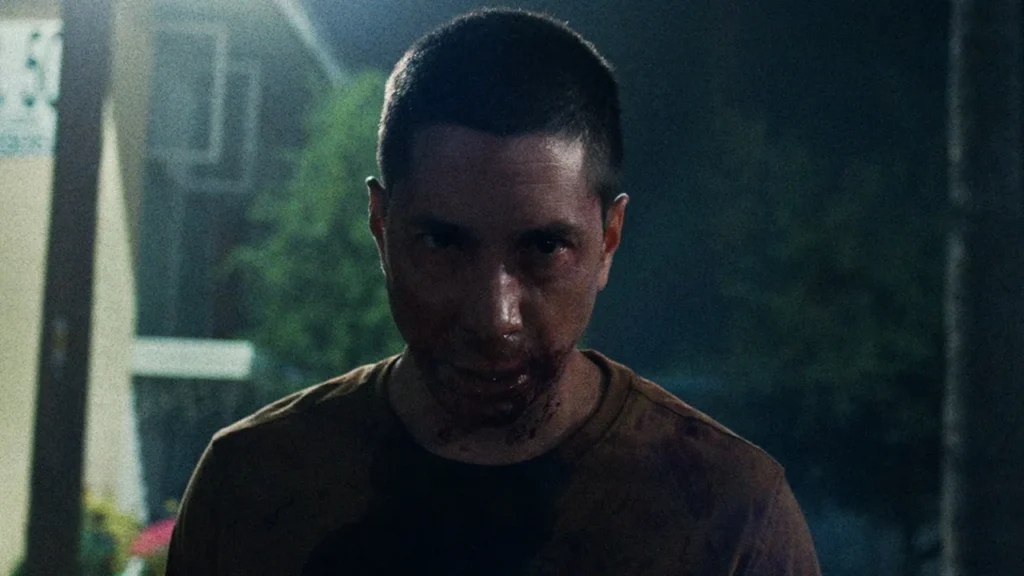
Crip Wazi (RJ Cyler) has his night take a sharp turn for the worse after a hookup with his Piru lover gets interrupted. But his misfortune isn’t from members of either gang spotting them: it’s the LAPD who arrive on the scene. What starts as a stop and search turns bloody fast as the mysterious unit of cops known as Night Patrol kill her suddenly. The newest member, Hawkins (Justin Long), doesn’t flinch as he becomes part of the deadly police gang in ritualistic fashion.
Narrowly escaping the encounter, Wazi returns home to the Colonial Courts to try and get help from the local Pirus, led by Bornelius (Freddie Gibbs). The plan is to avenge their own, but the entire neighborhood ends up in the crosshairs of the monstrous task force. Where the residents see a place and people to protect, Night Patrol sees little more than a chance to feed on its black and brown citizens.
A Strong Cast Led by RJ Cyler Delivers
At its core, it’s a solid concept: rival gangs band together with guns and African mysticism to fight some literal blood-sucking racist cops. If Pirus and Crips all got along, they might be able to gun down some vampires by the end of this movie. Its fun ideas are matched with an eclectic but appropriate cast: Freddie Gibbs, Flying Lotus, RJ Cyler, Justin Long, Dermot Mulroney, and most surprisingly of all Phillip Brooks, who you might know as WWE superstar CM Punk. Cyler, star of The Harder They Fall, very much carries with his performance here as he did there. He gets to show his emotional range throughout the film and works well with what he’s given. He’s only outpaced by Gibbs in terms of entertainment for the sheer number of great reactions Bornelius gets.
Justin Long’s physical performance oscillates from impressive to underwhelming here, but he is about as compelling as Cyler, all things considered. One scene in particular where he has an emotional outpouring as he discovers what Night Patrol is really all about struck hard. Brooks also manages to sell his vitriolic bastard of a character well, putting another mark down on his resume as a welcome sight in horror going forward.
A Clever but Confused Script
But unfortunately, fun performances can’t make up for the feet of clay the movie stands on. Its true weakness is in its storytelling and editing, which chops scenes and sections of the film up in a way that’s impossible to ignore.
Now, credit where it’s due. On a meta-textual level, the script has some clever flourishes. Its Black characters don’t start the movie on the back foot, intimately aware of the existence of Night Patrol, even if they can’t pin down exactly what kind of monsters they’re up against. There’s something to be said here of what it reflects: the acute awareness Black Americans are forced to have about the dangers of interacting with the wrong police officers and being at the mercy of violent policing.
The characters arm themselves well, they don’t walk into scenarios recklessly or leave themselves open to be torn apart (at least, not until late in the film). Wazi’s mother who evangelizes on the Zulu peoples and their occult knowledge, has been preparing for them for a long time. And when the vampires show up at their doorstep, the counter-offensive is quick.
In Spite of Night Patrol’s Charm, It’s A Plot Stretched Too Thin
I bring this up because, for as thoughtful and clever as that all is, those quality decisions highlight the uninspired and dull ones as well. The plot is still undeniably stretched out in an odd way. Part of the problem is the fact that there are effectively three different main characters in this story: Wazi, Hawkins, and Xavier (played by Jermaine Fowler). Xavier is Wazi’s cop brother, and Hawkins’ partner before he joins Night Patrol, making him the bridge between the two. But it’s a rickety bridge, and little care is paid to Xavier as a character who is one-dimensional in the end and really just human shaped fuel to keep the plot going. Hawkins gets a similar demotion later on but at least gets to be part of the ending and have a decent amount of screentime.
This problem of a plot stretched thin between characters is exacerbated by a slightly bloated runtime and a very disorderly rearrangement of scenes that plagues its back half. The characters have interactions in the third act that should have been established in the first or second. Expository and comedic beats that don’t fit the dire nature of the situation make for tonal road bumps. In some cases, continuity of where characters were and what they said is thrown out the window entirely. There’s a big reveal for comedic effect in the film’s last scenes, but its undercut by what a character said just minutes prior spoiling the joke.
A Nightmare of Editing Hamstrings Ryan Prows Fantastic Directing
Director Ryan Prows has proven himself highly competent in the past with his feature Lowlife, and his handling of the camera in this film is no different; it even indicates some serious growth. He has a firm grasp of lighting his locations and framing his characters, he’s good at setting a tone. I particularly love how he handles the sequence where the cops inevitably and violently storm the Colonial Courts. It manages to be highly stylized while capturing the genuine horror of the attack, and he demonstrates a clear sense of balancing those cinematic elements. He is, without a doubt, highly skilled.
But unfortunately, the way that Night Patrol is plotted, paced, and cut together tears apart and reassembles Prows solid vision, taking what could be a great horror film and seriously hamstringing it. It’s a flesh golem of great ideas, stitched with the right organs in the wrong places—and some of its guts missing altogether by the time those credits roll.
If there’s one thing I truly admire about 28 Years Later: The Bone Temple, it’s how deftly it maneuvers itself out of the mires that blemished the previous film. It continues the story director Danny Boyle and writer Alex Garland set up in 28 Years Later, but manages to bypass all of its weaknesses. It remedies all the ailments of the 2025 reboot, and it’s safe to say director Nia DaCosta is the one delivering the cure.
Director Nia DaCosta Gets Us Back on Course
Instead of the overly stylized editing and camerawork Boyle indulged in, we get a film that is clean and sharp without sacrificing the chaotic nature of the conflicts at hand. Instead of spreading its narrative and thematic butter too thin by hitting on many different ideas, The Bone Temple focuses in and focuses hard on what it’s trying to say about its characters. And most surprisingly of all, it manages to strike a near perfect balance of dark humor and genuinely disturbing sights to create a film that is every bit as fun as it is bleak and brutal.
Spike’s Journey Continues– While Dr. Ian Kelson’s Begins
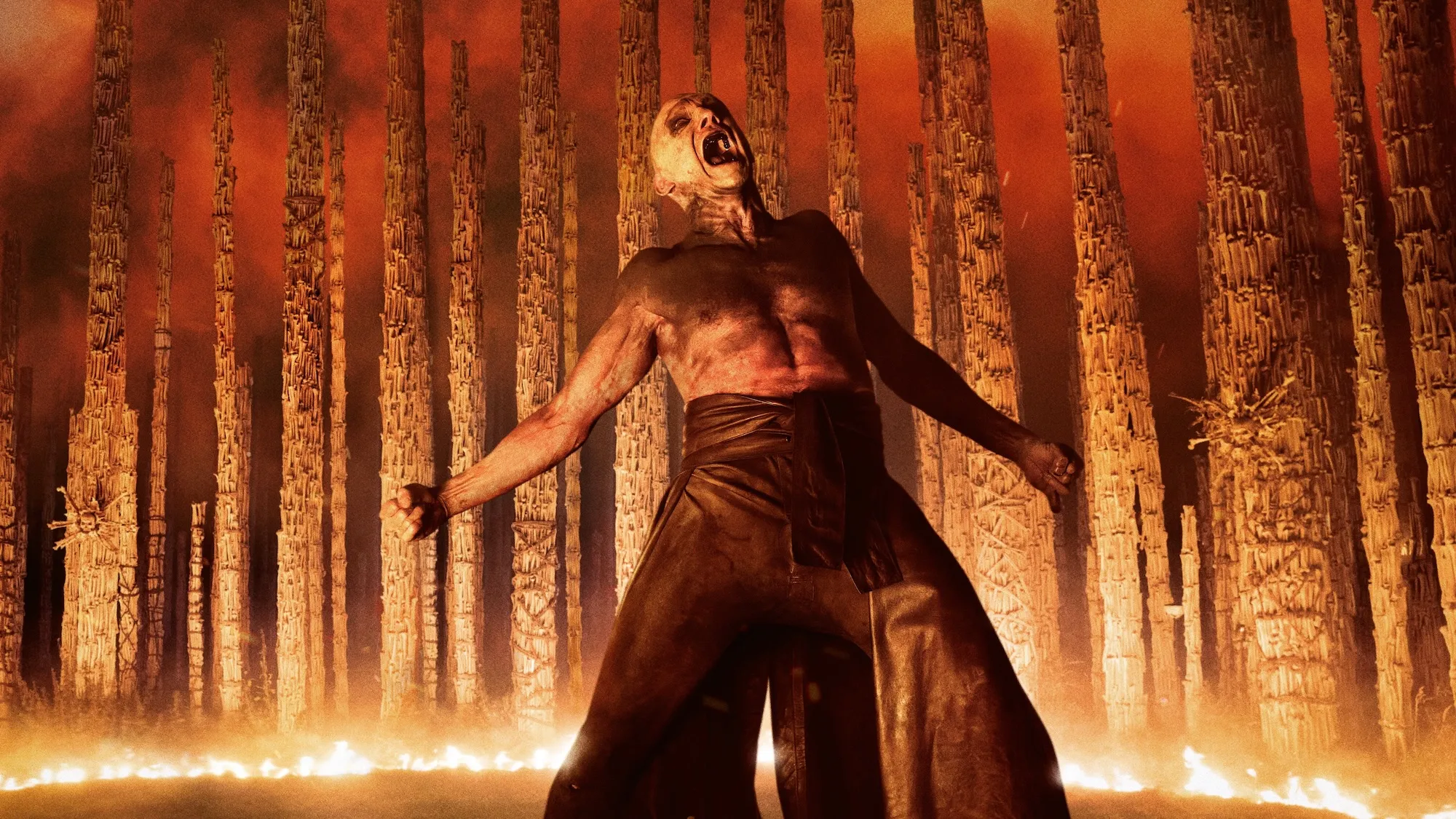
As Spike’s journey in a post-apocalyptic Great Britain continues, he finds himself in dangerous company: The Fingers, a childish and ultraviolent band of tracksuit wearing survivors all named Jimmy. They’re guided by their demented priest and gang leader Sir Lord Jimmy Crystal, a demanding monster that consumes everything in his path to fulfill his dark and bizarre sacraments.
As he’s inducted into the gang in a brutal fashion, things go from bad to worse as Spike tries to escape them. But elsewhere something even stranger than the Fingers’ way of life begins to unfold, as Dr. Ian Kelson’s run-ins with the infected alpha Samson bear bizarre new fruit.
Jack O’Connell Reminds Us of What Made 28 Days Later So Good
Those expecting the violent infected roaming the woods to take center stage again will likely be disappointed, as their threatening presence from the first film has been usurped by our new underhanded antagonist Jimmy Crystal. Portrayed by Jack O’Connell, hot off the heels of his explosive performance in Sinners, he proves to us time and again that there are in fact worse fates than infection and death out in the wastelands of the United Kingdom. He is without a doubt the best part of the film, primarily for what he achieves in refocusing on the ethos of the series. The sheer human horror that made 28 Days Later so compelling is revitalized here, with O’Connell taking on the same kind of dire threat that Christopher Eccleston did as Major West in the very first film.
I would dare to say the character might be even more effective than Major West in how masterfully his writing tells us who he is, and how the character reflects Spike’s own growth. Jimmy Crystal is an ignoble lord, an ersatz early 2000s Jimmy Savile with all the uncomfortable meta-commentary underpinnings that implies; he is a predator, just a predator of a different kind. He is through and through, a fun to watch monstrosity; not charismatic per se, but very, very entertaining. O’Connell plays the immature, rotten-toothed psychotic like a worn, familiar instrument, and is able to generate a lot of discomfort and disquiet with how he plays him.
Ralph Fiennes and Chi Lewis-Parry Are Unrivaled
The other star player is, unsurprisingly, Ralph Fiennes as Dr. Ian Kelson. Though he doesn’t have as expansive an arc as Spike did previously, we get to spend time watching the character soul search for something in himself and in his new companion, the now somewhat docile Samson (played once again by the absolute mountain of a man that is Chi Lewis-Parry). It’s the emotional ballast that keeps the darker half of this film afloat, and a perfectly complementing light to Spike and the Fingers dark plotline.
Credit where it’s due to Lewis-Parry in particular as well, whose physical control and facial acting as Samson was genuinely impressive; this time around, it’s certainly more demanding and asks for more nuance than the monster role it started as, which he achieves. The odd relationship the two characters foster in this film is a delight that’s only matched by Kelson eventually running afoul of Jimmy Crystal, and where it goes from there is a far cry from what I expected.
A Taste of the Terrifying Trilogy Closer Yet to Come
Though the A and B plots of the film have a heavy delineation in tone and in story, the way they intertwine is more elegant than I anticipated, and much more fun than I would have ever bet. It takes until late in the second act to see what picture is being pieced together exactly, but the crash of a climax it provides results in a rollicking good time that merges the disparate halves.
Many will see the midpoint of this trilogy-to-be, and expect its over reliance on what came before or needless burden setting up the forthcoming third film. But 28 Years Later: The Bone Temple is far from beholden to its place in the series. It is purely a good movie, and it stands on its own as one. There’s a genuine cohesion here, and an unpredictable x-factor in the radical departure from the family focused plotline of the previous film.
A Confident Middle Chapter That Stands on Its Own
Where 28 Years Later was a post-apocalyptic coming of age, The Bone Temple is a dark fairytale about characters on a disastrous journey for one thing: control in a lost, uncontrollable world. It’s a fine study of characters locked in a scramble to stay on top, and how they interact with characters scrambling to retain their humanity. What results is a sequel that isn’t just better than what came before it, but one that will ignite audiences with excitement for the final installment that’s yet to come.
28 Years Later: The Bone Temple releases in movie theaters on January 16th, 2026


‘Night Patrol’ Review: Vampiric Cop Horror Undone by Messy Execution

The 10 Most Satisfying Deaths in Horror Movies

‘28 Years Later: The Bone Temple’ Review: Nia DaCosta Has the Cure

The Horror Press Podcast Episode 54: Heated Rivalry & Yahtzee

‘Sleepy Hollow’ Review: Seeing Really Is Believing

‘Ready or Not’ and the Cathartic Cigarette of a Relatable Final Girl

‘Carrie’ Review: A Look At Two Adaptations

The Best Horror You Can Stream on Shudder in January 2026

The Best Horror You Can Stream on Netflix in January 2026

‘The Taking of Deborah Logan’ Review: An Overlooked Gem

‘The People Under the Stairs’ Review: A Brilliantly Bizarre Horror Classic

Slappy Was the Blueprint: How the Dummy from Goosebumps Became A Horror Icon

‘Five Nights at Freddy’s’ and The Story of William Afton Explained

Glen and Glenda: Don Mancini’s Reverence for Queerness in ‘Seed of Chucky’ (2004)

‘Truth or Dare’: Who Did it Best?

V/H/S Franchise Ranked, Best to Worst

Everything You Need to Know About Jason Voorhees

The 11 Most Disturbing Horror Movies Ever, According to an Actual Horror Fan

[REVIEW] ‘Cherry Falls’ (1999) Brittany Murphy Shines in This Cult Classic Slasher
