

TV
Hannibal: A Queer Love Story
Bryan Fuller’s 2013 adaptation of Hannibal is not your typical romance — after all, how many love stories focus on characters engaging in psychological warfare designed to destroy one another? Sure, it’s not a healthy relationship dynamic, but in the world of horror, this series created the pinnacle of the genre “horroromance.”
The Hannibal series is based on author Thomas Harris’ Red Dragon and follows empath Will Graham and his unexpected connection with the dignified, evil Dr. Hannibal Lecter. While the series starts as your typical police procedural, the second and third seasons explore the story Fuller really wanted to tell — and bring the queer undertones of these characters to light.
At a time when mainstream queer media was in its infancy, an unabashedly queer show like Hannibal was largely possible because of its status as psychological horror. When a debate on the ethics of cannibalism is on the table, folks are less likely to bat an eye at two men pining after each other. Embracing the horroromance label allowed Hannibal to shine and cement its legacy within queer media as a show in which body mutilation doubles as a flirtatious vehicle for romantic declarations, sapphic characters are flawed yet complex, and viewers are forced to reckon with the primal fear at the base of all love stories: whether we’ll ever be truly seen and accepted for who we are.


Bryan Fuller’s 2013 adaptation of Hannibal is not your typical romance — after all, how many love stories focus on characters engaging in psychological warfare designed to destroy one another? Sure, it’s not a healthy relationship dynamic, but in the world of horror, this series created the pinnacle of the genre “horroromance.”
The Hannibal series is based on author Thomas Harris’ Red Dragon and follows empath Will Graham and his unexpected connection with the dignified, evil Dr. Hannibal Lecter. While the series starts as your typical police procedural, the second and third seasons explore the story Fuller really wanted to tell — and bring the queer undertones of these characters to light.
At a time when mainstream queer media was in its infancy, an unabashedly queer show like Hannibal was largely possible because of its status as psychological horror. When a debate on the ethics of cannibalism is on the table, folks are less likely to bat an eye at two men pining after each other. Embracing the horroromance label allowed Hannibal to shine and cement its legacy within queer media as a show in which body mutilation doubles as a flirtatious vehicle for romantic declarations, sapphic characters are flawed yet complex, and viewers are forced to reckon with the primal fear at the base of all love stories: whether we’ll ever be truly seen and accepted for who we are.

“It really does look black in the moonlight.”
Some of the most horrific elements in Hannibal are also the show’s most romantic gestures, reflecting not just where Will and Hannibal are in terms of their relationship, but how they build intimacy.
We see this from the very first episode when Cassie Boyle is impaled on a rack of antlers with her lungs removed pre-mortem. Hannibal offers Will his “assistance” with the case by providing a stark contrast to the killer’s hunting ethics. Despite both characters being cannibals, Hannibal murders without kindness or a sense of necessity, but because it’s an art.
This act also serves as an attempt for Hannibal to gauge Will’s skill set, while giving Will his first insight into Hannibal’s psychological profile.
The cat-and-mouse game continues into Hannibal’s second season with Will attempting to ensnare Hannibal by offering his morality as bait, eventually succumbing to the allure of romantic mutilations himself when he combines the body of Randall Tier with the skeleton of a saber-toothed cat.. Later in the season, Will fakes the death of true-crime tabloid journalist Freddie Lounds by setting her body on fire as a gift to Hannibal, which Hannibal in turn honors by digging up Freddie’s corpse and posing it to resemble the Hindu god Shiva, both the creator and destroyer of worlds.
My favorite instance of a body horror grand gesture occurs in season three after Hannibal flees to Europe and leaves Will for dead. Although Hannibal told Will he forgave him for the betrayal, it’s Will’s forgiveness of Hannibal for killing Abigail Hobbs that prompts Hannibal to respond by leaving him a broken heart — an anatomically correct origami one made from the broken body of a queer male poet. Swoon.

“I love a good finger-wagging.”
Beyond the romantic dynamic between its leads, Hannibal depicts another set of complex, queer characters through the sapphic relationship between Alana Bloom and Margot Verger.
Margot is introduced to the audience as a patient of Hannibal’s who suffers multiple forms of abuse at the hands of her brother, Mason Verger. Despite her father disowning her for being a lesbian, Margot is self-assured in her identity and her desire to be a mother — particularly to provide an heir that would free her from her brother. By pursuing a sexual relationship with Will to fulfill that specific purpose, we see how cunning Margot is in her self-preservation. She is portrayed as far more than just a victim of her brother, especially as she continuously conspires against him, plots his death, and becomes partially responsible for his demise.
The most unexpected character development in the series is with Alana. Despite starting as a romantic option for both Hannibal and Will, Alana finally comes into her power — and her queerness — in season three. She has spent so much of the series being manipulated by Hannibal, and Will to some extent, that when she gives in to her desires for vengeance, it’s a refreshing direction for her character to take. She evokes a newfound confidence and stronger sense of self, which results in a casual “coming out” to viewers through a sex scene with Margot and a new collection of fashionable power suits.
Together, these survivors build a romantic connection based on mutual support and a desire to rid the world of certain evils and build a path forward for the two of them. Alana assists Margot in killing her brother and offers her body as a surrogate to give Margot the family she wanted. Though flawed, compared to the rest of the cast, the motives for their actions are the most realistic and understandable.
Their relationship is particularly remarkable because most on-screen sapphic relationships in the mid-2000s ended in the death of one or both characters. The last time we see Alana and Margot, they are alive and escaping the Verger residence with their son. Though this is a minor romantic subplot, their relationship is another example of how Hannibal fosters queer romance with bloody revenge at its heart.

“I let you know me. See me.”
Horror and romance are two sides of the same coin, especially with fear being so heavily associated with the act of falling in love. Our bodies react in the same way — hearts racing and anxiety mounting as we struggle with our desire to be seen for who we really are and be accepted for it.
The first two seasons of Hannibal address this core need. Hannibal is perfectly content living his life until Will waltzes in with his innate ability to “get inside a killer’s head.” Will’s empathy sets him apart from the other psychopaths that Hannibal interacts with, and when he witnesses Will’s lecture profiling the copycat killer who mutilated Cassie Boyle, he realizes that someone might actually understand him.
Of course, for Hannibal, being seen is a direct threat. While Will attempts to unravel the identity of the Chesapeake Ripper, the nickname given to the killer, Hannibal starts framing Will for his crimes to create distance between them. While it initially works, the moment Will sends someone to kill Hannibal, Hannibal’s hope for partnership is ignited.
Throughout season two, we see Hannibal let his guard down to accept Will. But this isn’t a one-way street — the whole time, Hannibal is also seeing Will for who he is and what he is capable of, which serves as one of the hurdles of their relationship as Will is forced to reckon with these implications himself. This results in what is essentially the third-act break up in the romance beat, as the characters realize they have different visions for a life together that neither are willing to commit to — whether it’s a life behind bars or being “murder husbands.”
Hannibal even says as much after he stabs Will. “I let you know me. See me. I gave you a rare gift. But you didn’t want it.” To which Will responds, “Didn’t I?”
But just like any other romance, being understood doesn’t mean anything if you’re not accepted. Even as they end season two with the realization that they have both been changed by the other, it’s the third season that delves into their struggle to reach that acceptance.

In true Hannibal form, that struggle results in a lot of attempted murder and cannibalism, but we eventually see Will find that acceptance — through attempting to destroy them both by hurtling off a cliff while they’re embraced in each other’s arms.
Despite the show only running for three seasons, Hannibal has been lauded for its impact on network TV, having been included on Variety’s 2023 list of “Greatest TV Shows of All Time” and building a fervorous fan base of “Fannibals.” Beyond all that fanfare, the series serves as a groundbreaking addition to queer media. It paved the way for other queer murder-romances, such as the Killing Eve adaptation, and even opened the door to more beloved media embracing the queer undertones of its source material, such as in Good Omens, which saw an on-screen kiss in 2023.
Fuller and the cast have loudly expressed their interest in returning for a fourth season, and I’d like to see how their dynamic would evolve. Hannibal’s fusing of romance and horror has already made canon a new, beautifully horrific love story.


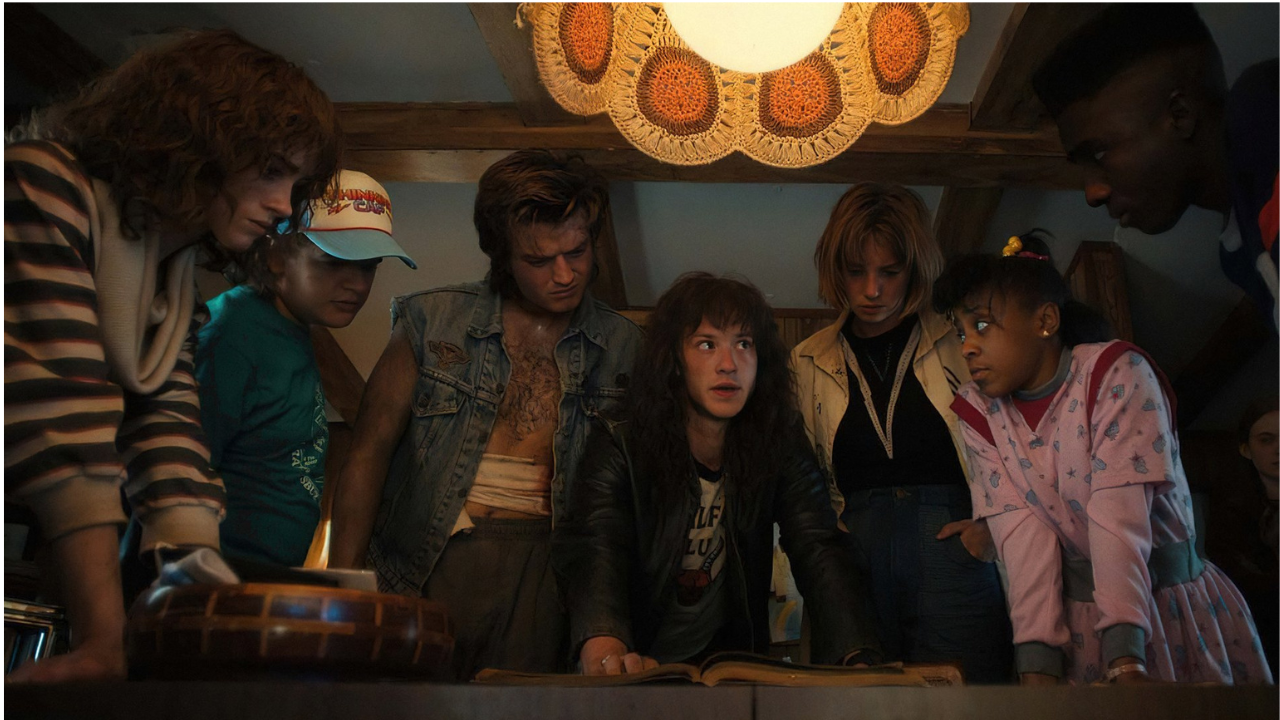
Now that we are heading into the last season of Stranger Things, it is hard to not remember the good times. Much like any goodbye, it feels too soon and is giving us a case of the nostalgia glasses. We all know that not all seasons were created equally. Yet, the wildly popular series managed to keep enough of us invested these last 10 years. It is an undeniable pop culture sensation that will not be forgotten anytime soon. It is also honestly one of the few shows that makes it hard to break up with Netflix. So, I decided to look back and highlight the best parts of each season. Grab a “Justice for Barb” t-shirt and take this walk down memory lane with me.
Our Favorite Moments From Stranger Things
Season 1: Eleven
Season one of Stranger Things brought us many memorable moments that reshaped pop culture. Joyce Byers’ (Winona Ryder) makeshift Ouija board on the wall, used to communicate with her missing son, was a major one. However, this was also the only season that allowed Eleven (Millie Bobby Brown) to be a badass. Which is why she is the best part of Stranger Things’ first season. Watching her showcase her powers as she sought out waffles was a mood. A relatable queen if there was one, right? From using her telekinetic powers to stop annoying diner fans to flipping vans chasing after her and the crew, this season set Eleven up to be a powerful badass. That is even before we get into her mind tricks, which we still have some questions about. Sadly, subsequent seasons have yet to follow through on the promise this one gave us. I could write a whole series about how Eleven is a reservoir of untapped potential in the next three seasons.
Season 2: Steve and Dustin
I think Max (Sadie Sink) is one of the best additions to the show, and I felt Bob (Sean Astin) deserved a better arc. However, only one arc warms my cold little heart when I think about this second season. Few things bring as much joy to Stranger Things fans as the unshakable bond between Steve and Dustin. Season 2 is where this unlikely duo found each other, and that is why they are the best part of this season for me. Steve (Joe Keery) and Dustin (Gaten Matarazzo) bring out the best in each other. Interestingly enough, the actors seem to have also found themselves formidable scene partners. Whether Dustin is bringing Steve up to speed or Steve is giving Dustin tips on how to handle girls, these two stole our hearts at multiple points this season. My personal favorite is when Steve steps in to save Lucas from Billy the Racist, and Dustin cheers him on (while he has the upper hand). Dare I say, this relationship has become the heart of the show.
Season 3: Robin Coming Out to Steve
This season of Stranger Things introduced quite a few new characters to kill, like all the other seasons. However, Robin (Maya Hawke) seemed cooler than most, and we were silently rooting for her to make it. While her easy dynamic with Steve made us worry that she would become another part of the Steve, Nancy, and Jonathan saga, we had nothing to worry about. When Steve professed his feelings to Robin, she surprised us all and came out. This led to Steve surprising us by picking up a more age-appropriate best friend in what is one of the sweetest moments of the show. Aside from becoming Steve’s platonic girlfriend, Robin also went on to become the first openly gay character in the ridiculously large main cast. So, while this season isn’t my favorite, I’m very grateful it brought us this scene and this pairing.
Season 4: Eddie Munson Meets Erica Sinclair
Eddie Munson (Joseph Quinn) is probably part of everyone’s favorite moments from the fourth season of Stranger Things. While many people will probably cite his cafeteria entrance, his moment in the woods with Chrissy (Grace Van Dien), or the infamous “Chrissy, wake up,” those aren’t my favorite moments. Because this show taught us that Quinn is a scene thief, and he turned this season’s throwaway character into a pop culture moment, there is plenty to choose from. However, my nerdy ass’s favorite scene is when my two favorites faced off in Dungeons & Dragons.
Resident scene thief Erica (Priah Ferguson) finally found someone who could keep up with her when she showed up to this game. Watching her and Eddie match wits before getting down to an epic game of DnD that spawned numerous fan theories about how Eddie could come back for season 5 is priceless. He forced Dustin and Steve’s duo to become a trio, played Metallica’s Master of Puppets in The Upsidedown, and broke our hearts with his death. However, I choose to remember him alive and becoming begrudgingly impressed with the little girl who takes no prisoners. I would have watched them play this game for hours and lived my best nerdy life.
We’re Looking Forward to Season 5 of Stranger Things
So, those are my fondest memories from each season of Stranger Things. Feel free to let us know your favorite moments and your predictions for the fifth and final season on social media!
The first four episodes of Stranger Things: Season 5 hit Netflix on Wednesday, November 26. Let us know if you plan to watch as they air. Or if you are going to wait until the end of the year to binge the whole season.
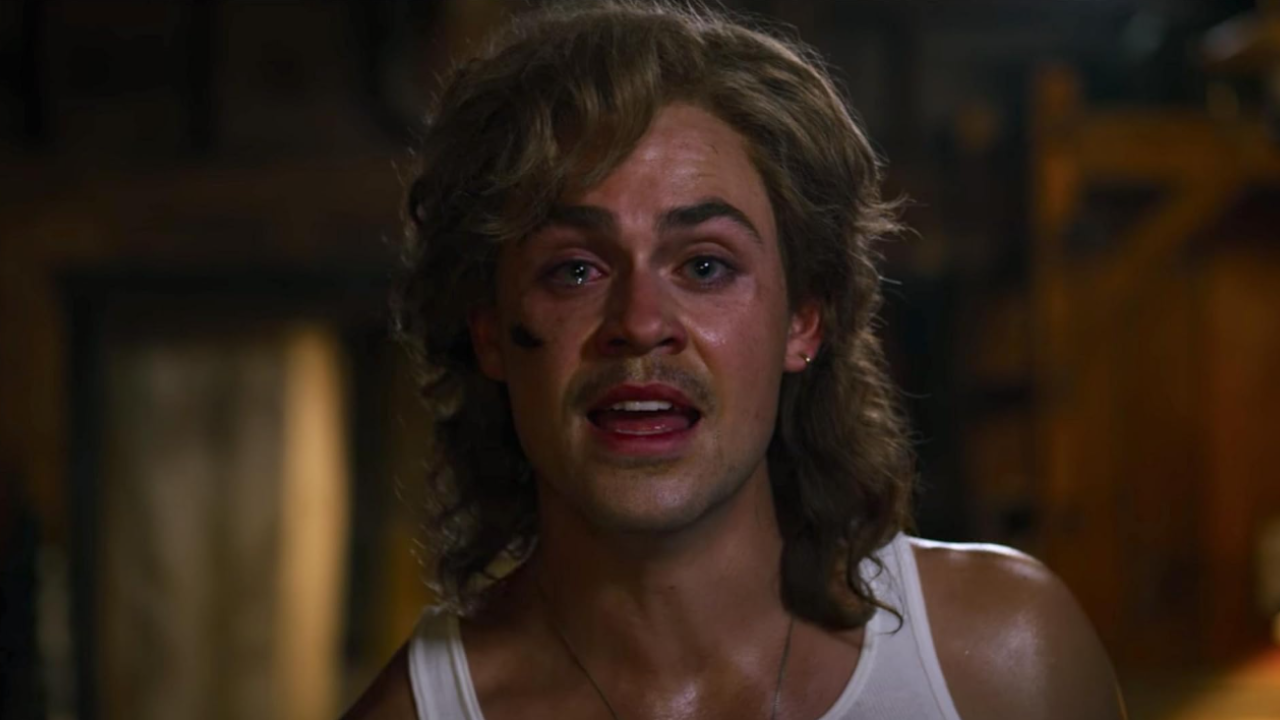
A new season of Stranger Things is upon us, and unfortunately, that always brings some baggage with it. As someone who has watched the show since it premiered on Netflix in 2016, I have witnessed the highs, lows, and questionable moments in real time. I have also seen this show unwittingly bring out the worst in its fandom. While I have many thoughts about all the problematic noise that surrounds the series, I am here with a very specific gripe today. I am not going to hold your hand when I say Billy Hargrove (Dacre Montgomery) is a racist. However, I will unpack some of the reasons I think it’s interesting that this fanbase (and some of the actors in this ridiculously large cast that should have been trimmed seasons ago) refuse to state the obvious.

Billy Hargrove Never Hides It
I get it. Billy Hargrove is hot when we first meet him in season 2. He looks like the typical ’80s heartthrob made famous by hotties of that bygone era. He could’ve easily been another Brat Pack actor next to Emilio Estevez, Rob Lowe, and Judd Nelson. However, all of that goes out of the window when we see how he abuses his step-sister, Max (Sadie Sink). We soon discover the bad boy image is not an act but simply one layer of this sociopath. Things quickly escalate in this season of Stranger Things, and Billy becomes the racist that Lucas (Caleb McLaughlin) will have to face this time out.
While the rest of his supposed friends are battling supernatural evils, Lucas always ends up the target of local racists. I have given up on his sidequests being something less targeted, or for anyone but his little sister Erica (Priah Ferguson) to ever stick up for him. The squad will battle Vecna, but Lucas will have to fend off some version of Mike Pence as a child.
Remember Script Analysis?
Anyways, the Duffer Brothers make it very obvious that Billy is an awful human. He even tells Max, “There are certain types of people in this world that you stay away from, and that kid, Max, that kid is one of them. You stay away from him, you hear me? Stay away.” This is before he decides to start taking a more hands-on approach with Lucas, much like he does with Max. However, too many fans like to paint the narrative that Billy isn’t a racist sociopath. They need him to be misunderstood, even broken, and would like to blame his abusive dad for the trauma he inflicts on his sister and one of the very few Black kids in town. As if all abused kids go on to be MAGA, and that pipeline is to blame for where we are now.
This isn’t helped by the actor also trying to get his character off the hook. His co-star’s comments on his acting being purposely misinterpreted is also another issue with this conversation. You can complement the complexities of a performance without excusing the character’s behavior. After all, villains can make for compelling TV when utilized correctly. Many viewers who want to romanticize this monster might not realize what they are doing. However, I cannot help but see it because I live in a world that loves to rewrite the facts.
Have You Watched the News?
Billy is much like all the other white guys who do horrendous things. Isms beget isms. Which is why when we see him level up from abusing Max to saying all of the racist parts aloud, I was not surprised. I was also not surprised at how much of the Stranger Things fandom is okay with him beating up on children. Society hates women and will always find a reason to justify racism. So, people can forgive and downplay what Billy does. That’s why many fans were happy to see him make his guest appearance in season 4. Meanwhile, the rest of us are being reminded that the internet, and this fandom specifically, are overwhelmingly white places.
A Tale of Two Actors
To counter Stranger Things fans’ love of Billy the Racist, let us look at how Dacre Montgomery gets treated compared to Caleb McLaughlin. McLaughlin is a member of the main cast and has been with the show since day one. However, his lines at cons are considerably emptier than his white counterparts. In the beginning, people pretended it wasn’t anti-Blackness. White fans claimed they didn’t like him because his character was mean to Eleven in the first season. I could write another essay on how he wasn’t mean, and even if he was, actors are not their characters. However, it doesn’t matter because we all know racism is the reason.
Meanwhile, Montgomery does very well. All of the people yelling about his character being misunderstood make their way to his table like he’s giving away money. How many times did we watch Billy abuse Max in various ways? How many times did we watch him abuse Lucas and escalate it to the point that only the most dense among us could miss the obvious racism on display? Yet, people still want those pictures and autographs. Coincidence?

Why This Bugs Me
As someone who cannot quit this show, I have been very vocal about my issues with Stranger Things. The refusal to kill any of the way too large main cast remains one of my biggest pet peeves. The Duffer Brothers having a hard time understanding that writing a period piece doesn’t necessarily mean you are writing for the audience of that era is also a bone of contention. Specifically, when Jonathan Byers (Charlie Heaton) took photos of Nancy (Natalia Dyer) undressing without her knowledge. In today’s context, we understand that it is assault and a severe invasion of privacy and no longer let that slide.
I am also salty about how every racist who is an aspiring Fox News reporter in Hawkins, Indiana, finds Lucas each season. Which is why it is so wild that I think the biggest issue with Billy Hargrove is how many fans of the show receive him.
What It Says About Society
I think Billy could’ve been written with a little more subtlety. I am also again very tired of Lucas’ storyline always being about racism and attempted hate crimes. Why can’t he have magical fights in The Upsidedown like everyone else? Yet, what really salts my tines is the internet’s willingness to overlook bigotry and excuse hatred. It’s extra triggering as I am trying to survive this second Trump term. I watched this country fail as fools tweeted, “all the candidates are the same.” White feminism allowed hateful relatives a seat at the holiday tables after voting away the few rights most of us had. Meanwhile, Judy wanted to wear a blue bracelet to let you know she cares. However, she doesn’t care enough to be serious about any actual activism. The Stranger Things fandom is unsurprisingly a mirror of society.
The same people who look at white male terrorists and blame the girls who wouldn’t go to prom with them. Or the ones who think the Black victims of police brutality might be to blame for the cop’s reaction. Those are the people who don’t understand that Billy is a raging racist. I think this is one Stranger Things character that the Duffers might have put the most thought behind. It’s a shame the toxic fandom surrounding the show swallowed him up and learned nothing.


‘Iron Lung’ Review: Exceptionally Atmospheric Cosmic Horror

No, Cult Cinema Isn’t Dead

‘The Ritual (2017)’ Review: When Grief Gets Gruesome

‘Wait Until Dark’ Review: A Timeless Psychological Horror Thriller

‘Return to Silent Hill’ Review: A Misogynistic Betrayal of Silent Hill 2

‘Lake Mungo’ Review: Still the Greatest Ghost Film of All Time

How ‘Child’s Play’ Helped Shape LGBTQ+ Horror Fans

‘The Cabin in the Woods’ Review: And the State of Horror

‘Night Patrol’ Review: Vampiric Cop Horror Undone by Messy Execution

The 10 Most Satisfying Deaths in Horror Movies

‘The People Under the Stairs’ Review: A Brilliantly Bizarre Horror Classic

‘Five Nights at Freddy’s’ and The Story of William Afton Explained

Slappy Was the Blueprint: How the Dummy from Goosebumps Became A Horror Icon

Glen and Glenda: Don Mancini’s Reverence for Queerness in ‘Seed of Chucky’ (2004)

‘Truth or Dare’: Who Did it Best?

V/H/S Franchise Ranked, Best to Worst

Everything You Need to Know About Jason Voorhees

The 11 Most Disturbing Horror Movies Ever, According to an Actual Horror Fan

[REVIEW] ‘Cherry Falls’ (1999) Brittany Murphy Shines in This Cult Classic Slasher
