

Movies
‘V/H/S94’, A Satisfying Throwback to Analog Memories
Dive into V/H/S94, Shudder’s latest found-footage anthology, blending VHS nostalgia with analog horror’s gritty charm. From the eerie “Storm Drain” to the tense “Empty Wake,” explore why this cult-favorite series and the rising analog horror subgenre haunt fans with lost media’s unsettling intimacy. Stream now on Shudder!


I’m a big fan of VHS.
Yes, I’m also a big fan of V/H/S, as a series, but we’re tabling that for now, stick with me.
The clicking and whirring of the tape spindles and the movements of plastic across metal scratch an auditory itch for me. The scanlines and color saturation of the films put on a little visual grime I can’t help but like. It’s all very scrappy and humble-looking, which is partially why I find it a bummer when I see how limited of a lifespan they really have.
The VCRs of yesteryear are an aged tool that has now become fragile after years in dutiful service and aren’t going back into production. Their ever-dwindling numbers put this medium in a bizarre limbo, leaving us with a surplus of content on tape that is easy to find but increasingly hard to view. For those of us who grew up with VHS before trading up to DVDs and Blu-Ray, it’s a bittersweet sensation, staring at the contents of these clamshell and cardboard cases that one day, sooner than later, will become impenetrable. This leads me to the crux of why I found V/H/S94, the newest Shudder exclusive installment in the found-footage horror anthology franchise, so compelling.
A Return to Retro Horror Roots
For those out of the loop, analog horror was born out of creator Kris Straub’s smash-hit web series, Local58, an apocalyptic late-night local broadcast depicting various end-times, along with the victims of eldritch entities and government experimentation alike. I really cannot do it justice here in so few words, so I highly recommend anyone who hasn’t seen it to go check it out.
How Analog Horror Redefines Low-Budget Creativity
Low-Budget Charm and Gritty Aesthetic
The Intimate Terror of Analog Horror and Lost Media
Nostalgia and Fear in VHS’s Fading Legacy
We see the obsoletion of things like VHS tapes, and in turn, observe not just the inevitable death of the mechanisms, but the memories inside of them. We lose not just the cartoons and movies of your childhood, but home movies, school recital recordings, weddings, and baby showers. Good times end up cursed to wither in the confines of something we can’t use and gain a new life only as a reliquary for vague familiarity. Analog horror takes that familiarity we have with the quaint and personal, removes their markings, and exploits our nostalgia before it turns it on its head to give us a gruesome, twisted version we can’t look away from. It adds a dark tinge to a medium that is obscuring itself from us in real-time and implants the thought that these tapes, the tapes that used to be ours, might just hold as much fear as they do nostalgia.
You can watch V/H/S 94 on Shudder!


Looks like another July will be spent getting cozy with Shudder in this house. Between all the new (to me) international titles and the conclusion of Hell Motel on July 29th, the app has filled my calendar for the month. Hold my texts, keep your emails in the draft folder, and don’t look for me outside. My TV and I are on a mission, and we’re prioritizing the five titles below. I hope they grab your attention and make it into your Shudder viewings this summer as well. However, I’ll be too busy watching them to know what anyone else is doing, so happy streaming whatever you decide to get into.
While we have you here, you should consider joining us for Bloody Brunches! Every Sunday at 11 AM CST / 12 PM EST, we’ll be livestreaming a new episode of Hell Motel. Who know’s who you’ll see, sometimes Ian Carpenter and crew stop by!
The Best Movies to Stream on Shudder This Month
Lake Placid (1999)
A small group of people try to capture a gigantic crocodile terrorizing the people of Black Lake, Maine. I am not an aquatic horror girl, and I am usually unimpressed with 90s action horror titles. I make a special exception for Lake Placid though. Sure, it stars Bridget Fonda, Bill Pullman, and Oliver Platt. However, real film buffs know that it’s really the late Betty White who carries this movie. Her foul-mouthed character stood on business and is the reason most of us revisit this title during the summer.
You can watch Lake Placid on July 1st.
Nyi Blorong (1982)
The South Sea Queen’s daughter rises to take a human lover. I have a long history of disliking snakes and movies about snakes. However, I’m leaning into this 1982 film because I deserve a retro Indonesian horror fantasy moment. I am also excited because it stars the late Suzzanna, the queen of Indonesian horror. I only learned about her a few years ago and wanted to spend some time with her work. As usual, Shudder is making it too easy to become a better cinephile.
You can watch Nyi Blorong on July 7th.
The Housemaid (2018)
An orphaned girl is hired as a housemaid at a haunted rubber plantation in 1953 French Indochina. Once there, she falls in love with the landowner, which sends the ghost of his dead wife into a jealous rage. I was excited to watch this just because it sounds chaotic, and I do not see enough Vietnamese horror for my liking. However, I recently discovered it is also an IFC Midnight title, so now my expectations are through the roof. IFC has been the home of upsetting, weird, and unique horror since 2010. I have a date with Shudder on July 14th, because I want this movie in my eyeballs the second it becomes available.
You can watch The Housemaid on July 14th.
Swallow (2020)
A pregnant housewife is compelled to eat dangerous objects, leading her husband and in-laws to become more controlling. Swallow had the misfortune of debuting during the top of the pandemic, so many people missed it. I found it on accident during Thanksgiving back when Showtime still had its own app. It’s quiet chaos that surprised me in a good way. I have been trying to make everyone I know watch it, and Shudder is making that so much easier this month. I am overdue for a rewatch myself, so I will also be hitting play while it’s available this July.
You can watch Swallow on July 21st.
Monster Island (2024)
A Japanese ship transporting prisoners of war and a British POW are stranded on an island where a mythical creator hunts them. Can they work together now that their very survival depends on it? I was bummed I missed this movie at Overlook Film Fest this year because all my friends loved it. So, obviously, I am thrilled Monster Island (also known as Orang Ikan) is hitting the Shudders streets so soon. I do not know what the other monster movies are doing this July because my heart belongs to this baby.
You can watch Monster Island on July 25th.
So, as usual, I will be hiding in my apartment and trying to make Shudder Saturdays my personality. I’m running at their international titles like it’s my job and revisiting a few movies I never spend enough time with. I hope your Shudder watches spark as much joy for you as I expect mine will this July.

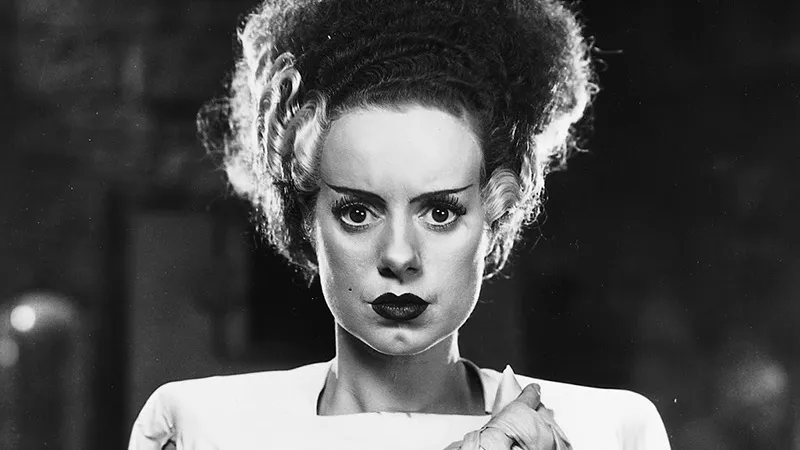
In the 90 years since its release, The Bride of Frankenstein is still the Universal Monsters franchise’s strongest film.
I first watched The Bride of Frankenstein on cable around 15 years ago. Director James Whale’s fable of a misunderstood creature’s quest for a bride really stayed with me after subsequent viewings. Speaking of The Bride, she’s the Universal Monster with the most potential for a gripping and modern reimagining that hasn’t been fully tapped into yet. Universal’s newest theme park Epic Universe, opening back in May, inspired a deeper dive into The Bride of Frankenstein, the titular role and its legacy.
Unveiling The Bride: The Plot and Power of the 1935 Classic
Immediately following 1931’s Frankenstein, The Bride of Frankenstein centers on Henry Frankenstein (Colin Clive) as the sinister Dr. Pretorius (Ernest Thesiger) urges him to collaborate on creating a mate for The Monster (Boris Karloff). In the meantime, The Monster travels across the countryside, learns to speak, and meets Pretorius. When both scientists complete and unveil The Bride (Elsa Lanchester), she rejects The Monster, motivating him to pull a lever and famously say, “We belong dead.” Pulling the lever ignites an explosion, killing The Monster, The Bride, and Pretorius.
Just as it took two scientists’ minds to create her onscreen, two individuals gave life to The Bride’s characterization and look: Lanchester and makeup master Jack Pierce, who designed nearly all the original Universal Monsters.
The Bride’s Hiss: How Lanchester Stole the Show with Limited Screentime
The Bride not being the film’s main protagonist is ironic since she’s the title character. Making the most of her brief performance, Lanchester’s swan-like mannerisms as The Bride sharply contrast with the humanity Karloff brings out of The Monster. After her dual role as The Bride and author Mary Shelley herself in the film, Lanchester took on more horror film roles like Henrietta Stiles in Willard (1971). It’s not hard to imagine what could’ve been for her career if she reprised her role in The Bride of Frankenstein’s sequels Son of Frankenstein and Ghost of Frankenstein. If a lab explosion couldn’t kill The Monster, wouldn’t it be the same for The Bride?
Besides the white streaks, Lanchester surprisingly didn’t wear a wig to portray The Bride since Pierce shaped her red hair to look the way it does. Pierce’s work on The Bride is just as iconic if not more so than Lanchester’s performance, ensuring the character became inseparable from her intended suitor in pop culture’s eyes. Case in point: There’s so much officially licensed merchandise playing up a romance between the two characters, even though The Bride can’t stand her intended mate. Beyond Lanchester and Pierce, there is one man responsible for how the film itself would come out.

James Whale’s Masterpiece: Directing The Bride of Frankenstein
Whale stitched great set designs, fantastic performances and composer Franz Waxman’s eerie score together to create a masterpiece.
Having Frankenstein, The Old Dark House and The Invisible Man under his belt by the mid-‘30s, it’s clear Whale creatively peaked while working on The Bride of Frankenstein. Although so much about Whale’s talents has been said, there’s a reason why his work on the film stands out across his filmography: He really went wild when directing it. Every character is practically cartoony, the sets are more elaborate and the plot is thematically richer than the original’s. Being an openly gay filmmaker, he cranked up The Bride of Frankenstein’s camp to legendary heights.
The Bride of Frankenstein is the final horror movie Whale directed. The novel Father of Frankenstein and its film adaptation Gods and Monsters, starring actor Ian McKellen as Whale, dramatize his life after directing the film. According to the reference book Universal Horrors by Tom Weaver, Michael Brunas and John Brunas, he initially didn’t want to direct his horror work’s apex. Just like Henry Frankenstein’s relationship with the monster he created, The Bride of Frankenstein’s production is a case of life imitating art. The Monster’s in-universe infamy further parallels Whale’s Frankenstein duology’s lasting popularity.
How The Bride of Frankenstein Shaped Horror Sequels and Adaptations
The Bride of Frankenstein’s influence can be seen across other horror films and Frankenstein adaptations.
Having “Bride of” in a horror sequel’s title is synonymous with including the main character’s female counterpart, leading to Bride of Re-Animator, Bride of Chucky, etc. The similarities go further than the titles, with The Bride of Frankenstein inspiring the former’s plot and furthering Tiffany’s arc in the latter. The Bride of Frankenstein inevitably shaped Frankenstein’s future adaptations as well.
Directed by Kenneth Branagh, Mary Shelley’s Frankenstein from 1994 closely follows the original novel. Breaking away from the novel’s narrative, its third act pays homage to The Bride of Frankenstein when Victor brings Elizabeth back to life with similarly brief screentime. Mia Goth’s seemingly red hair on the set of Guillermo Del Toro’s upcoming Frankenstein may hint at her character similarly becoming The Bride.
The Bride’s Untapped Potential for a Modern Horror Remake
With Warner Bros. releasing its own take on the character with The Bride! in 2026, it makes Universal’s reluctance to make a new remake downright egregious.
The Bride is still the literally redheaded stepchild among the Universal Monsters. When it comes to being neglected by Universal, The Creature From the Black Lagoon is the only character who rivals The Bride, but that’s another story. Universal did plan a remake directed by Bill Condon, who helmed Gods and Monsters, for its aborted Dark Universe film franchise.
The Bride’s Absence in Epic Universe’s Monsters Unchained Ride
Looking at Epic Universe, the Monsters Unchained: The Frankenstein Experiment ride apparently leaves The Bride out, even though she makes more sense to be in it than The Phantom of the Opera. However, The Bride does make meet-and-greet appearances across Dark Universe’s grounds.
Several ideas can be incredible for when Universal finally releases a remake of The Bride of Frankenstein someday. Based on what I’ve heard about 2023’s Poor Things, it’s exploration of a mad scientist’s creation’s experiences in a restrictive society is closer to what a modern reimagining should be. Having a woman behind the camera can lead to a feminist vision, delving into The Bride questioning her life’s purpose.
Until the day a proper remake debuts, the original 1935 film remains The Bride of Frankenstein’s definitive incarnation.


Mark Duplass and More Added to Cast of A24’s ‘The Backrooms’

‘Terrifier’ Takes Orlando: Halloween Horror Nights 2025

‘I Know What You Did Last Summer’: And the Impact of Slasher Sequel Trends

FANGORIA Releases 2025 Chainsaw Award Nominees

The ‘I Know What You Did Last Summer’ Franchise, Ranked

‘Shadow of God’ Review: A Bold Indie Horror That Falls Short

The Best Horror You Can Stream on Shudder in July 2025

‘Jurassic World: Rebirth’ Review: Show Me Your Teeth

‘Bride of Frankenstein’ at 90: Why Universal’s Horror Classic Still Haunts and Inspires

The Best Horror You Can Stream on Netflix in July 2025

‘The People Under the Stairs’ Review: A Brilliantly Bizarre Undercover Horror Classic

Glen and Glenda: Don Mancini’s Reverence for Queerness in ‘Seed of Chucky’ (2004)

Slappy Was the Blueprint: How the Dummy from Goosebumps Became A Horror Icon

‘Truth or Dare’: Who Did it Best?

HORROR 101: Five Nights at Freddy’s and The Story of William Afton Explained

[REVIEW] ‘Cherry Falls’ (1999) Brittany Murphy Shines in This Cult Classic Slasher

Mia from ‘Evil Dead’ – A New Kind of Final Girl

This Is What Makes Sue Ann from ‘Ma’ a Terrifying Yet Loveable Horror Villain

The 11 Most Disturbing Horror Movies Ever, According to an Actual Horror Fan
