


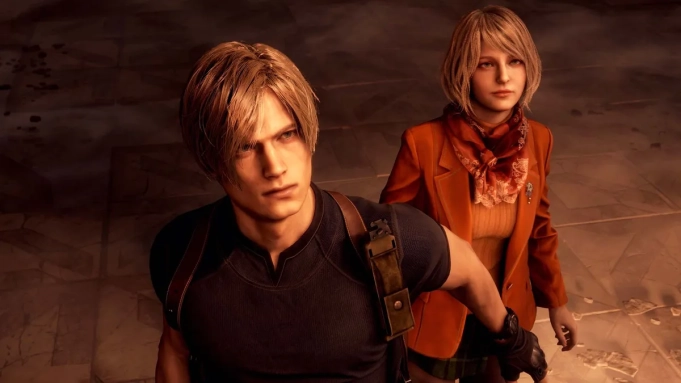
Technology is fleeting. What was once groundbreaking and state-of-the-art is child’s play compared to the digital landscape we’ve grown accustomed to today. Looking back at movies with dated CGI is often laughable, and landmark moments in film history tend to shy away from these dusty digital artifacts. Video games, however, are a different sort of Digimon. Their sole purpose is to invite us into virtual playgrounds where we experience their stories and environments firsthand.
Speak to any gamer, and they’ll regale a novella’s worth of tales from their time wandering through the multiverse, many of which are part of the pop cultural canon in their own right. Gaming is a lived experience, and while old-school pixelated graphics and blocky 3D models do not withstand the test of time, to gamers, these moments rival the cultural significance of film’s greatest hits.
Why Game Remakes Outshine Movie Reboots
Today, the tech has far outpaced past limitations. And while a TV adaptation such as The Last of Us has rendered many a thinkpiece due to the seamless way modern games tell harrowing and emotional stories, returning to the classics that thrilled us is often a chore. Fond memories don’t compensate for eye-straining environments and outdated mechanics that are more combative than the game’s actual monsters. If you’ve ever attempted a return to the notorious “tank controls” of yesteryear, you’d agree it’s like trading in your cell phone for a pager.
Tension is gone, character models are cringe, and the old guard has lost its edge. Yet, the gaming industry has solved our nostalgic conundrum via the recent remake trend. We may roll our eyes at yet another uninspired movie reimagining, but give us a 4K upgrade of a gaming classic with modern touches and quality-of-life improvements, and we are seated. In gaming – especially when it comes to horror – immersion is essential.


A Survival Horror History Lesson
2002 – Resident Evil REmake: The blueprint for what could be, Capcom shocked RE fans and newbies alike with a moody remake of their survival horror classic. Including a full graphical overhaul with detailed pre-rendered backgrounds, tweaked controls, and an expanded story, it had fans foaming at the mouth – and terrorized scores of naive children who thought Nintendo games to be innocuous platformers. It did not sell as well as they had hoped, but its mark had been made.
2016 – Doom: After a decade’s worth of HD remasters pushed chiefly for a cash grab, technology had caught up with our wildest nightmares, and a reboot of the hellish first-person shooter franchise Doom was released. It won Best Action Game at the 2016 Game Awards, and the time had come for popular old-school franchises to claw their way back into the zeitgeist.
2019 – Resident Evil 2: In 2017, Resident Evil 7 rebooted the franchise as an immersive first-person Texas Chainsaw Massacre – I legitimately could not handle playing for more than an hour – and convinced Capcom to take another crack at a remake. The new RE2 took a 90s masterpiece and upped the ante with eye-popping graphics and an expanded story to become the definitive survival horror experience. It outsold the original 1998 game in its first year of release, and the black flame of horror game remakes was about to spread like wildfire.
April 2020 – Resident Evil 3: A truncated retelling of an underrated gem, it was rushed out after RE2’s success. Having excluded chunks of the original, fans were disappointed, but it got the job done and added another modern RE game to the catalog.
November 2020 – Demon’s Souls: A PS5 exclusive launch title, gamers could reexperience the original that spawned a franchise with a next-gen coat of paint. Until recently, however, the PS5 has been a rare commodity, so only a select few could bare witness to that infamous “YOU DIED” screen.
2022 – The Last of Us: In case you missed the transcendent masterpiece in 2013, Naughty Dog released a next-gen remake on PS5 four months before the critically acclaimed HBO series premiered.
January 2023 – Dead Space: It’s bloodthirsty necromorphs on a massive space shuttle, so Resident Evilmeets Event Horizon. The graphics and sound design are next-level, and you’ll certainly be leaving the lights on.
March 2023 – Resident Evil 4: A remake of the franchise’s darling is releasing this month and has tens, tens, tens across the board in critic reviews.


Old Dog, Gorier Tricks
Unnecessary horror movie remakes are often an exercise in what not to do. With few exceptions to the rule, they’re typically a way to make a quick buck on the uninitiated and leave fans of the originals unimpressed. Gaming, on the other hand, is participatory. Experiencing your faves like they were meant to be, remade from the ground up in the modern era, is like seeing them in color for the first time. Familiarity is now often used against us to rake in those scares. Occasional changes to set pieces and the order of events, coupled with photorealistic gore, will have you regretting that Jamie Lee Curtis-endorsed cup of Activia yogurt. Add to the mix 3D audio, ray tracing, butter smooth framerate, and enhanced enemy AI, and you may as well be the one holding the flashlight – and in VR, you are!
Newcomers will be shitting bricks regardless while they explore the puzzle boxes that are RE2’s labyrinthine Racoon City Police Department or Dead Space’s derelict spaceship Ishimura for the first time. Yet compared to a movie remake, only a video game can inject that same level of adrenaline fans of the original felt when they first played upwards of twenty years ago. Unlike in 2008, you’ll be rationing electrical power within the Ishimura as you explore, forcing you to cut the lights in all the wrong places. And speaking as someone who has completed The Last of Us several times since 2013, there was still something uniquely special about exploring and surviving through the lush, overgrown neighborhoods and abandoned cityscapes with Joel and Ellie on the PS5. It’s like getting a 4DX theater upgrade of your Blu-ray collection.


What Fresh Hell is This?
A calming piano accompaniment lulls you into a false sense of security while you sort through your pockets. The lighting seems brighter, and strangely, a typewriter in the center of the room calls out to you. As you jot down the memories of the last twenty minutes like a goldfish with a notepad, the faint thud of footsteps draws near. “It couldn’t be,” you think, as you recall doing a great job at zigzagging your way across the building. You only need one more medallion to escape this hellhole, so you creak open the door and return to the nightmare. BAM! It’s game over as the hulking behemoth closes his fist around your neck, and you draw your final breath.
That was just one example of your many encounters with Tyrant – or Mr. X as he’s more affectionately called – in the RE2 remake. He was a small piece of the pie during your second playthrough in 1998, but this time, he’s stalking your every move at various points throughout the main campaign. AI is taking the world by storm and is no different here. Mr. X is in pursuit throughout the RCPD in real-time, so make too much noise blasting away zombies, and you’re toast. It’s borderline debilitating. Yet this type of hands-on, play-at-your-own-risk visual storytelling is why we adore the medium. Everyone’s experience differs depending on when and how you choose to slink out of the light and into the shadows, and these remakes pull no punches.
Enhanced AI and Storytelling Innovations
Beyond the enhanced AI of the chainsaw-wielding maniacs and human companions of Resident Evil 4 or the petrifying sound of the Dead Space necromorphs scuttling through vents, game directors are finding other ways to make these adventures fresh. Cherished stories are now the director’s cuts we’ve always wanted, incorporating new story beats, side quests, character interactions, and even additional never-before-seen endings. Filming a scene for a video game in 2023 is no different than your average day doing motion capture for the MCU or James Cameron, and storytelling is held to the same standard as visual finesse.
On the flip side, the HBO adaptation of The Last of Us accomplishes what very few have done before. In a meta twist, the game’s creator, Neil Druckmann, is the show’s lead writer. We’re essentially getting another remake of the game, and Druckmann gifts us entire episodes dedicated to characters and subplots only hinted at on consoles. Much as the audiovisual enhancements in the PS5 remake allowed me to experience the beauty and terrors of its world with fresh eyes, the HBO series views its characters through a new lens. Naysayers have always looked down their noses at video games, but the series’ critical success and viewer reception, which brought people to tears weekly, has something to say about that.


Untold Horrors
The future is bright for horror gaming, and its untapped backlog for remakes and reimaginings runs deep. The macabre classic Silent Hill 2 has been announced as the next major remake coming down the pike, which will undoubtedly induce a few panic attacks. As for other hopefuls, Parasite Eve – a bizarre fusion of Final Fantasy and Resident Evil set in NYC that explores themes of bodily autonomy and spontaneous human combustion – and Dino Crisis, which is clearly about gunning down dinosaurs come to mind. And let’s not forget the wild west of VR and whatever hallucinatory nightmares that might bring.
If we’ve learned anything from the success of this new trend, the adage “if it ain’t broke, don’t fix it” does not apply to video games. Allowing the game’s core to remain intact is necessary, but twenty-year-old polygons need help being scary again. And please, whatever you do, don’t even think about bringing back tank controls for some kitsch nostalgia trip.