


I’ve spent 30 years injecting horror into my eyeballs. I’ve absorbed it in most ways imaginable. Sometimes it was stumbling on a scary movie my older siblings were watching or tagging along with my mom to the theater if she felt I could stomach it. I have gathered with friends at hangouts or sleepovers to watch the umpteenth “scariest movie ever”. I’ve dumped hours into browsing through the aisles in Blockbuster (R.I.P.), inspecting Horror movie covers, and rolling the dice on a rental. I thrifted. I delicately thumbed through the $5 bins at Walmart. I’ve been scrolling through the Horror genre on the same Netflix account (not as much lately) for the past 15 years.
After laying my eyes on thousands of genre films, from the classics to the shot-on-iPhone flicks, I realized the characters (not surprisingly) had a lot in common: they were white older adolescents or adults, usually middle class or higher. No matter the shenanigans they find themselves in, whether it be a killer, a demon, a vengeful ghost, zombies, witches, etc.: the main characters ( especially if they make it to the end) fall into that group. When Horror focuses on children, they are usually white middle-class children. This affects the decisions they make, the amount of self-awareness they have, and how they evolve.
Character identities also affect the world that is built around them. I find this especially fascinating when we follow children or adolescents because we can see the village surrounding that character. There is usually (not always) a view of their home life. This tends to acquaint the viewer with parts of the world and society because children typically have less control over their environment. They are forced to make decisions based on their situation and deal with whatever horror the movie throws their way. Although the situation can quickly become horrific, there is something special about seeing slices of your experience in a genre that often neglects or misrepresents it.
Seeing an image onscreen and then being transported back to a scent, a song, a saying, a joy, or a fear allows for a deeper connection with the characters or the world they interact with because it’s viscerally relatable. There’s sometimes an instant feeling of “I lived there too” swirling around and dancing with your memories. Films can parade small parts of childhood that can affirm or trigger you: reminding you of your roots and making you face them. Here are a few films that display Black childhood and adolescence, and give a different perspective into the lives of Black youths.
Our Favorite Scary Movies That Depict Black Childhood & Adolescence
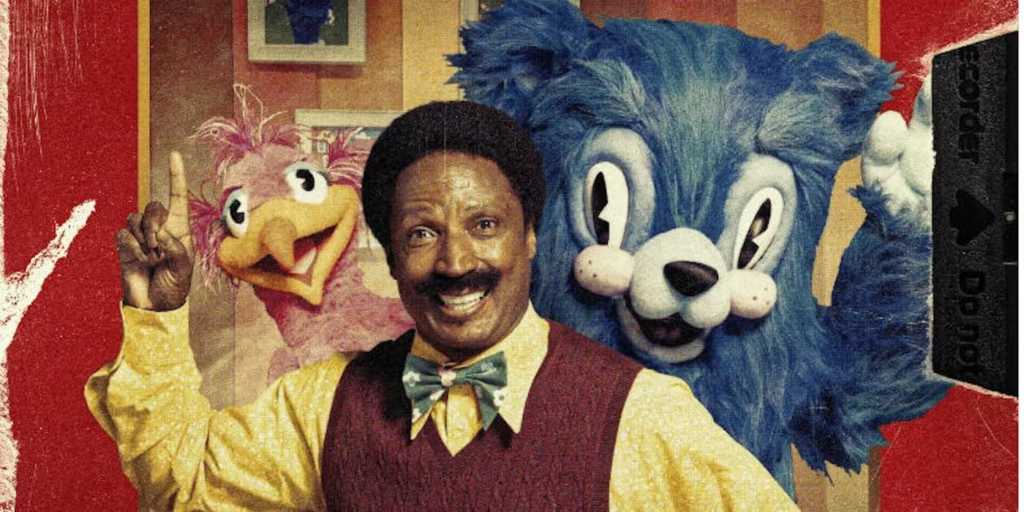

Mr. Crocket (2024)
There are limited genre films with Black directors, writers, and cast. This makes Mr. Crocket a rare treat! The film follows a Black family dealing with a recent loss and how that affects the relationship between mother and son. While we spend most of the screen time with Summer Beverly (Jerrika Hinton), we still get a glimpse into the life of a young boy in the early 90’s. There is a pit stop through a Black church, a familiar staple of the Black coming-of-age experience. The view of Black women in church hats giving stern looks to misbehaving children gave me flashbacks.
Before Mr. Crocket cha cha slides out of the TV, the tense moments are provided by the interactions between Beverly and her son Major (Ayden Gavin). Having a Black mom is a key part of the Black experience. When Major gave his mom attitude, I could feel my body tense. At one point he purposely destroyed a household item, and I jumped like Pumpkin (my mom) was going to pop up behind MY seat with a belt. I was able to see it in a small theater with a mostly Black audience. You could hear the wave of gasps every time Major talked back or rolled his eyes. Even a few moms and aunties let out quiet “uh uh’s” which translated to “ya’ll need to get him before I do”. This reaction opposes Beverly’s patient and gentle approach (up to a point), which seemed unheard of at that time. It’s important to note that in many cases, Black characters are not developed to the point of having parents or a home life at all. In the absence of Major’s character onscreen, the audience gets a front-row seat to a Black mother’s love and determination. It isn’t lost on me that the police seemed unhelpful and dismissive. When Black kids are missing, we cannot expect the same resources so it is up to the parents and families. Beverly takes so many risks to get her son back and helps others in the process (in true Black woman fashion). I also love that while financial hardship is mentioned, it’s not the centerpiece of this story.
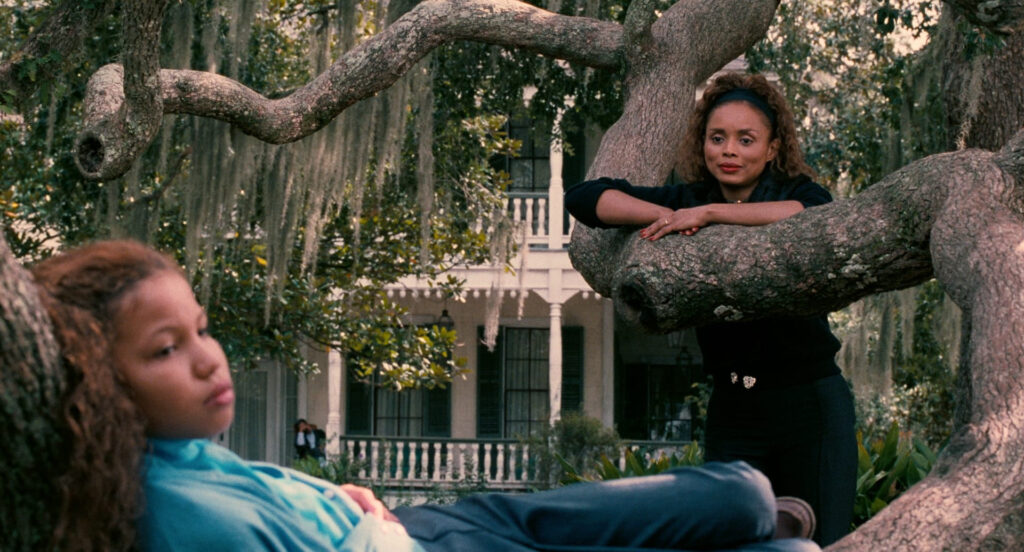

Eve’s Bayou (1997)
Eve’s Bayou is a Black Gothic tale about a well-off family’s drama unfolding throughout the summer of 1962. I saw this movie shortly after seeing Tales From The Hood and felt the warm experience of truly seeing myself. Not only was there a Black girl, she had siblings! There’s something comforting about remembering summers with your siblings in the south. It involved teasing, running about the house, and letting your mom’s “good air” out of the house. Every time I watch this movie, I can smell the air. I can smell the hot comb and Dax grease. I can hear the echo of a screen door slapping a frame. Memories of us yelling at each other to get out of the tub: seven people and one bathroom is a nightmare I never want to live through again. Eve’s Bayou also showcases the sometimes tumultuous relationships between mothers and teenage daughters. There’s a constant push and pull between daughters trying to bloom and expand their freedom and their mothers who try to keep them in “a little girl’s place” or keep them from being “fast” (I hate that term). There is also a focus on the relationship between sisters, and what they are willing to do to protect each other, even from their parents.
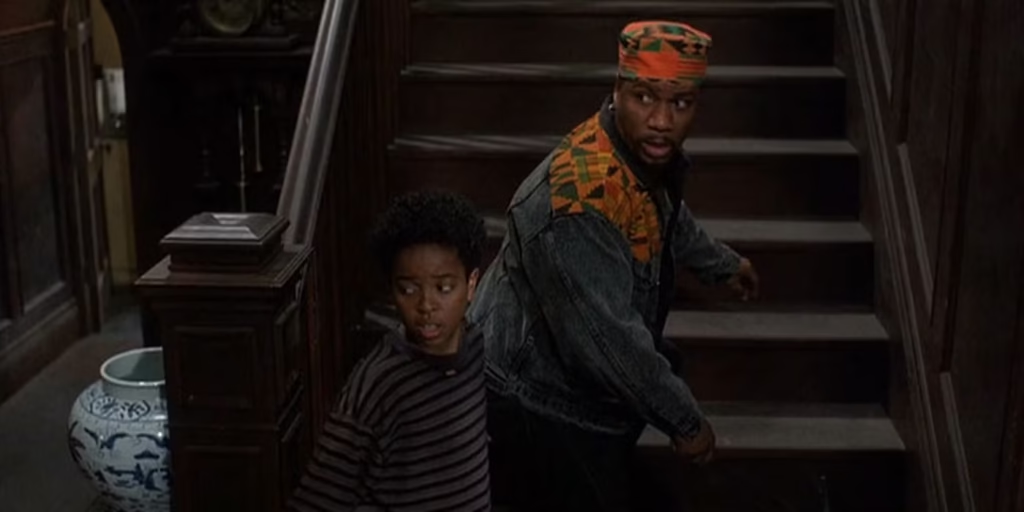
The People Under The Stairs (1991)
This film follows a young Black boy, Fool (Brandon Quintin Adams), who gets involved in a break-in to provide for his family and avoid eviction. Usually, when a protagonist commits crimes to provide for their family, they are adults. Fool is thirteen. This feels relatable in the sense that many Black children are called on to support and provide for their families in ways that children with more resources are not. I have never had to save my family from eviction, but I did contribute to bills as a teenager. Even if they are not required to support their family financially, they are directly exposed to the financial woes of their caregivers (prayers up to the kids whose parents used their social security number on bills). These children might receive harsher consequences if they are perceived as using too many resources. They may go without necessities. Their environment could be crowded or unstable. The financial stress bleeds into everything. This can drive children to make dangerous decisions to lessen the burden on their household: They are in survival mode. The combination of childhood naivety, an underdeveloped frontal lobe, and a desperate situation is the perfect storm for others, especially adults, to manipulate these kids: Leroy (Ving Rhames) was able to take advantage of this, kickstarting the movie. The People Under The Stairs isn’t only about disparities and struggles, it’s about victory and justice. Fool outsmarts his captors, and frees the other victims and most of the neighborhood from the greedy clutches of Mommy (Wendie Robbie) and Daddy (Everett McGill).
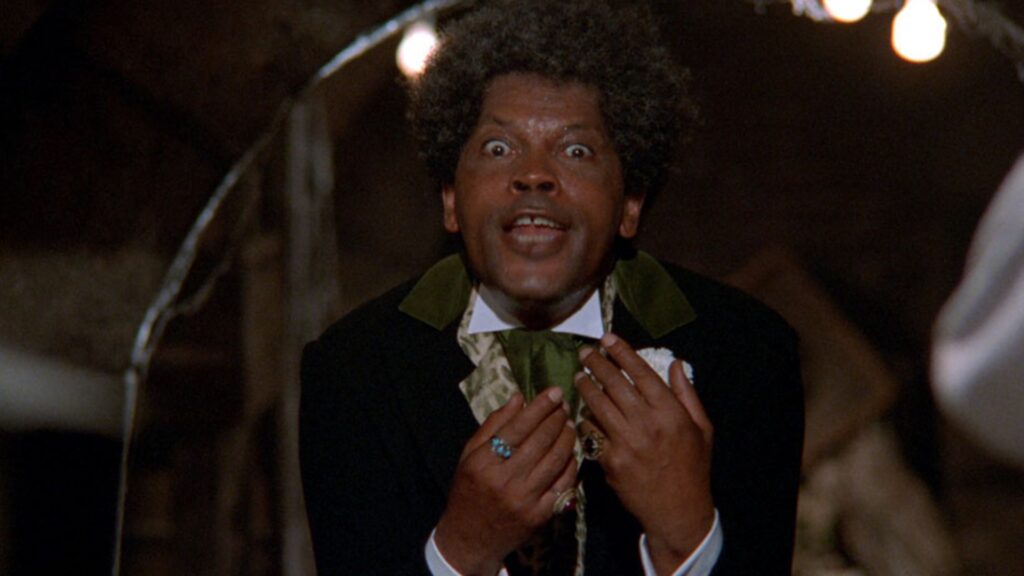

Tales From The Hood (1995)
“Boys Do Get Bruised”
I will always bring up Tales From The Hood in any horror discussion I can squeeze it into. While the film makes poignant statements about the world (still relevant 30 years later), it still manages to be wildly funny at times. One of my favorite stories from the anthology is “Boys Do Get Bruised”. It follows a boy who is being tormented by a monster. I was around 7 or 8 when I saw Tales From The Hood and quickly related to Walter (Brandon Hammond). For the first time, I saw a Black kid in a horror movie. We saw a glimpse of his school and home life. His house looked just like my cousin’s house. I could feel the glass doorknob in my hand. I saw multiple Black staff members at a school in a horror movie, another first. The genre often features classroom settings (because of teens), but you’d be hard-pressed to find a classroom or school scene with more than four Black students and/or staff (Especially if they have dialogue). Black educators are a pillar of the community, and it was inspiring to see them represented. They usually go above and beyond, especially when they are less likely to have the same resources as their white counterparts. Back in my day (shakes cane at the sky), teachers would show up to your house to talk to your parents. This happens in “Boys Do Get Bruised”. Richard (Rusty Cundieff -also the director) shows up to discuss Walter’s bruises, his drawings, and mentionings of a monster. He ends up witnessing the wildest parent-teacher conference in history. The Monster was real, showing up as a metaphor for abuse. I loved how the justice did not involve the police. Instead, the story incorporates aspects of dark fantasy, using drawings that have the power to harm the person depicted.
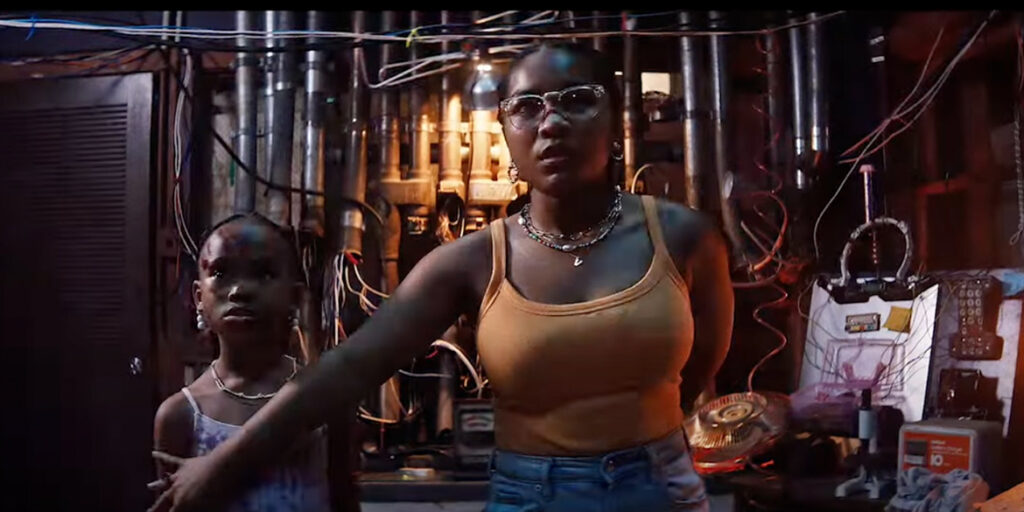
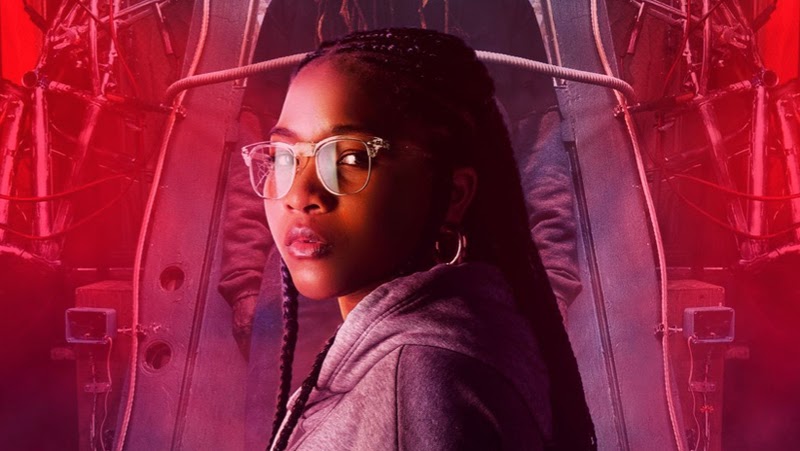
The Angry Black Girl and Her Monster (2023)
This is one of the few horror films I have seen that takes place in public housing. As a kid, I always wondered “What if the monsters came to the hood?”. The Angry Black Girl and Her Monster poses a better question: “What if you made a monster in the hood?”. This introduces a level of secrecy and tension. Vicaria (Laya DeLeon Hayes) is a brilliant young scientist reeling from the loss of her mother and brother to violence. This drives her to become deeply invested in trying to reverse death because she sees it as a disease. I can directly connect with how witnessing death, especially due to violence, can shape or even warp your idea of death.
I was Vicaria’s age when my father was gunned down at a public housing complex in my hometown. It transformed death from this far-away thing that happened to other people into this omnipresent shadow that watched me when I slept. For Vicaria it was a sickness spreading over her family and neighborhood like a plague. Her father’s drug use may affirm this feeling. Having a parent with an addiction can feel like watching them die little by little. I appreciate how her father wasn’t always passed out in the house and letting his kids fend for themselves, which is how I usually saw Black parents with addictions depicted in media.
He had a job and he showed up to school to lay into Vicaria’s science teacher. He had flaws, but he wasn’t one-dimensional or a caricature. You can tell he loves his daughter, but he is struggling with grief and the stress of being a single parent. Vicaria turned to science to combat her grief. If she can cure death, she can eliminate her primary source of grief. Her “cure” brings her brother back to life, and in true Horror fashion, it goes awry. Still, I loved seeing a young Black girl in STEM, although she should not be alone with electricity or corpses.
Vicaria is the main focus, but it was interesting to see Jada’s(Amani Summer) upbringing. Her mother, Aisha (Reilly Stith), focuses on educating her daughter about unfortunate truths about the world around her. Many Black children cannot rely on public education to learn about the vast history and achievements of their ancestors. Black parents who want their children to be informed have to supplement what the school teaches with our factual history. My mother supplemented my public school education with Black Inventor flashcards, encouraging me to read, and forcing me to watch Roots (1977) and other programs like it. My grandmother joined in by telling me all her stories of segregation, experiencing racism, and growing up in the Carolinas in the 50s. It’s a step that Black families have to take to protect their kids because knowledge is power.
Representation is also a form of power. It is a reminder that we are real, we are seen, and our stories deserve to be told. With movies like Attack The Block, The Transfiguration, Wendell and Wild, Vampires Vs. The Bronx, etc., being readily available, I am hopeful that young Black horror fans will have an easier time seeing themselves in the genre.