


Gateway horror holds a nostalgic space in the horror enthusiast’s heart. Many of us fixated on the genre as children, irrespective of whether the films we viewed scarred us for life. The subgenre of gateway horror (or children’s horror) is recognized as films targeted at younger audiences with frightening elements that do not cross the boundaries of suitability. Films that usually represent this subgenre include Hocus Pocus (1993), Gremlins (1984), Frankenweenie (2012), and others.
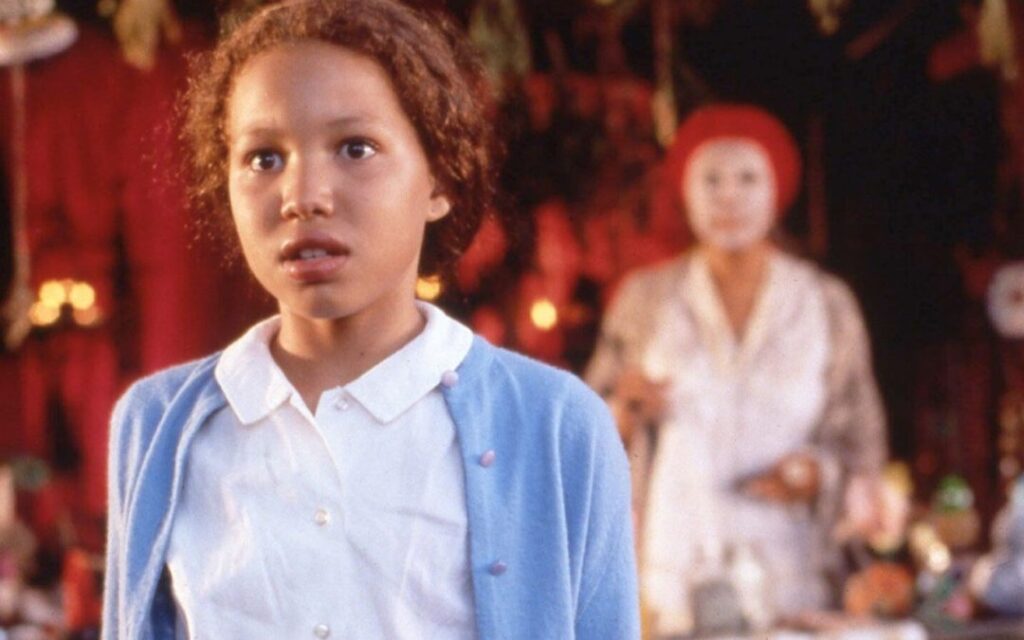
Unfortunately, most of these narratives focus primarily on white male children from middle-class neighborhoods (Lester, 2022). In ReFocus: The Films of Wes Craven, children’s horror scholar Catherine Lester highlights how children of different ethnic backgrounds are often featured as secondary characters and suggests adult-rated horror films such as The People Under the Stairs (1991) or Eve’s Bayou (1997) are more inclusive for Black children who love horror, through being represented on-screen.
I will further expand on this concept, i.e., gateway horror should not be defined by age ratings. We should look at the type of horror children create; what films resonate within their circles and listen to their opinions on what kinds of creepy stories they crave.


Horror by Children, For Children
Thanks to TikTok and YouTube, the visibility of child filmmakers creating their own horror shorts has grown. Some even pursue it professionally, beyond the confines of their homes.
A young director making waves in the industry is transgender filmmaker Alice Maio Mackay, who has been called “The self-aware Gen Z Ed Wood we deserve” by critic Juan Barquin. She conceived her first feature, So Vam (2021), at age 15 but already cut her teeth directing shorts since age 11. While Mackay does not position herself as a “horror filmmaker for children”, her work in directing as a child makes her work a groundbreaking contribution to gateway horror. Queerness in the subgenre is scarce, though ParaNorman (2012) has been praised for featuring Mitch as the first openly gay character in an animated film.
Another filmmaker is Emily Hagins, who directed the zombie film Pathogen (2006) at 12 years old, going on to receive a Vinegar Syndrome release in 2022. In Zombie Girl: The Movie (2009), the behind-the-scenes process of Pathogen is captured as we see how she led a team of adults and children to bring her first feature to life. The documentary shows how self-aware she is as a filmmaker, noting she chose the zombie genre due to the conventions it must follow.
There are other child horror filmmakers whose films can be seen in festivals or competitions, creating opportunities for young people to express themselves. Renegade Film Festival has a “Best Gen Z Film” category, and Killer Shorts has opened submissions for horror writers under 18. We can look to the horror child creator as a guide, as well as seek out their opinions on horror as audience members.


Gateway Horror: Beyond the PG-13 Rating
When my niece was 12 years old, we recorded an episode of the Kindergeist Podcast, which discussed whether horror was appropriate for children. She expressed that Bird Box (2018) should be PG-13. When I mentioned death by suicide may be too intense for young viewers, she added:
“My generation, which is Gen Z obviously, we get introduced to social media and things at a very young age. So I learned about suicide when I was in fourth grade, okay? Which is a very young age to process. So that’s why I feel like it shouldn’t be rated-R probably, because I’m so used to seeing suicide everywhere.”
Salem Horror Fest founder Kay Lynch’s list of “queer friendly horror for children” on Letterboxd reveals how she sees the value in including R-rated films, because most embraced gateway horror films can be restrictive to the diversity of childhood experiences. Similarly, 14 year old CommonSense reviewer named GlytchedWatchesMovies wrote that I Saw The TV Glow (2024) should be accessible to 11 year olds and above, but the film has been rated 15 in the UK and PG-13 in the US.
The contrast between children’s and adults’ opinions surrounding film ratings is fascinating. In the US, the Classification and Ratings Administration (CARA) board is made up of a group of parents (with children aged 5-17) who help families decide what they can view together. However, at times it may feel adults claim that their restrictions “keep the children in mind” when in many cases, there is a desire to “control what the children have in mind.”


Children, Speak Now
Osgood Perkins is a director who is challenging the standard of gateway horror. In his retelling of the Grimm fairy tale Gretel & Hansel (2020), he approached the film’s intensity with the understanding that gateway horror tends to undermine the intelligence of young people. In an interview with Bloody Disgusting, he unpacks pushing against the norm:
“Where’s Gremlins today? Where’s the thing for kids that’s just slightly too freaky that just sort of trusts kids to be able to take care of themselves and to be able to emerge out from the other side and there’s just not a lot of those. So yes, the idea was always to honor the younger audience.”
Rated PG-13, Gretel & Hansel is an excellent example of a gateway horror film that does not shy away from crafting a dark and sophisticated storyline. Others include Jordan Peele’s Monkeypaw Productions, with their release of Henry Selick’s stop-motion Wendell & Wild (2022), which centers around a Black girl grieving the loss of her parents, and features a cast of Asian, Brown and transgender characters. In portrayals of neurodivergence, Come Play (2020) has been praised as a “horror movie that gets autism right”, showing a nonverbal 8-year-old on the autism spectrum.
While gateway horror is cherished, it is still an underserviced niche that is very cisgender, white, and heavily influenced by the perspectives of adults. There is still a lot of work to be done in creating a more inclusive and realistically diverse portrayal of childhood in gateway horror, but one thing is for sure – without the children’s involvement, we will not be getting anywhere.
References
Ponce, Z. and Pajarillo, X. (2021) 1: Is Horror Appropriate for Kids? Kindergeist [Podcast]. 24 September. Available at: https://podcasters.spotify.com/pod/show/kindergeist-podcast/episodes/1-Is-Horror-Appropriate-for-Kids-e17rmst
Thurman, T. ” Osgood Perkins on Making ‘Gretel & Hansel’ a Horror Movie for a Younger Audience.” Bloody Disgusting, 31 Jan. 2020, https://bloody-disgusting.com/interviews/3602756/interview-oz-perkins-gretel-hansel/
Waddell, Calum. ReFocus: The Films of Wes Craven, Edinburgh: Edinburgh University Press, 2023. https://doi.org/10.1515/9781399507028