


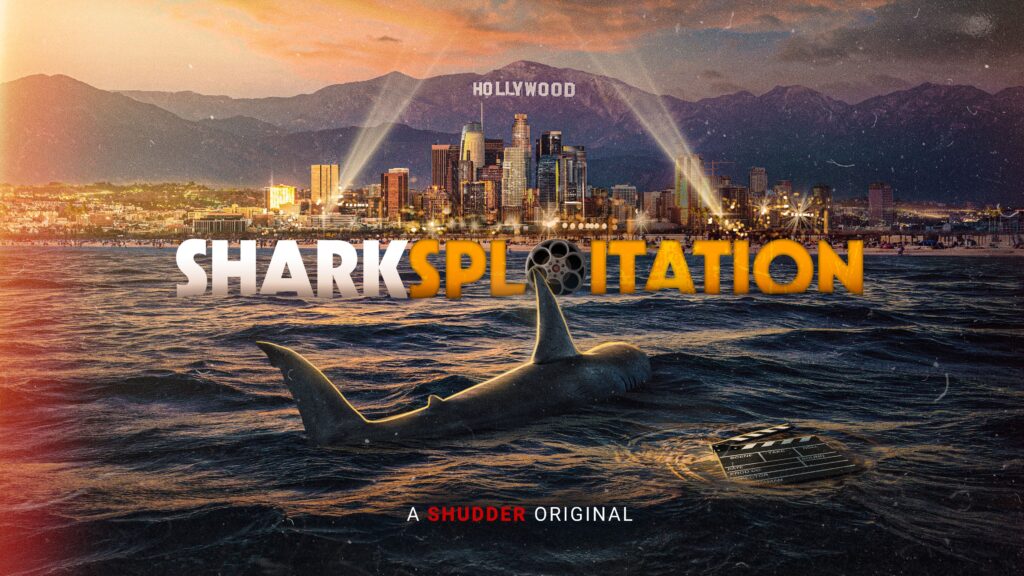
Among all the natural horror subgenres (figure that, subgenres for a subgenre!), there’s one so storied and dense that it becomes an academic feat to map the history of. That sect of natural horror all about our toothy maligned friends, the Great Whites, is aptly named “sharksploitation”. For most audiences, sharksploitation films are just an enjoyable outing to see bursts of cloudy crimson blood in pure blue water. We’re all here to watch shark animatronics (or bad CGI models, if you’re nasty) flip out on their victims, and maybe there’s a plot attached to them. There’s no shame in that: what’s simple fun is simple fun, and sometimes simple fun is being mauled by a big angry fish.
But beyond that, when it comes to being more nuanced, to observing the ebb and gory flow of the genre’s trends, it’s impossible to do justice to the history of such a spanning worldwide sensation in a short summary. How can you capture something so large in something so small?
Well, lucky us, our summarizing days are over! Someone made a documentary all about it.

Shudder Brings Us Sharksploitation
Written and directed by Stephen Scarlata, Sharksploitation interviews a veritable who’s-who of film and marine biology experts to discuss the history of the sharksploitation genre, not only its impact on the film industry but on the real world and its ecological consequences. The film starts with the king of cult himself, Roger Corman and 47 Meters Down director Johannes Roberts who dive into the meaning and motivation of thalassophobia; that’s the fear of the deep water for those who don’t regularly get lost looking at photo galleries of people diving in the middle of the inky black ocean.

From here on out, you get to hear from directors like Joe Dante and Rebekah McKendry, and writers like Rob Schrab on the subgenre, the behind-the-scenes of how it came to be, and where it’s going next. You even get an abridged history of the Syfy channel from Thomas P. Vitale and get to see how David Michael Latt and Paul Bales, the men behind the infamous Asylum Productions, came to birth the “mockbuster” genre and the perfect schlock that is the Sharknado series. These interviews capture the history of shark films with fantastic anecdotes from on and off-set; some are morbid, some are fascinating, and some are downright hilarious.
Marine Biology Meets Cinema: The Science Behind Sharks
That’s not even crediting the folks like Vicky Vasquez, Gregory Stone, and David Schiffman, marine biologists who handle all the science behind these not-actually-that-menacing menaces, and how sharks behave when they’re not made of rubber and metal. You get insights from Wendy Benchley, an ocean conservationist and wife of Jaws creator Peter Benchley, who gives a first-hand account of the craze her husband’s film made and its repercussions, for better or worse. Having such a broad spectrum of people talking about the genre lends not only credence to the research done for the film, but it also just gives you a whole lot of great stories that keep you captivated and wanting to hear more.

Given Scarlata produced one of my favorite documentaries of all time, Jodorowsky’s Dune, there was quite a high bar set in terms of quality. Most documentaries composed of sit-down interviews can never really excel in terms of editing and use of footage, and this is much of the same. Still, Sharksploitation tosses interesting graphics, animations, and plenty of glorious shark attack footage to pique your interest. It’ll have you compiling a list of shark films to watch on the Notes app on your phone before you even realize it.
(And I will be adding Ghost Shark to the list post haste, expect a review on that in the future!)
Tracing the Evolution of Shark Horror Films
But where Sharksploitation really excels is in how it creates a chronology for viewers. In the ordering of these stories and info, you find yourself jumping around through time from the early oral traditions of Hawaiian mythology and their depictions of sharks, to the cultural and industry touchstone Jaws, its lesser imitators, leading all the way to the modern-day and the devolved insanity of the Z-grade shark movies that come out every year. It’s a clever way of doing it and avoids trudging along a predictable path as other documentaries on film sometimes tread.
Why Sharksploitation Is a Must-Watch for Horror Fans
The natural horror subgenre is at its best when it’s breaking down the relationship between humans and sharks, and Sharksploitation knows that. It takes the time to chart that relationship and its many branching paths in a way that’s engaging and worthwhile, in a way that plays with that human element and tells a tale that bleeds between the spectacle of cinema and the more outlandish parts of the real world. Even if you aren’t a fan of documentaries, I’d suggest tossing this on once it hits Shudder; if not for the educational value, then for some of the crazy stories of molds being invented and nasty practical effects it has to offer. I’m almost certain it’ll hook you.
Make sure to stream Sharksploitation on Shudder starting July 21st!