


Sinister is one of my favorite horror movies, plain and simple. And hearing that Scott Derrickson was back with C. Robert Cargill and flying under the banner of prolific producer Jason Blum, I was optimistically skeptical of how this film would measure up against that instant classic, given all the heavy praise The Black Phone has been getting. After all, lightning rarely strikes twice.
Scott Derrickson Channels Joe Hill More Than Himself
But funny enough, it wasn’t Derrickson’s creative voice I kept hearing throughout the movie. I was laughing sitting through the credits of this film because one of my recurring thoughts during the runtime was, “Wow, this really feels like a Joe Hill story.” I was reminiscing on the likes of Locke and Key & The Low, Low Woods, unaware that the Son of King himself left his unmistakable fingerprints on this with that same creativity he always brings.
He gets a story by credit on this that I missed during the slick opening of the film, as this is an adaptation of the tale from his anthology “20th Century Ghosts”; we follow a young boy kidnapped by a child murderer, attempting to escape using advice from specters that speak through the disconnected rotary phone in his underground prison. If you’re a fan of Hill’s work, you’ll enjoy this for being the same level of moody and inventive as all his other creations are. While I may have my gripes with this film, there’s plenty to enjoy about it, and chiefly I love the novel set-up of it all being utilized to its fullest.
Some of the Best Child Performances in Modern Horror
If there’s one aspect to The Black Phone I will praise nonstop alongside this clever premise, it’s that this has the best child actors I’ve seen in a horror movie in a long time. Most horror movie veterans know by now that there is nothing that sucks the tension out of a scene like bad child actors who can’t play fear, anger, or any of the myriad emotions that should be coursing through their tiny veins at any given moment. This movie never has that issue.
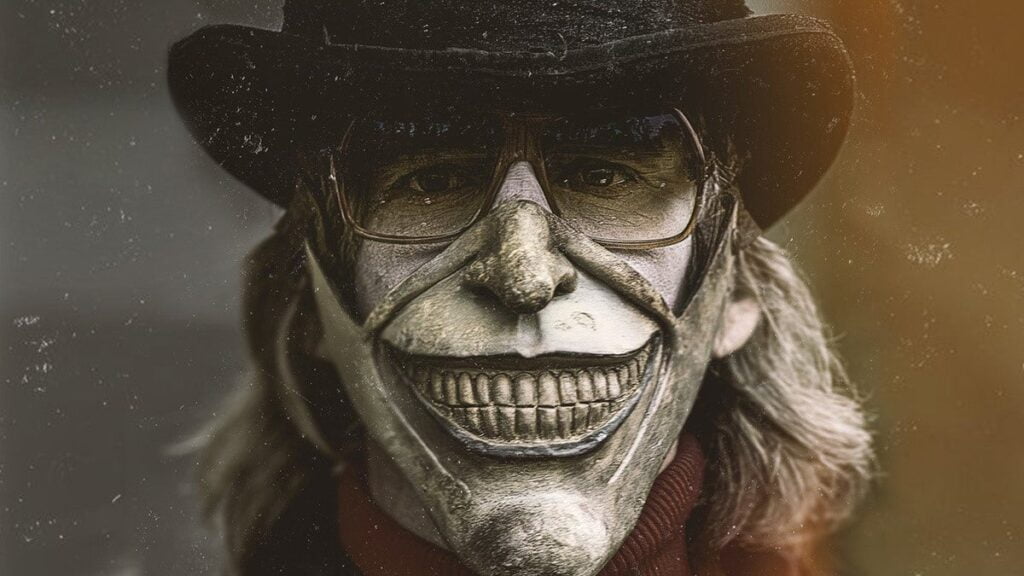
Mason Thames plays the fear, the exhaustion, and the stress of his character Finney Blake with expertise beyond his years. Every moment Thames plays opposite of Ethan Hawke’s “The Grabber” is a gem where I’m feeling disgust for the latter and terror for the former, almost entirely thanks to how compelling Thames is. Hawke’s character is admittedly nothing revolutionary, a masked psychopath with an M.O. out of a dozen F.B.I. casefiles, but his performance makes up for that. It’s the right balance of unhinged and even-tempered that keeps you on the edge of your seat, wondering if this is the scene where he explodes with fury, right up until that last scene.
Madeleine McGraw Steals the Show as Gwen
The show is stolen, however, by Madeleine McGraw, who plays Finney’s sister, the charming and plucky Gwen. She’s so entertaining, and her lines got plenty of laughs in the cinema. She’s also heartbreakingly good at playing a traumatized young girl who is perpetually going through it with a harrowing home life and a mystery about her brother’s disappearance at her heels; she makes the film for me.
In terms of the rest of The Black Phone, you get a mixed bag. Sadly, the soundtrack is mostly uninspired up until the last 20-minutes, where it feels like the budget kicked in; that final song really does buoy you with emotion, and I’m a sucker for a good closing track. The set design is all perfectly 70s and feels curated down to the last fabric of the character’s costumes. The film’s pacing is stellar, without any scenes dwelling too long and overstaying their welcome. Everything feels precisely cut and intentional, even if some of those intentions bug me.
Cinematography and Visual Choices That Occasionally Miss the Mark
Questionable cinematography choices are The Black Phone’s pitfall. One VFX decision had me holding back laughter in the theatre from how silly it looked, but all in all, the effects are far and few between, so I can’t say they broke it for me. While the film grain of 70’s commercial cameras and the inclusion of organic home-video portions make up a lot of the film’s best parts (particularly the intensely executed intro credits), stylistically, the movie kind of breaks it hardest when it embraces this dreary nostalgia too much.
When The Black Phone Loses Its Grip on Tone
One sequence completely extracted me from the movie. It feels like Scott Derrickson was in the mood to do a coming-of-age film by way of The Shining, and while its enjoyable, it breaks pace with the rest of the movie and sprints away with its distractingly bright tone.
A Flawed but Effective Horror Film
It isn’t perfect, not by a long shot, with a heavy-handed auteur touch that might be off-putting to some like myself. But no matter how my eyebrows might raise with certain stylistic choices, it never left me bored and had me thoroughly invested in its characters all the way to the finish line. It may not be as great as Derrickson’s previous ghostly fare, but it is still good for yanking out a few genuine scares and some great acting.