

Film Fests
Brooklyn Horror Film Fest 2025: ‘CAMP’ Review

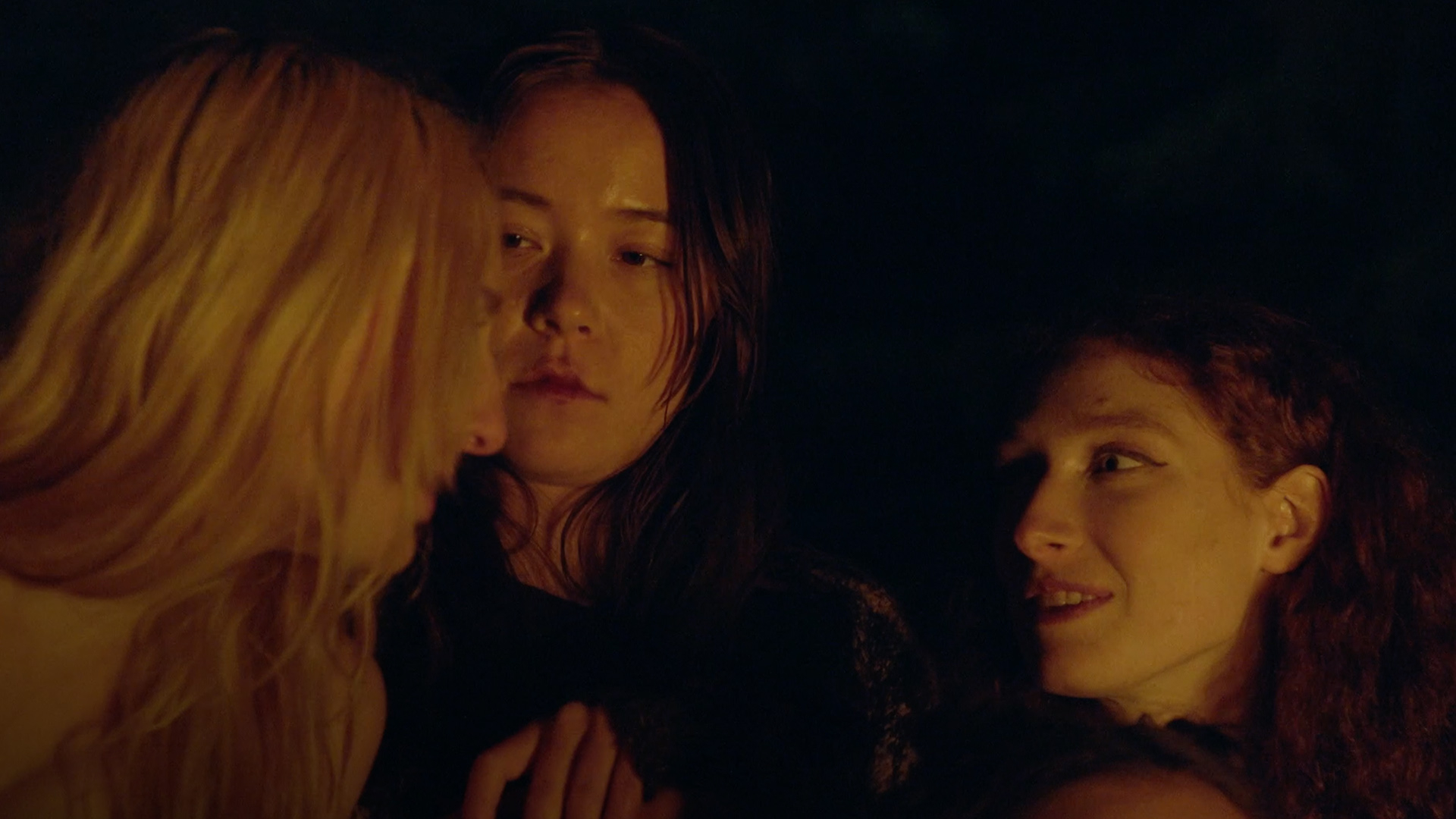
Dabbling with witchcraft is a time-honored tradition for troubled teen girls, especially in horror movies. Writer-director Avalon Fast adds their own dreamy spin on the subgenre with her sophomore feature, CAMP, an achingly melancholy coming-of-age film that will strike a nerve for anyone who was once a girl lost in the dense and tangled forest of adolescence.
CAMP Avoids Vilifying Its Teen Witches at Every Turn
CAMP stars newcomer Zola Grimmer as Emily, a young woman struggling to process the joint tragedies of a fatal traffic accident and the overdose death of a friend. Depressed and alone, she follows her father’s suggestion and takes a job as a counsellor at a summer camp deep in the woods. It turns out to be a Christian camp, but you wouldn’t know it from looking at the counselors, who love nothing more than drinking, smoking, and partying all night. Embraced by the other girls (Alice Wordsworth, Cherry Moore, Lea Rose Sebastianis, and Sophie Bawks-Smith), Emily finds herself drawn into a world of feminine power and magic—but soon discovers that, like all things in life, it comes at a cost.
In previous incarnations of teen witch horror, it was generally accepted that the ringleader would crash and burn in the climax while her disciples returned to the humbling confines of a normal life. Think Nancy Downs strapped, screaming, to a bed in a hospital ward, her powers bound, reduced to a harmless madwoman. CAMP firmly rejects this framing. Emily is never afraid of her fellow misfits, entering into the world of witchcraft with open eyes and a wounded yet curious heart. “Fall from grace,” one of the girls whispers. “Into what?” Emily asks. “All of this,” comes the response, reopening a door to a world of friendship that Emily had previously considered shut.
The Characters in CAMP Inhabit a Hazy, Liminal Space, Ripe With Magic and Beauty
The world that Fast conjures around these girls unfurls like a dream, impossibly lovely and faintly unreal. CAMP feels like a hazy summer night that never ends, a memory slightly blurred by sweet wine, one where the finer details are lost to time but the sight of the fog on the lake, the light filtering through the trees, the shooting stars pouring from the heavens sticks with you forever.
It’s a space where trauma can be shared, processed, and released into the forgiving wind, and where lifelong friendships can be forged—or, just as easily, the kind of friendships that burn bright and fierce for a summer, then drift naturally apart, but still shape you. The relationships between the counselors feel real and lived in, rich with laughter, yet brimming with the complex, writhing anxieties of girlhood. These girls can be dangerous, perhaps even cruel, but Fast allows us to observe their rituals without passing judgment. This is all part of the process of growing up, as painfully necessary as a bone healing after a bad break.
Let CAMP’s Slow Burn Seduce You, and Succumb
CAMP’s unhurried pacing won’t appeal to all viewers, but if you allow yourself to sink into its witchy waters, it will welcome you into its warm embrace. Fast has created the rare teen witch film that focuses on grief as much as it does empowerment, creating space for her characters to pour out their pain and inviting the viewer to ache with them. It’s heartfelt, honest, and at times devastatingly beautiful—a film that’s sure to find the right audience with time, and a sign of great things to come from its director.


The second (of two) feature I was able to check out at 2026’s Brooklyn Horror Film Festival was a rather peculiar film. Anthony Oberbeck’s latest feature film, Little Doors, was one of the films from this year’s festival that I had previously heard very positive rumblings about. Out of all of the films I had requested a press pass for, this was the film I was most excited to check out. After writer/director Anthony Oberbeck’s intro, where he said it’s still up in the air whether the film was considered a comedy or horror, I was excited to see the weird world we were about to enter. As the credits rolled, I wasn’t too sure what to make of Little Doors. Was it horror? Was it comedy? Or did it meander a bit too much in between?
A woman (Megan Koester) finds herself navigating an apocalyptic world, as she [presumably] squats in a gorgeous McMansion. The apocalypse is about to get even worse for this woman as one day she finds a tiny door on the side of her stomach, where a cyst once was. After hiring a locksmith (Anthony Oberbeck) to open a locked door in her house, she comes to the realization that just because the world is ending doesn’t mean she can’t find love. Can the locksmith open the literal and figurative doors in this woman’s life? Or are some locks best left…locked?
Little Doors Makes The Mundane Interesting
Little Doors is a troubling film. There are moments where it lags behind itself and then moments where it gets a burst of energy before retreating back into its shell. Writer/director Anthony Oberbeck is, unquestionably, a talented filmmaker. He finds unique ways to make the most mundane of scenes into something fun to watch. But it also feels like he’s not confident in his own style.
Oberbeck, from what I could tell from his intro and Q&A, is a very deadpan person. Kind of like a slightly less self-aware Nathan Fielder. From his short intro to the film, it was clear what the overall vibe of the film was going to be. Little Doors, by definition, is a horror film. But in practice, it’s more or less a dry dark comedy. The idea of the ongoing apocalypse is left as background fodder. Which is fine, but when you have two characters who view a little door appearing on someone’s body as just another day, I think some worldbuilding would be helpful.
Finding Your Voice
In a way, Oberbeck has his own style. And I hate being one of those people to say x movie is like if movie A and movie B had a baby. But when I was watching Little Doors, I just kept feeling as if I was watching a Yorgos Lanthimos-lite movie. And that’s where my biggest issue comes from. Lanthimos is one of the greatest screenwriters of our generation. Attempting to emulate any form of his style is a Herculean task. How can you perfectly capture that level of purposeful esotericism without alienating an overwhelming majority of the viewing audience?
Granted, filmgoers who attend festivals are more likely to enjoy the jigsaw puzzle of a difficult film like Little Doors. But where Oberbeck and Lanthimos depart from one another is that Lanthimos can still craft a film that could be enjoyed even if someone doesn’t understand it. Little Doors exists in this vague figurative limbo that asks more questions than it answers. That being said, it created a nearly two-hour discussion between my wife and myself as we transited back home. And by the time we reached our front door, our consensus was, “eh.”
Anthony, Please Keep Reading!
Anthony, if you’re still reading this, please don’t stop. All of this isn’t to dissuade anyone from watching this film. Even though I ended the last paragraph the way I did, that does not mean I hated the film. As stated at the top, I think Anthony Oberbeck is a very talented filmmaker. I just think he needs to focus more on his own style, rather than trying to amalgamate the styles of others into his aesthetic.
I loved the two main characters, the pacing, and how interesting Oberbeck could make an empty room feel. Little Doors just feels both all over the place and way too narrow. There are points where it feels like the commentary on love and relationships contradicts itself. But the acting is incredible, and the idea of a little door appearing on someone’s torso in the middle of an apocalypse is genuinely a riot. Whatever Oberbeck makes next, I will watch. But for me, this little door should have stayed locked.

Brooklyn Horror Film Festival came and went like a furious lightning strike. As they say, you don’t know what you got, til it’s gone! The festival was full of excellent films, familiar faces, and drinks aplenty. My opening night film was one that hit a bit too close to home and almost made me miss a time in my life that I would never like to revisit. Night After Night is the latest film from I Trapped The Devil’s Josh Lobo, and it’s HR’s worst nightmare!
Andy (Scott Poythress) and Willis (Johnny Sibilly) are security guards at a university; a university that’s overwhelmingly ambiguous. As they battle shift changes, Andy and Willis slowly slip into a never-ending cycle of dread and terror. But the horror affects more than their mental states. Can these two hourly workers get to the bottom of the terrors that lurk in the hallways at night? Or will their next shift…be their last?
The True Horror of a Night Shift
Night After Night was my first screening at this year’s festival. I typically view my first screening as the bar-setter for my festival experience. As the credits rolled, I wasn’t too sure what bar this film truly set. Co-writer/director Josh Lobo (with co-writer Rowan Russell) takes quite a big swing with this film. Their story is layered and full of heart, but it meanders in capturing the mental state of a dead-end job and the unbearable pressure of the night shift. Lobo and Russell’s addition of supernatural elements into an overwhelming shift is smart and resourceful. But did they bite off more than they could chew?
As someone who has worked the overnight shift for nearly a decade, I’ve seen all facets of it transcribed to the silver screen. Rarely have I found a film that captures the mentality it puts a worker in. To date, Dark Mommy is the only film I’ve seen that emotionally captures that feeling best. But the goal of this isn’t to compare films, because that’s unfair. I just don’t feel like it gives itself time to breathe and grow with the characters. By the time the credits rolled, it felt like an unfocused, mind-bending cacophony of manufactured confusion.
Night After Night‘s Crowded Third Act
There’s an attempt to explain the goings-on at this university, but it doesn’t feel confident in its own exposition. As Night After Night approaches its climax, there’s an addition of a fourth main character (I’m counting The Stranger as the third (or five main characters if we’re going all film-schooly with it and counting the university as a character)). Don’t get me wrong, I absolutely LOVE AJ Bowen. In fact, I almost jumped out of my seat when he appeared. It’s just not the time to add another major character. Especially when you’ve given little to no explanation/context clues thus far.
That being said, I don’t want this review to be overly negative. I did not walk away from this film mad or disappointed. Night After Night proves that Josh Lobo is an insanely talented visual filmmaker. Along with I Trapped The Devil cinematographer Bryce Holden, this film expertly tells a visually enthralling story. Chock-full of atmosphere and visual dread, this film is truly a visual treat. It’s hard not to appreciate this film on an aesthetic level.
A Stellar Cast!
On top of that, Night After Night is brimming with incredible performances. Johnny Sibilly has this powerfully charming anger in his character, even if it feels slightly unfounded. Scott Poythress, on the other hand, is the perfect foil for Sibilly’s character. Where you can feel Sibilly’s charged emotions, Poythress digs deep and pulls out a deeply broken performance. There’s a deep emotional charge behind the character’s eye-bagged, dead stare. I really wish there was more of something for both of them to go off of. And, as always, AJ Bowen is a rockstar. It’s nice to see him in projects.
Night After Night is visually impressive but struggles with substance and style. It’s hard to connect with this film when it struggles to connect with itself. Lobo and Russell broach a fantastically unique idea, but pacing and unbalanced writing give this film a Sisyphean task. I have no doubt this film will resonate with many people; I just don’t think I am one of those people.
