

Film Fests
[REVIEW] Fantastic Fest 2025: ‘Primate’ Is the Animal-Attack-Meets-Slasher Movie You Didn’t Know You Needed

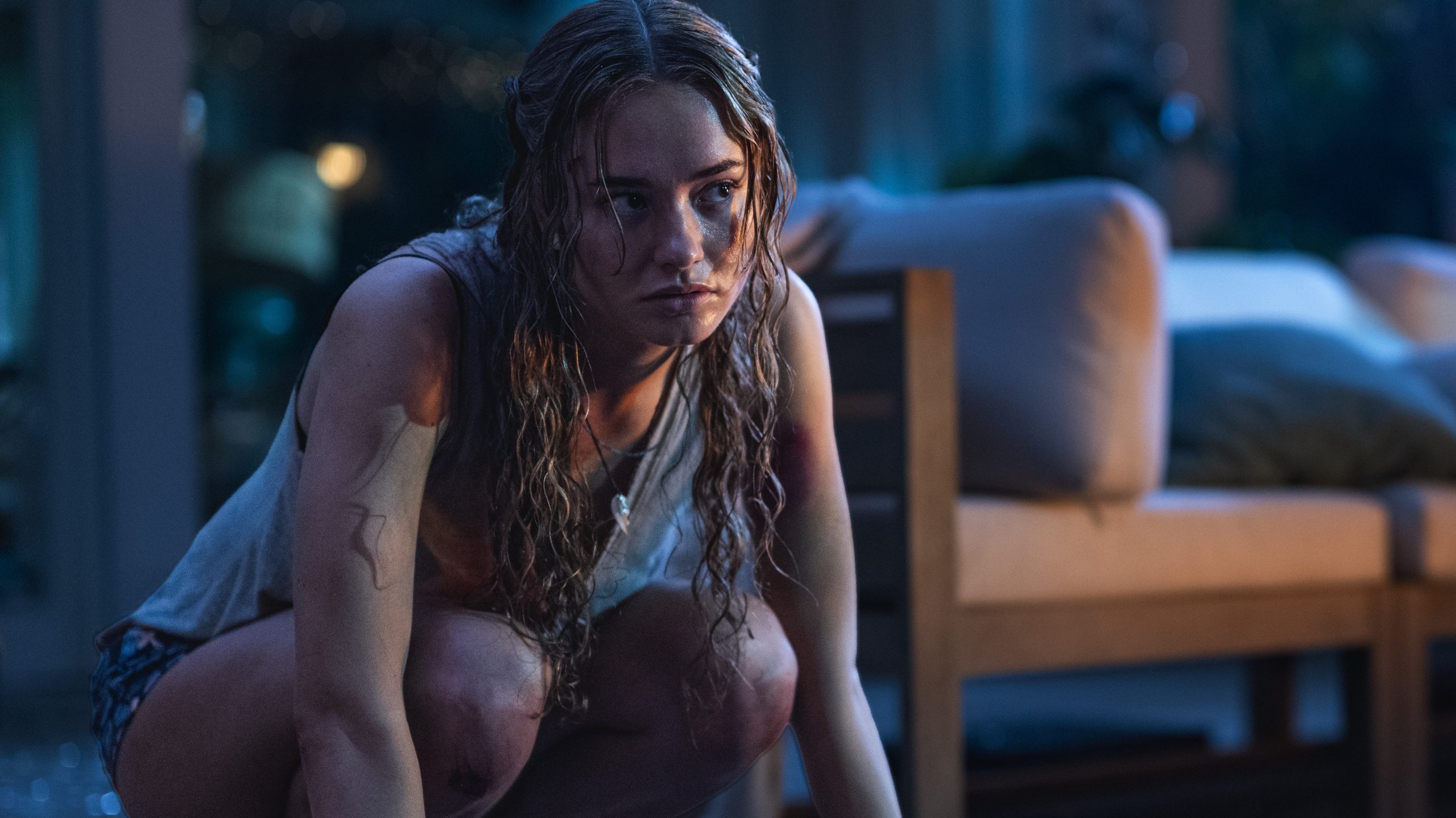
If that one scene in Nope (you know the one) wasn’t enough to convince you that owning a chimpanzee is a bad idea, Primate is here to remind you that these animals can literally rip you limb from limb. Directed by Johannes Roberts, who also co-wrote the script with Ernest Riera, the film is scheduled to release in January—and if it wasn’t on your radar before, allow me to firmly add it.
PSA: Primate Proves That Chimps Are Not Pets (But They Are Great Slasher Killers)
Primate begins with a pre-credits scene introducing us to the danger: a vet has been called to check in on a chimp named Ben that isn’t feeling so hot, only to discover the hard way that the super-strong animal has gone rabid. It’s an evocative opening, though it does create a little timeline confusion when we jump back in time a few days to follow Lucy (Johnny Sequoyah) as she returns home to Hawaii to see her family and their unusual pet.
Her late mother, we learn, worked with Ben for years before her death, and he remains a beloved member of the family, able to communicate most basic needs via the use of sign language and a special tablet. Ben is acting a little off, though, so Lucy’s father (Academy Award-winner Troy Kotsur, in a stand-out role) calls in the vet we’ve already seen die before heading out for the night.
Of course, we know that Ben has rabies, so it’s only a matter of time before he goes bananas. In the meantime, Lucy, her sister, and their friends get to living it up while they have the place to themselves. The family owns a gorgeous secluded mansion complete with a cliffside infinity pool, and if you’ve seen The Strangers: Prey at Night, you’ll know Roberts loves a pool. He quickly finds a reason to drive the young people into it and trap them there—but just because chimps can’t swim, that doesn’t mean they’re safe.
Blending Animal Attack Horror with Slasher Thrills in Primate
One of the biggest things going for Primate is its ability to blend classic animal attack horror with slasher elements. The film draws clear inspiration from Cujo, but where the Trentons were largely safe from the beast’s foaming maw (if not the sun) so long as they stayed inside their vehicle, Lucy and friends aren’t so lucky. As the tagline for Primate warns, Ben is “dangerously close to human,” which means he understands how to use tools and constantly finds creative ways to take a swipe at his prey whenever they and the audience let their guard down. The sicker the chimp gets, the more he seems to radiate a savage, all-too-human glee.
At the same time, Roberts and Riera’s script leverages the communication gap between Ben and the family to devastating effect. Ben is so close to being able to tell them what’s wrong before his rabies progresses to the point of no return, but he doesn’t quite have the language. The fact that Lucy’s father is deaf adds an additional layer to the tragedy: we see how expressive the family is able to be through non-verbal communication, yet Ben is still isolated in his misery.
Toward the climax, however, even this form of communication starts to break down as the girls’ screams go unheard. While it feels like there’s more material that could have been wrung from this theme, it’s notable that Ben goes for the mouth more than once during his rampage, including in the film’s most memorable kill. In the end, maybe all communication is meaningless when nature decides to play a cruel prank.
Miguel Torres Umba’s Incredible Performance as Rabid Chimp Ben
This tragic aspect of the story doesn’t dampen the scares or thrills. Movement specialist Miguel Torres Umba, who portrays Ben, initially imbues the chimp with lovable warmth that makes his feverish, trembling intensity all the more frightening as the sickness takes hold. It’s a remarkable performance, one that lulls the audience into a similar state of wishful thinking to Lucy as she repeatedly reaches out to Ben in the hope that some part of the pet she loved is still in there. Primate rewards that desperate desire with brutal bites, bludgeonings, and beyond.
Primate Is a Lean, Mean, Face-Ripping Machine
Animal attack horror movies have trended hard toward sharks in the last decade (a world Roberts is no stranger to, having helmed 47 Meters Down and its sequel). It’s exciting to see a new addition to this subgenre focusing on a lesser-seen aggressor, especially one that doesn’t frame its killer creature as inherently evil, but rather a victim of both a natural blight and human foolishness. Ben should never have been put in the position he’s in—but now he’s here, it’s pulse-poundingly fun to see the damage that 100+ pounds of pure muscle can do when its brain is on fire.
Primate attacks theaters on January 9.


The second (of two) feature I was able to check out at 2026’s Brooklyn Horror Film Festival was a rather peculiar film. Anthony Oberbeck’s latest feature film, Little Doors, was one of the films from this year’s festival that I had previously heard very positive rumblings about. Out of all of the films I had requested a press pass for, this was the film I was most excited to check out. After writer/director Anthony Oberbeck’s intro, where he said it’s still up in the air whether the film was considered a comedy or horror, I was excited to see the weird world we were about to enter. As the credits rolled, I wasn’t too sure what to make of Little Doors. Was it horror? Was it comedy? Or did it meander a bit too much in between?
A woman (Megan Koester) finds herself navigating an apocalyptic world, as she [presumably] squats in a gorgeous McMansion. The apocalypse is about to get even worse for this woman as one day she finds a tiny door on the side of her stomach, where a cyst once was. After hiring a locksmith (Anthony Oberbeck) to open a locked door in her house, she comes to the realization that just because the world is ending doesn’t mean she can’t find love. Can the locksmith open the literal and figurative doors in this woman’s life? Or are some locks best left…locked?
Little Doors Makes The Mundane Interesting
Little Doors is a troubling film. There are moments where it lags behind itself and then moments where it gets a burst of energy before retreating back into its shell. Writer/director Anthony Oberbeck is, unquestionably, a talented filmmaker. He finds unique ways to make the most mundane of scenes into something fun to watch. But it also feels like he’s not confident in his own style.
Oberbeck, from what I could tell from his intro and Q&A, is a very deadpan person. Kind of like a slightly less self-aware Nathan Fielder. From his short intro to the film, it was clear what the overall vibe of the film was going to be. Little Doors, by definition, is a horror film. But in practice, it’s more or less a dry dark comedy. The idea of the ongoing apocalypse is left as background fodder. Which is fine, but when you have two characters who view a little door appearing on someone’s body as just another day, I think some worldbuilding would be helpful.
Finding Your Voice
In a way, Oberbeck has his own style. And I hate being one of those people to say x movie is like if movie A and movie B had a baby. But when I was watching Little Doors, I just kept feeling as if I was watching a Yorgos Lanthimos-lite movie. And that’s where my biggest issue comes from. Lanthimos is one of the greatest screenwriters of our generation. Attempting to emulate any form of his style is a Herculean task. How can you perfectly capture that level of purposeful esotericism without alienating an overwhelming majority of the viewing audience?
Granted, filmgoers who attend festivals are more likely to enjoy the jigsaw puzzle of a difficult film like Little Doors. But where Oberbeck and Lanthimos depart from one another is that Lanthimos can still craft a film that could be enjoyed even if someone doesn’t understand it. Little Doors exists in this vague figurative limbo that asks more questions than it answers. That being said, it created a nearly two-hour discussion between my wife and myself as we transited back home. And by the time we reached our front door, our consensus was, “eh.”
Anthony, Please Keep Reading!
Anthony, if you’re still reading this, please don’t stop. All of this isn’t to dissuade anyone from watching this film. Even though I ended the last paragraph the way I did, that does not mean I hated the film. As stated at the top, I think Anthony Oberbeck is a very talented filmmaker. I just think he needs to focus more on his own style, rather than trying to amalgamate the styles of others into his aesthetic.
I loved the two main characters, the pacing, and how interesting Oberbeck could make an empty room feel. Little Doors just feels both all over the place and way too narrow. There are points where it feels like the commentary on love and relationships contradicts itself. But the acting is incredible, and the idea of a little door appearing on someone’s torso in the middle of an apocalypse is genuinely a riot. Whatever Oberbeck makes next, I will watch. But for me, this little door should have stayed locked.

Brooklyn Horror Film Festival came and went like a furious lightning strike. As they say, you don’t know what you got, til it’s gone! The festival was full of excellent films, familiar faces, and drinks aplenty. My opening night film was one that hit a bit too close to home and almost made me miss a time in my life that I would never like to revisit. Night After Night is the latest film from I Trapped The Devil’s Josh Lobo, and it’s HR’s worst nightmare!
Andy (Scott Poythress) and Willis (Johnny Sibilly) are security guards at a university; a university that’s overwhelmingly ambiguous. As they battle shift changes, Andy and Willis slowly slip into a never-ending cycle of dread and terror. But the horror affects more than their mental states. Can these two hourly workers get to the bottom of the terrors that lurk in the hallways at night? Or will their next shift…be their last?
The True Horror of a Night Shift
Night After Night was my first screening at this year’s festival. I typically view my first screening as the bar-setter for my festival experience. As the credits rolled, I wasn’t too sure what bar this film truly set. Co-writer/director Josh Lobo (with co-writer Rowan Russell) takes quite a big swing with this film. Their story is layered and full of heart, but it meanders in capturing the mental state of a dead-end job and the unbearable pressure of the night shift. Lobo and Russell’s addition of supernatural elements into an overwhelming shift is smart and resourceful. But did they bite off more than they could chew?
As someone who has worked the overnight shift for nearly a decade, I’ve seen all facets of it transcribed to the silver screen. Rarely have I found a film that captures the mentality it puts a worker in. To date, Dark Mommy is the only film I’ve seen that emotionally captures that feeling best. But the goal of this isn’t to compare films, because that’s unfair. I just don’t feel like it gives itself time to breathe and grow with the characters. By the time the credits rolled, it felt like an unfocused, mind-bending cacophony of manufactured confusion.
Night After Night‘s Crowded Third Act
There’s an attempt to explain the goings-on at this university, but it doesn’t feel confident in its own exposition. As Night After Night approaches its climax, there’s an addition of a fourth main character (I’m counting The Stranger as the third (or five main characters if we’re going all film-schooly with it and counting the university as a character)). Don’t get me wrong, I absolutely LOVE AJ Bowen. In fact, I almost jumped out of my seat when he appeared. It’s just not the time to add another major character. Especially when you’ve given little to no explanation/context clues thus far.
That being said, I don’t want this review to be overly negative. I did not walk away from this film mad or disappointed. Night After Night proves that Josh Lobo is an insanely talented visual filmmaker. Along with I Trapped The Devil cinematographer Bryce Holden, this film expertly tells a visually enthralling story. Chock-full of atmosphere and visual dread, this film is truly a visual treat. It’s hard not to appreciate this film on an aesthetic level.
A Stellar Cast!
On top of that, Night After Night is brimming with incredible performances. Johnny Sibilly has this powerfully charming anger in his character, even if it feels slightly unfounded. Scott Poythress, on the other hand, is the perfect foil for Sibilly’s character. Where you can feel Sibilly’s charged emotions, Poythress digs deep and pulls out a deeply broken performance. There’s a deep emotional charge behind the character’s eye-bagged, dead stare. I really wish there was more of something for both of them to go off of. And, as always, AJ Bowen is a rockstar. It’s nice to see him in projects.
Night After Night is visually impressive but struggles with substance and style. It’s hard to connect with this film when it struggles to connect with itself. Lobo and Russell broach a fantastically unique idea, but pacing and unbalanced writing give this film a Sisyphean task. I have no doubt this film will resonate with many people; I just don’t think I am one of those people.
