

Reviews
‘The Strangers: Chapter 2’ Review: I Am So Confused Right Now

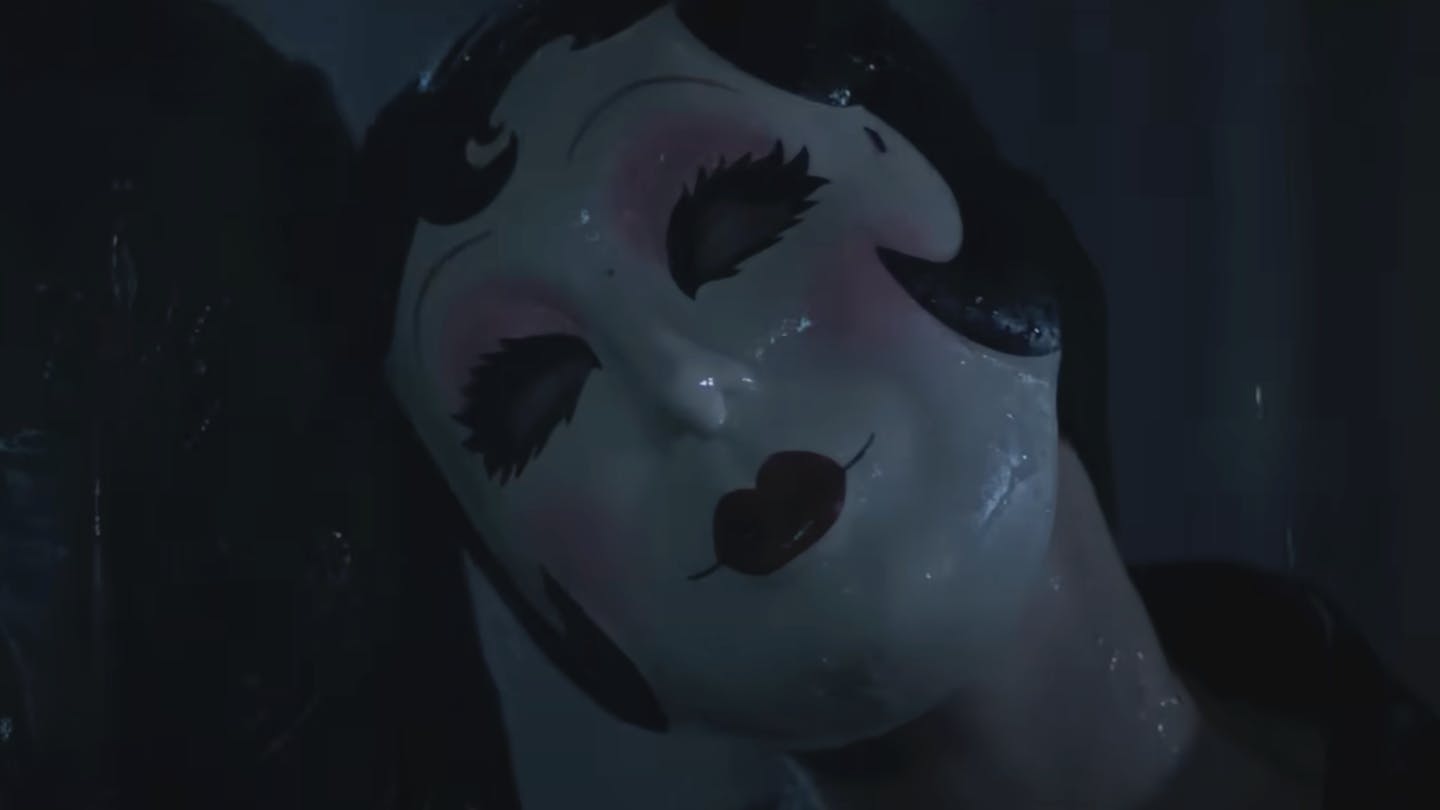
The opening sequence of The Strangers: Chapter 2 is a promising start to what soon becomes a bafflingly bad movie. Since Chapter 1, I had been hopeful that the trilogy would find purpose for itself beyond being a remake. I honestly thought all the claims of Chapter 2’s irredeemable incompetence were just exaggerations meant to appease the algorithmic machine spirits. Let he who has not written an inflammatory article title cast the first stone.
But no. It actually is that bad.
We pick back up with our protagonist Maya (played by Madelaine Petsch) in the hospital, mourning the loss of her boyfriend to a trio of deranged masked killers. Struggling with wounds physically, mentally, and emotionally, she’s soon forced to get back on her feet and keep running after the titular strangers arrive at the hospital she’s recovering in.
Despite the honestly very strong camera work in this environment, the game is given away early. When you realize how long Maya’s been running from room to room, evading an axe-wielding maniac with cartoon logic, you soon understand the dire truth of the film as she escapes from the hospital morgue into the town: Oh good lord, we’re going to do this same thing for the entire movie aren’t we?
Yep, We’re Going to Do This Same Thing for the Entire Movie
If the final reel of The Strangers: Chapter 1 felt like a molasses drip, Chapter 2 in its entirety feels more like having people pour bottles of maple syrup out onto your face for 90 minutes. Something is technically happening, yes, but it’s the same thing over and over, slowly, and surprisingly very little happens in the grand scheme of things.
Maya runs, then walks, then trudges aimlessly as she flees her attackers, occasionally getting a hit in on them, and then flickering in and out of consciousness. Every character that could give some good insight disappears or dies before they can speak. The ones who do speak are all equal levels of ominous, hinting at the very obvious twist we’re approaching in the third film, that there are way more than three killers and that the rest of the town is in on it.
Large swathes of the runtime are dedicated to watching Maya struggle to do simple things in the wake of her injuries. There’s no mean-spirited nature or message to punctuate the suffering parade she marches on in; she is effectively just fast travelling from set piece to set piece via CTE and blood loss induced teleportation. And while that sentence may be very funny in the abstract, it gets very old very fast.
What Is Actually Going On, I Am So Confused
It’s in these set pieces where the most confusing choices of Chapter 2 abound. We get flashbacks of the Pin-Up Girl killer as a young child, explaining the origin of the Strangers ding-dong-ditching antics. The scenes are just as corny as you’d expect, pockmarked by nonsensical explanations and connections back to the main plot; this is ignoring the fact that it tries to give sense to what are supposed to, at their core, be senseless crimes. It’s like, the whole ethos of the series. There is no point.
The nonsense of it all comes to a crescendo around the midpoint, when the strangers eventually lose track of Maya, and decide there’s only one course of action to get her: release a tactical boar into the woods to hunt her down like a heat-seeking hog missile. What results is a scene so ridiculous that it’s only topped by the shonen anime style flashback Pin-Up Girl has to honor the boar’s demise, fondly remembering how she got the pig in the first place before weaponizing it into a one-ton murder beast.
None of this is a joke in any way, shape, or form. I am still genuinely confused as to how this was all just allowed to happen.
The Strangers: Chapter 2 Brings Technical Faux Pas on So Many Levels
Terrible story aside, it’s not like the film is saved on a technical level either. It’s largely lit like an IKEA commercial and shot in some locations, just like one too. The soundtrack is middling at best. The actual action is often shot shakily and edited in a manner so frantic that it would make early-2000s found footage blush with its visual instability.
The best I can say is that the practical effects to detail Maya’s wounds and subsequent sutures are great, but even then a finger curls on the monkeys’ paw as a trade; the film matches that with CGI blood at multiple points, blood that is so clumsily textured and layered on fabric that it made me nostalgic for the 2010s YouTube sketch videos they reminded me of.
Petsch’s performance is on par with her previous appearance in Chapter 1, still solid character work here, barring some cheesy moments that are like potholes in the road of the script. But when you’re fighting against a director who isn’t directing you in any meaningful way, and a script that doesn’t give you anything to work with, it really feels like she’s been left to spin her wheels. They don’t even let her act opposite Richard Brake for more than one scene, who spends most of the movie sitting in a diner drinking sweet tea with another officer. If anything is criminal here, it’s that. You don’t put Richard Brake in a corner!
Abandon All Hope for The Strangers: Chapter 3
For a film about masked killers, Chapter 2 is awfully mask-off about what it is— just the slow, low middle point in a nearly 5-hour movie that’s been cut into thirds. It’s a meandering stroll through some really alien choices in storytelling that ultimately feels hollow. It’s eerily reminiscent of the 2015 Martyrs remake, since that was also a complete trainwreck that didn’t understand what made its source material tick.
The Strangers: Chapter 2 is a trite hellbilly slasher at points, a played-out character study of its killers at others, and a limp thriller throughout where anyone can be the killer, and where ultimately, it doesn’t really matter who the killer is. While I wish I could say it’s insane failures in filmmaking will find itself a cult audience that loves bad horror, I don’t know if I fully believe that either. It lacks the heart necessary to be a cult classic. Whatever it is, it doesn’t bode well for whatever can of worms its finale has in store.


Luz: The Flower of Evil is a movie simultaneously charged with and mired in ambition. It’s genuinely comical how overly ambitious of a first-time film it is for writer-director Juan Diego Escobar Alzate: a microbudget, shot on location in the mountains of Colombia, character driven psychological horror film meant to explore the very nature of good and evil while also tackling cults and misogyny.
So, it’s shocking how much of it works. Not all of it works, not at all, but it is cohesive enough to serve as a surprising experience with the colorful aesthetic it employs and incredibly dark places it goes to.
What Is Luz: Flower of Evil About?
After the death of their mother Luz, three sisters in a rural cult community find their faith waning. The three are the centerpiece of an elaborate theology crafted by their cult leader father, a man who is becoming more difficult to deal with by the day. So, when he brings a mute boy into town, chaining him up and claiming he’s the people’s messiah, an already tense situation devolves into outright madness. What ensues is the slow dissolution of the cult, and the torturous end of an already fractured family.
Let this usual synopsis section also serve as a content warning: the film does depict sexual violence very early on, about 25 minutes into the film. It’s not Irreversible levels of horrifically long, but it’s also not particularly brief and still graphic content by its nature. It can be difficult to stomach, so I’m mentioning it now for those who would rather avoid that sort of thing.
A Ponderous Arthouse Folk Horror About Good and Evil
The film has shocking moments, but it’s not very interested in shock value. This is first and foremost a slow burn, a piece of arthouse folk horror that is more about bleeding out than it is about a violent demise. The most obvious comparisons are to The VVitch and Midsommar, but even that feels like an inappropriate mix, even when it leans towards Aster’s commercial darling or Egger’s colonial nightmare.
Fundamentally, Luz is a study about people who mythologize suffering and cruelty and excuse it as being driven by outside spiritual forces rather than their own decisions. It’s about deconstructing harmful religious and cult mentalities, and it wears its philosophy on its sleeve (aggressively so). Alzate creates a visually and textually fascinating meltdown of his characters and the community they find themselves within.
I would say it’s a “descent into madness” if it didn’t feel clear that the characters were already in a tailspin right at the film’s outset. The script, especially through its second act, starts to feel repetitive and a little simplistic, with a somewhat anticlimactic ending and dialog that starts to feel less naturalistic and more tedious. But it’s an interesting dissection of a family, even if it’s rough around the edges.
Hyperreal Sense of Color, But Shaky Directing and Writing
The film’s most obvious and striking feature is its hyperrealist palette, bearing a rich Technicolor aspect that permeates throughout the entire runtime. Colorist Felipe Martinez U paints the mountainous countryside with such vibrancy, a simple but very effective contrast to the dying days of a cult the story centers on; bleak, muddy times, punctuated by vibrant nature all around. Aesthetically, it’s pretty clearly visually inspired by the early works of Pedro Almodóvar and the visual warmth of Robin Hardy’s The Wicker Man.
Even the naturalistic tendencies of Terrence Malick make an appearance here, though how much of that is just in the gorgeous location scouting and how much is actually emulated by Alzate is up for debate. All around, the film lacks polish. The camerawork is amateurish in some ways, slightly cramped and occasionally uninspired in its framing. Sometimes the oversaturated look of the film can feel a little saccharine and heavy, but the pop of color here feels purposeful enough that I can forgive it as being highly stylized rather than trying to mask the weak points of a first-time director.
Is Luz: The Flower of Evil Worth the Watch?
In the search for great Latin American horror, Luz was an odd duck to stumble upon to be certain. But I’m a champion of strange birds with a lot of character, so you do the math.
Luz: The Flower of Evil is a struggle of a film, hard to watch at points despite how visually appealing it can be. It’s a brutal, bleak piece of psychological folk horror that certainly has a thin audience and will test the patience of even those the premise appeals to. But it does have as much substance as it does style, even when it treads into murky waters, and for that I think it’s worth the watch.


If you’re not watching Indonesian horror, you’re missing out. The region is producing some of the craziest genre movies around right now, thanks in no small part to the efforts of writer-director Joko Anwar. His latest, Ghost in the Cell, which celebrated its North American premiere at Fantastic Fest 2026, combines everything we love about the filmmaker’s work—supernatural scares, inventive kills, and gnarly gore—along with a strong vein of comedy and political satire.
What is Ghost in the Cell About?
Ghost in the Cell centers around Dimas (Endy Arfian), a journalist whose life falls apart after he tries to run a story on corporate corruption and mysterious worker deaths. Wrongfully convicted of the horrific murder of his boss, Dimas finds himself with a one-way ticket to Cell Block C, where he quickly meets a colorful cast of prisoners—the good, the bad, and the seriously nasty. Among the good guys, there’s Anggoro (Abimana Aryasatya), who is constantly getting into trouble for defending fellow inmates, and Six (Yoga Pratama), who claims he can see people’s auras.
As if Dimas’ situation couldn’t get any worse, his arrival seems to trigger a series of brutal killings in the prison. Bodies are showing up mangled beyond recognition and displayed in positions that wouldn’t look out of place in Hannibal. It soon becomes clear that Dimas isn’t behind the murders, which begs the question: what did he bring in with him?
Anwar Embraces Horror-Comedy Whole-Heartedly
Prison is a scary place, and Anwar makes great use of the setting, with the action moving from the dingy showers where predators lurk to the bleak cellblock where inmates are at the mercy of their captors and the cafeteria where rival gangs eye each other up with ill intent.
But for all the human misery contained within the film, Ghost in the Cell is ultimately a horror-comedy, one that isn’t afraid to lean into broad slapstick and quippy dialogue when it wants to raise a chuckle. The tonal shifts can take a little while to adjust to, especially if your previous experience with Anwar comes from his more serious horror outings like Impetigore. This might be a problem if the film wasn’t actually funny, but Ghost in the Cell has enough laugh-out-loud moments to make you forget about any whiplash.
Ghost in the Cell Is a Genre-Bender to the Max
Comedy isn’t the only new flavor that Anwar has tossed into the mix. In Ghost in the Cell, dance sequences and martial-arts fight choreo sit side-by-side with some of the most extreme gore scenes seen outside a Terrifier movie in recent years. Then there’s the eerie way the spirit presents before it kills (trypophobia sufferers, beware) and the extensive critique of political corruption, power, and inequality. It’s an everything-and-the-kitchen-sink approach that shouldn’t work on paper, but under Anwar’s assured hand, it does.
It helps that for all the slapstick, the film lands a surprisingly earnest message, amplified by its vast ensemble cast. Dimas and Anggoro at times feel like main characters, but everyone in Ghost in the Cell has a big part to play, and that’s the point: in seemingly impossible circumstances, there’s strength in unity.
Ghost in the Cell Is an Endlessly Entertaining Blend of Goofiness, Heart, and Gore
If you’re looking for nonstop scares, you won’t find them in Ghost in the Cell. What you will find is a delightful blend of horror, comedy, and action that is apt to leave you grinning from ear to ear.
The film doesn’t skimp on the gore, throwing flesh and fluids at every surface. But it’s also charmingly goofy, with a cast that doesn’t take itself too seriously and a script that’s all too happy to devolve into a comedic dance scene when it feels like the spirit might strike. In every sense, Anwar is doing the most, and the end result is a film where there’s nary a dull moment in sight.
