

Reviews
‘Cut’ (2000) Review: Is This The Best Scream Rip-Off?

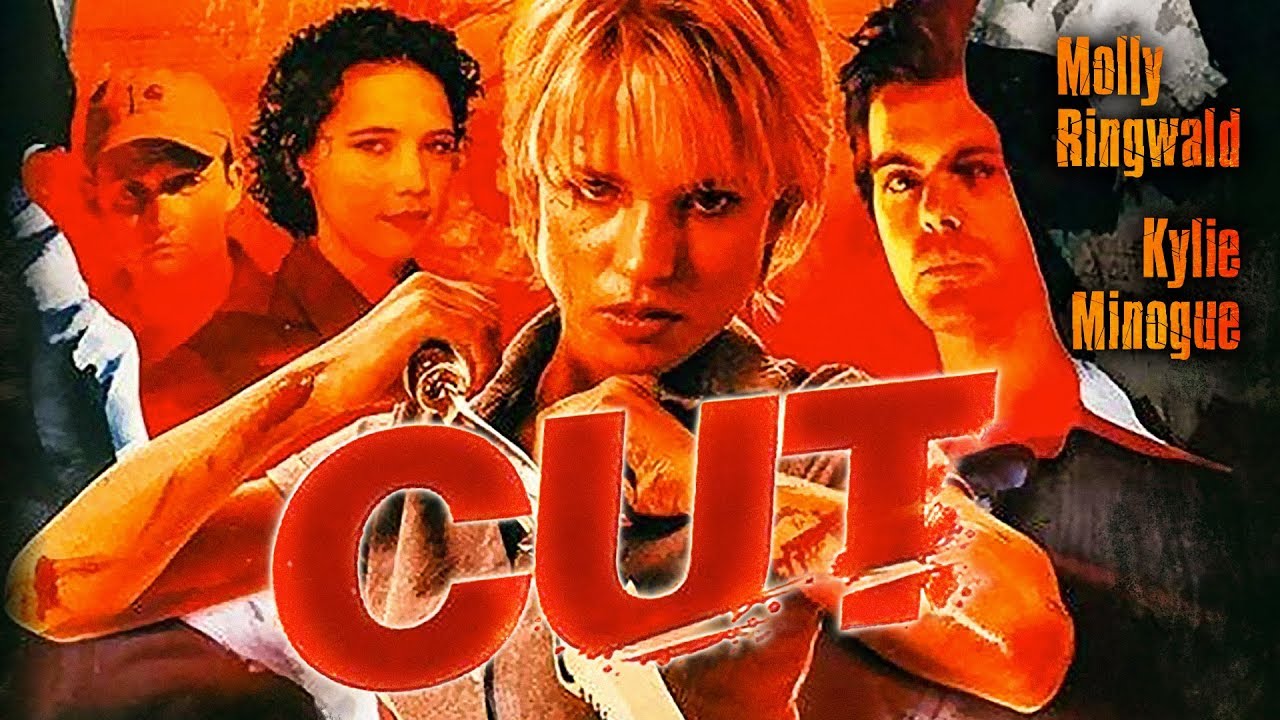
Cut is a movie opaquely made to ride the coattails of the Scream franchise’s explosive success. At least, that is what I said about it two years ago in my foreign slashers article. Everything I said there generally stands; it does remind me a decent amount of Behind the Mask, though if you’re looking for a film as hilarious as that, you’re not going to be pleased. The story of egotist slasher Leslie Vernon was bottled lightning, and I don’t think we’re ever going to get a sequel to it, spiritual or otherwise.
Why Cut Stands Out as a Unique Australian Slasher
But, if you’re interested in a rare Australian slasher film made on a minuscule budget, you can certainly do worse than Cut for your next movie night. Although I stand by the idea that Cut was in essence trying to ride the wave of Scream, it ends up doing something different and surprisingly effective in how it comments on the genre.
Promising film students Raffy and Hester want to make a name for themselves with their final project. When they find out their film professor was part of the cursed slasher production ‘Hot Blooded’, a film that’s rumored to kill those who try to finish it, they know exactly what they have to do. Despite their professor’s protests, Raffy’s ragtag group gets ahold of the film reels and takes a trip to a secluded mansion in the outback to finish the story– with some minor rewrites. The guest of honor? Vanessa (Molly Ringwald), the diva who killed a murderous stuntman on the set of Hot Blooded and set the curse into motion. The unexpected guest? The vengeful reincarnation of that same stuntman.
Technical Flaws and Challenges of a Low-Budget Horror
On a technical level, Cut is rough around the edges, especially 25 years after the fact. First and foremost, it shows its age through its low fidelity transfer to digital. Its proper high-definition release or remaster is impossible to find, and certainly not popping up on streaming platforms anytime soon. This is begging for someone like Vinegar Syndrome to take it out of the region-locked hell its prohibitively expensive Blu-ray lies in. The film isn’t that long at all, but its pacing makes it feel in need of minor cuts throughout, which seems insane to say, considering it is only 82 minutes.
As far as slashers go, it has a semi-rare premise: our killer, Scarman, is a prototypical Bagul living in the reels of the failed film-within-a-film ‘Hot Blooded’. He might not have the creepiness that character brought to the table in Sinister, but the simple mask and motif fit the film well for what it’s trying to do thematically. Cut has a lot of late 90s dialogue, with some of the supporting characters ranging from enjoyable to grating. They make the slower second act of this film sometimes funny and other times irritating.
Molly Ringwald Shines as a Complex Final Girl
The highlight in the cast is, as expected, the always charming Molly Ringwald. Her turn here as a washed-up actress throws you for a loop, initially seeming to be shallow and one-dimensional for some cheap laughs. Vanessa as a character, however, turns out to be very endearing beyond the comedic relief she provides. She goes from irate movie star who expects to be waited on hand and foot by a crew of rowdy college students, to someone who clearly hasn’t dealt with any of the terrible stuff that happened to her. She makes for a surprisingly high-quality final girl.
Despite all the problems fraying the edges of the film, Cut has a special place in my heart. It’s a fun little slasher, with the story around its main character, Raffy (Jessica Napier), still managing to be compelling despite all its scuffs and scrapes. Cut isn’t just mindlessly poking fun at horror movie tropes and trying to be clever in the burnt-out trail of Scream’s meta-horror wildfire. It’s more so making fun of the way people perceive horror movies as a fruitless art, and it manages to be funny in how it does that.
Meta-Horror with a Purpose
One of the earliest pieces of dialogue in the film is Professor Lossman begging the girls to make something more worthwhile than a horror movie. It’s in that moment Cut lays bare what it’s really about: it is a meta horror movie about how disrespected the people making horror movies are.
In the vein of One Cut of the Dead, it laughs at the pains of film production. It reminds you of the thankless job it can be when you’re trying to make something you’re passionate about, as well as the thankless job it is having to sell that idea to other people. It’s about the mental grind of coordinating a bunch of different human beings to make your vision come true.
Why Cut Deserves a Watch
As corny as it sounds, movies about making movies put a smile on my face without fail. Cut is a good slasher, but its real strength is how it highlights the unexpected problems that pop up in the process of making art, and the prickly personalities forced to interact on set. So, despite its blemishes in runtime and script, it manages to be a fun spin on your typical horror comedy. In my opinion, it’s well worth watching.


Of all the horror movies to be described as a runaway train, Rob Savage’s Other Mommy is the first in recent memory to have that quality as a negative. A more focused piece of over-the-top supernatural horror would capitalize on starting at a high speed and just gunning it. It would get increasingly faster, more horrific with its effects and reveals, more stunning and spectacle-filled. But Other Mommy never utilizes the momentum it starts with. It stays at the same steady, uncomfortable pace. And it gets old, very fast.
Other Mommy Is Missing a First Act
The movie begins in what should have been the second act; it never does stop haunting the narrative that Other Mommy feels like it’s missing 30 minutes of setup and 10 minutes of breathing room that would actually get you to care about what’s happening. Bela (Arabella Olivia Clark) is a young girl already well acquainted with a creature known as Other Mommy. A supernatural being that can change shape and size to her liking, becoming anyone she wants and then some. The entity only desires one thing: for Bela to let it into her heart and give it a new body.
Bela’s parents, Ursula (played by Jessica Chastain, in a dual role as the Other Mommy) and Russell (Jay Duplass), become aware of the space-bending creature in the film’s very first scenes. Soon, they’re on the run from the creature that’s trying to tear the already strained family apart. But the overwrought family drama of an unfaithful mother and a scatterbrained father forced to hide their struggling marriage from their kid is smothered. Much like Chastain’s performance, it’s drowned out by a barrage of aggressive and unimpressive digital effects trying to milk every single moment for a fright, desperate to keep audiences’ attention.
A Clumsy Digital Effects Showcase That Smothers the Story to Death
Other Mommy is primarily concerned with showing off its titular monster and her reality-bending powers, jumping from one “scare filled”, dreamlike sequence to the next; heavy, heavy quotes on scare filled. You become inured to every trick the film has as it shows you all the most unimaginative uses of a shapeshifting, size changing monster possible. There is no clever framing or use of shadow to obscure it, no restraint at all really. The directing is frenetic and clumsy, but it makes sure to make the monster as clear as possible. It’s all out in the open, plain to see, and bizarrely mundane for a depiction of a demonic interloper.
Every jumpscare-a-minute scene moves too fast and is too overlit to ever scare. The bright and inappropriate atmosphere fails the already rough looking digital effects. What it amounts to is a choppily edited and disjointed assortment of scenes, with weak imitations of Trevor Henderson style abominations center stage. Tall and small and melty variations of a CGI Chastain, none of them work to evoke tension or fear or any emotion other than the occasional eyebrow raise for how goofy some of them look.
There are a few moments where Chastain teases at playing the monster effectively without face and body morphing effects, sporting a genuinely disturbing countenance and creepy voice. But as soon as these fragments of interest come, they’re washed away by warping her into a lanky, slinking monster of ridiculous proportions. What we get out of the dual role is a boring creature for the feature, and a dry, one-dimensional protagonist, both squandering the phenomenal actor Chastain is.
Other Mommy is Full of Dull Performances and Squandered Potential
Duplass offers little with his supporting role, providing flat dialogue and flatter comic relief as a middling SNL sketch’s idea of a clownish father. It’s worth noting Clark actually provides the most interesting performance among the entire cast, a feat impressive from such a young child actor. But even her endearing and heart-breaking time as Bela is too little and too shadowed by the faulty composition of the film it’s trapped in.
The trailer for Other Mommy may have caught audiences off guard at the cinema in the past few months. But ultimately, that trailer showed the movie’s entire hand. Other Mommy is a pasty, crooked collage of elements from the supernatural horror movies producer James Wan made the backbone of the genre a decade ago. That doesn’t make it a throwback; just a rehash of cliches, with no structure and no sense of cohesion. It never amounts to anything more interesting than what the marketing material showed, which is a tragic end for a film, if there ever was one.

Luz: The Flower of Evil is a movie simultaneously charged with and mired in ambition. It’s genuinely comical how overly ambitious of a first-time film it is for writer-director Juan Diego Escobar Alzate: a microbudget, shot on location in the mountains of Colombia, character driven psychological horror film meant to explore the very nature of good and evil while also tackling cults and misogyny.
So, it’s shocking how much of it works. Not all of it works, not at all, but it is cohesive enough to serve as a surprising experience with the colorful aesthetic it employs and incredibly dark places it goes to.
What Is Luz: Flower of Evil About?
After the death of their mother Luz, three sisters in a rural cult community find their faith waning. The three are the centerpiece of an elaborate theology crafted by their cult leader father, a man who is becoming more difficult to deal with by the day. So, when he brings a mute boy into town, chaining him up and claiming he’s the people’s messiah, an already tense situation devolves into outright madness. What ensues is the slow dissolution of the cult, and the torturous end of an already fractured family.
Let this usual synopsis section also serve as a content warning: the film does depict sexual violence very early on, about 25 minutes into the film. It’s not Irreversible levels of horrifically long, but it’s also not particularly brief and still graphic content by its nature. It can be difficult to stomach, so I’m mentioning it now for those who would rather avoid that sort of thing.
A Ponderous Arthouse Folk Horror About Good and Evil
The film has shocking moments, but it’s not very interested in shock value. This is first and foremost a slow burn, a piece of arthouse folk horror that is more about bleeding out than it is about a violent demise. The most obvious comparisons are to The VVitch and Midsommar, but even that feels like an inappropriate mix, even when it leans towards Aster’s commercial darling or Egger’s colonial nightmare.
Fundamentally, Luz is a study about people who mythologize suffering and cruelty and excuse it as being driven by outside spiritual forces rather than their own decisions. It’s about deconstructing harmful religious and cult mentalities, and it wears its philosophy on its sleeve (aggressively so). Alzate creates a visually and textually fascinating meltdown of his characters and the community they find themselves within.
I would say it’s a “descent into madness” if it didn’t feel clear that the characters were already in a tailspin right at the film’s outset. The script, especially through its second act, starts to feel repetitive and a little simplistic, with a somewhat anticlimactic ending and dialog that starts to feel less naturalistic and more tedious. But it’s an interesting dissection of a family, even if it’s rough around the edges.
Hyperreal Sense of Color, But Shaky Directing and Writing
The film’s most obvious and striking feature is its hyperrealist palette, bearing a rich Technicolor aspect that permeates throughout the entire runtime. Colorist Felipe Martinez U paints the mountainous countryside with such vibrancy, a simple but very effective contrast to the dying days of a cult the story centers on; bleak, muddy times, punctuated by vibrant nature all around. Aesthetically, it’s pretty clearly visually inspired by the early works of Pedro Almodóvar and the visual warmth of Robin Hardy’s The Wicker Man.
Even the naturalistic tendencies of Terrence Malick make an appearance here, though how much of that is just in the gorgeous location scouting and how much is actually emulated by Alzate is up for debate. All around, the film lacks polish. The camerawork is amateurish in some ways, slightly cramped and occasionally uninspired in its framing. Sometimes the oversaturated look of the film can feel a little saccharine and heavy, but the pop of color here feels purposeful enough that I can forgive it as being highly stylized rather than trying to mask the weak points of a first-time director.
Is Luz: The Flower of Evil Worth the Watch?
In the search for great Latin American horror, Luz was an odd duck to stumble upon to be certain. But I’m a champion of strange birds with a lot of character, so you do the math.
Luz: The Flower of Evil is a struggle of a film, hard to watch at points despite how visually appealing it can be. It’s a brutal, bleak piece of psychological folk horror that certainly has a thin audience and will test the patience of even those the premise appeals to. But it does have as much substance as it does style, even when it treads into murky waters, and for that I think it’s worth the watch.
