

Movies
In the Valley: Queer Fear & Trauma in Horror


I’ve spent years honing my craft making strange, retro-inspired horror films on a budget — films driven by style but rooted in emotion. Love, grief, heartbreak, longing — all filtered through darkness. I’ve always been drawn to horror because, like many people, I found healing there. In stories where fear becomes confrontation, where pain can finally take shape.
How Joshua Tree Inspired In the Valley
During COVID, my partner and I bought land in Joshua Tree and built an off-grid glampsite. It became an oasis away from the city — a place defined by silence, stars, old VHS tapes, and isolation that initially felt restorative. At night, we’d drift between local dive bars, searching for connection in the middle of nowhere.
One spot we frequented was Out There Bar — a strange desert refuge with drag nights, disco, and often only a handful of people scattered inside. Most nights felt harmless, almost dreamlike. But every so often, something shifted in me. A wall would suddenly go up — an instinctive voice whispering: Be careful. Don’t let anyone know you’re queer. The feeling was immediate and overwhelming. A defense mechanism I thought I had long outgrown. One of the largest military bases in the country sat only a few miles away, and soldiers would often cycle through the bar. Some encounters were warm, others less so, but there was always an underlying sensation I couldn’t shake — that isolating feeling of being watched too closely.
What unsettled me most was the contradiction. I had been openly queer since I was seventeen. Proudly. Yet suddenly, in the place I considered my sanctuary, old survival instincts came rushing back. Joshua Tree is romanticized as liberating and expansive — a place people go to find themselves. And yet, underneath that openness, I found myself shrinking again. That feeling became the seed of In the Valley.
The stars are why you go to the desert. No matter how many vintage motels or pools people chase, the conversation always circles back to the sky. The desert remains one of the few places where light pollution disappears, and the stars reveal themselves fully. But I became fascinated by another feeling entirely: the sensation that something might be watching back. As the desert became my second home and that defensive wall kept resurfacing, I started interrogating the feeling more deeply. Why was I suddenly so concerned with safety? What exactly was I afraid of?

Queer Fear and Survival in Isolated Spaces
The answer was complicated because I hadn’t experienced overt homophobia in any defining way before. Sure, there had been passing slurs shouted from cars or strangers trying to provoke something ugly, but those moments felt easy to dismiss. What unsettled me more was the quieter feeling underneath it all — inherited vigilance. My partner is non-binary, and their safety often occupies my mind more than my own. Even in harmless moments, I found myself scanning rooms, reading body language, calculating exits. It wasn’t irrational. It was conditioning — a survival instinct sharpened over generations of queer people learning when to stay visible and when to disappear.
Building Horror From Internalized Fear
That was the horror I wanted to explore.
Not simply homophobia itself, but the psychological architecture it leaves behind. The way fear embeds itself into the body long after you convince yourself you’re safe. Eventually, I realized I had to confront it. I had to give it a face.
In the Valley is a descent — a body-switch film wrapped in alien imagery and retro western horror aesthetics. The film begins with Josh entering a queer speakeasy hidden in the middle of the desert. The room immediately studies him. Josh carries himself with hesitation, almost like someone entering a gay bar for the first time and trying desperately not to appear uncomfortable.
Romance, Desire, and Alien Horror
After several strange encounters with the bar’s enigmatic owner, Dahlia, the atmosphere shifts when Richard enters the room. Their connection is immediate, communicated through something as simple as a smile. Quiet conversation turns into flirtation, flirtation into dancing, and suddenly the film reveals itself as a romance. Richard takes Josh home after Josh admits he can barely remember where he lives — an important detail. Josh exists untethered, emotionally disoriented, searching for grounding in another person. Outside, the two lie beneath impossibly purple desert skies, staring upward as the stars loom over them.
For a moment, the desert becomes sacred. Then the film turns.
After the two move inside together, storm clouds begin swallowing the sky while purple lightning fractures across the landscape. The storm doesn’t interrupt their intimacy — it amplifies it. Desire and danger begin occupying the same emotional space. I wanted the sequence to feel like the best night of your life teetering on the edge of violence. With every flash of lightning, horrific images invade Josh’s psyche: a man bound to a barbed wire fence, an ominous cowboy gripping a bat, fragments of brutality interrupting intimacy like inherited nightmares.
By the climax of the sequence, the lovers are no longer alone. Their bed now sits exposed beneath the storm as two towering extraterrestrial beings silently observe them above. Because for me, the horror was never simply the aliens. It was the feeling of being watched while trying to love someone openly. At the final moan, Josh awakens alone — naked and abandoned beneath the brightness of the desert morning. Richard is gone.
The Desert, Memory, and Queer Trauma
Searching desperately for help, Josh instead discovers something impossible: a single black orchid growing from the dry sand. The flower mirrors the tattoo seen earlier on Richard’s arm. In panic, Josh rips the flower from the earth. Inside, a violent purple light pulses outward. Fractured memories stab through him in flashes: the dancing, the bedroom, the storm, the extraterrestrial figures looming above them. Then the desert itself revolts, erupting into blood and consuming him completely before releasing him back into the endless landscape.
By nightfall, dehydrated and unraveling, Josh discovers a lone fire burning beside an unfinished barbed wire fence. A baseball bat rests in the flames. Torn clothing hangs from the wire. Nearby, he finds a mound of disturbed earth crowned with a cowboy hat. Beneath the hat sits another black orchid.
Uncovering the Film’s Central Mystery
This time, when Josh removes it, there are no violent visions. Only silence. He begins digging. Slowly, a grave reveals itself. Inside lies a body reduced almost entirely to bone and weathered skin. Then Josh realizes who he’s looking at. Richard. Not recently dead — but buried there for years.

The Horror of “Bury Your Gays”
Josh stumbles backward in horror only to suddenly find himself seated beside Richard once more at the barbed wire fence, the same way they sat together in the bar earlier that night. Only now the atmosphere has changed completely. Romance has curdled into mourning. Richard speaks like a ghost struggling to remember his own humanity. He tells Josh the story of a man who only wanted love — and another man too terrified to survive what that love awakened inside him — and suddenly everything clicks into place.
The uneasy looks from the bar patrons were never truly about Josh. They were about what he represented: a repetition. An echo. The cowboy was never a monster in the traditional sense.
He was fear weaponized.
A closeted man who carried his self-hatred into the desert and attempted to bury it there alongside the person who exposed it. A literal manifestation of the old horror trope: “bury your gays.” Richard tells Josh it’s time to leave. The grave suddenly splits open into a violent purple void as storm clouds consume the desert once more. Before falling in, Josh looks back one final time. The extraterrestrial beings stand silently above the true history of the murder unfolding beneath them: Richard bound to the barbed wire fence while the cowboy approaches slowly with the bat in hand. Josh is no longer witnessing metaphor. He is witnessing buried history itself.
How In the Valley Reclaims Queer Horror Tropes
Josh crawls out of the grave and back into the present day. Disoriented and exhausted, he stumbles toward the bar from the beginning of the film — only now it has changed. Modern cars sit outside. The once-forgotten dive has been transformed into a stylish Airbnb. Inside, a man frantically calls the police, searching for his missing partner.
Then Josh collapses through the doorway. His own partner rushes toward him, holding him tightly in relief. And in that final moment, music begins playing softly in the background.
The spirits of Richard and the Cowboy appear together one last time, replaying their dance across the room. But now the cowboy is no longer monstrous — just young, frightened, human. Josh watches as they move together exactly as he and Richard once did. Finally, everything aligns.
The Hidden Meaning Behind In the Valley
Josh was chosen to relive this forgotten history — not simply to witness violence, but to understand survival. To recognize the privilege and responsibility of existing openly in spaces where others once had to hide. The desert did not just hold trauma. It held memories. In The Valley is intentionally layered. Viewers may miss the clues on a first watch: the body switch, the orchid tattoo, the realization that the sex scene is not simply passion but “gay panic” refracted through alien abduction imagery. The storm itself becomes psychological — terror building inside someone unable to reconcile desire with shame.
Why Horror Is the Perfect Language for Queer Stories
I never wanted to make a “clear” queer film because my experience as a queer person has never felt clear or linear. Fear rarely announces itself directly. Trauma lingers, mutates, hides in the body, resurfaces unexpectedly. Horror became the only language that felt honest enough to express it. The core of In the Valley is about the collision between passion and fear. A film wrapped in neon skies, extraterrestrials, and retro horror, but underneath, grappling with violence, shame, inherited trauma, and survival. Even the barbed wire fence carries historical weight. It directly references a young queer man whose death mirrored the imagery in the film. If you know, you know. If you don’t, I encourage you to research the history of violence against queer people, particularly in isolated spaces where secrecy and fear have too often turned deadly.
When Art and Reality Collide
Since the film’s release, it has played festivals around the world and received recognition I’m incredibly grateful for. But life has a strange way of collapsing the distance between art and reality. In February of this year, I was physically attacked for being queer for the first time in my life. The assault left me with a severe concussion and heavy bruising, and I’m still processing what it changed inside me.
The Real-World Importance of Queer Horror
More than anything, it forced me to confront a difficult realization:
The fear that inspired this film was never imaginary. It was always real.
Which is precisely why we have to keep protecting one another. Keep creating spaces for queer people to exist openly. Keep telling stories that confront what others would rather bury. And keep making horror films that remind us we survived.


While the aughts were chock-full of remakes, that doesn’t mean it was devoid of original ideas. Some of horror’s greatest franchises got their start in the 2000s. Franchises like Resident Evil, Saw, and Final Destination kicked off the new millennium with bloody force. One franchise that I’ve always felt was underappreciated was Wrong Turn. That’s not to say the franchise itself didn’t cause its own issues. This nearly two-decade-long franchise had its ups and downs; most would probably argue the downs outweigh the ups.
As with most franchises, except for Saw, the quality (both visually and substantively) for Wrong Turn sharply declines in the later films. Except for one entry in particular, but we’ll get to that later. It’s clear that Declan O’Brien’s participation in the franchise was nothing more than an attempt to cash in on the torture porn craze. O’Brien himself, in behind the scenes interviews, has even said as much, in more and less words, that his films were about the kills. Which is fine, but somewhere along the way, Wrong Turn lost sight of its characters and made the fatal franchise mistake of pivoting toward torture porn. Wrong Turn and Wrong Turn 2: Dead End were character pieces surrounded by fascinating kills.
The Entire Wrong Turn Franchise Ranked
That all being said, each entry in this film ranking has at least one review on Letterboxd saying, “BEST ENTRY IN THE FRANCHISE.” If there’s one thing that’s clear, Wrong Turn has a loyal fanbase that has strong opinions about which films are good…and which films are great. Let’s take a look at the most quintessentially aughts cannibal slasher franchise and see how they stack up against each other.
#7 Wrong Turn 3: Left for Dead (2009)
What is there to say about this film? Calling it a film is almost an affront to the idea of a moving image. One thing the Wrong Turn franchise had made itself known for was gnarly practical effects. If there is one group of people who cannot stand awful CGI (unless we’re talking SciFi Originals), it’s slasher fans. For some ungodly reason, Wrong Turn 3: Left for Dead covers itself in awful-looking 1s and 0s. The CGI in Pumpkinhead 4: Blood Fued is better than the digital effects in this. And that’s saying a lot.
Connor James Delaney’s script was so bad that it made Declan O’Brien feel like he could write a script. A group of prisoners and some prison guards meander through the woods for a mind-boggling 90 minutes. Somehow, not a single interesting line is uttered. Nor is a single interesting acting choice made. The ONLY gutsy decision made in this film is the canon death of one main character. But spoiler alert, it doesn’t matter because every film after this one is a GODDAMN PREQUEL.
Wrong Turn 3 should have been like roadkill…left for dead.
#6 Wrong Turn 6: Last Resort (2014)
Just over a decade after its inception, someone had the bright idea that rebooting Wrong Turn was a necessity. The connecting idea behind this film and the previous one was the inclusion of Three Finger, Saw Tooth, and One Eye. That’s all. Even after the seemingly retconned Hillker father in Wrong Turn 5: Bloodlines, it seems the creatives behind this project figured the three cannibals were the franchise’s main attraction. And they’re not too wrong.
Wrong Turn 6: Last Resort is a boring orgy of occasional hyper violence and bad accents. A film typically needs style or substance to be somewhat watchable…this film has neither. And the film is marred by controversy. Upon its release, copies of the film were recalled when the filmmakers decided to use an actual photo of a missing person. Who in their right mind thinks that’s even a good idea? If the world were ending and I only had enough time to watch one movie, Wrong Turn 6 would be my last resort.
#5 Wrong Turn 5: Bloodlines (2012)
Gone is the vast expanse of the West Virginia woods; in is an awful studio set. Up to this point, each Wrong Turn film had, at the very least, a passable location. Even Wrong Turn 3’s location made it somewhat watchable. Whoever’s idea it was to forgo the woods for “Fairlake”, West Virginia should have their head examined. And that’s not the most egregious thing about Wrong Turn 5: Bloodlines!
Making Doug Bradley debase himself as the seemingly retconned Maynard Odets (Wayne Robson) is blasphemy. He doesn’t even get to do anything fun! Doug Bradley, Pinhead himself!!, is forced to spend a good chunk of his screen time sitting in a jail cell. What’s even more fascinating (derogatory) is writer/director Declan O’Brien’s complete disregard for continuity.
Wrong Turn 5 takes place nine months after Wrong Turn 4: Bloody Beginnings. And because of the deaths of Saw Tooth (Garry Robbins) and One Eye (Ted Clark) in Wrong Turn, that means Wrong Turn 5 takes place BEFORE Wrong Turn. And if that’s the case, that means, at the very earliest, Wrong Turn takes place on November 2nd, 2003. But if you remember, Scott (Jeremy Sisto) and his friends were on their way to a camping trip. Not a single jacket is in sight after the car wreck.
You expect the audience to believe that a bunch of yuppies are going to go camping in West Virginia in November? A time of year when the temperature plummets to the 30s at night? There is no way in hell that Wrong Turn takes place in November. And if Wrong Turn 5 takes place before Wrong Turn, why is there not a single mention of Lita Marquez (Roxanne McKee) in either Wrong Turn or Wrong Turn 2?
What I’m trying to say is this film is messy as hell. And there aren’t enough kills to make up for it.
#4 Wrong Turn (2003)
This is where the list really gets into ‘hot take’ territory. But at least we’re finally getting to the good films! Wrong Turn, for its time, didn’t have much of an impact. It was yet another high-energy aughts slasher with little staying power. Simply put, this is a film that’s loved by many in hindsight.
Don’t get me wrong…I love Wrong Turn. I appreciate the franchise and world that it started. But it wasn’t a standout film. The kills are fun to watch and quite inventive. You’re blessed with a cast of characters that are engaging and fun to root for. In fact, this is one of the only Wrong Turn films where you root for the protagonists. But at the end of the day, the film lacks a huge oomph.
It’s far from the worst in the franchise, but it’s also far from the best. And a huge shout-out to Julian Richings for the only good portrayal of Three Finger in the franchise.
#3 Wrong Turn 2: Dead End (2003)
Even though I do enjoy this franchise (it’s a yearly October watch for me), I think it should have ended here. Wrong Turn is a franchise where the bad outweighs the good in nearly all aspects. Yet there’s a gratuitous aspect about the films that draws me back to them time and time again. Wrong Turn 2: Dead End takes what worked in the previous film and adds a new layer to the whole bloody affair.
With a script from Turi Meyer and Al Septien and directed by the wildly talented Joe Lynch, Wrong Turn 2 feels like a breath of fresh air. A group of contestants on a survival TV show are thrown into a scenario where they actually MUST survive; the producers can’t save them now. The cast for this film is chef’s kiss. Each actor is perfectly cast for the role that was written, and I truly can’t see this film any other way.
It’s always a blast to see Texas Battle on screen, and I really wish his body of work was more vast than it is. His screen presence and charisma are off the charts. But the real scene-chewer in this film is, undoubtedly, Henry Rollins. Rollins is a natural in nearly all regards. Part of me wishes he had survived this film and became a cannibal killer in the later films.
What sets Wrong Turn 2 apart from the others is the implication of their “regular lives.” At points, we see the cannibals watching TV or cooking a “nice” family meal…there’s a purpose to their screen time other than killing. It’s this really nice foray into how they do act as a family unit besides their brutal murders.
#2 Wrong Turn: The Foundation (2021)
As we approached 2021, complete reboots were not out of the question. Some were handled with class, like 2018’s Halloween (more of a sequel, but you get it), and others weren’t, like 2010’s Nightmare on Elm Street. 2021’s Wrong Turn was an incredibly fresh entry into the franchise, even if it has remained dormant since then.
From Wrong Turn writer Alan B. McElroy comes this complete franchise reimagining. For the series creator to helm a project that upends all that we’ve seen so far is incredibly gutsy. And it works unbelievably well. Forgoing the Hilliker family and focusing on the human condition and cultural misunderstandings, Wrong Turn: The Foundation is bold and welcome. Plus, it brought us one of the most beautifully shot and stunning scenes with the log rolling down the hill.
After rewatching Wrong Turn: The Foundation, I had an interesting shower thought. Harkening back to John Carpenter’s original idea for Halloween, what if this franchise had taken a completely different trajectory? What if each new entry was a one-off story in an anthology fashion? Each film took place when someone made a “wrong turn” somewhere (or it could be a figurative wrong turn). That would allow the franchise to go so many different routes. It’s a fun thought experiment.
#1 Wrong Turn 4: Bloody Beginnings (2011)
If my pick for #2 didn’t get some blood pumping, then my #1 pick is sure to ruffle some feathers. Declan O’Brien’s second (of three) entries into the Wrong Turn franchise is a bona fide classic. (It’s been 15 years; is that long enough to label something a classic?) I’ve spent the past few paragraphs reading Declan O’Brien to filth. But there is something about Wrong Turn 4 that checks every box.
The location of the abandoned sanatorium is gorgeous; you can feel the pain and sadness that had been confined within its walls over however many years it was active. Much of the location is explored and used to the FULLEST effect. Wrong Turn 4 even brings us two of the gnarliest kills in the franchise. With a nice homage to Slumber Party Massacre and a truly fucked up fondue, Wrong Turn 4 is a bone-chilling standout in this two-decade-long franchise.


Sometimes, movie recommendations have to be malicious. It’s just human nature to run into people you just won’t get along with. The conversational Venus flytraps of the world who you must struggle talking to. The friends of a friend that you just can’t see eye to eye with. That one person at the party who is killing your vibes. You know, horror movies for people you hate.
Horror Press isn’t just a site meant to equip you with great recommendations we know you’ll love. It’s also a site that can equip you with terrible recommendations for the people you hate. Every monster has a weakness, so we’re busting out the silver bullets and garlic for your cinema loving enemies. The following is a list of horror movies, good, bad, and weird, meant for you to deploy as recommendations for the opposition.
For your rivalries small and large, this has been concocted to inflict maximum time-wasting, psychic damage inducing viewing experiences. We’ll also be breaking down who specifically these recommendations are for, so you can really maximize the “feels bad” aspect of the watch for them.
For People Who Only Watch What’s on Netflix and Just Can’t Be Bothered to Branch Out

Texas Chainsaw Massacre (2022)
I would have put Bird Box in this spot, but who are we kidding? Nobody remembers Bird Box. The terminally incurious humans of the world who take cinema for granted are certainly not the most offensive among these ranks, but they do irk the hell out of me in a particular way and might do the same for you. You have the entirety of the internet and hundreds of physical media purchasing sites at your fingertips, and all you want to watch is contained to one of the worst streaming platforms of all time? Seriously?
Nobody is telling you that you have to spend all your money on used DVDs or get an AMC A-List membership just to enjoy films. But having a conversation about movies and TV is like playing a game of catch, and the person who I’m recommending this does not want to play ball. I lob them a suggestion for something they might like, and this person in turn slaps the ball out of the air by telling me if it’s not on the one streaming platform they use, they probably won’t watch it any time soon.
So, fine. Watch what is available to you: an awful reboot that shakes violently back and forth from being just watchable to being absolutely useless. One that has none of the spirit that made its predecessors classics. I mean, it wouldn’t be on streaming if it wasn’t decent right? Besides, they’ll just erase it off the platform in 5 years without explanation if it isn’t good enough! Have the movie you deserve.
For the Self-Serious Who Can’t Accept the Flavor of the Genre

Lee Cronin’s The Mummy (2026)
Matter of fact, while we’re here, let’s lump in Leigh Whannell’s 2024 reboot Wolf Man. These recommendations aren’t here because they’re both Universal Monster reboots and I’m the kind of person who delusionally complains that “they’re just not making original movies anymore!”. That person doesn’t watch movies by the way, they just like complaining.
No, these are here because the person who loves them can’t commit to the bit. You “love” horror movies, but for some reason you hold an innate dislike for the concepts that the horror movie is playing with. A mummy movie with a straight up ancient undead mummy is “too silly” for you. A werewolf that looks like a traditional werewolf doesn’t do it for you. Movies like these fail miserably at capturing the vibes of their namesake and instead seem to be running as fast as they can from the trappings of the story they’re trying to emulate.
This is basically just another flavor of the people who can only enjoy superhero media if its “a complete deconstruction of the genre”; everybody who recommends you The Boys despite how dogwater of a show it is, because it doesn’t risk being too silly and is “messed up and mature.” Is it an actual deconstruction, or just contempt for the genre that wants to be taken more seriously? So, if you’d rather not face a movie with silly ideas or stylized depictions in the abstract, chow down on these.
For The Elevated Horror Snobs Who Are Violently Defensive of Their Taste

Malignant (2021)
Now, I love Malignant. I really do, I think it’s the best thing James Wan has ever done. But it’s also the antithesis of everything I think makes a clever, psychologically and thematically complex film. It’s a weird pastiche of giallo films and 80’s slashers with Henenlotter tendencies that turns into an explosive Matrix-like race to the finish in its third act. It’s great, and it will absolutely be hated by the “elevated horror” snob you’re recommending it to.
Snobbery can be permissible in some matters, I sincerely do believe that. But there’s a strain of horror fan who likes shouting down on the less sophisticated facets of the genre for a sense of superiority rather than cultivating their own personal enjoyment. Why is it so hard for them to accept that not everything has to be that serious, that weighed down by prestige? The film seems to be tailor made to grind up against the sensibilities of this person. Maximum enjoyment of this will result from watching it with them, just to see their reaction to that final act and all of its messy, bizarre choices.
For The Ones Who Just Love Those BetterHelp Ad-Reads in the Middle of Their True Crime Podcast

The Poughkeepsie Tapes (2007)
You know, originally this recommendation was Henry: Portrait of a Serial Killer, but I realized that movie was actually quite good. So instead, the person we’re recommending this to gets terrible, over the top true crime inspired found footage. They get the favorite shock-slop of every internet dork who makes “disturbing film” content.
Now look, if you just like to watch the rare true crime video about a really unusual case, or watch a really well-made documentary with a morbid subject matter, this recommendation doesn’t apply to you. This is for the true true crime junkies. The people who eat lunch everyday over a 2-hour mukbang about a brutally murdered person, complete with an inappropriate ZocDoc ad in the middle of it. This is for the people who slam EXPLORE WITH US and other bodycam videos daily like they’re energy drinks.
The commercialization of actual, real-world suffering and human atrocity is rewiring this person’s brain in the worst of ways if it hasn’t already. It’s probably making them at least a little misanthropic; peering into a 24-hour drip feed of all the most evil acts humanity has to offer tends to do that. This is not me trying to be paternalistic about their viewing habits, it is genuine concern. If they won’t take my sincere advice to ease up on it for their own good, let them have my not at all well-meaning recommendation of The Poughkeepsie Tapes.
For The Person Who Grew from An Incredibly Annoying Child into Incredibly Annoying Adult

Dashcam (2021)
The person I would recommend Dashcam to is just one thing: irritating. Annoying, bothersome even. I would say vexatious, but they’re also probably a knuckle dragging neanderthal, so I don’t think they’d know that word.
Their taste in comedy hasn’t changed since middle school; they’re still doing the “I’m not touching you” bit at age thirty. Their entire view of the world is based around eking out a little bit of attention and imposing themselves as a mandatory interaction. And much like the main character of Dashcam, Annie, the only small joy they can milk out of life is being as annoying as possible. Frustrating people to the point of them giving up on the conversation is their only recourse, because it’s the only victory they can have. A pyrrhic victory to be sure.
This film is absolutely grating, thanks to its incoherent, almost entirely improvised dialogue, and the very awful character that’s driving the plot. Very few protagonists in horror are this frustrating with so little reward in watching them. It’s just a constant tear of human mosquito behavior. The annoying person in your life who watches this will absolutely meet their match if they’re recommended this film and told to stick with it.
For the Person Who Loves Wasting Everybody’s Time

The Strangers Reboot Trilogy
Oh boy, paint drying! You shouldn’t have! Really, you shouldn’t have. Man, if there was ever a movie series to regret watching, it’s The Strangers reboot trilogy. Not that the person I’m recommending this to would care really. They get a special thrill out of wasting the time of everybody around them.
They show up criminally late, the plans you make with them fall through every single time. They could arrange something themselves, and still somehow manage to be late to their own event. So what film series is more appropriate for them than nearly five hours of gruelingly boring mush that feels like it’s showing up late to every development in the plot? It’s a trio of films that are constantly snatching defeat from the jaws of victory, and despite their constant promises, never deliver.
If they watch even one of the three, its still 90 minutes too many that they can’t get back. So, recommend that person in your life with no follow-through this movie. Get your lick back. Waste their time. You deserve it, reader.
For The People Who Says Things Like “AI Is the Future Bro! You Just Gotta Get Used to It!”

Ice Cream Man (2026)
If I had to saw through my own ankle and sever my foot, or endure a conversation with someone trying to talk to me about generative AI, you better believe I’m going Lawrence Gordon and hacking clean through it.
Speaking of hacks: say what you will about Eli Roth as a director, at least all the content he actually shot for the movie was just as trash as the generative AI animations that pockmark the runtime like pimples. Ice Cream Man is the perfect gift for the AI lovers you must regrettably interface with: a boring slog with no personality, an incoherent plot, and some truly hideous art direction. It’s a film that managed to regurgitate a tired premise of killer kids back out of its disgusting maw, having drained every last drop of creativity from its makeup.
The AI enthusiast that loves their weird, glossy slop deserves so little, but it’s our duty as movie lovers to not offload that job onto an LLM and just feed them more randomly recombined garbage. Beyond the endless ecological, psychological, and cultural damage of AI, we’re also not utilizing our hating to the fullest potential. A terrible human made film can ruin someone’s day, so why don’t we recommend them one of the worst that’s on offer?
For the People Who Won’t Shut Up About “Disturbing” and “Extreme” Horror Films

Enys Men (2022)
You’re asking me if I’ve seen what? Have I seen A Serbian Film? It’s the most extreme, messed up, depraved film you’ve ever seen? Should we tell everyone? Should we throw a party? Should we invite Bella Hadid?
Every horror fan, and I suspect a disproportionate amount of women horror fans in particular, have been trapped in conversation with the guy who can’t wait to tell you that they watch horror more extreme than you. Their idea of mature filmmaking is centered around being as disgusting and over the top as possible. This person is the spiritual sibling to the Dashcam person, but their aura is green stink lines and flies instead of a subtle, shrill infrasound of irritation they project like a bat echolocating.
The easy out here is to assign this person the Martyrs remake from 2015 and call it a day; it’s terrible, boring, and lacks all the things they would want out of a film. But I would instead recommend the experimental, super slow burn film Enys Men, while lying to them and saying, “The body horror is insane dude! Stick with it, the ending is even crazier than August Underground!”.
It’s an actually really fascinating piece of experimental horror, but to them it will basically be water drip torture. By the time they realize this was a lie, they’ll have already watched enough of it to be bored to tears and waiting for something more horrific to happen. Enjoy the avant-garde psychological horror, dork!
For The People Who Love the Online Discourse More Than the Movies Themselves
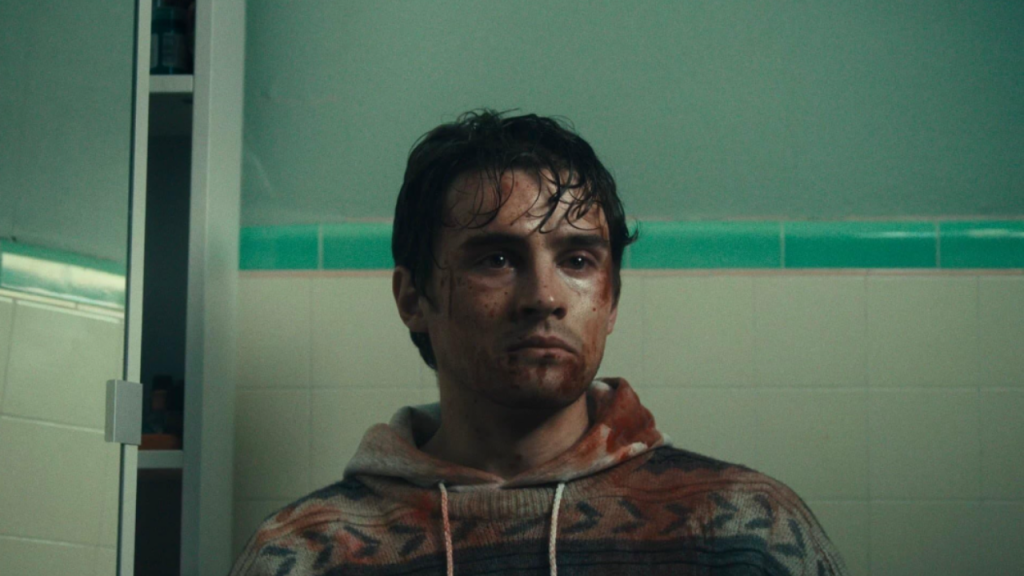
Obsession (2026)
And to the person who read this recommendation and immediately got angry, remember the old adage: only a hit dog hollers.
I loved Obsession, and it’s not getting unseated as one of my favorite horror movies of the year for how physically and emotionally effecting it was. But if you have any sense of mental stability, you will recognize that this movie generated some of the most trash conversations and worst bits of discourse to ever crawl out of people’s mouths and into your ears. For the ones who actually enjoy the discourse and arguing more than they actually liked the movie, this is for you. You’re not getting recommended this because it’s good, you’re getting it recommended because I know you won’t appreciate it fully anyways and that’s punishment enough.
I can already hear this kind of person typing with their Gollum-esque posture over the laptop. “Luis, you literally spend all your time writing your opinions on movies and sharing them with people, what’s the difference between you and me? You’re literally writing hot takes right now!” the reader said, still unable to grasp my point.
You see, this is a real Dark Knight, “I’m not wearing hockey pants” situation. I talk about movies for the love of them, you’re talking about movies because you want to score points in the internet dunk economy. We are not the same. Happy watching!
