

Film Fests
Brooklyn Horror Film Festival 2025: ‘Slayed’ LGBTQ+ Shorts Block


As someone who has been attending the Brooklyn Horror Film Festival annually since 2017, I can comfortably say that the ‘Slayed’ LGBTQ+ shorts block is a true highlight. Horror Press was honored to once again sponsor the block for the 2025 edition of the festival, elevating some of the very best that queer horror has to offer.
This year’s shorts represented a vast diversity of gender identities and sexualities, and the role of intersectionality in shaping a person’s lived experience. They managed to be funny, sexy, beautiful, heartbreaking, and triumphant in turns—and plenty scary, too.
If you couldn’t make it to the screening, here’s a quick recap. Consider it a call to action to prioritize the ‘Slayed’ programming at next year’s fest!
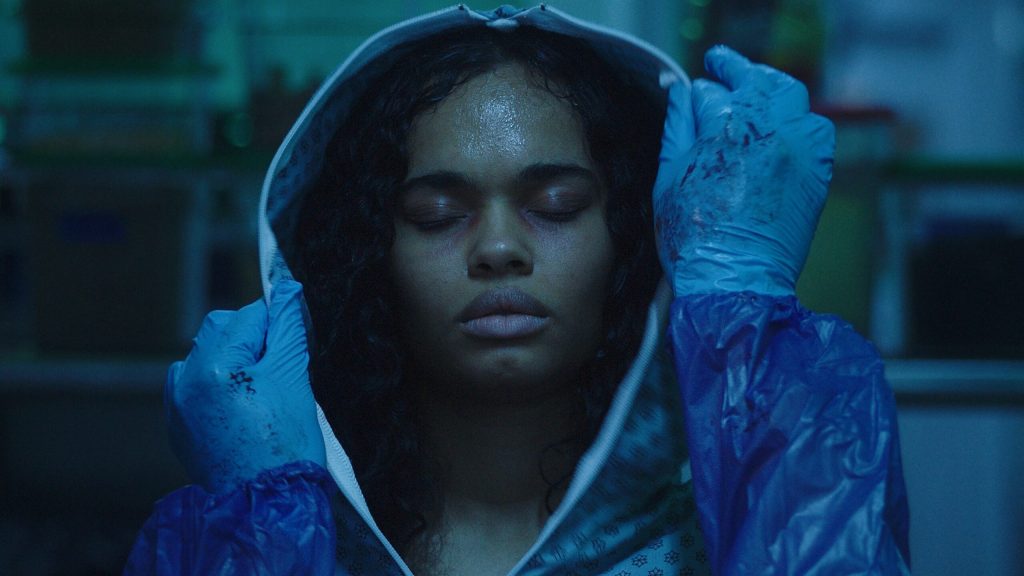
Long Pork (Dir. Iris Dukatt)
The opening titles of writer-director Iris Dukatt’s Long Pork inform us that we are in post-Roe America (don’t I know it). But our currently dystopian hellscape has been taken up a notch, with state propaganda posters plastering the exterior walls of an upscale steakhouse informing us that we need to “Protect the child, forfeit the vessel.” Inside, the head chef (Lena Headey) seizes the opportunity to avenge her daughter, a victim of this extreme pro-life regime, when the smug, hypocritical Chancellor of Righteousness (Marc Menchaca) walks through her doors.
Deliciously cathartic, Long Pork’s master stroke is in its portrayal of a pregnant trans-masc kitchen worker and the solidarity of the women around them. It’s a powerful reminder that queer and gender non-conforming people are often equally (if not more) vulnerable to the kind of oppression that targets cisgender women, and that standing together is the best way to defend ourselves and our communities against those who seek to destroy us. Even if we have to eat them.
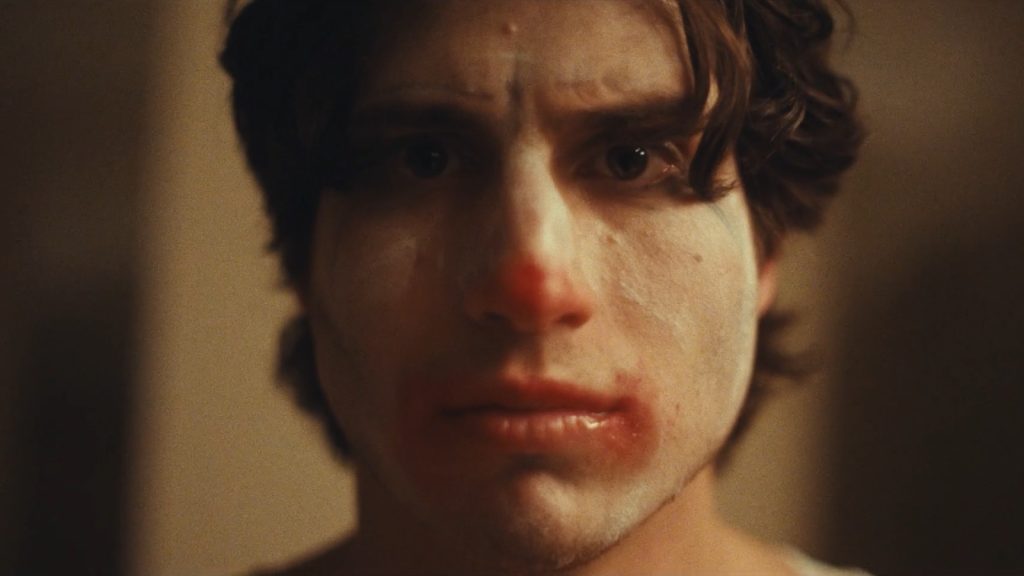
Are You Fucking Kidding Me?! (Dir. Zen Pace)
“We’re all clowns in the hospitality industry,” writer and star Zachary Solomon said of their short film Are You Fucking Kidding Me?! during the Q&A at Brooklyn Horror Film Festival. In it, they play Jordyn, a struggling birthday party clown dealing with bitchy clients, a fellow performer throwing around queer slurs, and an empty bank account, all while his phone rings off the hook, informing him that his ailing mother has taken a turn for the worse. A mean right hook from an entitled kid and an abusive sexual encounter with the dad finally push Jordyn over the edge, leading to a bloody climax that left the person next to me audibly praying for Jordyn to murder the child next.
He doesn’t, leaving Are You Fucking Kidding Me?! more tragicomedy than outright cathartic horror. Director Zen Pace uses shots through the eyes of Jordyn’s humiliating pig costume to put the viewer in his shoes, but many queer people will already be very familiar with the situation he’s in, forced to debase himself just to make ends meet, any art he might have produced drowned out by the screams of unappreciative little brats.

She Devil (Dir. Allie Perison)
Being a butch woman in hyper-feminine spaces can be uncomfortable. Director Allie Perison amps up the discomfort to an eleven in She Devil, a short film following butch Gemma (Paula Andrea Placido) as she accompanies her femme girlfriend, Mae (Phoebe Voss), to a friend’s breakup party. This is Gemma’s first time meeting Mae’s friends, and she’s alarmed to learn that the group forced the breakup because they distrusted the boyfriend, seemingly without cause. When they realize that Gemma isn’t entirely on their side, the women quickly turn on her, using her as a stand-in for the ex to express all their rage and distrust.
Co-written by Perison and Matt Almquist, She Devil is a chilling examination of weaponized femininity and how it can harm gender-nonconforming women. “I would do anything for my femmes,” one character expresses, pointedly excluding the decidedly unfeminine Gemma. The script also cleverly plays on viewers’ biases, leaving us to reflect on whose side of the story we believe when relationships sour.

Last Call (Dir. Winnie Cheung)
Winner of Best Short Film at this year’s festival, director Winnie Cheung’s Last Call is a dreamy, drug-fueled ride into the psyche. Less a narrative film and more a vivid emotional landscape lit by a lotus-flower sun, the short follows a rebellious motorcyclist (Celia Au) who indulges in her worst vices night after night in an attempt to outrun the seductive serpent woman (Matilda Sakamoto) in her mind. But a high-speed crash forces a collision, triggering a journey of transformation and desire.
Last Call is cut through with moments of stark body horror like a forked tongue slithering from a wound. Paired seamlessly with sumptuous acid-trip landscapes and a triumphant performance from Au, it all makes for one of the most unique—and uniquely beautiful—films of the fest.
Tal 탈 (Dir. Charlie Gillette)
Not all queer stories have a happy ending. From director Charlie Gillette and writer Wesley Han, Tal is a quietly devastating short about the crushing expectations of immigrant parents and the feeling that you need to hide your true self to be successful, or at least make others happy.
Han stars in Tal as Gabriel, a young associate at a prestigious New York City law firm. He’s tried to put his artistic dreams behind him, but he can’t let them go entirely, keeping a neutral mask (a tool used to train actors in movement by hiding their expression) in the desk drawer of his cubicle. As he pulls a grueling all-nighter for his demanding boss and fields worried phone calls from his mother, he finds himself struggling to suppress his feelings for his kind coworker (Barton Cowperthwaite)—and running from a demon wearing his mask. Sadly, Gabriel can’t outrun his demons or confront his desires, leading to an ending that will sit with you long after the credits roll.
Consume (Dir. Aliyah Knight)
The Nitehawk Cinema’s projector broke in the middle of Aliyah Knight’s Consume, but the highest praise I can give the film is to say that I was gutted to miss a single moment of it. From what I did see, the short follows a young woman in a religious household who is struggling to suppress her desires. A little sexy, a little sapphic, and very bloody, it left me hungry for more—a must-watch if I can catch it in full in the future!

Blood Boys (Dir. Jordan Hahn)
When it comes to the topic of blood donation, the shadow of the AIDs crisis still hangs over the gay male community. Writer-director Jordan Hahn’s Blood Boys reframes blood sharing between queer men as a sexy competitive sport, one that fuels toxic masculinity and gets in the way of genuine intimacy.
Based on the real phenomena of creepy old rich men getting blood transfusions from young donors in an attempt to live forever (or at least reverse the effects of aging), Blood Boys follows buff boy Sam (BooBoo Stewart) as he competes to be a billionaire’s personal blood bag. If he wants the job and the perks that may come with it, he’ll have to beat out the current bloodletting champ, Charlie (Damian Joseph Quinn). Hahn contrasts the cold sterility of the clinic with hot skin shining with sweat, plunging needles into swollen veins in a way that is both wince-inducing and undeniably, disturbingly erotic.
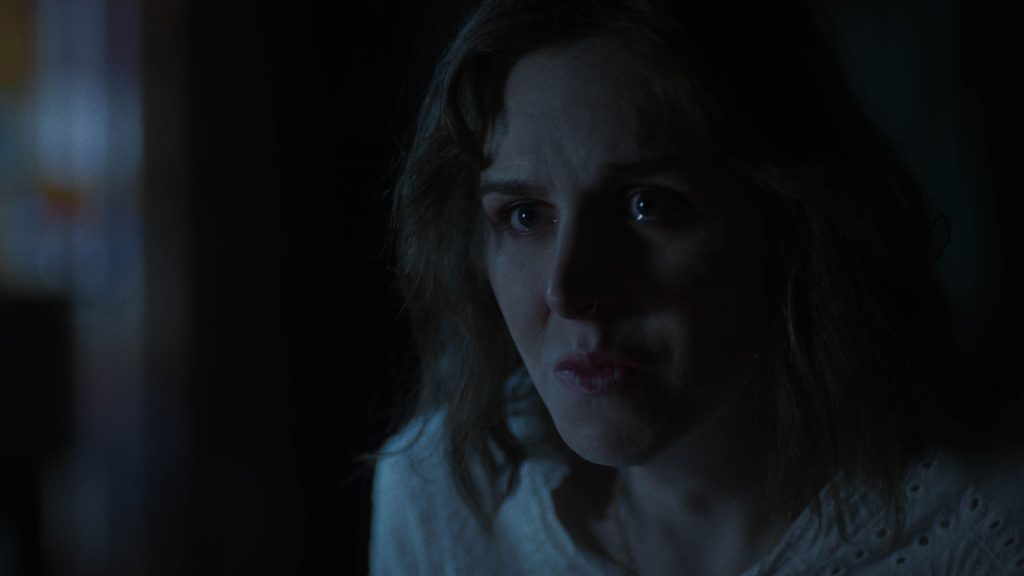
The Dysphoria (Dir. Kylie Aoibheann)
With access to affordable gender-affirming care getting more limited by the day, writer-director Kylie Aoibheann’s playful short The Dysphoria packs a surprisingly hefty punch. In it, Alice (Eva Rees), unable to afford a procedure, turns to ancient rituals in an attempt to make her body reflect her true identity. Unfortunately, her boyfriend Tyler (Adam White) not only won’t take the ritual seriously, but wants to dissuade Alice from getting the surgery at all.
The Dysphoria elegantly sidesteps obvious punchlines, instead driving toward a conclusion that is as cathartic as it is amusing. With some great practical gore and a standout performance from Rees, it’s a fun take on a serious issue—and the perfect way to close out the ‘Slayed’ shorts block for another year.


The second (of two) feature I was able to check out at 2026’s Brooklyn Horror Film Festival was a rather peculiar film. Anthony Oberbeck’s latest feature film, Little Doors, was one of the films from this year’s festival that I had previously heard very positive rumblings about. Out of all of the films I had requested a press pass for, this was the film I was most excited to check out. After writer/director Anthony Oberbeck’s intro, where he said it’s still up in the air whether the film was considered a comedy or horror, I was excited to see the weird world we were about to enter. As the credits rolled, I wasn’t too sure what to make of Little Doors. Was it horror? Was it comedy? Or did it meander a bit too much in between?
A woman (Megan Koester) finds herself navigating an apocalyptic world, as she [presumably] squats in a gorgeous McMansion. The apocalypse is about to get even worse for this woman as one day she finds a tiny door on the side of her stomach, where a cyst once was. After hiring a locksmith (Anthony Oberbeck) to open a locked door in her house, she comes to the realization that just because the world is ending doesn’t mean she can’t find love. Can the locksmith open the literal and figurative doors in this woman’s life? Or are some locks best left…locked?
Little Doors Makes The Mundane Interesting
Little Doors is a troubling film. There are moments where it lags behind itself and then moments where it gets a burst of energy before retreating back into its shell. Writer/director Anthony Oberbeck is, unquestionably, a talented filmmaker. He finds unique ways to make the most mundane of scenes into something fun to watch. But it also feels like he’s not confident in his own style.
Oberbeck, from what I could tell from his intro and Q&A, is a very deadpan person. Kind of like a slightly less self-aware Nathan Fielder. From his short intro to the film, it was clear what the overall vibe of the film was going to be. Little Doors, by definition, is a horror film. But in practice, it’s more or less a dry dark comedy. The idea of the ongoing apocalypse is left as background fodder. Which is fine, but when you have two characters who view a little door appearing on someone’s body as just another day, I think some worldbuilding would be helpful.
Finding Your Voice
In a way, Oberbeck has his own style. And I hate being one of those people to say x movie is like if movie A and movie B had a baby. But when I was watching Little Doors, I just kept feeling as if I was watching a Yorgos Lanthimos-lite movie. And that’s where my biggest issue comes from. Lanthimos is one of the greatest screenwriters of our generation. Attempting to emulate any form of his style is a Herculean task. How can you perfectly capture that level of purposeful esotericism without alienating an overwhelming majority of the viewing audience?
Granted, filmgoers who attend festivals are more likely to enjoy the jigsaw puzzle of a difficult film like Little Doors. But where Oberbeck and Lanthimos depart from one another is that Lanthimos can still craft a film that could be enjoyed even if someone doesn’t understand it. Little Doors exists in this vague figurative limbo that asks more questions than it answers. That being said, it created a nearly two-hour discussion between my wife and myself as we transited back home. And by the time we reached our front door, our consensus was, “eh.”
Anthony, Please Keep Reading!
Anthony, if you’re still reading this, please don’t stop. All of this isn’t to dissuade anyone from watching this film. Even though I ended the last paragraph the way I did, that does not mean I hated the film. As stated at the top, I think Anthony Oberbeck is a very talented filmmaker. I just think he needs to focus more on his own style, rather than trying to amalgamate the styles of others into his aesthetic.
I loved the two main characters, the pacing, and how interesting Oberbeck could make an empty room feel. Little Doors just feels both all over the place and way too narrow. There are points where it feels like the commentary on love and relationships contradicts itself. But the acting is incredible, and the idea of a little door appearing on someone’s torso in the middle of an apocalypse is genuinely a riot. Whatever Oberbeck makes next, I will watch. But for me, this little door should have stayed locked.

Brooklyn Horror Film Festival came and went like a furious lightning strike. As they say, you don’t know what you got, til it’s gone! The festival was full of excellent films, familiar faces, and drinks aplenty. My opening night film was one that hit a bit too close to home and almost made me miss a time in my life that I would never like to revisit. Night After Night is the latest film from I Trapped The Devil’s Josh Lobo, and it’s HR’s worst nightmare!
Andy (Scott Poythress) and Willis (Johnny Sibilly) are security guards at a university; a university that’s overwhelmingly ambiguous. As they battle shift changes, Andy and Willis slowly slip into a never-ending cycle of dread and terror. But the horror affects more than their mental states. Can these two hourly workers get to the bottom of the terrors that lurk in the hallways at night? Or will their next shift…be their last?
The True Horror of a Night Shift
Night After Night was my first screening at this year’s festival. I typically view my first screening as the bar-setter for my festival experience. As the credits rolled, I wasn’t too sure what bar this film truly set. Co-writer/director Josh Lobo (with co-writer Rowan Russell) takes quite a big swing with this film. Their story is layered and full of heart, but it meanders in capturing the mental state of a dead-end job and the unbearable pressure of the night shift. Lobo and Russell’s addition of supernatural elements into an overwhelming shift is smart and resourceful. But did they bite off more than they could chew?
As someone who has worked the overnight shift for nearly a decade, I’ve seen all facets of it transcribed to the silver screen. Rarely have I found a film that captures the mentality it puts a worker in. To date, Dark Mommy is the only film I’ve seen that emotionally captures that feeling best. But the goal of this isn’t to compare films, because that’s unfair. I just don’t feel like it gives itself time to breathe and grow with the characters. By the time the credits rolled, it felt like an unfocused, mind-bending cacophony of manufactured confusion.
Night After Night‘s Crowded Third Act
There’s an attempt to explain the goings-on at this university, but it doesn’t feel confident in its own exposition. As Night After Night approaches its climax, there’s an addition of a fourth main character (I’m counting The Stranger as the third (or five main characters if we’re going all film-schooly with it and counting the university as a character)). Don’t get me wrong, I absolutely LOVE AJ Bowen. In fact, I almost jumped out of my seat when he appeared. It’s just not the time to add another major character. Especially when you’ve given little to no explanation/context clues thus far.
That being said, I don’t want this review to be overly negative. I did not walk away from this film mad or disappointed. Night After Night proves that Josh Lobo is an insanely talented visual filmmaker. Along with I Trapped The Devil cinematographer Bryce Holden, this film expertly tells a visually enthralling story. Chock-full of atmosphere and visual dread, this film is truly a visual treat. It’s hard not to appreciate this film on an aesthetic level.
A Stellar Cast!
On top of that, Night After Night is brimming with incredible performances. Johnny Sibilly has this powerfully charming anger in his character, even if it feels slightly unfounded. Scott Poythress, on the other hand, is the perfect foil for Sibilly’s character. Where you can feel Sibilly’s charged emotions, Poythress digs deep and pulls out a deeply broken performance. There’s a deep emotional charge behind the character’s eye-bagged, dead stare. I really wish there was more of something for both of them to go off of. And, as always, AJ Bowen is a rockstar. It’s nice to see him in projects.
Night After Night is visually impressive but struggles with substance and style. It’s hard to connect with this film when it struggles to connect with itself. Lobo and Russell broach a fantastically unique idea, but pacing and unbalanced writing give this film a Sisyphean task. I have no doubt this film will resonate with many people; I just don’t think I am one of those people.
