


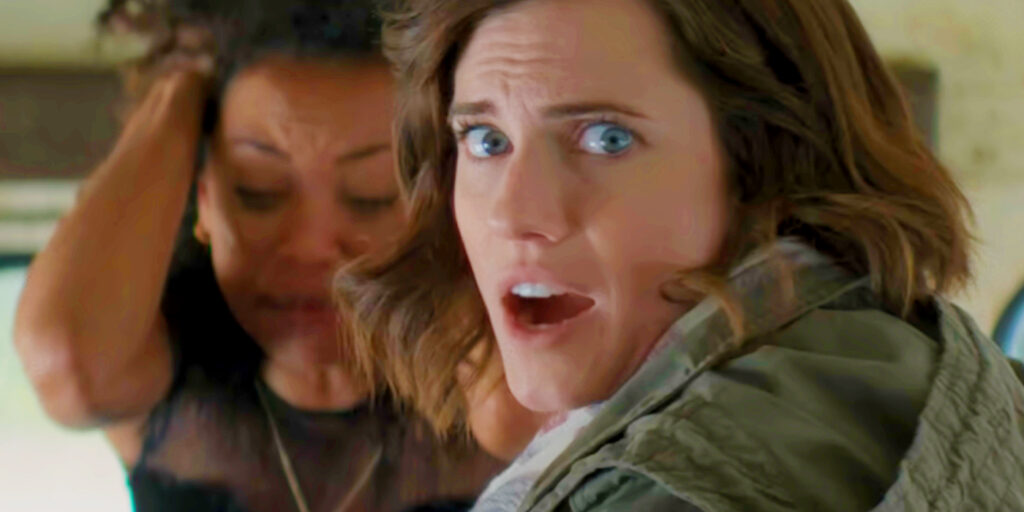
We have a double theme going on here at Horror Press this month. In addition to working to highlight horror movies with actual queer characters for Pride Month, we are also diving deep into the wriggly, creepy-crawly world of bug movies. Now, there are two distinct movies that come to mind that combine queer characters and bug terror. One of them you may just have read about last week, thanks to Luis: Swallowed. The other, which I’m here to talk about today, is a movie that I still have not entirely forgiven for playing my nervous system like a goddamn snare drum. That’s right, it’s time to break down 2018’s The Perfection.
This movie has many twists and turns, so if you haven’t seen it, here is your big spoiler warning! We’ll be freely spoiling the first half of this movie today, though there’s no need for us to go any further than that within the bounds of this discussion.

The Perfection Is Underrated As A Bug Horror Movie
In some ways, the first act of The Perfection feels like a counterintuitive choice as one of the best “bug horror” sequences of all time. Primarily, this is the case because the bugs don’t technically even exist in the universe of the movie. As is eventually revealed, everything bug-related is a hallucination brought on by drugs and the power of suggestion. After the movie’s first of several major abrupt swerves, the story moves on to an entirely different subject matter, and the bug motif is dropped like a hot stone.
However, when I think about watching that moment in the movie for the first time, all I remember is this palpable sense of relief. I felt like if the movie would have continued escalating the bug story for another 45 minutes, I might have literally exploded. That is because everything about the buildup to the crescendo of the opening act of the movie is perfectly calibrated to deliver the same sensations of escalating terror that poor Lizzie (Logan Browning) feels, thanks to the machinations of Charlotte (Allison Williams).

The Perfection Builds Tension Like No Other
There are so many things going right in The Perfection that make it such an effective bug movie, and one of those things is the fact that it isn’t a bug movie at all. This allows it to play with its bug element in unusual ways that even some of the best bug/creepy-crawly movies in history – such as Arachnophobia and the Creepshow segment “They’re Creeping Up on You!” – cannot do.
While the bug element is seeded about 10 to 15 minutes before it comes to the fore, so it feels like a natural conclusion to the buildup, the sudden intrusion of bugs into the scenario nevertheless feels like an invasion. This is definitely how the experience feels for Lizzie, and the way it is presented thrusts the audience directly into her visceral, physical experience.
Before bugs begin wriggling out of Lizzie’s vomit and bursting through the skin of her arm, the movie has already shown us a masterclass in building tension in various ways. The first is in showcasing the mounting sexual tension between Charlotte and Lizzie. The movie takes its time before even revealing that either is on the LGBTQ+ spectrum enough to even be into one another. After this point, which is another of the movie’s sudden, sharp shocks (and one of its most pleasurable), the story slowly, deliberately builds to a boil via words, touch, and one incredibly horny cello duet.
While their sex scene bursts the bubble of the mounting sexual tension, a new form of tension has already begun rising in the meantime. Shortly before their night in bed together, they witness a man falling ill from a real hemorrhagic fever that has been plaguing the area, planting the seeds of the chaos that is to come. That part of the story also builds beautifully, as Lizzie becomes sicker and sicker (and more and more desperate). Only then does the bug material come into play.


Why The First Act Of The Perfection Works So Well
The reason this sequence is so good at getting under your skin (so to speak) is that your nerves are already strained from every single scene that has led up to this, so the sudden and concentrated burst of pure bug terror allows every nightmare you’ve ever had about bugs surface all at once, each element spilling out over the others in its eagerness to terrify. This is something which movies that feature bugs for their full run times simply cannot do, because they are forced to have that tension ebb and flow instead.
The whole affair also comes as a shock because of the profound level of misdirection that is going on as to the plot of the film and the exact nature of Lizzie’s ailment. Said ailment also makes the bug story even more potent, because it effectively grounds the movie in a relatable physical reality. I assume everyone watching the movie has had a headache or a stomachache before (and if you haven’t, kudos). These are the first two symptoms that begin to bother her, which makes her peril intensely relatable from the jump.
Why The Perfection’s Relatable Horror Makes Its Bug Terror So Intense
As these symptoms escalate, the relatability continues. Even if people haven’t been in her exact situation, the fact that she is dangerously ill while in an isolated place, on a bus surrounded by strangers, provokes feelings of vulnerability that are very easy to empathize with. Naturally, the movie’s setting also stokes other fears of a more xenophobic nature, playing off of the vibes of Steven Soderbergh’s Contagion by embracing many United States citizens’ fears that they will fall ill the second they step foot on foreign soil. But anyone who has been sick while on a trip far from home, or even while stuck in traffic on a commute, can put themselves in Lizzie’s shoes without feeling icky about it.
Up until the very moment that the bugs burst onto the scene, everything has been intensely grounded and realistic, so your brain naturally assumes the next step is going to be realistic, too. This is why that moment is so terrifyingly potent. You’re already prepared to believe the next thing that happens, and suddenly you’re being forced to believe that bugs are crawling beneath the surface of Lizzie’s skin. It’s a hell of a time.
Like I said at the top, this approach is especially powerful because it’s so concentrated, and it wouldn’t have worked if the movie was entirely about bugs the whole time. Plus, if the next two acts were about bugs and had to escalate from there, I wouldn’t be writing this right now, I’d be locked in a small closet with 18 bars of soap, clutching a can of Raid.