


You’re reading this article on the Internet. Which means you’ve been on the Internet at least once in the past five years. Which means you know that Harry Potter author J. K. Rowling is an unrepentant, festering transphobe. What started as potentially out-of-context liked tweets has become an extremely in-context catastrophe. The situation escalated into a more and more sinister string of anti-trans screeds and monetary donations to anti-trans causes.
The Harry Potter Revival and Its Challenges
This has unfortunately coincided with the return of all things Harry Potter. Because, whatever the woman’s strengths are as a novel writer, they did not transfer over into the Fantastic Beasts screenplays. Thus, Warner Bros. has bailed on that franchise and is busy resurrecting the original novels for a prestige series. One that couldn’t possibly last the seven seasons (or reportedly 10 years), it would need to tell the story fully.
Avoiding Support for Rowling’s Causes
And, listen. I’m a millennial who grew up on the Potter books and, to a slightly lesser extent, the movies. I get how important they are to a lot of us. They’re an inextricable part of our cultural DNA. It’s OK to feel that way, and it’s even OK to re-engage with those texts. You probably already own them, or know a friend who does. Cracking one open and even enjoying it isn’t a bad thing, and it isn’t putting money in Rowling’s pocket. Money that she would almost certainly give to some organization run by bigots even more heinous than herself.
But you know what would put money in her pocket? Watching that godforsaken HBO show, for one thing. Buying those new illustrated editions, for another. Or listening to those full-cast audiobooks that Michelle Gomez had to issue a statement semi-apologizing for joining.
5 Harry Potter Alternatives for Guilt-Free Reading
It’ll become increasingly difficult to resist the temptation to check out some new cultural artifact strip-mining the Harry Potter canon. However, the moral imperative to protect and affirm our trans siblings is much more important than that temptation. To that end, I have compiled a list. Here are five books/series to scratch that Potter itch without the accompanying Rowling guilt. They’re not ranked by quality, but by how many ways they feel like a suitable replacement for the series. Find the full reading list at the end of the article!
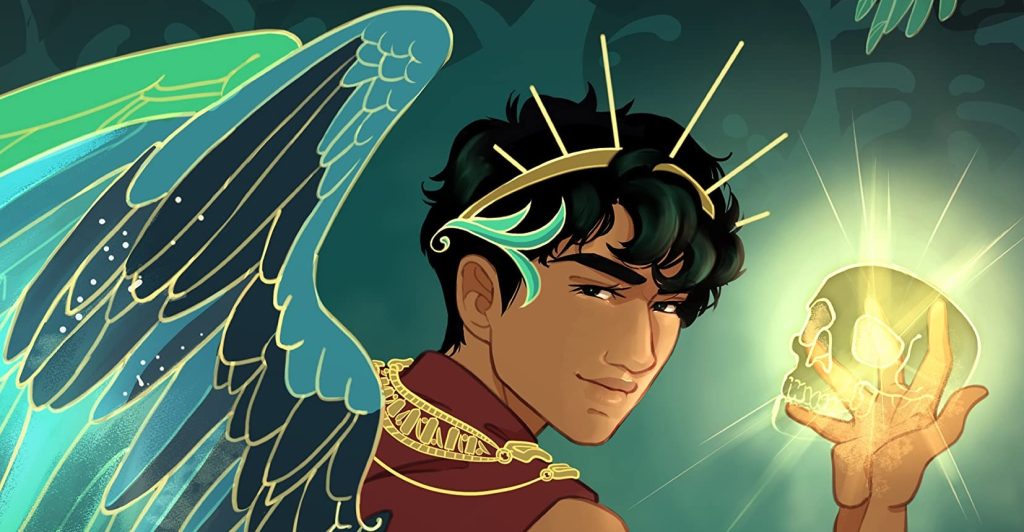

#5 The Sunbearer Duology by Aiden Thomas (2020)
These two novels by trans author Aiden Thomas are only lowest on the list because of their vibe. They draw just as much inspiration from The Hunger Games as they do Percy Jackson & The Olympians. But Percy Jackson was always a readalike for Harry Potter, no matter how much Rick Riordan protests. So there is still a good amount of Potter DNA entwined with this queer adventure duology inspired by Mexican mythology.
These books follow teenage semidioses (for those not familiar with Spanish, “demigods”) participating in a high-stakes competition. High-stakes as in the loser gets sacrificed to the god Sol. It’s got tried-and-true young adult themes of questioning authority, coming of age, and finding love both giddy and marvelously inconvenient.
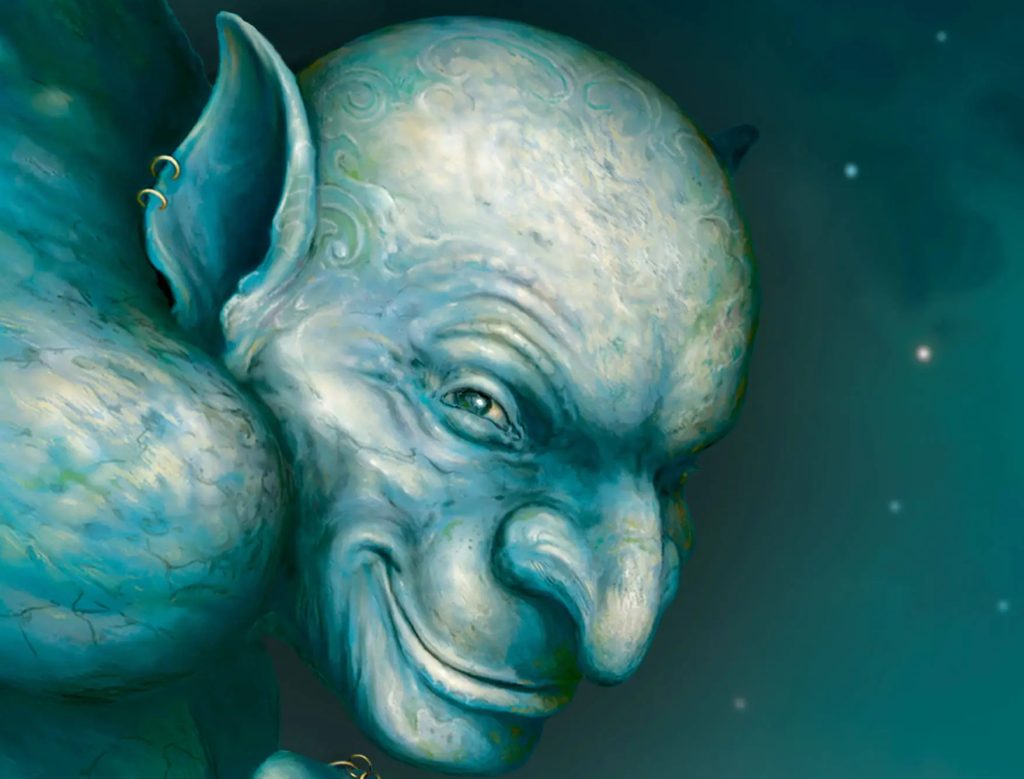

#4 The Bartimaeus Sequence by Jonathan Stroud (2003-2006)
This trilogy is probably my personal favorite fantasy series that I read as a kid. The story is told from the perspectives of multiple characters, but primarily the sarcastic djinni Bartimaeus. He imbues the trilogy with a sense of fun, even though it covers dark topics including terrorism, propaganda, and authoritarianism. It’s a text about the seduction and danger of politics and power, and it wields those themes extraordinarily well. Like all the best books for youngsters, it doesn’t talk down to them, but it’s not a grim slog either.
However, because of the story being told from the perspective of an ancient demon, it doesn’t necessarily have Potter vibes. That said, it does follow a young boy’s magical education and the hard lessons he learns as he matures. Stroud also builds the foundation of his magical world from real folklore, just like Rowling.
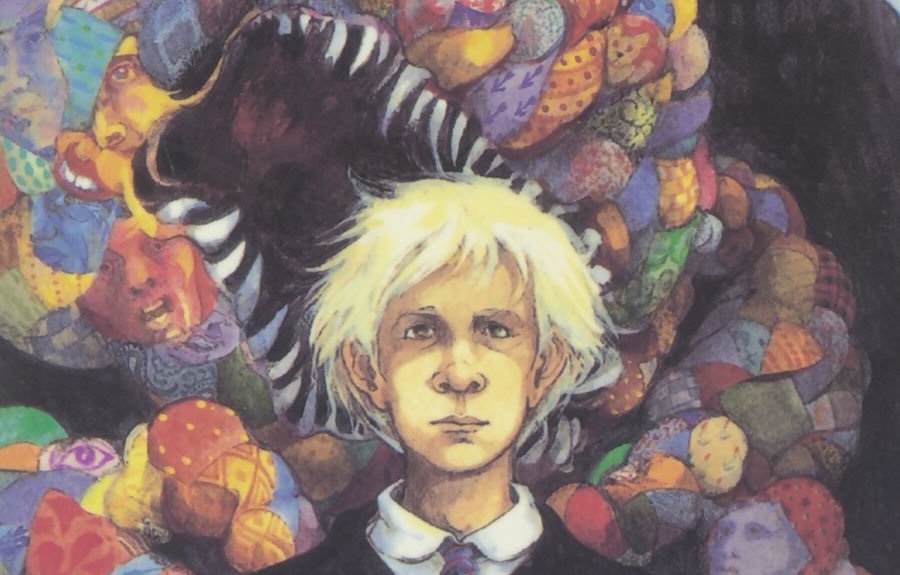

#3 Wizard’s Hall by Jane Yolen (1991)
Wizard’s Hall is in fact such a readalike for Harry Potter that many fans accused Rowling of ripping it off. Jane Yolen and I both disagree with those accusations (Rowling was much more interested in ripping off Tolkien). However, the similarities between the texts should feel like a warm bath to recovering Potter fans.
We’re talking a young man attending a school for wizards. We’re talking said schooling existing in the shadow of a dark sorcerer’s reign of terror. We’re talking school administrators expecting students to battle evils far outside their power. Yolen also provides a compelling and warmly domestic magic system, where names—particularly the names of plants—hold untold power.
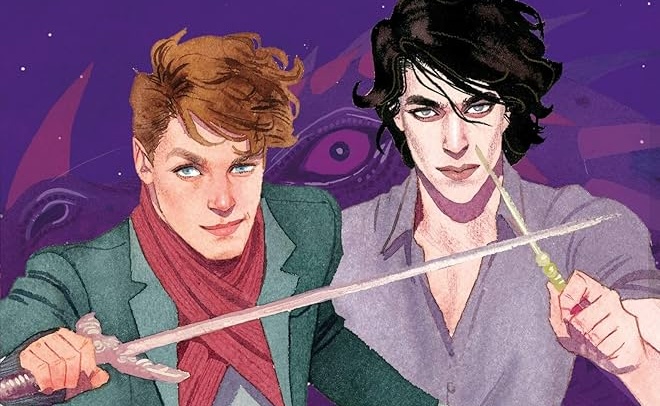

#2 The Simon Snow Series by Rainbow Rowell (2015-2021)
Now, this series was literally designed to be a Harry Potter readalike. Simon Snow was born as the Drarry-style fanfiction written by the lead character of Rowell’s 2015 novel Fangirl. However, the three Simon Snow novels are not necessarily meant to be the exact fanfiction written by the character. That said, the first installment does follow the burgeoning love between two antagonistic male students at a magic school. Rowell knows what her readers want.
Does she know how to deliver it, though? Yes and no. Frankly, I wouldn’t recommend this trilogy to fans of romance-forward stories, because I think that angle is weirdly underserved. However, Simon Snow presents a lovely world that does more than just sand the serial numbers off of Hogwarts. Rowell has invented her own linguistics-based magic system, and it is fabulous. It is an unfettered delight to get to go on adventures in this world. The fact that these adventures are viewed through the lens of off-model Potter characters makes it all the better. It’s a perfect nicotine patch for those hooked on Rowling.
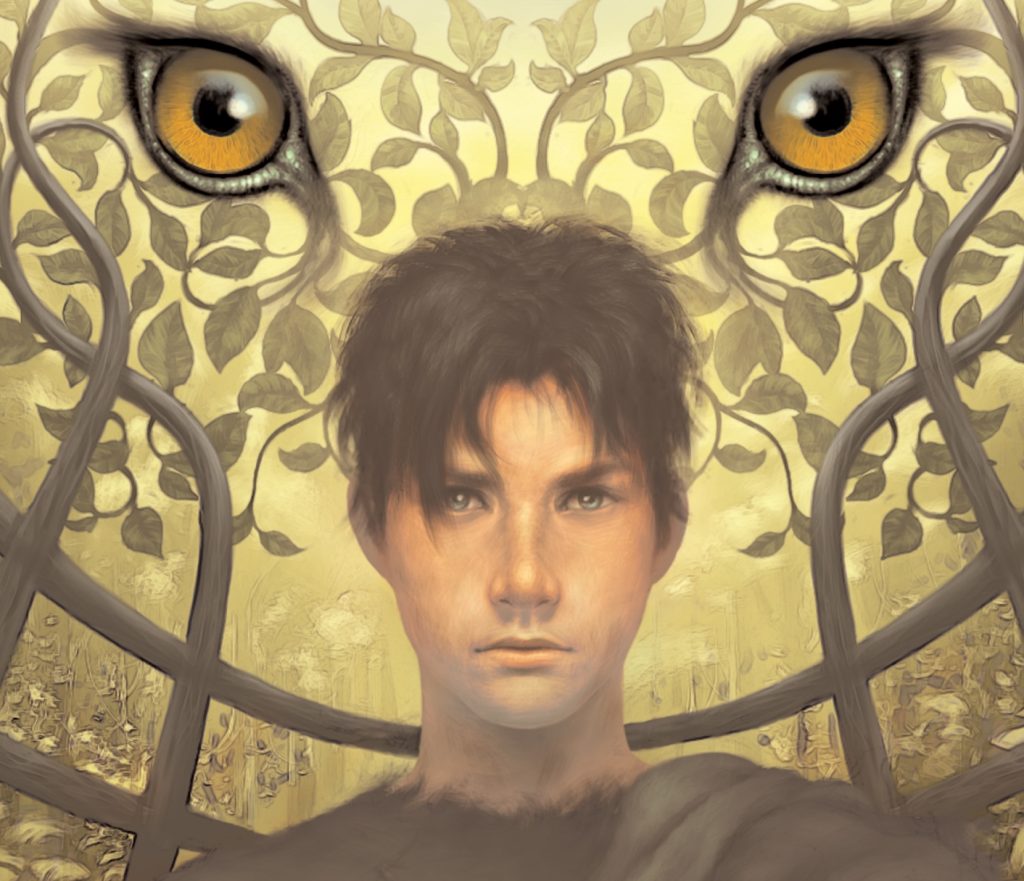

#1 Pendragon by D. J. MacHale (2002-2009)
The 10 Pendragon novels have fewer superficial connections to Harry Potter than Simon Snow or Wizard’s Hall. There’s no school of magic, for one thing. Nor is there a “dragons and folklore” vibe in the background. However, this young adult sci-fi fantasy epic is undeniably going to serve Potter fans well. I mean, come on. It follows a young man living a seemingly normal life who learns that he is part of a secret world. The stories mature as the character does, as the stakes get higher and higher. And he has two friends, one male, one female, who help him on his quest. It’ll get the job done, trust me.
This franchise is also the one that switches up its own vibe the most, to its benefit. You see, Bobby Pendragon’s a Traveler, one of the rare few with the power to access other worlds and times. This allows MacHale to present Bobby with an astonishingly wide variety of settings. He draws inspiration from everything. From Tarzan to Tron, from Waterworld to Dune, from George R. R. Martin to Al Capone, Pendragon’s got it all.
Runners-Up: Heir Apparent by Vivian Vande Velde (2002), Ella Enchanted by Gail Carson Levine (2004), Spell Bound by F. T. Lukens (2023), The Montague Siblings Series by Mackenzi Lee (2017-2021), Cemetery Boys by Aiden Thomas (2020)
Other Runners-Up That Are Sci-Fi, So They Were Never Seriously Considered, Even Though They’re Great: The Supernaturalist by Eoin Colfer (2004), The Gone Series by Michael Grant (2008-2013), The Darkness Outside Us by Eliot Schrefer (2021)
Full Reading List
The Sunbearer Duology by Aiden Thomas
The Sunbearer Trials (2022)
Celestial Monsters (2024)
The Bartimaeus Sequence by Jonathan Stroud
The Amulet of Samarkand (2003)
The Golem’s Eye (2004)
Ptolemy’s Gate (2005)
The Ring of Solomon (2010) – an inessential, but charming, prequel
Wizard’s Hall by Jane Yolen (1991)
The Simon Snow Series by Rainbow Rowell
Carry On (2015)
Wayward Son (2019)
Any Way the Wind Blows (2021)
Pendragon by D. J. MacHale
The Merchant of Death (2001)
The Lost City of Faar (2001)
The Never War (2002)
The Reality Bug (2002)
Black Water (2003)
The Rivers of Zadaa (2005)
The Quillan Games (2006)
The Pilgrims of Rayne (2007)
Raven Rise (2008)
The Soldiers of Halla (2009)